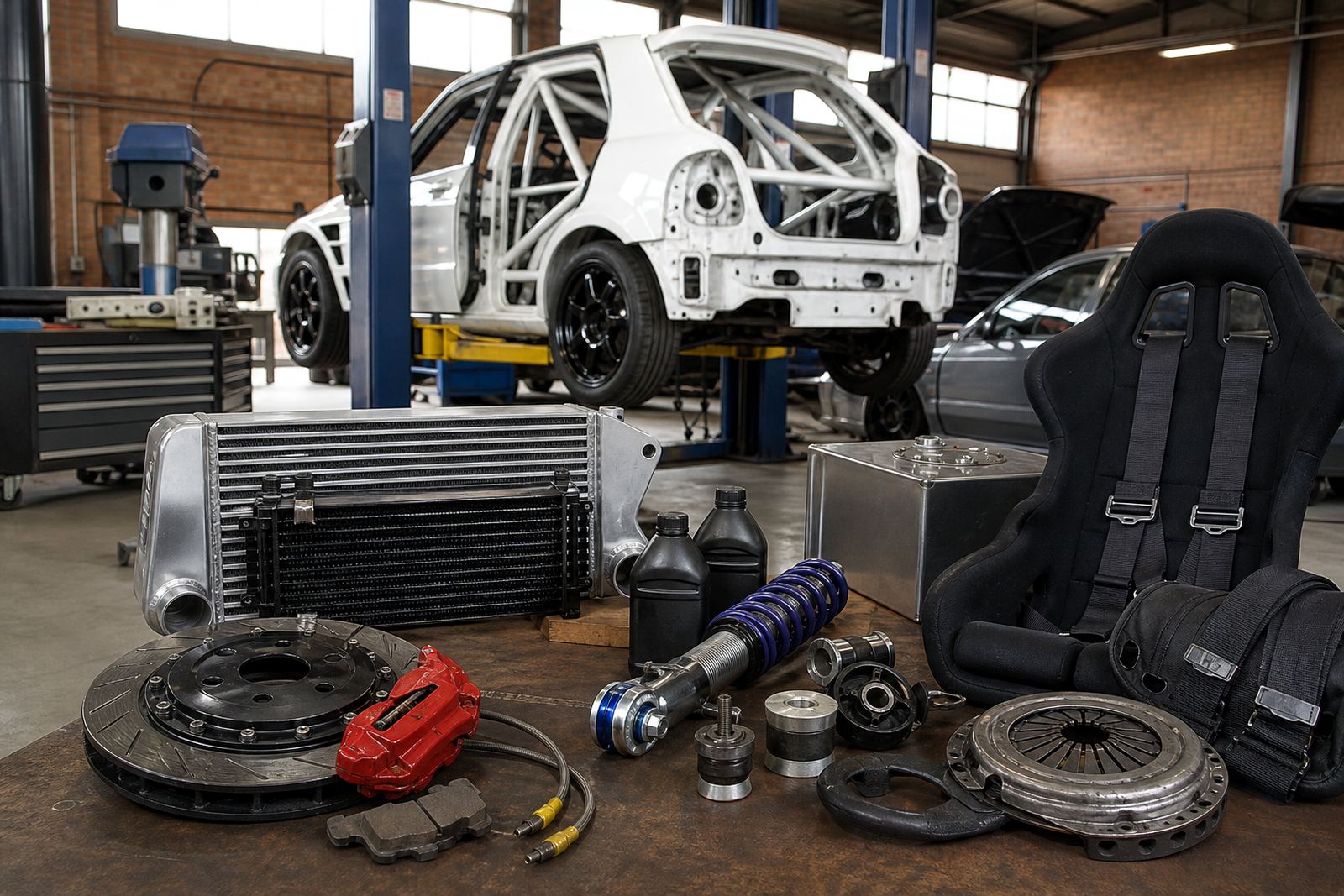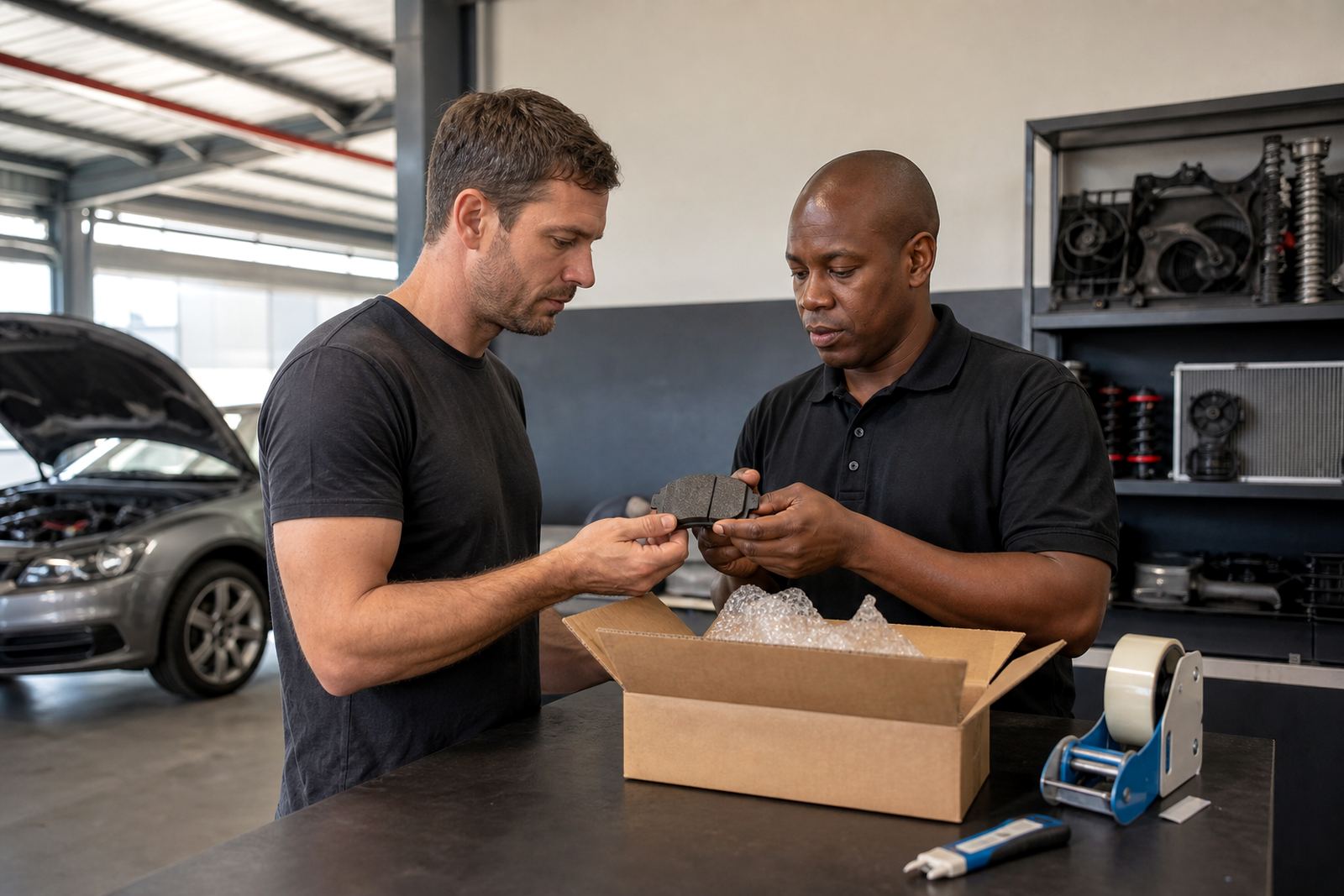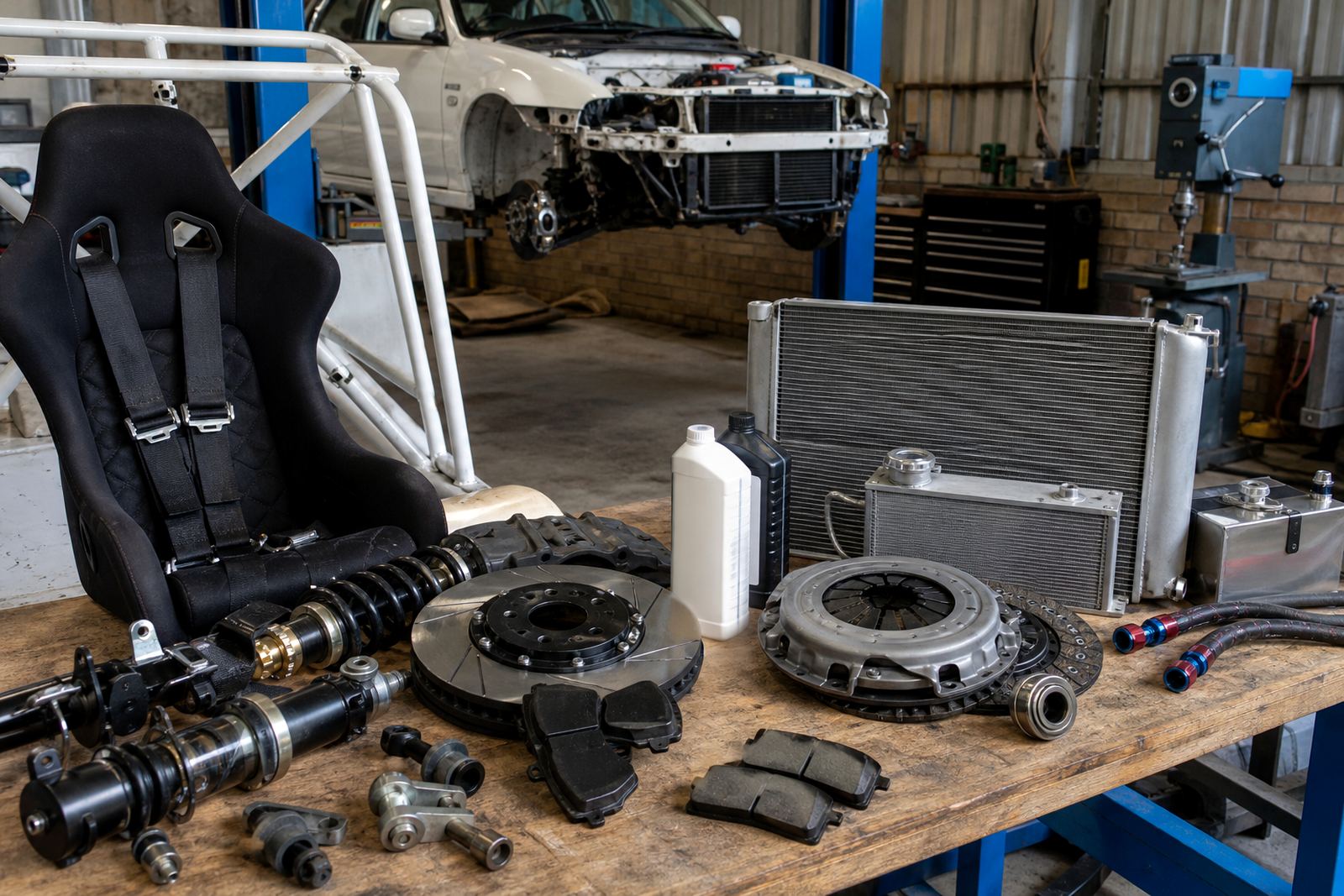


Start with the car as it sits now
Bring the car in as it is used, not as the old build notes describe it. A set of worn bushes, bent brackets, mixed brake hardware or a previous seat mount can change the whole job. On track cars and rally cars, small differences in ride height, wheel offset and tyre size matter more than people expect.
We look at the package first: brakes, suspension, cooling, seating, restraint points and the driveline. If one area is planned in isolation, the finished setup can feel odd on turn in or under braking. That is where a clean fitment check saves rework later.
Measurements that save time in the workshop
Fitment work needs real numbers, not guesses from a brochure. Track width, hub face to hub face, spring seat position, brake disc diameter, caliper clearance and wheel barrel space all need checking. A car with wide rims or a lowered stance can have less room than the part catalogue suggests.
- Measure wheel clearance around calipers, springs and top mounts.
- Check seat base height, helmet space and steering wheel reach.
- Confirm fuel cell room, boot access and filler placement.
- Record ride height before any alignment or corner weighting.
When these numbers are wrong, a simple part swap can turn into bracket work or a second visit. That is especially true on older shells, repaired cars and mixed-spec builds.
Brake parts need matched choices
Brake upgrade planning works best when pads, fluid, discs and caliper size are matched to the car’s weight and use. A pad that suits hot circuit laps can feel poor on the road, while a fluid choice that suits racing temperatures may still need a proper bleed and clean system to feel right. Brake bleeding should always follow a careful inspection of lines, fittings and master cylinder condition.
We also look for heat issues. If the front brakes are carrying too much load, or the cooling behind the bumper is poor, the system can fade early. That is common on heavier sedans, turbo cars and cars running longer stints at Kyalami or high-speed club sessions.
Suspension, corner weight and alignment in one sequence
Coilover setup is not just a spring change. Spring rate, damper range, top mount position and bump travel all need to work together. If the car is lowered too far without checking travel, it can ride on the bump stops and feel nervous through quick direction changes. Bushes and linkages should be checked at the same time because worn rubber or split joints change the reading on the alignment machine.
- Set ride height before final alignment values are chosen.
- Check for binding in control arms, drop links and steering joints.
- Corner weighting should be done with the car in race trim.
- Recheck toe after any spring perch or seat change.
On cars that see both road and circuit use, a good compromise setup often depends on honest testing, not on copying another build.
Seats, harnesses and roll cage clearances
Seat positioning affects control, comfort and safety. The seat needs to sit low enough for helmet room, but not so low that pedal reach and steering input become awkward. Harness fitment checks should confirm belt angles, anchor points and shoulder height. If the geometry is off, the belts can load the body badly in a hard stop.
Roll cage fit advice starts with space around the shell. Door bars, dash bars and footwell tubes must leave enough access for the driver, and enough room for door cards or trim where they remain in place. On a narrow cabin, millimetres count. A seat rail that looks fine on the floor can become wrong once the driver is strapped in and the wheel is fitted.
Cooling, fuel and clutch work need proper routing
Radiators and oil coolers need airflow, secure mounting and lines that do not rub on bodywork. If the routing forces a hose to bend sharply, the system may last until the first hard session and then start giving trouble. Fuel system layout should keep lines tidy, protected and away from heat sources. A fuel cell or surge arrangement must also sit where the harnesses, seats and cage do not interfere.
Clutch and shift setup deserves the same care. Pedal travel, release point, linkage feel and gearbox clearance all need checking before the car goes out. A rough gear change on a track car is often a setup problem, not only a part problem.
- Inspect hose clamps, grommets and heat shielding.
- Check that hoses clear steering, suspension and exhaust parts.
- Confirm throttle and clutch pedal travel with the driver seated.
- Look for chafe points near bulkheads and chassis edges.
What to bring for a fitment visit
Bring the car, the parts already ordered, and any notes about class limits or intended use. If the car has been modified before, photos of the old setup help our workshop team understand what was changed. It also helps to bring wheel specs, tyre sizes and any current alignment numbers, even if they are only rough.
For drivers across Midrand, Johannesburg, Pretoria, Kyalami, Centurion, Durban, Cape Town and Port Elizabeth, the useful detail is always the same: how the car sits now, what it needs to do on track or stage, and which parts must work together without rubbing, binding or overheating.