

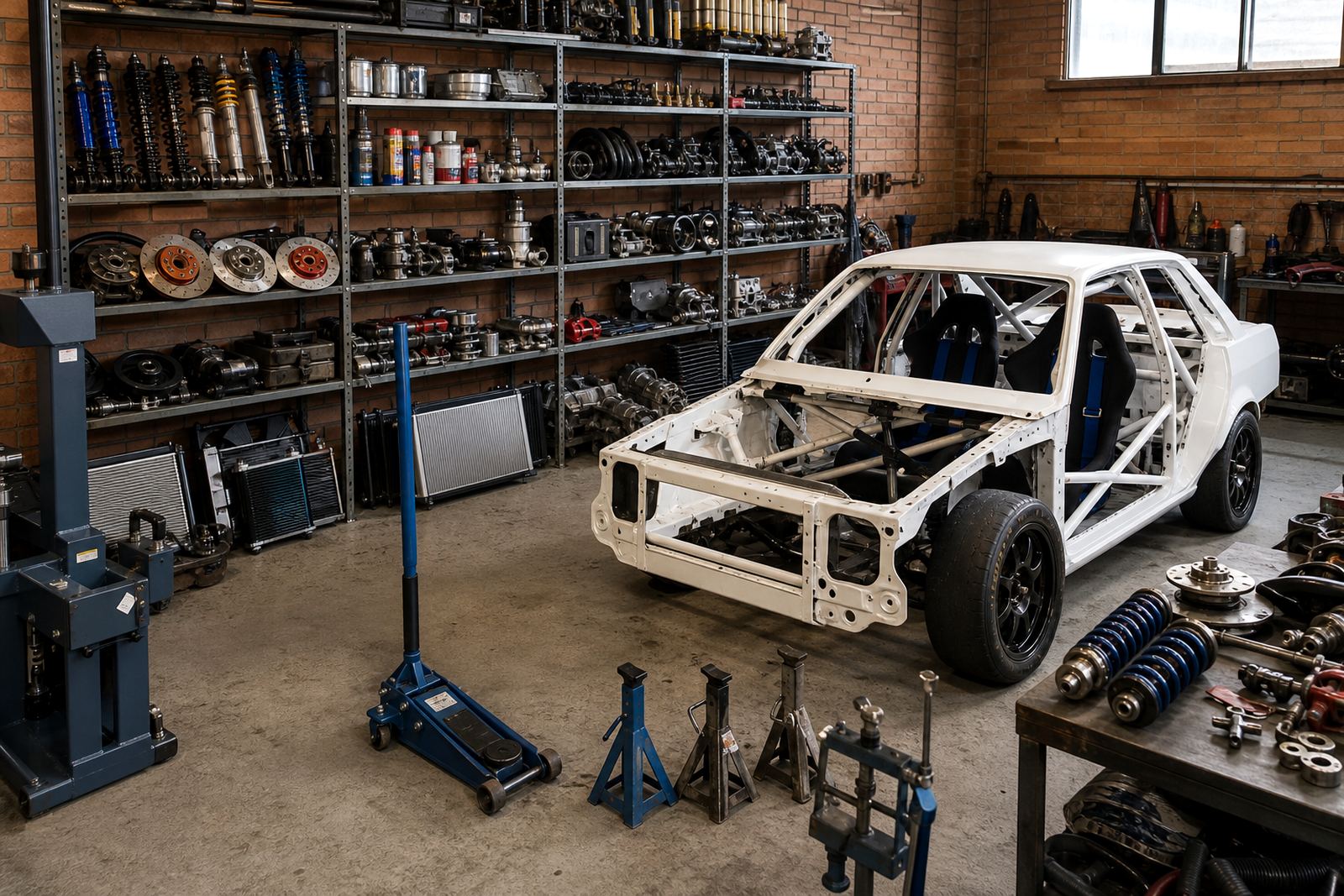


How a motorsport counter in Midrand took shape
A racer leans over the counter with a worn part in hand, and the search for the right replacement is already under way. In Midrand, close to Gauteng’s racing corridors, the workshop keeps pace with the demands of Johannesburg, Pretoria and Kyalami, where motorsport jobs rarely fit one neat address. RaceHouse grew out of that exchange, matching parts to the car, the class and the way it is driven.
The early work was straightforward and practical. Drivers needed brake pads that could take heat, fluid that could stand up to hard use, suspension parts that could be set correctly and cooling parts that kept temperatures in check on longer sessions. Those jobs taught the counter staff more than any sales course would have. The point was to supply the right hardware and talk through fitment, setup and the knock-on effect each change has on the rest of the car.
That practical style stayed central as the customer base widened. Some cars came in for track days, others for rally stages, and some were built for club racing where budgets are tighter and mistakes cost time. The shop learned to work with all of them, and to keep the advice plain enough for a first-time racer while still detailed enough for an experienced driver or crew chief.
- Brake parts chosen for heat and pedal feel
- Suspension advice drawn from how the car is driven
- Cooling parts matched to the way the car runs
- Safety items treated as fitment work, not shelf stock
The craft grew around the car, not the catalogue
As the work got broader, the business moved beyond basic replacement parts and into proper performance planning. Coilovers, bushes, radiators and oil coolers, seats, harnesses, roll cages, fuel cells, clutches and shift components all became part of the daily conversation. Those items do not work in isolation, so the team learned to look at the whole car before suggesting a change.
A brake upgrade is not just pads and fluid. It has to suit the rotor size, the caliper setup, the tyre grip and the driver’s style. Coilovers are not only about lowering a car, they shape balance, camber range and how the shell settles over kerbs and rough surfaces. Fuel system layout has to make sense in a race car, and a seat or harness has to sit correctly before anyone calls the car ready. That sort of detail became part of RaceHouse’s identity.
The business also became more useful to drivers who were learning how small setup changes affect lap time, tyre wear and confidence. A car that feels nervous under braking may need a different approach to alignment or corner weighting. A car that runs warm on long sessions may need airflow checked, ducting reconsidered or an oil cooler placed with more care. Those are the jobs that built the reputation, one careful adjustment at a time.
- Alignment checks to settle turn-in and tyre wear
- Corner weighting for a cleaner balance across the car
- Cooling checks for track heat and long sessions
- Clutch and shift setup for repeatable gear changes
Who walks through the door and what they bring with them
RaceHouse works with a wide spread of motorsport customers, from weekend racers to committed club drivers and teams preparing for tougher events. Some arrive with a clear list and know exactly which parts they need. Others want to understand what will suit the car without overbuilding it. Both types matter, because motorsport is full of different goals and different budgets, and the shop has to respect that.
The drivers who use the business most often are usually dealing with real conditions rather than theory. Johannesburg traffic, Pretoria commutes, Kyalami track days, Durban humidity, Cape Town weather and long-haul transport all affect how a car behaves once it is fitted out for racing. A brake package, harness fitment or cooling change has to work in the environment the car will actually face. That is why the team talks through use cases before touching a spanner.
There is also a strong loyalty from people who race in classes where reliability matters as much as outright pace. A club racer might need a better pedal, a more predictable rear end or a seat position that makes the car easier to place through a fast section. A rally driver may care more about durability, packaging and how components survive rougher roads. The business grew by understanding those differences and keeping the conversation honest.
The workshop side became part of the service
RaceHouse is not only a parts counter. The workshop side grew because many motorsport parts work best when the fitment and setup are checked by people who understand racing use. That includes brake bleeding, coilover setup, seat positioning, harness fitment checks, roll cage fit advice, fuel system layout, and the kind of inspection that spots a problem before it becomes expensive.
Track setup days became a natural extension of that work. Drivers want to feel the difference between a car that looks ready and one that is actually settled, safe and predictable. On those days the team can look at alignment, ride height, corner balance, pedal feel, cooling performance and the way the car loads up under braking. It is slower work than a simple sale, but it leaves the driver with more confidence in the package.
The workshop also helps keep the advice grounded. A suspension specialist sees patterns in how cars move. A technical advisor notices where a setup needs to be softened or tightened. A workshop coordinator keeps the physical job organised so the work is clean and the car leaves in usable shape, not just in a better mood on paper.
- Brake bleeding checked with track use in mind
- Seat position set for control and visibility
- Harness fitment checked against driving position
- Track setup days used to refine the whole package
The people behind the counter and under the cars
The team today reflects the way the business runs. Thabo Chetty leads the company with a close eye on what motorsport customers actually need, not what sounds impressive in a showroom. Anele Malherbe handles sales with the sort of detail that helps a driver compare options properly. Johan Gumede keeps workshop flow practical, while Lerato Ncube advises on technical matters that affect the car once it is loaded, braked and pushed hard.
Morne Naidoo focuses on suspension setup, which is where a lot of race car character can be gained or lost. Sibusiso Mashaba keeps logistics moving so parts and components reach the right place with less fuss. Candice Phiri handles customer support and helps keep the communication clear when a build has several moving pieces. Together they give the business a broader working memory than a single counter ever could.
That matters because motorsport jobs often shift as the car develops. A customer may arrive asking for brake parts and leave with a better understanding of seat position, fluid choice and cooling behaviour. Another may come in for a suspension adjustment and end up changing the order in which the car is prepared for its next outing. The team works in that space, where the original request is only part of the final answer.
What the business stands on today
RaceHouse still works with the same direct feel at the counter. The base in Midrand supports drivers across South Africa, with regular links to Johannesburg, Pretoria, Kyalami, Centurion, Durban, Cape Town and Port Elizabeth. The business stays close to the parts and close to the people who use them, which is important in motorsport where the smallest change can alter a session.
There is a steady pattern to the work now. Braking, suspension, cooling, safety gear and engine support remain the main themes, with each enquiry treated as part of a wider car setup rather than a single product sale. That is why so many of the discussions circle back to fitment, weight transfer, heat management and driver confidence. The parts matter, but the way they sit in the car matters just as much.
If there is one thread running through the history of RaceHouse, it is that the business grew by keeping its feet on the workshop floor. The questions changed, the cars changed and the circuits changed, but the work still comes down to good parts, proper advice and an honest look at what the car needs to do next.