



Midrand workshop talk, not showroom noise
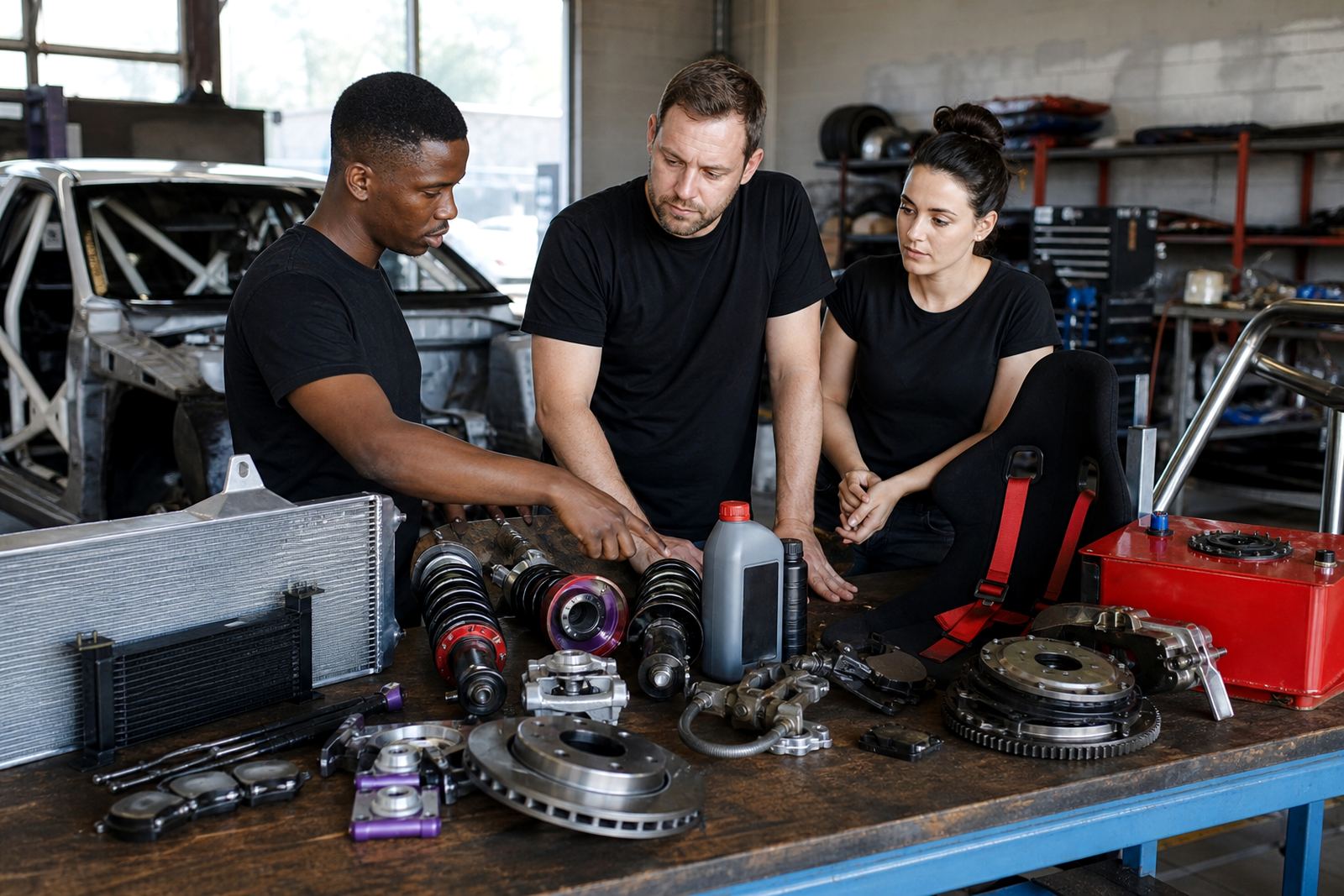
RaceHouse is centred on motorsport use, not everyday road car browsing. The work is built around parts that count when the car is being driven hard lap after lap, from brake pads and fluid to coilovers, bushes, cooling parts, seats, harnesses and clutch hardware. Drivers work with us when they want the car to feel settled, predictable and ready for the next session.
The Midrand base gives us easy reach into Johannesburg, Pretoria, Centurion and Kyalami, while our work also follows cars heading to Durban, Cape Town and Port Elizabeth events. That reach matters because racing cars are rarely neat little projects. They arrive with mixed setups, different budgets and a list of details that can be small on paper but important on track.
We keep the conversation close to the job. If a brake package is too aggressive for the tyre and circuit, that gets said. If a coilover spring rate needs a second look, that gets said too. The point is not to load a car with parts, but to make the package fit the driver and the class.
Parts picked for the punishment they will take
Motorsport parts earn their place through heat, vibration and repeated loading. Brake fluid must keep a clean pedal feel under temperature. Cooling parts must cope with long pulls, traffic to the paddock and hot weather at inland and coastal venues. Seats and harnesses need proper positioning, not just a neat look in the cockpit.
We work with the kinds of components racers ask about every week: brake upgrade parts, bleeding equipment, suspension hardware, alignment settings, corner weighting, roll cage fit advice, fuel system layout and shift feel. That list changes from car to car, yet the thinking stays the same. Every item must do a job that makes sense in the car, the class and the circuit.
- Brake pads and fluid matched to heat and pedal feel
- Coilovers, bushes and alignment checks for balance
- Radiators and oil coolers sized for the car’s thermal load
- Seats, harnesses and cage fit advice for driver placement
- Fuel cells, clutch parts and shift setup for hard use
We do not treat a build as a parts list alone. A car can have good hardware and still feel wrong if the setup is out. That is where the detail work matters, especially on cars that have changed hands or changed class a few times.
Setup days that look at the whole car
Track setup days give us a chance to look beyond the box of parts and into how the car actually behaves. A racer can arrive with fresh brake parts, new suspension and a cooling upgrade, yet the car may still pull one way under braking or wear tyres unevenly. The setup day is where those clues get tied together.
We cover brake bleeding, alignment checks, corner weighting, seat position, harness fitment checks and cooling system checks. Where needed, we also talk through fuel system layout and clutch and shift setup. The aim is to leave less to guesswork once the helmet goes on.
- Sitting the driver in before the belts go in
- Measuring how the car sits under load and across corners
- Looking for brake balance issues before they turn into bad habits
- Reviewing cooling paths so the car is not chasing heat all day
That kind of day is useful for newer racers and seasoned drivers alike. The newer driver often wants confidence and repeatability. The more experienced driver usually wants finer control, less movement in the chassis and a clearer feel at turn in and braking.
How the team works on a build
RaceHouse runs as a small working team with clear roles. That helps when a car needs careful coordination between sales, workshop, technical guidance and logistics. Anele handles sales direction, Johan keeps the workshop side organised, Lerato covers technical advice, Morne focuses on suspension detail, Sibusiso manages logistics and Candice handles customer support. Thabo Chetty leads the business and keeps the work pointed at the same standard.
The useful part of that structure is simple. A driver does not have to repeat the same details to six different people. The setup notes, fitment questions and parts requirements move through the team with the car’s purpose in mind. That is handy when the same car may need one plan for local club racing and a different plan for an event further afield.
We also keep the tone straight. If something is worth changing, we say so. If a part can wait until the next stage of the build, that is said too. Motorsport budgets are never unlimited, so the order of work matters. Good planning saves time and avoids the common trap of buying hardware before the base setup makes sense.
South African racing conditions shape the detail
Cars in Gauteng live a different life from cars that spend time near the coast. Heat, altitude and humidity change how a car feels and how hard parts work. A setup that behaves well in Midrand may need a different cooling margin in Durban, or a different brake and suspension balance for a circuit weekend in Kyalami.
That is one reason we pay attention to the details behind the headline parts. The radiator size, oil cooler placement, brake fluid choice, hose routing and even seat position can all affect the way the car behaves after a few hard laps. None of those things sounds dramatic on its own, but together they decide how calm the car feels when the pace goes up.
Our work also reflects how many racers move between events in different provinces. A car built for club racing around Johannesburg may still have to cope with a long tow, changes in ambient temperature and a weekend where the weather shifts from cool morning air to hot afternoon running. The hardware has to cope with that pattern, not an ideal one.
A practical way to start the conversation
Most jobs begin with a car that already has a story. It may be a fresh build, a used race car, or a road car being turned toward competition. We look at the class, the track use, the driver’s feel in the car and the parts already on hand. Then the next step becomes easier to plan.
Drivers usually come to us with a part that failed or a car that feels wrong. That can be for brake upgrade planning, suspension checks, cooling parts, seating, harness fitment checks, fuel system layout or clutch and shift setup. The useful detail is not how fancy the plan sounds. It is whether the car ends up sharper, safer and easier to place on track.
- Track cars that need sharper brake and suspension balance
- Rally cars that need stronger cooling and safer cockpit layout
- Club cars that need consistent setup and more predictable feel
- Builds that need a second look before money goes into the wrong parts
That is the way we prefer to work: direct, technical and close to the car. If the next step is a small adjustment or a full parts plan, the aim stays the same. Make the package make sense, then let the driver feel the difference where it counts.