

What a support vehicle has to carry on a race weekend
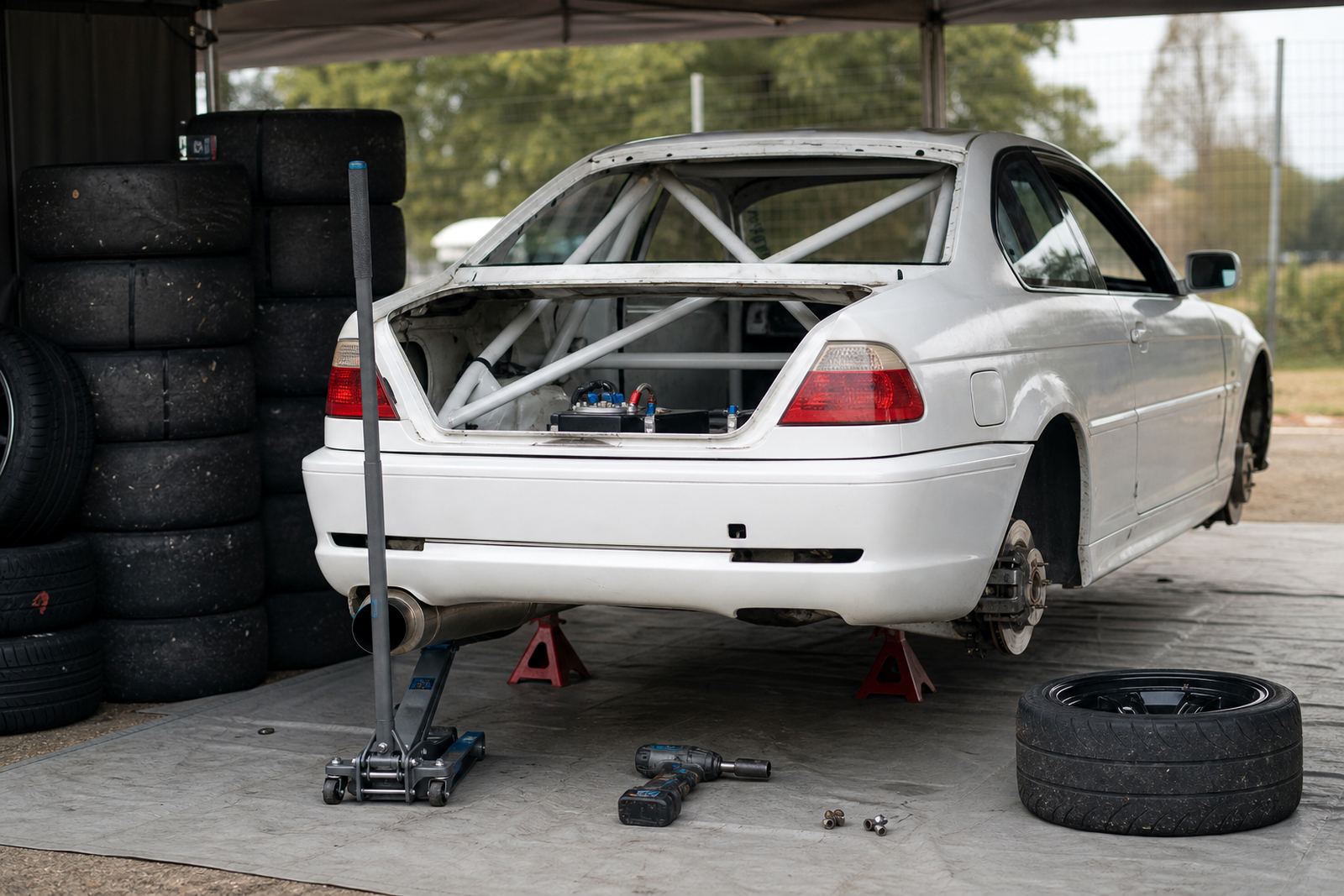
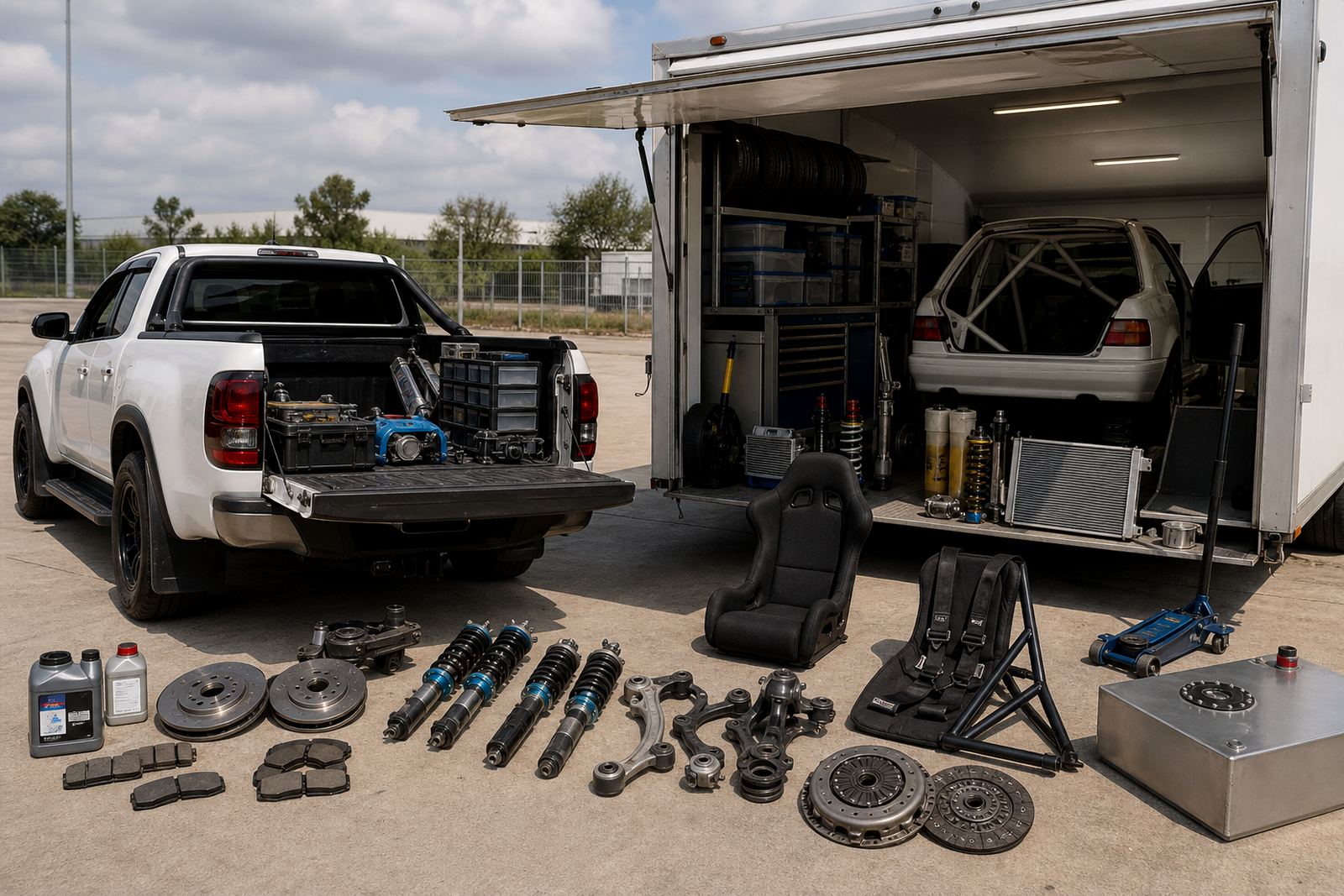
A support vehicle is not just transport. It is the moving store room, tools bench and spare parts shelf that keeps a car ready at the circuit, at the scrutineering bay or in the paddock at Kyalami, Midrand, Zwartkops or Red Star. On a busy weekend it may carry wheels, fluids, a jack, stands, wheel chocks, cleaning gear, spares and the bits people forget until they need them.
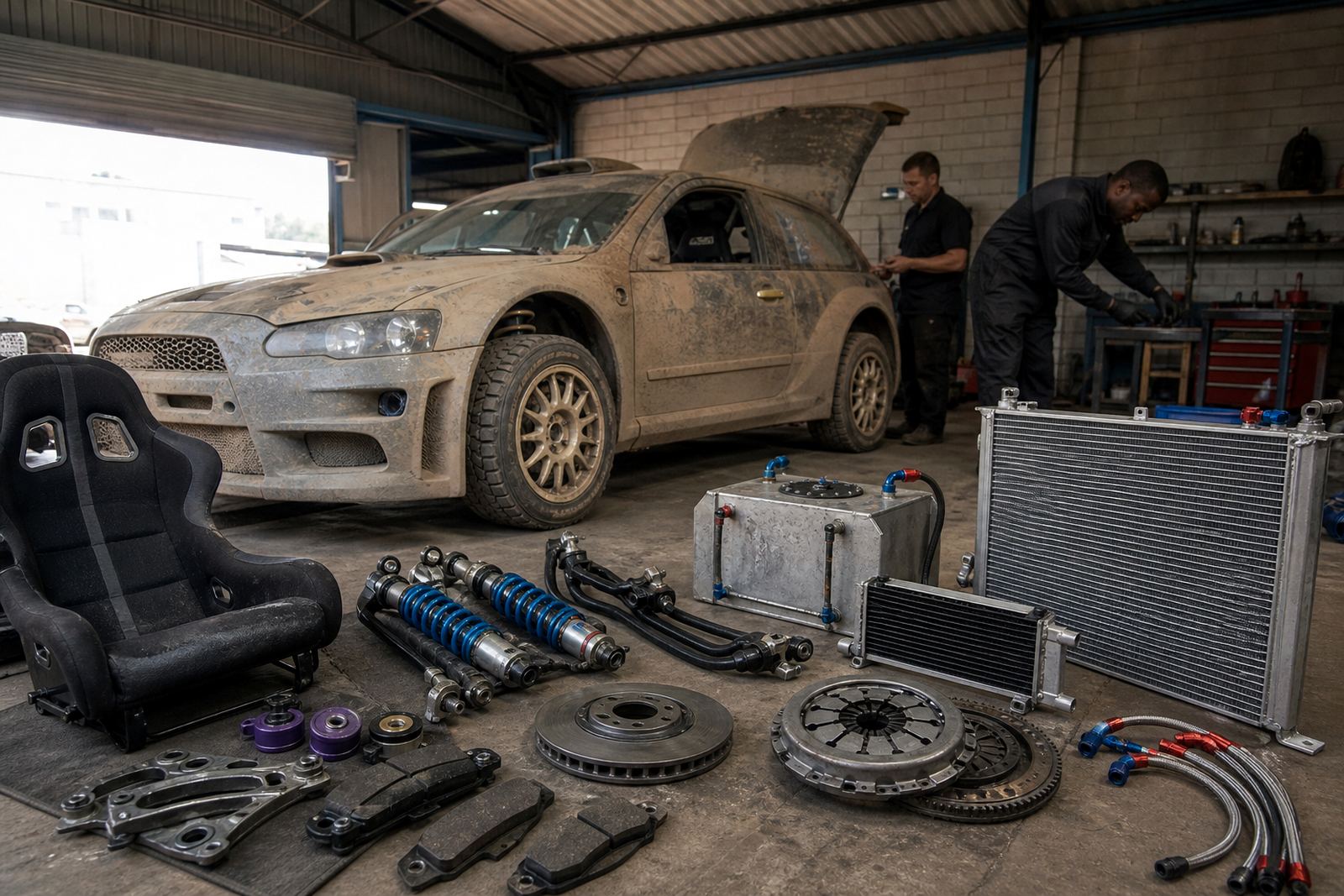
For many teams the aim is to keep the race car lighter, cleaner and easier to work on. That means the van or trailer takes the weight of brake fluid, pads, belts, hoses, fasteners, fluids and service tools. If the layout is poor, people waste time hunting for a torque wrench or moving boxes just to reach a simple part.
A sensible equipment list for tow rigs and paddock vans
The best build depends on the type of racing, but a working set usually starts with secure storage and good access. Heavy items should sit low and near the axle line. Light items can go higher in cabinets or bins. A small tyre stack, recovery straps and a fuel safe container arrangement also help when the day runs long.
- Brake pads, brake fluid and bleed kit
- Spare wheel nuts, studs and fasteners
- Oil, coolant and cleaner in sealed containers
- Jack, axle stands and wheel chocks
- Ratchet straps, tow straps and recovery gear
- Tyre pressure gauge, torque wrench and hand tools
- Service boxes for belts, plugs, hoses and clips
In coastal towns such as Durban or Cape Town, salt air and moisture can be hard on exposed metal, so closed storage and corrosion-conscious packing are important. In Gauteng, dust from road transport and paddock work can also work into open bins and soft bags.
Layout choices that save time on race day
A good layout is about reach, weight balance and moving safely around the vehicle. Cabinets should open without blocking the aisle. Tie down points need to hold the load when roads get rough or a trailer takes a hard stop. If a generator, compressor or water tank is part of the setup, place it where fumes, heat and weight are managed properly.
We often look at three zones. One zone for fast-moving service items, one for heavier spares and fluids, and one for dirty items such as used parts and worn tyres. That kind of split keeps the support vehicle cleaner and cuts down on double handling when the car is on stands.
For trailers, axle loading matters. Too much weight at the back can make towing twitchy, while too much up front can overload the tow ball. For vans, shelving should be fixed properly and not left to shift under braking. A tidy van is not about looking neat, it is about not chasing loose items when the driver needs the car ready.
Common mistakes that cost time and money
People often load a support vehicle around what fits, instead of what gets used first. That leads to digging through boxes for brake fluid or a spare wheel spacer while everyone else waits. Another mistake is mixing clean parts with dirty ones. A bag of used pads next to fresh seals is a simple way to create trouble.
- Overloading one side of the van or trailer
- Leaving fluids loose with no spill control
- Forgetting tie downs for batteries or heavy tools
- Using shallow shelves for parts that can roll out
- Keeping emergency tools at the back of the load space
- Ignoring corrosion protection for coastal use
Support vehicles also get rushed when teams upgrade the race car but not the transport side. A better radiator or brake package is useful, yet the pit support system still needs order. Without that, the whole weekend feels harder than it should.
Budget bands in Rand for practical builds
Budgets vary with vehicle size and how much gear must move. A simple paddock van build with shelving, tie downs, compact storage and a few tool holders can begin at about R15 000 to R35 000. That level suits a team that already has the main tools and only needs better organisation.
A more complete build with custom storage, stronger fixing points, tyre carry space, fluid containment and a cleaner load layout often sits between R40 000 and R90 000. Larger trailer builds or heavier duty service vehicles can move beyond that once electrical work, fabricated mounts and special storage are added.
For many teams, spending the money on the support vehicle pays back in fewer lost parts, less damage in transit and less time wasted at the circuit. The right setup also makes it easier to keep service items separate from race items, which matters when the weekend gets busy.
How RaceHouse approaches track support vehicle planning
We plan the support vehicle alongside the race car. That means checking what the car needs, what the team carries and how the load should be arranged for Johannesburg traffic, Gauteng roads and longer runs to Durban, Cape Town or Port Elizabeth. Midrand teams often want a practical plan first, then a parts list that fits the space they have.
RaceHouse can help with brake upgrade planning, cooling system checks, seat positioning, harness fitment checks, fuel system layout, clutch and shift setup, alignment checks and corner weighting where the support vehicle work ties into the car build. For setup days and fitting advice, our team works with track, rally and club racing cars as well as the gear that supports them.
Support crews usually send their list to the workshop through the contact form. That keeps the details in one place, especially when the brief covers storage, transport, spares and the race car itself.
- Midrand base for local handover and planning
- Support for Johannesburg, Pretoria and Centurion teams
- Regular work for Kyalami, Durban and Cape Town racing crews
- Planning for tow vehicles, vans and paddock trailers