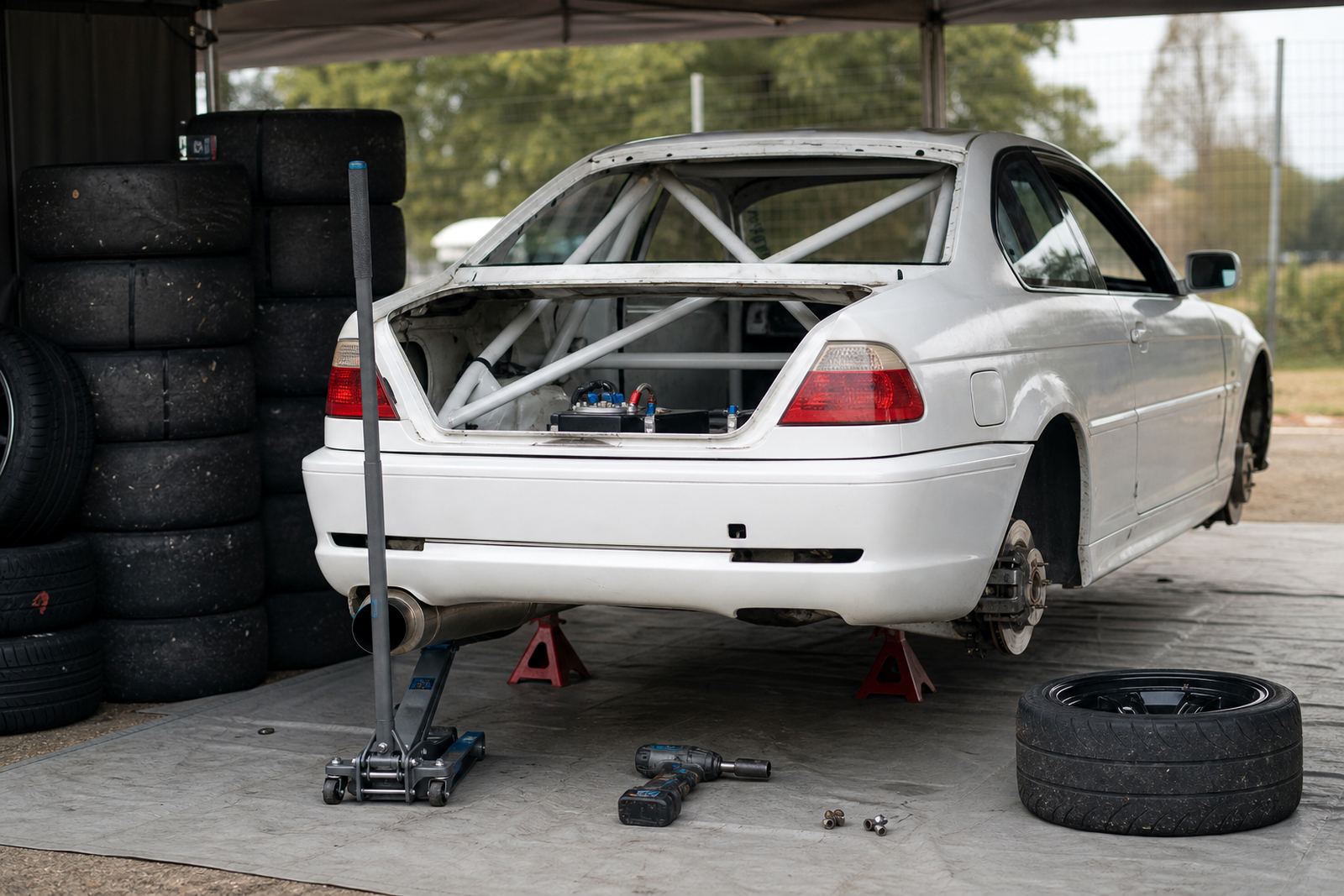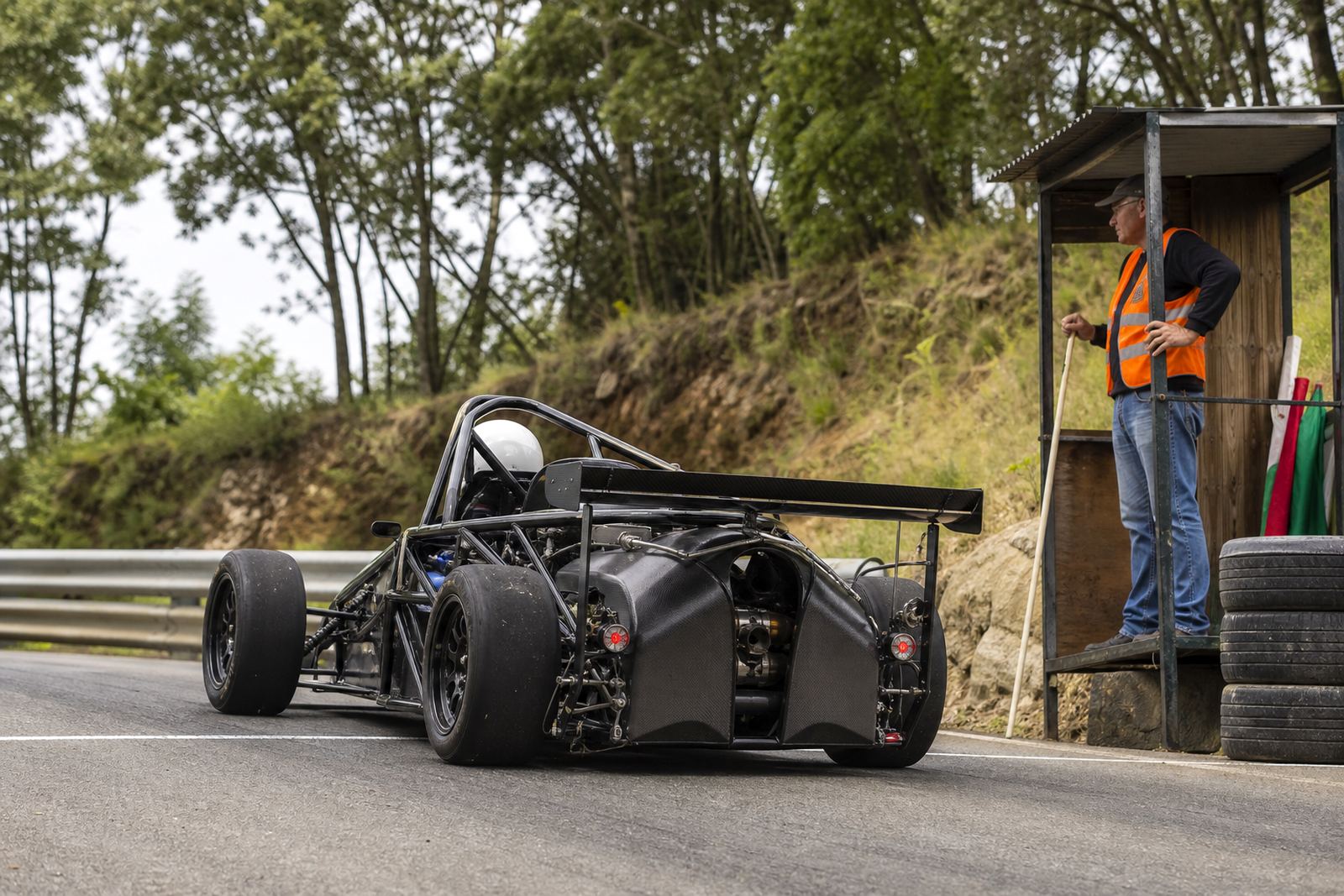


Stage roads punish the weak spots first
A rally car usually starts with heat, movement and impact in mind. Gravel, corrugations and repeated hard braking load the same parts over and over, so the car needs steady cooling, honest pedal feel and suspension that can take a hit without feeling vague.
That is where planning matters. A front brake package that works on circuit laps may be too sharp or too heat sensitive for rally stages, while soft bushes or a tired damper package can let the car wander under braking. We look at how the car is driven, the surface it sees, and how far the owner wants to push the setup before parts are fitted.
The equipment list usually starts here
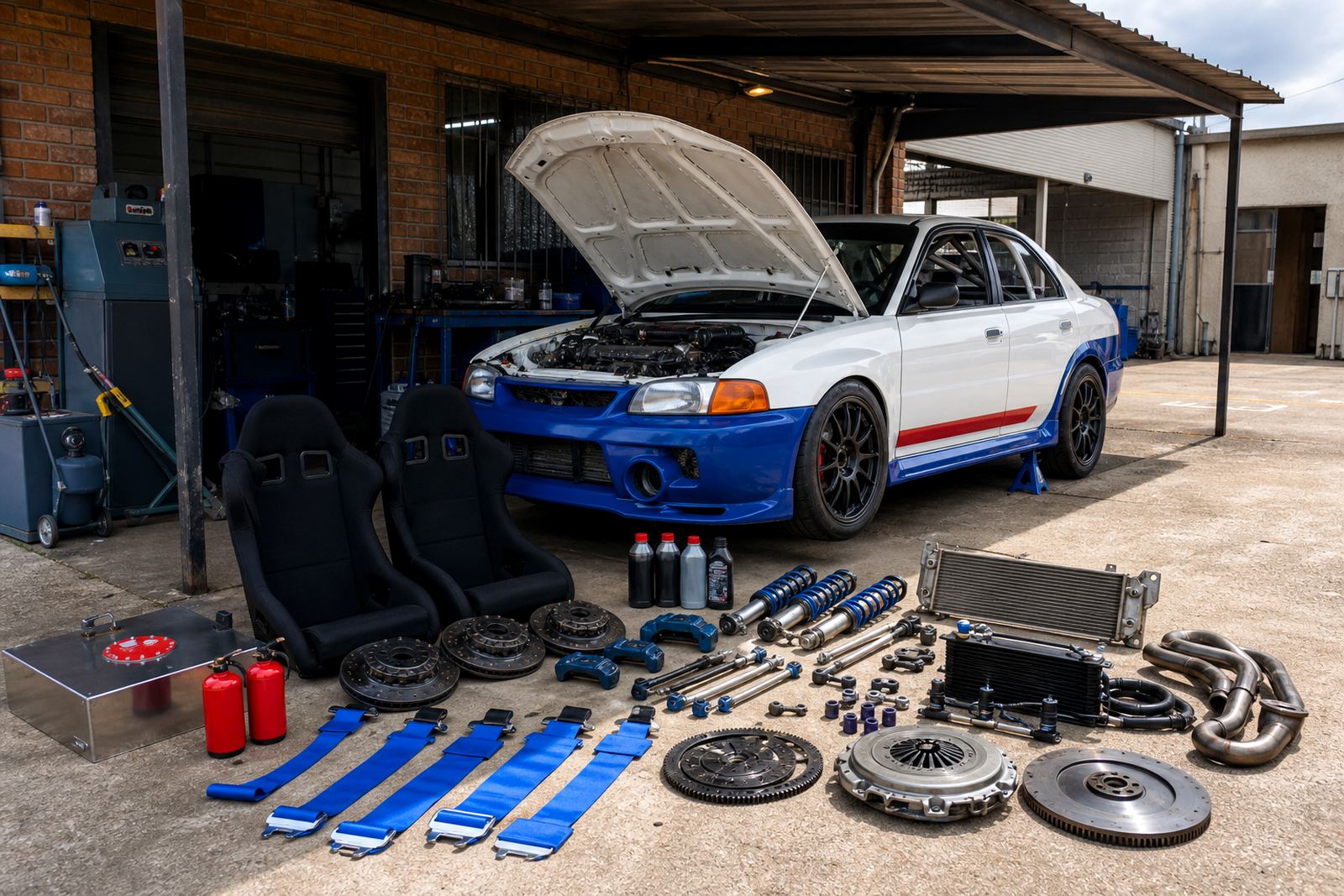
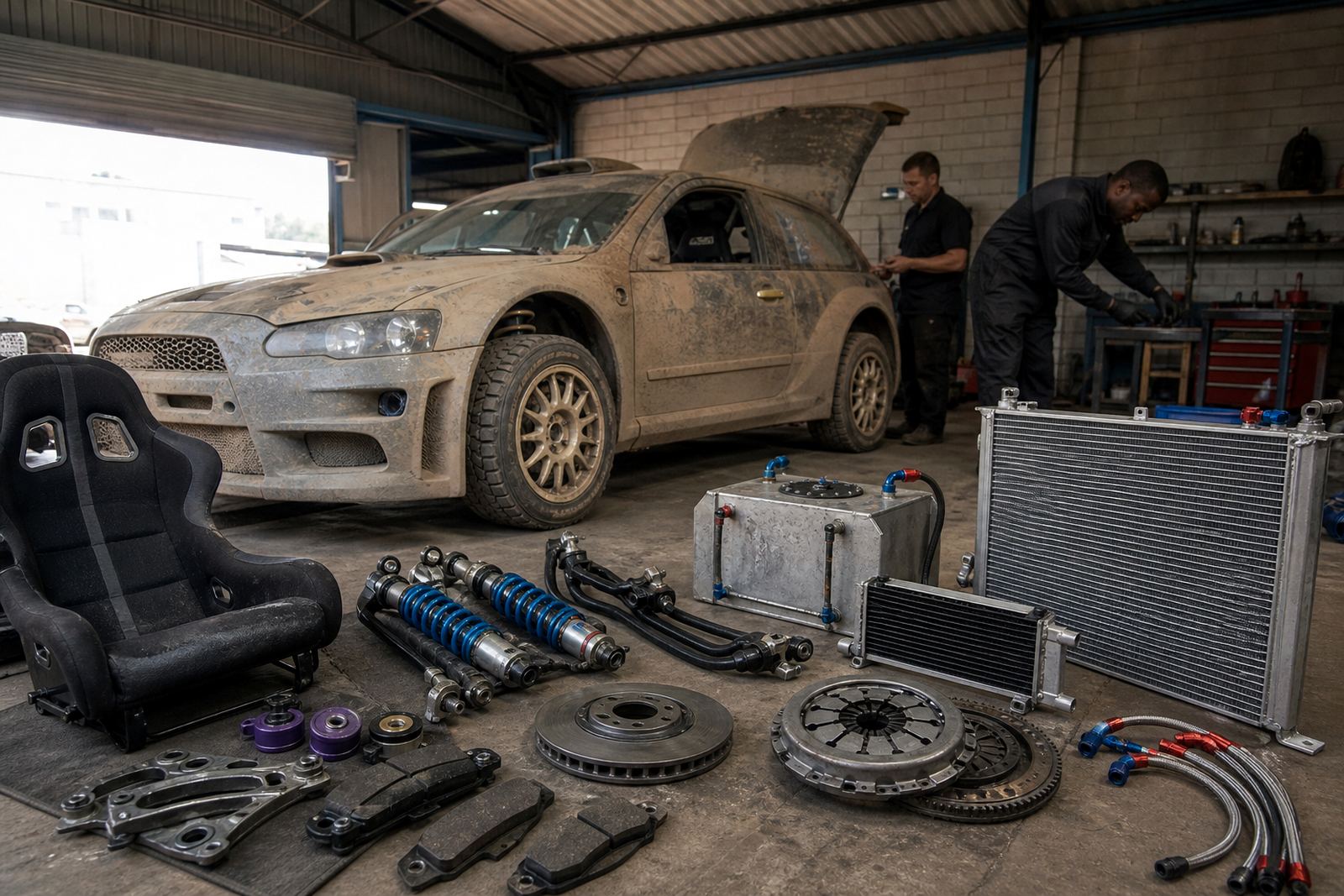
Most rally builds move through the same core items, even when the shell and engine are very different. The exact mix depends on class rules, tyre choice and the road sections between stages.
- Brake pads and fluid suited to repeated high load stops
- Coilovers or rally-tuned dampers with sensible spring rates
- Bushes that keep geometry stable under load
- Radiators and oil coolers for high ambient temperatures
- Seats and harnesses that hold the driver in place
- Roll cage fit advice for safety and access
- Fuel cell layout for weight control and safety
- Clutch and shift setup for rough, fast changes
Some cars also need harness bar checks, steering wheel clearance, or a rethink on pedal spacing. Those details sound small, but they matter when a driver is bracing through a fast left and still needs clean pedal travel.
How the layout gets planned before parts go in
Rally fitment is easier when the order makes sense. Cooling choices should not block service access, brake lines should stay protected from debris, and seats need to suit both the driver and the cage without putting the driving position too high.
We look at where the car will carry spares, fuel, tools and fire gear too. A hatchback used in club rallying may need a different layout from a sedan built for longer stage days. Midrand cars often arrive after a few seasons of mixed use, so the first step is usually checking what can stay and what needs to be moved, braced or replaced.
- Keep brake cooling and duct routes clear of wheel travel
- Leave room for quick inspection of hubs, lines and mounts
- Match seat position to the steering wheel and pedal box
- Check harness angles against the cage and seat shell
- Balance extra cooling against front-end weight
Common mistakes that cost time on the stage
One of the most common problems is fitting parts for looks or for circuit use, then expecting them to work in gravel. Another is chasing a very stiff suspension setup that feels sharp in the workshop but skips across rough ground. That sort of car may feel lively on a short test, then wash wide when the surface changes.
Brake fluid choice is another weak point. Old fluid can turn soft under repeated heat, and brake pads that sound fine on the road can fade badly when the stage is long. Cooling gets missed too, especially on cars that sit in traffic between events and then get pushed hard in hot weather. A rally build also needs proper restraint support, because a loose harness or poor seat angle can leave the driver fighting the wheel instead of the road.
Budget ranges that make sense in Rand
Rally budgets vary a lot, because some cars only need a basic reliability pass while others need a full safety and handling package. As a rough guide, a brake service with fluid, pads and bleeding can sit in the low thousands of Rand, while coilovers, bushes and alignment work move into a larger spend. Cooling upgrades, seats and harnesses add their own cost depending on fitment and fabrication time.
A more serious stage package, with cage advice, fuel system layout changes and a proper setup session, can run into the tens of thousands of Rand. The important part is to spend where the car gains control first. On rally cars that usually means brakes, cooling, suspension and restraint points before cosmetic extras or engine power.
- Entry-level refresh: pads, fluid, bleed and basic checks
- Mid-level package: suspension, bushes, alignment and cooling
- Stage-focused package: seats, harnesses, fuel layout and setup time
- Full rebuild support: cage fit advice, weight balance and layout planning
Setup days for drivers who need the car to speak clearly
Track setup and rally setup are not the same thing, and that difference shows up quickly once the car leaves tarmac. We use setup days to look at how the car sits, how it corners, and how the driver loads the brakes and steering on rougher surfaces. Corner weighting, alignment checks and suspension adjustments can change the car from nervous to predictable without chasing extreme settings.
For drivers in Midrand, Johannesburg, Pretoria, Kyalami, Durban, Cape Town and Port Elizabeth, the aim is practical: a car that feels settled, easy to inspect and ready for the next event. That usually means fewer surprises around heat, tyre wear and fast changes in grip, which is exactly where a rally car earns or loses time.