

Short runs punish weak brakes first
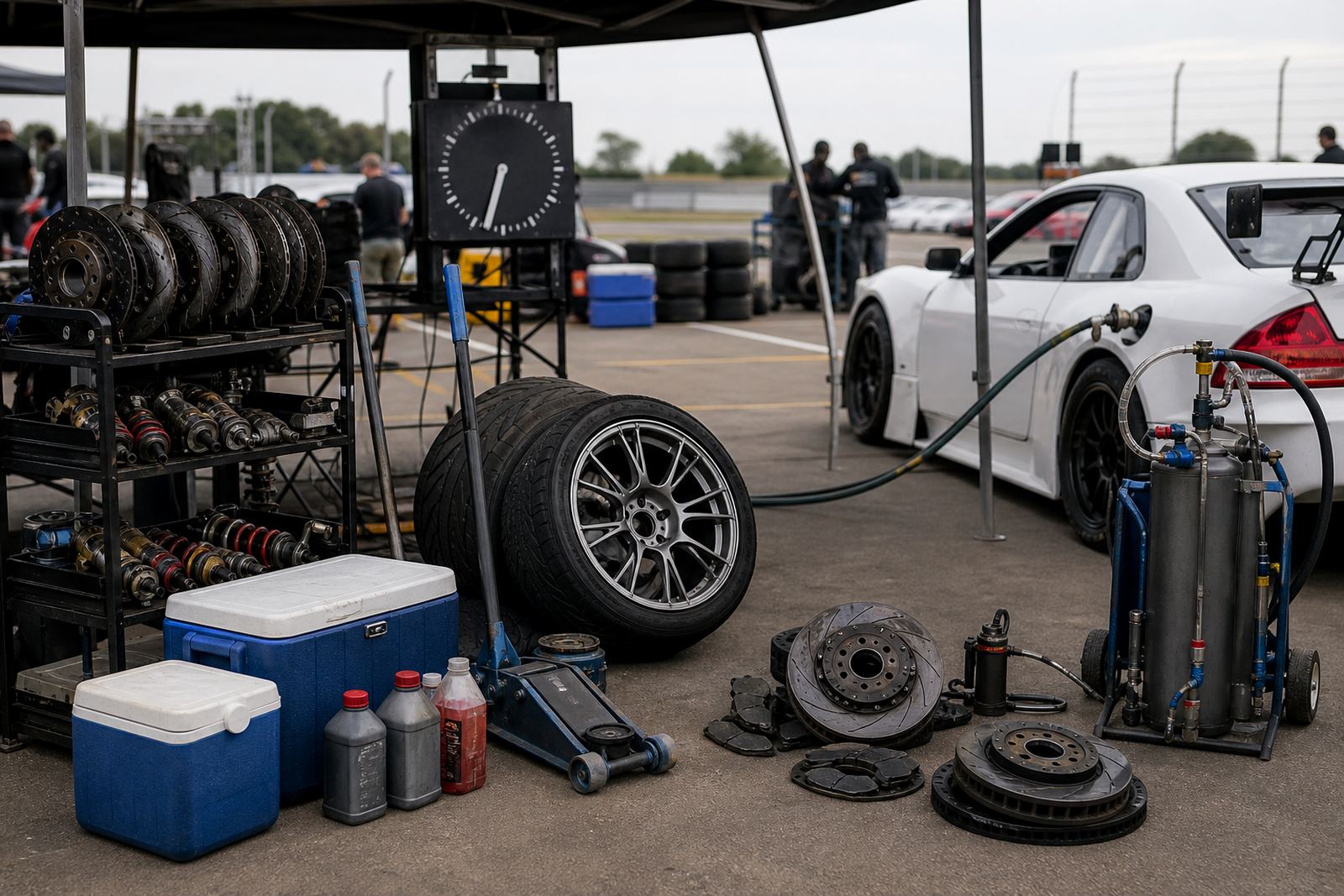
A hillclimb car rarely gets the luxury of long warm-up laps. The first strong stop can arrive early, then another after a tight corner, and the parts need to take that repeated heat without the pedal going long. For that reason brake upgrade planning usually starts with pad choice, fluid condition and disc size rather than the flashier changes.
We look at the car as a whole. A lighter hatchback, a rear-drive coupe or a stripped club car may all need different pad compounds, caliper clearance and duct routing. Brake bleeding is worth doing properly too, because old fluid can hold moisture and that shows up fast in a short timed run. On cars used in coastal towns like Durban and Cape Town, humid air and standing storage can make fresh fluid and clean bleed points even more important.
- Brake pads for fast bite and repeat heat control
- High temperature brake fluid for firm pedal feel
- Disc condition checks and caliper clearance checks
- Brake bleeding after any line or fluid change
- Brake cooling advice where the package allows it
Suspension that turns in without wasting tyres
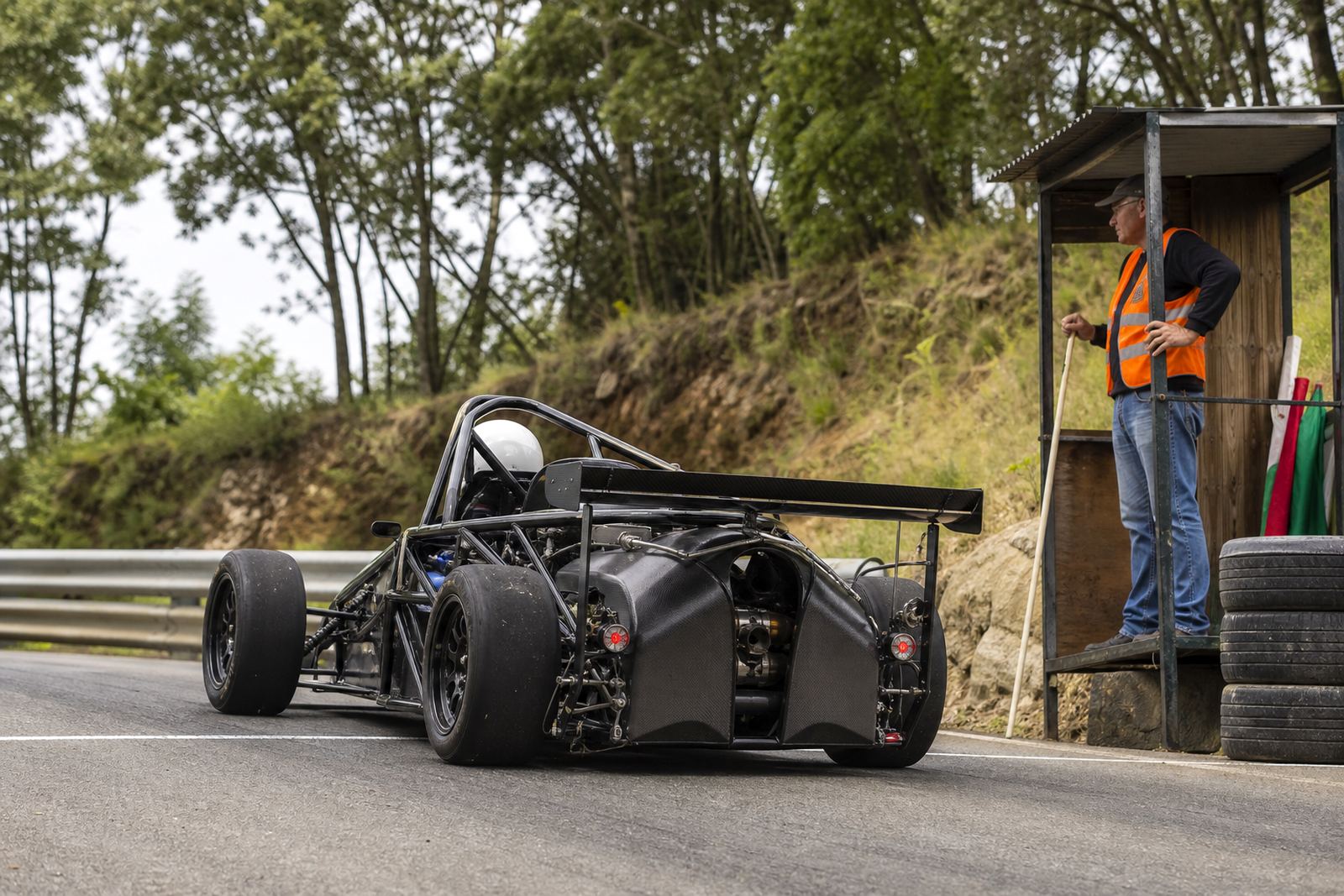
Hillclimb work is rarely about long-term tyre life. It is about front-end response, weight transfer and enough grip to make the car settle quickly between corners. Coilovers, bushes and alignment settings need to match the route, the surface and the driver. A car that feels sharp in the workshop can still push wide if the spring rates are mismatched or the ride height is too low for rough tarmac.
Our setup days often start with basic numbers. Camber, toe, corner weights and ride height tell a clear story before anyone touches a spanner. The right bushes can take slop out of the steering and rear axle location, while coilover setup can keep the platform stable over bumps and kerbs. For cars that run short climbs around Gauteng, small changes in front toe or rear balance can make the car easier to place on the road or closed course.
- Coilover setup for response and chassis balance
- Alignment checks for steering feel and tyre contact
- Corner weighting to settle cross-car balance
- Suspension bushes for reduced play under load
- Ride height checks for rough surface clearance
Cooling matters even on a short climb
People sometimes think a hillclimb is too short to worry about cooling. In practice, a few hard pulls in close succession can raise temperatures quickly, especially on turbocharged cars or engines that already run hot in traffic. Radiators, oil coolers and hose routing need to be planned with the full run in mind, not just one single burst of speed.
We check where air enters, where it can escape, and whether the front of the car still has enough opening after brake ducts or additional lamps are fitted. A poorly placed cooler can trap heat instead of shedding it. That becomes noticeable on steep runs in warmer inland towns such as Midrand, Centurion and Pretoria, where ambient heat and stop-start paddock time add to the load. If the car is turbocharged, oil control and intake positioning deserve attention too.
- Radiator choice for the engine size and heat load
- Oil cooler placement with clear airflow
- Hose routing that avoids rubbing and sharp bends
- Coolant level and cap checks before event day
- Space planning around fans, ducts and grille opening
Safety gear has to be fitted to the driver
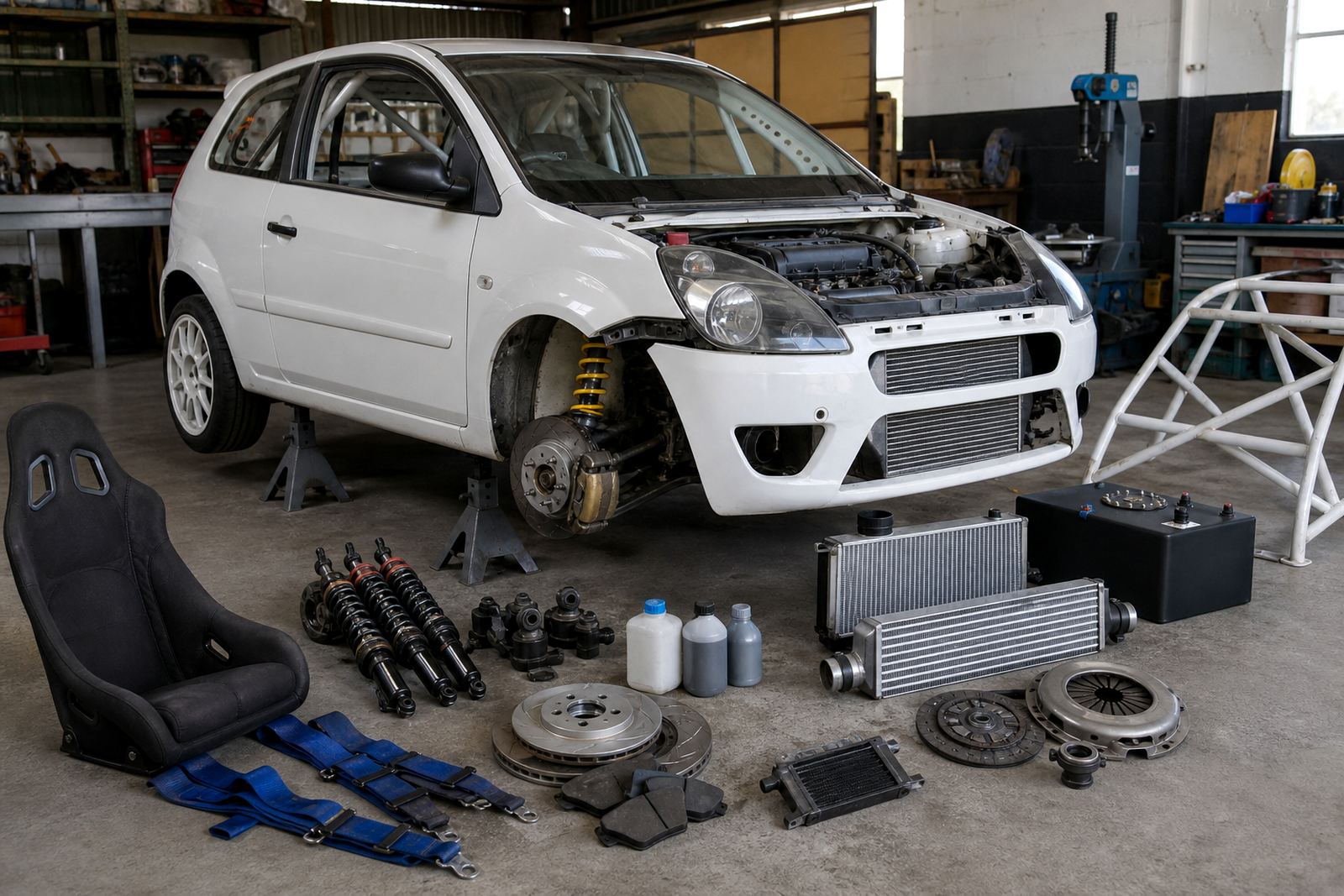
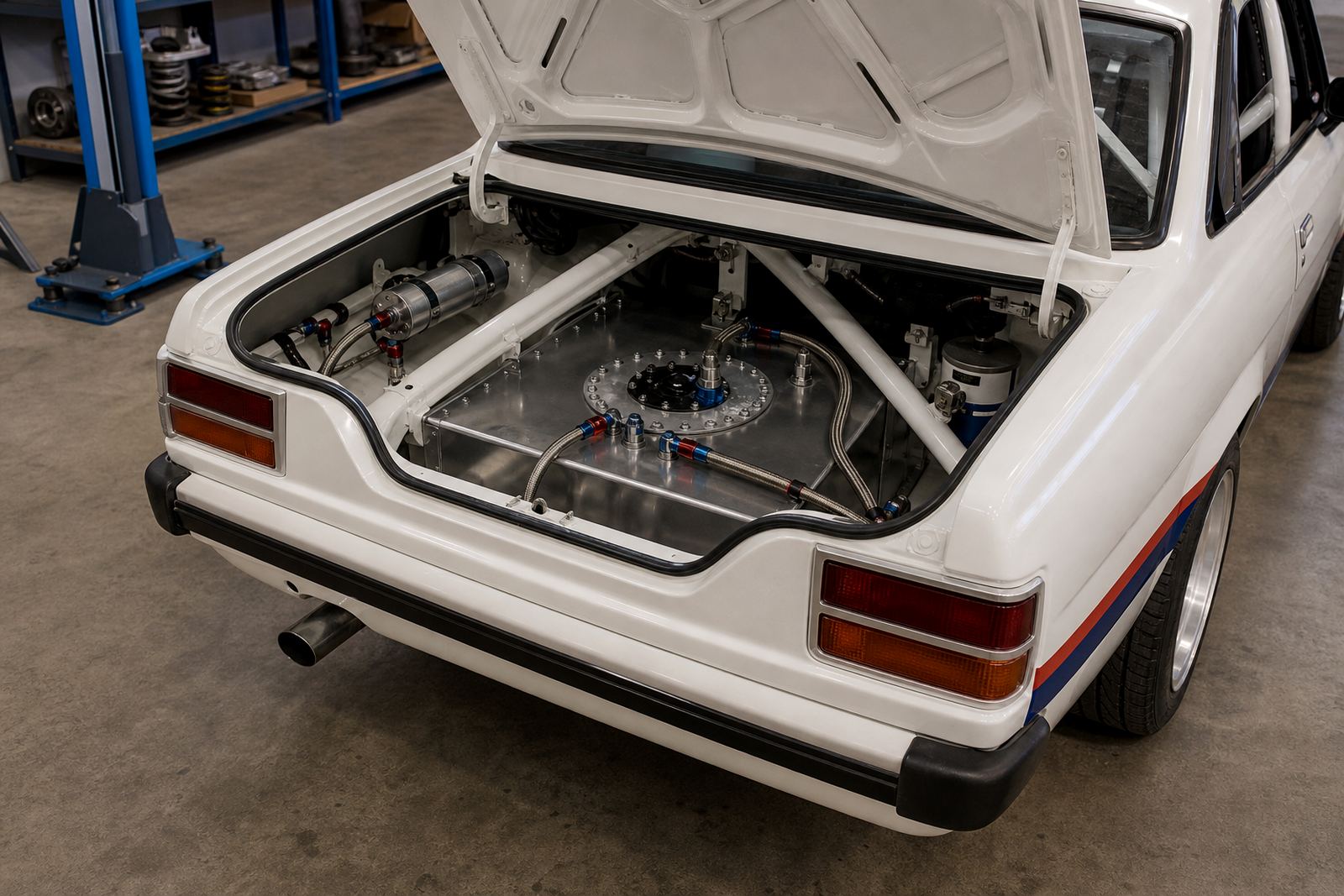
Hillclimb cars often carry the same safety questions as rally and club racing cars, even when the event is shorter. Seats, harnesses, roll cage layout and fuel cell placement need to fit the shell, the driver and the rules of the event. A seat that sits too high can spoil helmet clearance. Harnesses mounted at the wrong angle can make the belts work poorly in a sudden stop.
We give fitment advice around the actual car rather than a generic list. That includes seat position, harness height, fixed mounting points and how the driver gets in and out with gloves, helmet and sometimes a tight cage side bar. Fuel system layout matters too, especially where a cell must be secure and lines must avoid heat and moving parts. These checks are more useful before welding or trimming has started, not after the trim is already cut.
- Seat positioning for helmet room and pedal reach
- Harness fitment checks for correct belt angle
- Roll cage fit advice for headroom and side clearance
- Fuel cell layout checks for secure mounting
- Clutch and shift setup for cleaner gear changes
Common mistakes that slow a hillclimb car
The usual mistakes are not dramatic, they are practical. A car can be over-sprung and skittish, under-braked for the downhill section, or cooled well enough for one lap but not for the second. Another common problem is uneven corner weight after a parts change, or a steering setup that feels fine in the workshop but wanders under load. Even small fitment errors, like a brake line rubbing on a wheel or a harness anchor sitting wrong, can cause trouble on the day.
Budgeting in Rand depends on how much of the car is being refreshed and how much fabrication is already done. A focused brake and fluid refresh with setup checks can sit in the lower thousands. Coilovers, bushes and alignment work move the budget higher, while seats, harnesses, cage work and cooling changes can lift it again. A more complete hillclimb package often lands somewhere between R15,000 and R80,000, and serious builds can move past that when the shell, safety gear and cooling system all need attention together.
The better approach is to stage the work in the order that affects lap confidence first. Brake feel, suspension balance and cooling usually give the clearest gain before more expensive engine changes are considered.
Midrand workshop support for drivers across South Africa
Our Midrand base works with drivers from Johannesburg, Pretoria, Kyalami, Centurion, Durban, Cape Town and Port Elizabeth. Some cars arrive for a full setup day before a hillclimb weekend, while others come in for a smaller list such as brake bleeding, alignment checks or harness fitment checks. The job is to make the package suit the event, the driver and the surface, not to fit parts for the sake of fitting parts.
For hillclimb cars, the strongest result usually comes from a clear plan. Start with braking and temperature control, then suspension, then the safety and cockpit items that keep the driver secure and comfortable. That order keeps the spend sensible and avoids buying parts that do not suit the rest of the car.