

When the car still carries its history
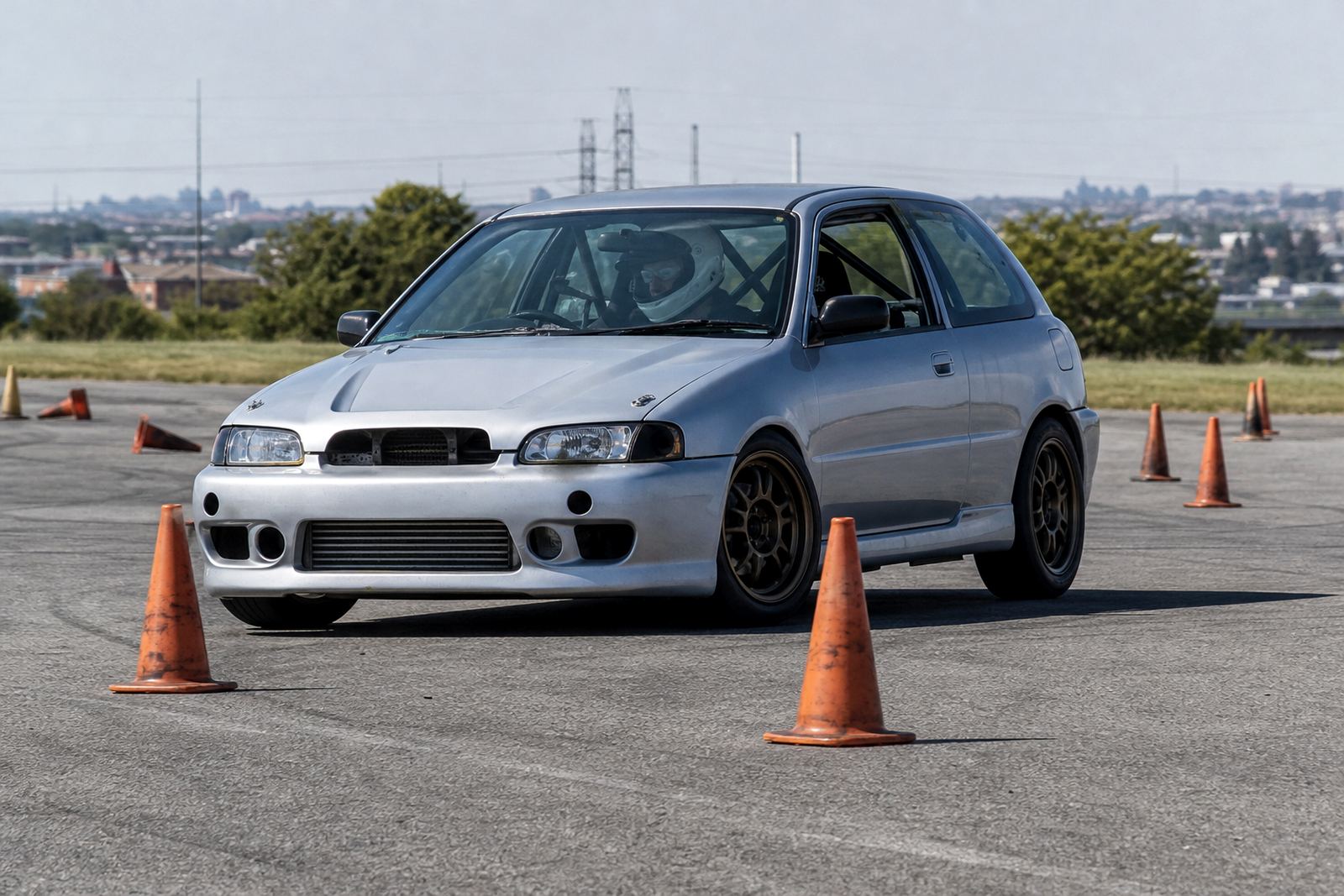
Historic race cars arrive with a very different brief to a modern club racer. The owner may want better braking, a safer seat position, firmer damping and cooler temperatures, but the car still has to look and feel period-correct where it matters. That means checking what can be changed without upsetting the shell, the trim or the character of the car.
We see these cars for hillclimbs, sprints, track days and club racing, often after years of mixed repairs. The common pattern is a car that drives well at low speed, then fades under hard use. Soft pedal feel, wandering geometry, heat soak around the engine bay and old harness points are all familiar issues on older chassis.
Often, the right upgrade is not the fiercest option. A historic car usually benefits from parts that are easier to inspect, easier to pad out, and less likely to put extra stress into mounts that were never designed for modern tyre grip. That is where sympathetic planning matters.
Parts that suit an older chassis without overworking it
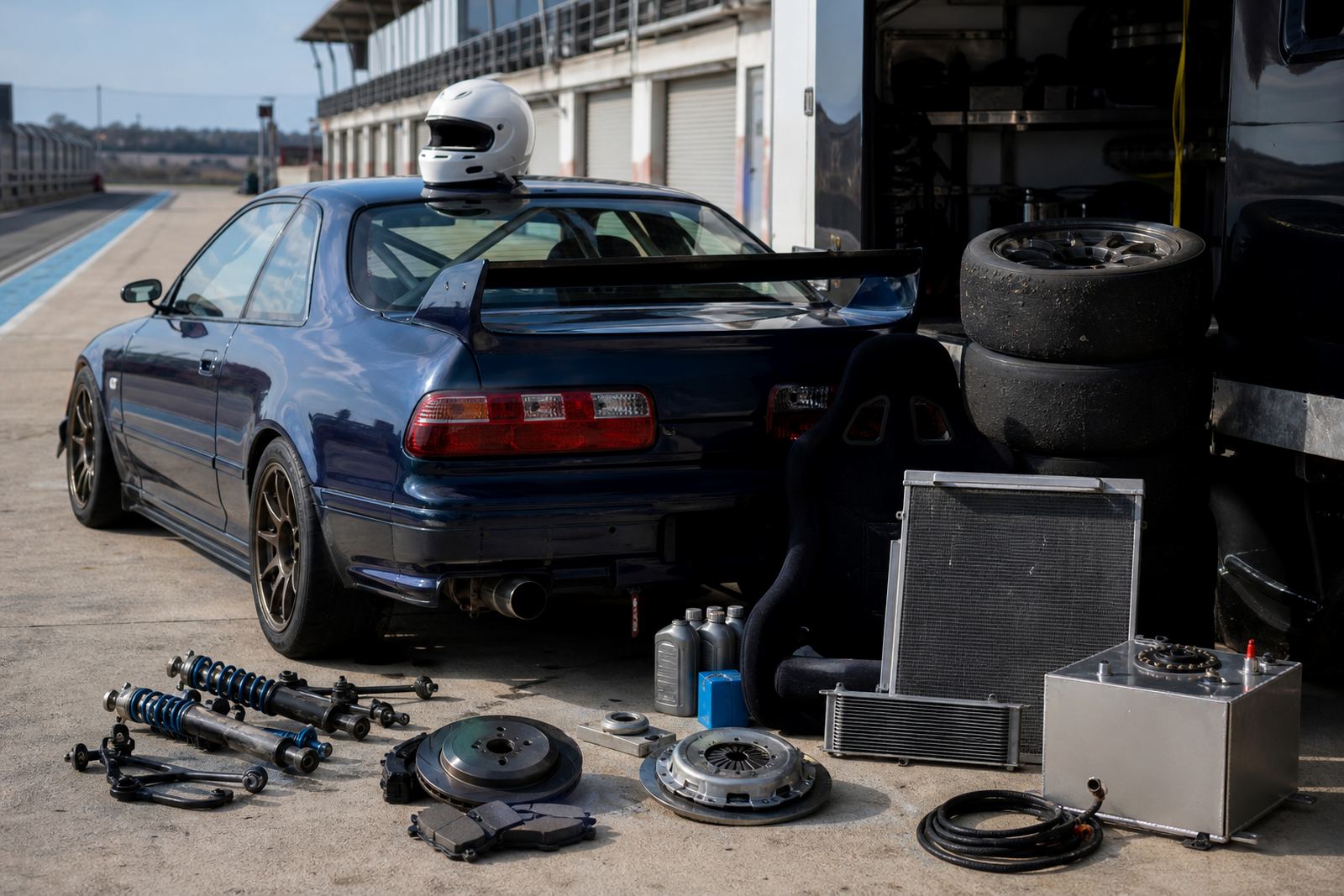
The right parts list usually starts with the basics. Brake pads and fluid need to match the pace of the car and the length of the session. A firmer pad can help, but it must still work when cold enough for pit lane and caravan towing to the venue, and it should be easy to live with on the road if the car still sees public roads.
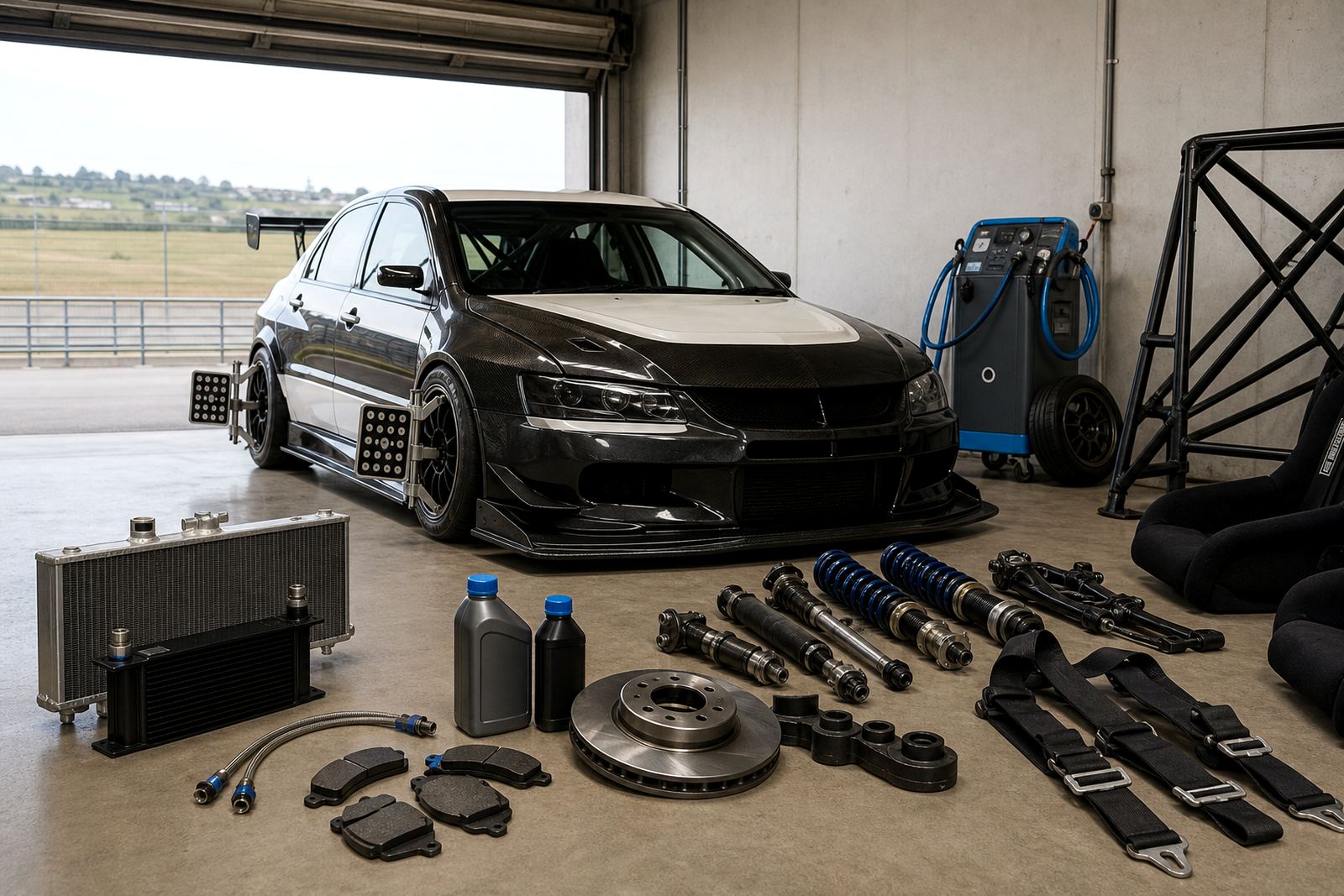
Suspension changes often start with coilovers, bushes and alignment checks, yet on historic cars the conversation is rarely only about lap times. Body roll, ride height, arch clearance and steering weight all matter. Some owners want the stance period-correct with only a small reduction in body movement, others want a sharper front end without making the car skittish over bumps. We also look at radiators and oil coolers where heat is the real limitation, plus seats, harnesses and roll cage advice when the interior needs safety work without looking overbuilt.
- Brake pads and brake fluid matched to track use
- Coilovers or spring and damper packages with sensible travel
- Replacement bushes where the old rubber has gone soft or split
- Radiators and oil coolers sized for hot laps and slow queues
- Seats, harnesses and roll cage fit advice for older shells
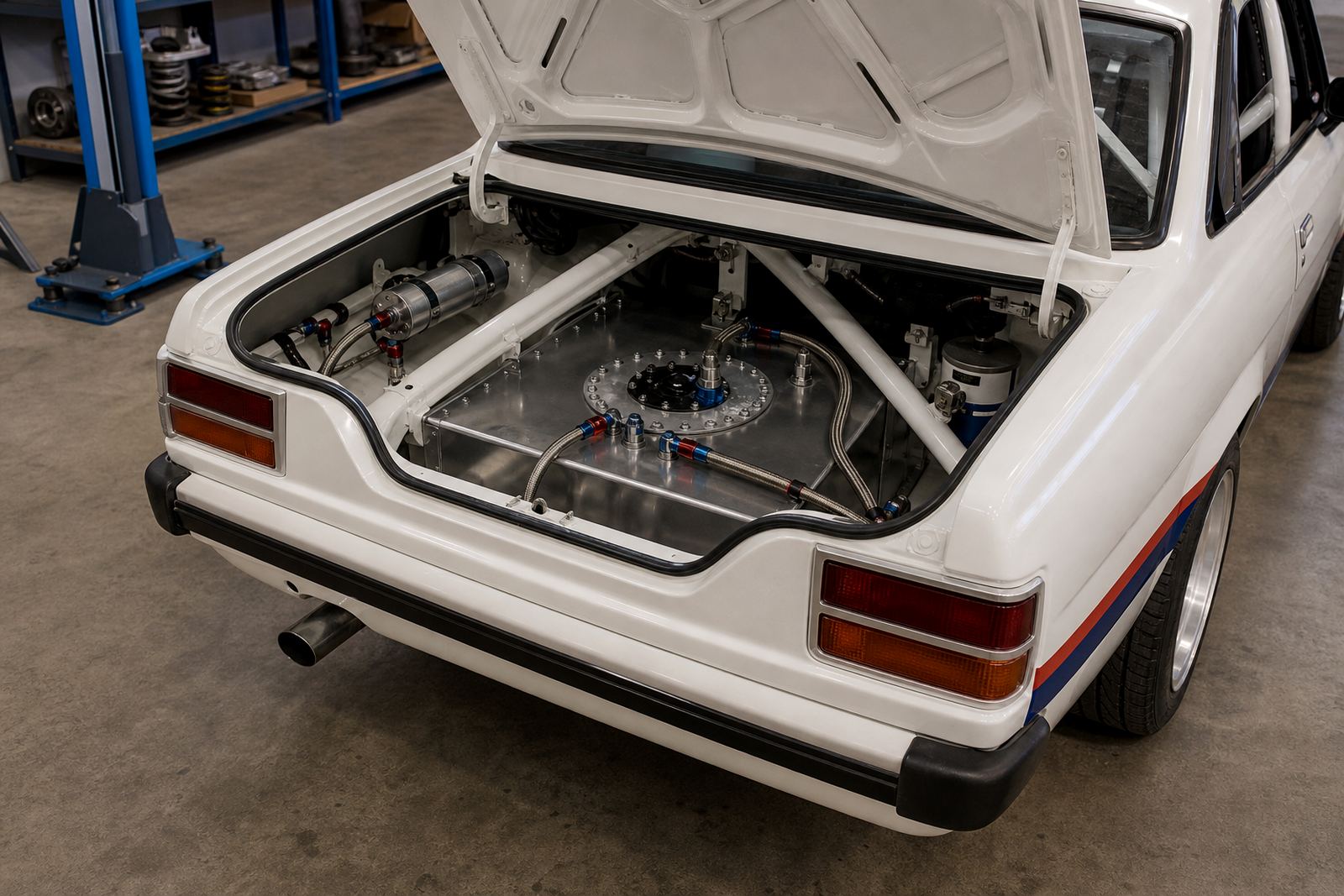
- Fuel cells, clutches and shift setup where the drivetrain is tired
Layout decisions that save time and spare parts
Historic race cars often lose time in awkward places. Access to bleed screws, fuel lines, fasteners and service points can be poor, especially after decades of small changes. Before parts are ordered, the car needs a proper look at clearance around the exhaust, brake lines, steering arms and gearbox tunnel. If a change makes a routine job harder, it tends to cost more in the long run.
Our layout advice usually starts with the items that affect the whole package. A seat that sits too high can upset helmet clearance and cage alignment. A harness mounted at the wrong angle can pull across the shoulders rather than hold the driver in place. Fuel system layout has to suit the tank position and the way the car is filled, while the cooling system should let air move through the nose and out of the bay without trapped heat hanging around.
On older cars, one small compromise can affect three other jobs. A slightly different seat mount may change steering reach, pedal feel and harness routing. That is why a historic build often needs decisions made in sequence, not one part at a time.
What usually goes wrong on these cars
The most common mistake is fitting modern hardware without checking the rest of the chassis. Fresh pads on tired hoses, or stiffer dampers on soft bushes, can make the car feel odd rather than better. The second mistake is chasing a low ride height and losing usable travel. Historic cars often need more ground clearance than a modern racer, especially where kerbs, ramps and trailer loading are part of the routine.
Another problem is heat. Older engine bays can trap hot air because the radiator, shrouding and oil cooler were never designed for repeated hard running. A car may look fine in the paddock then climb in temperature after a few laps. Clutch and shift issues also show up often, usually because the car is making more torque than the original linkage or pedal parts were meant to handle. It is not always broken, sometimes it is simply tired.
- Using one upgrade to hide three worn systems
- Over-lowering the car and reducing suspension travel
- Ignoring seat, harness and steering wheel position together
- Running an old cooling system with no airflow plan
- Choosing parts that are hard to inspect or service later
Budget bands for sensible historic updates in Rand
Historic car work can stay modest or become detailed very quickly, so the budget needs to be clear from the start. A basic brake refresh with pads, fluid and bleeding usually sits in the lower bracket. A more involved package with hoses, brake balance checks and better cooling support moves higher. Suspension work with coilovers, bushes and alignment is a different step again, especially if the car needs corner weighting and repeated setup days.
For many owners, the first useful spend is in the range of R5 000 to R15 000 for one system that is clearly holding the car back. A broader chassis package, including brake, suspension and cooling work, often lands between R18 000 and R45 000 depending on how many parts need replacement. Safety work such as seats, harnesses, mounting hardware and roll cage advice can take the total further, especially if the shell needs extra fabrication or careful fitment checks.
If the car is rare or the trim is valuable, the bill is often less about the part price and more about preserving the original hardware where possible. We normally build the plan around what must change now and what can wait until the next phase.
Track day support for old cars that need measured changes
Track setup days are useful on historic cars because they show the effect of each change in real driving, not just in the workshop. Small adjustments to tyre pressures, camber, toe, brake balance and damping can transform a nervous car into one that is calmer under load. The point is not to modernise the car out of shape. It is to make it feel settled, safe and readable for the driver.
We work with drivers from Midrand, Johannesburg, Pretoria, Kyalami, Centurion, Durban, Cape Town and Port Elizabeth who need practical help on older race cars. Some want a car that can do a few events a season without drama. Others want a competitive setup with serviceable parts and a careful eye on originality. Either way, historic cars reward patience, accurate measurements and parts that can be maintained without guesswork.
When the plan is clear, the car gets easier to live with. That means fewer surprises at the circuit, cleaner service intervals and a better chance of keeping the car true to its era while still being quick enough to matter.