

What a private track car usually needs first
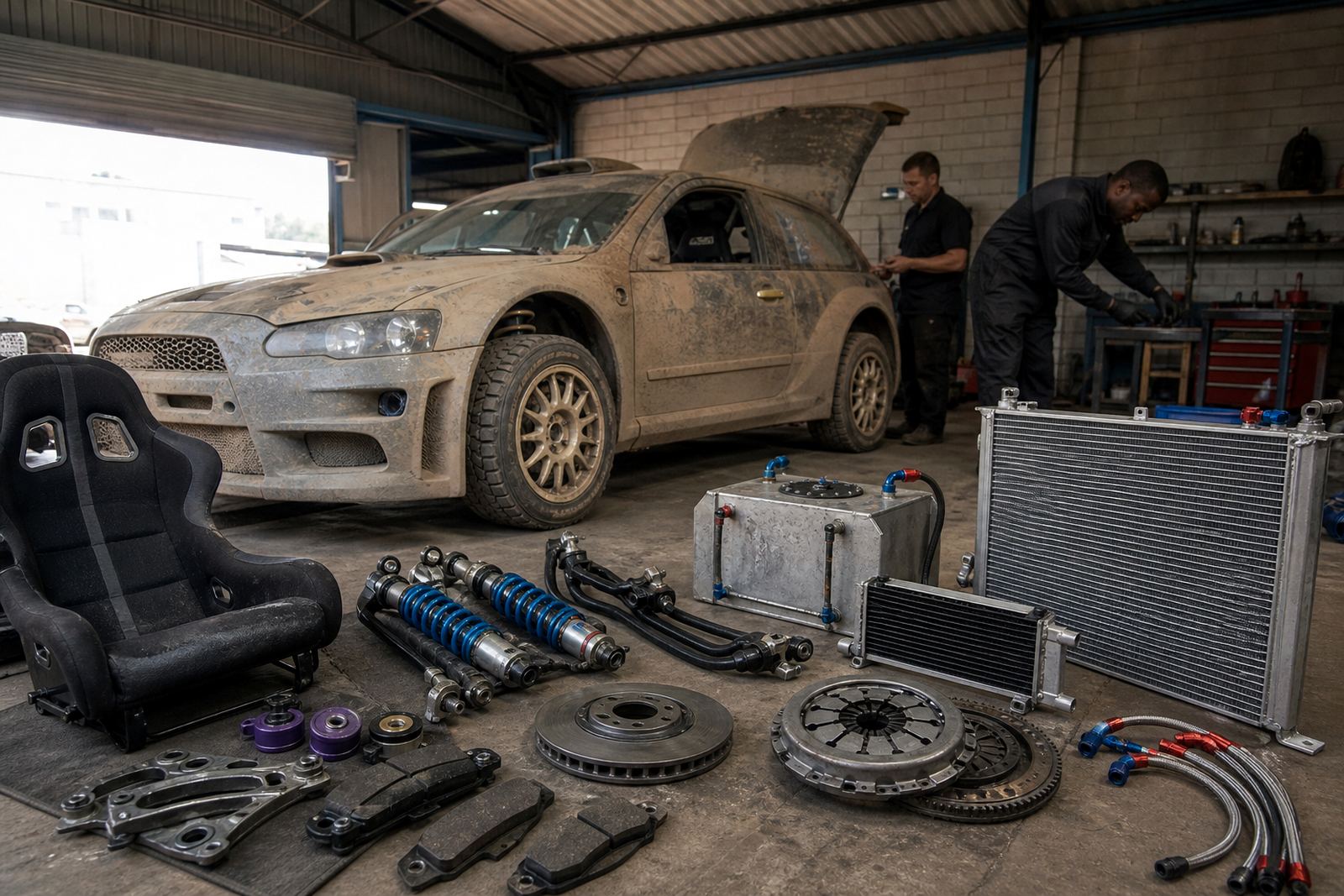
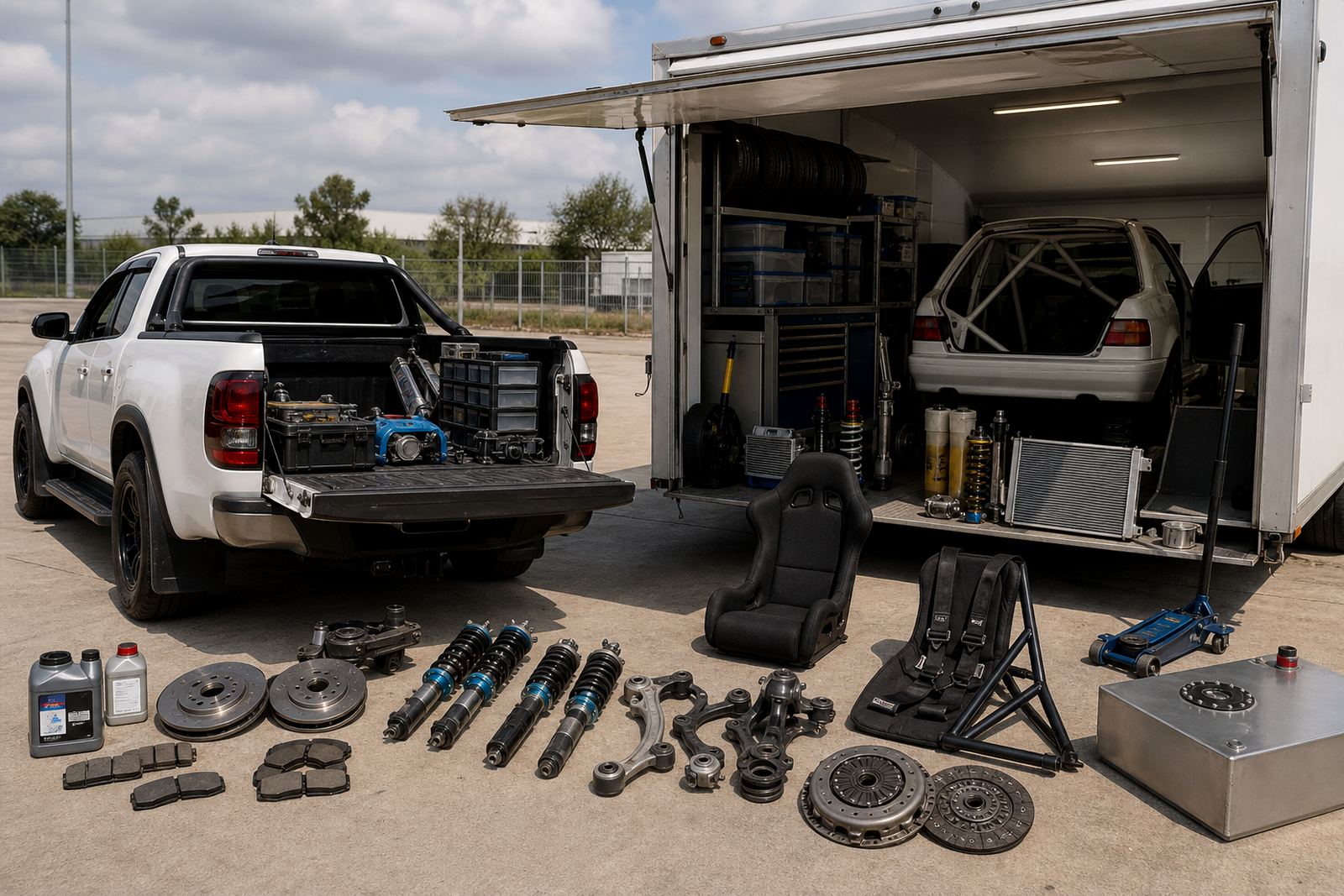
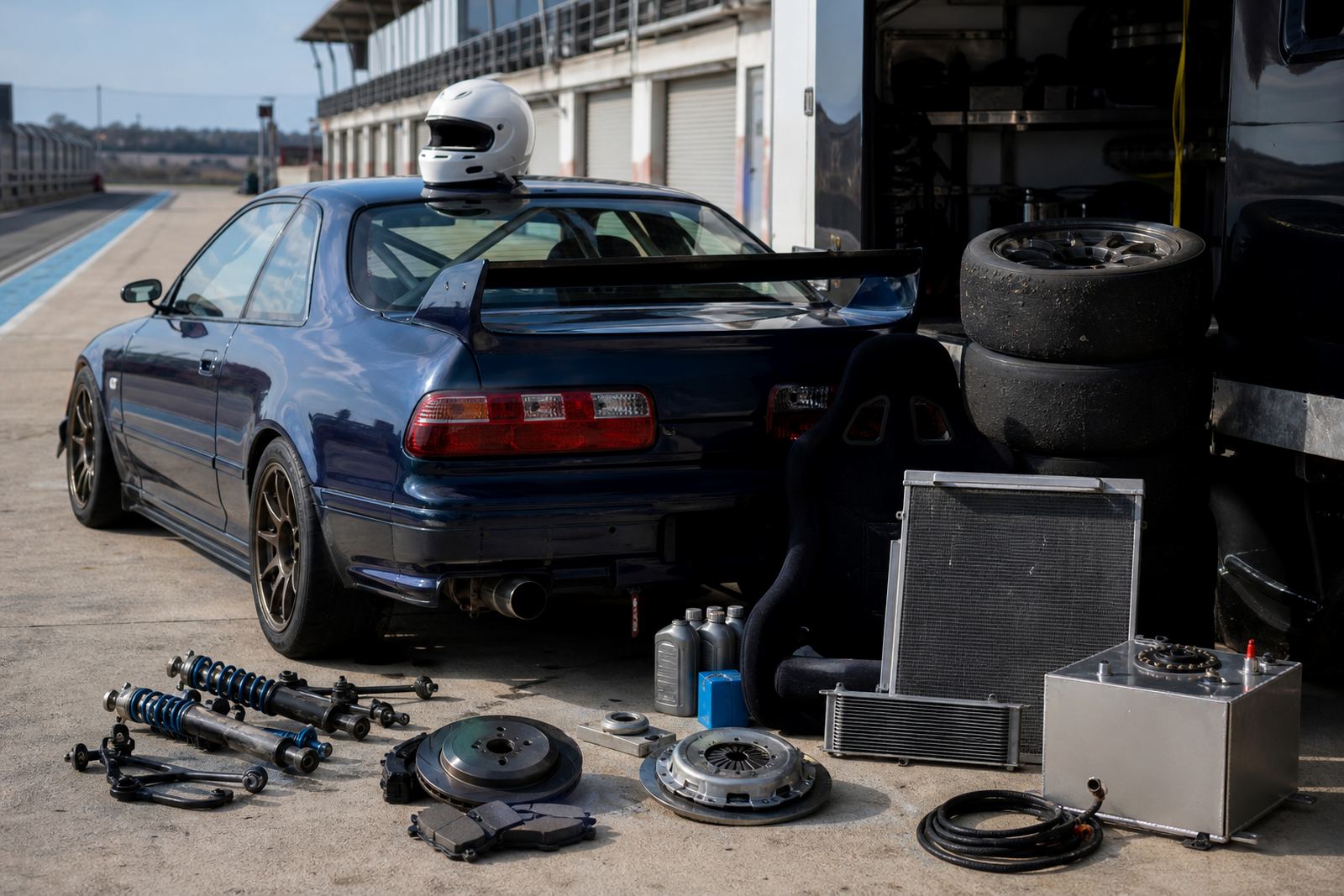
A track day car often arrives with good power but weak stopping control, soft damping or cooling that works for a short burst and then runs hot. The first job is to match the car to repeated laps, not a single quick run, so the brake package, fluid, pads and tyre support all need to work together.
We look at the real use pattern: short sprints, ten lap sessions, mixed tarmac and the driver’s confidence under heat. That usually points to stronger pads, fresh high temperature fluid, firmer suspension parts and an honest check on whether the current cooling system can keep water and oil temperatures in range.
Brake heat is where most track cars start to fade
Brake upgrades for track use are not just about bigger parts. Pad compound, disc condition, fluid quality and ducting all matter, and a car can feel poor if one item is out of step with the rest. Repeated lapping brings out soft pedals, taper wear, boiling fluid and long stopping distances very quickly.
- Brake pads suited to higher temperatures and repeat stops
- Brake fluid with a higher boiling point for track use
- Disc inspection for cracks, lip wear and uneven faces
- Bleeding that removes trapped air before the event
- Rear brake balance that still feels stable under trail braking
For many club cars the budget sits around Rand 3 500 to Rand 12 000 for a serious brake refresh, while a fuller package with lines, fluids, pads and extra parts can move into Rand 15 000 to Rand 35 000 depending on the chassis and parts chosen.
Suspension that keeps the tyre working through the session
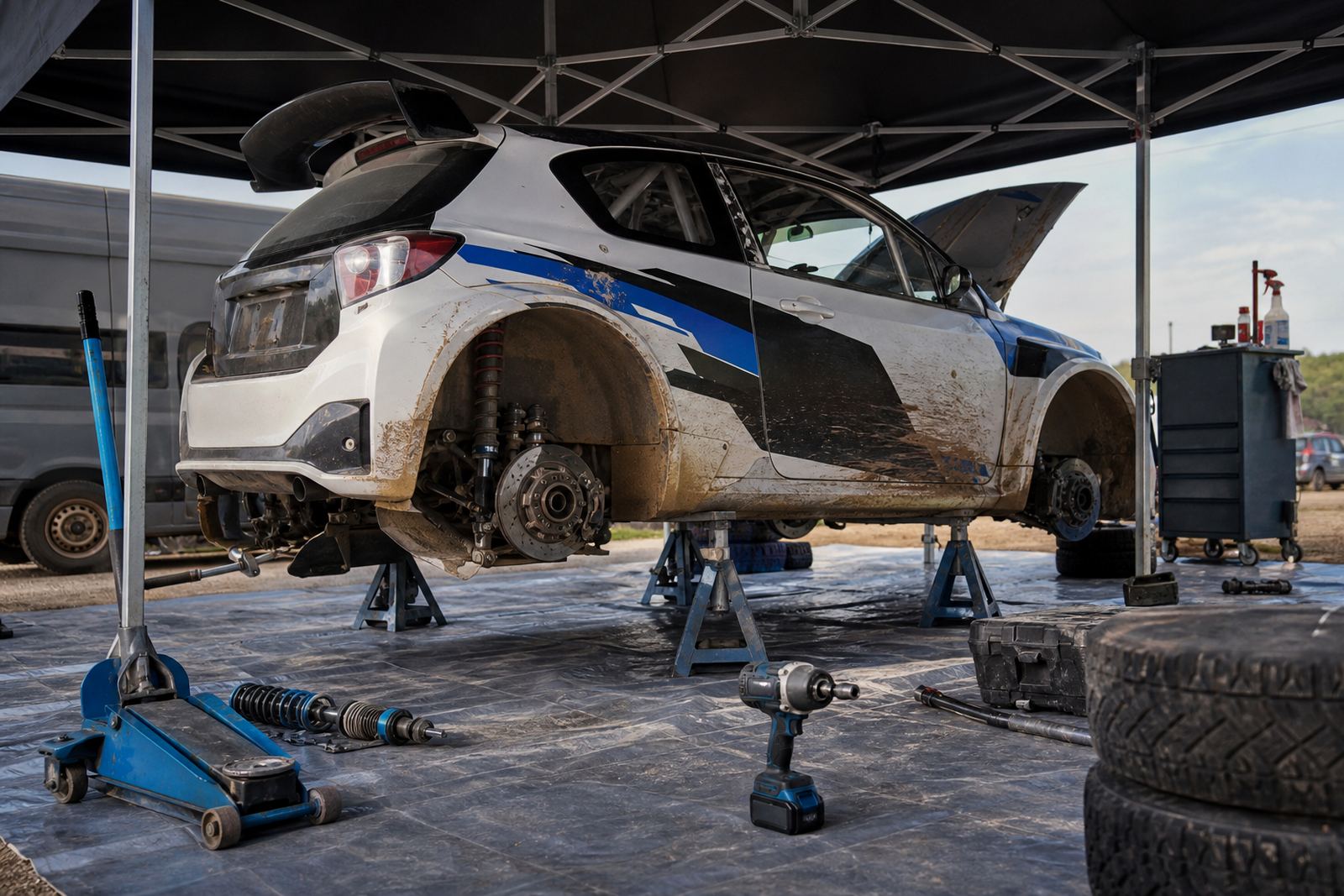
Track setup is not only about dropping the car lower. Coilovers, bushes and alignment need to keep the tyre flat on the tarmac and predictable through corners and kerbs. Too much stiffness can make a car skate over bumps, while too much softness lets it roll onto the outside shoulder and chew up the front tyres.
We usually talk through ride height, spring rate, damper range, camber and toe in plain terms. Corner weighting can help a car feel calmer left to right, especially on layouts with faster direction changes or cars that already carry uneven driver weight and fuel bias.
- Coilover setup for the intended circuit pace
- Alignment checks after any major suspension change
- Corner weighting where the car needs better balance
- Bush inspection for slack that shows up under load
- Steering response that stays clean on turn in
Cooling changes that keep the car honest on lap four
Track day cars often run fine on the first lap and then start to drift on temperatures once airflow, ambient heat and intake temps build up. Radiators, oil coolers and hose condition matter more than many owners expect. A neat duct path and a proper bleed can do a lot, but a tired system will still struggle if the core size or fan setup is too small for the engine.
On turbocharged or heavily worked engines, oil temperature control can be just as important as coolant temperature. If the oil climbs too far, the car may still run, but it will lose consistency and the driver will feel that as a softer, less accurate car by the middle of the day.
- Radiator condition, cap rating and hose ageing
- Oil cooler sizing for long sessions and hot weather
- Coolant bleed points that help remove trapped air
- Heat shielding around vulnerable lines and fittings
Seat, harness and cage advice that suits the driver
For track use, the driver should sit low enough to control the car without bracing through the steering wheel. Seat position, harness fitment and cage layout need to work together, not fight each other. A good seating position helps with brake feel, steering precision and how long the driver can stay relaxed during a session.
We also check that the harness angles and mounting points make sense for the seat and the shell. If a cage is planned, the fit advice needs to consider entry and exit, helmet clearance and whether the car is used only on track or still sees street driving between events.
- Seat height and leg reach for consistent pedal pressure
- Harness geometry that sits correctly on the shoulders
- Cage fit advice for driver clearance and access
- Safety gear choices that suit a private track car
Spending wisely on a track day car, and where the seconds leak away
A track build can drift in cost if parts are bought in isolation. The cheapest mistake is usually a mismatch, such as sticky pads with old fluid, stiff springs with no alignment work or cooling parts added without checking airflow and hose routing. Those cars may look ready, but they feel untidy once the pace goes up.
Typical spend for a sensible private track car setup can sit around Rand 8 000 to Rand 20 000 for a careful starter package, Rand 20 000 to Rand 45 000 for a more complete brake, suspension and cooling package, and more where the car needs a full safety and drivetrain refresh. The useful move is to spend in the order that protects the session first, then improves the pace.
Common faults include old brake fluid, mismatched pad compounds, soft bushes, lazy alignment and a fuel system that was fine for road use but not for sustained cornering. Those issues show up under heat and load, not in the workshop bay.