

What a tar rally build asks of the car
A tar rally car lives in a narrow window between road use and hard competition use. The braking system has to stay predictable when the surface changes, the suspension needs to keep the tyre loaded over bumps and patches, and the cockpit layout has to let the driver work cleanly under pressure. On sealed stages, small mistakes show up fast, especially when the car is carrying speed into long braking zones or turning in over uneven tar.
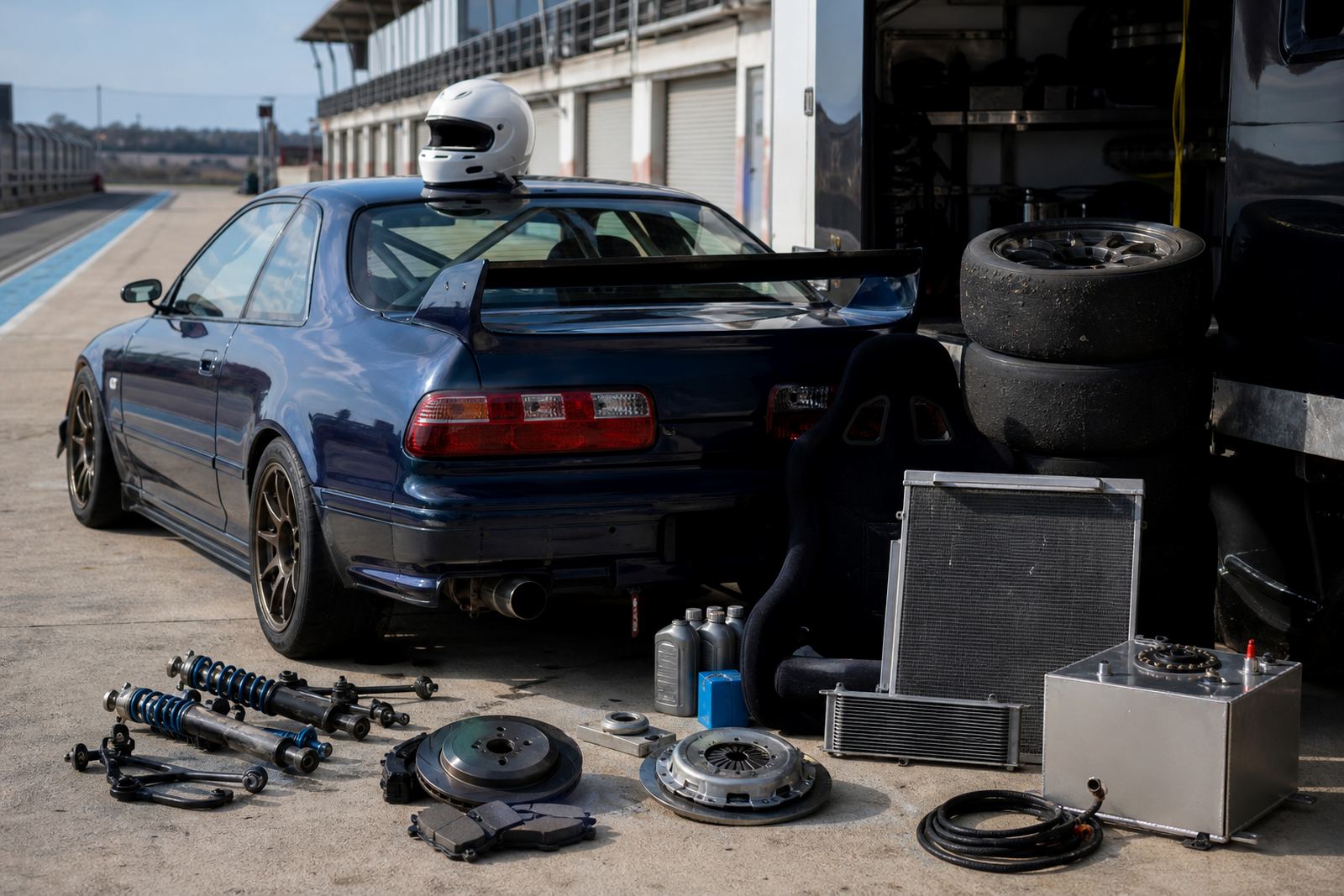
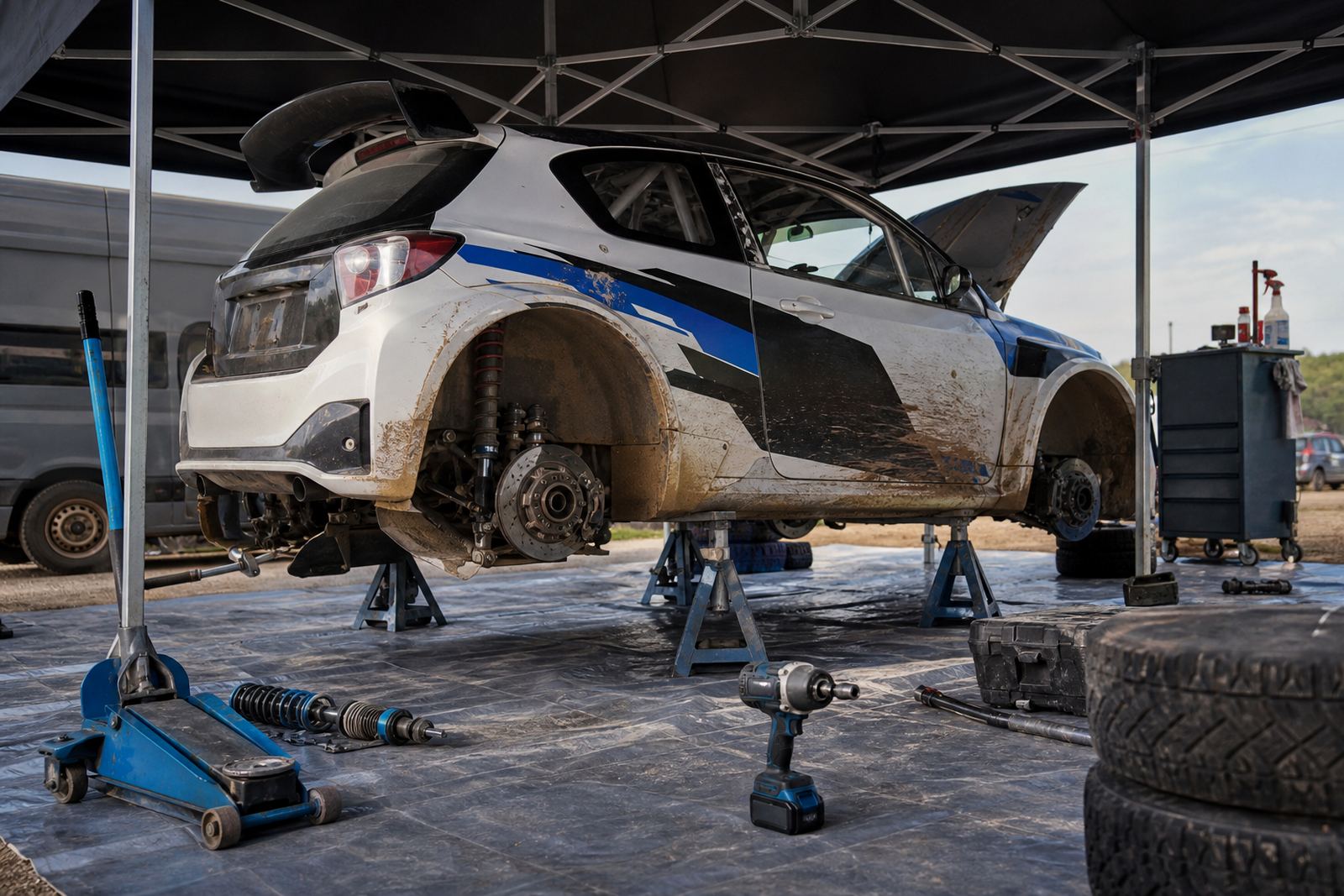
Most builds start with the basics that affect feel every lap. Brake pads, fluid and hoses need to suit repeated heat cycles. Coilovers or damper upgrades need a sensible spring rate, not just a firmer number. Bushes, alignment and corner weights matter because a car that feels settled in the workshop can still move around badly once it is hot on the stage.
Parts that usually sit on the tar rally shortlist
We normally see tar rally requests built around a few core groups of parts. The exact mix changes with the car, the class and how much road distance the car still has to cover between events. Some teams want a sharper front end and stronger pedal feel, while others are trying to protect the drivetrain and keep temperatures under control on longer stages.
- Brake pads and high-temperature fluid for firmer, more repeatable pedal feel
- Coilovers, springs and top mounts for better control over body movement
- Poly or rubber bushes where the car needs less slop without becoming harsh
- Radiators and oil coolers where heat build-up is a real issue
- Seats, harnesses and roll cage fit advice for driver support and safety layout
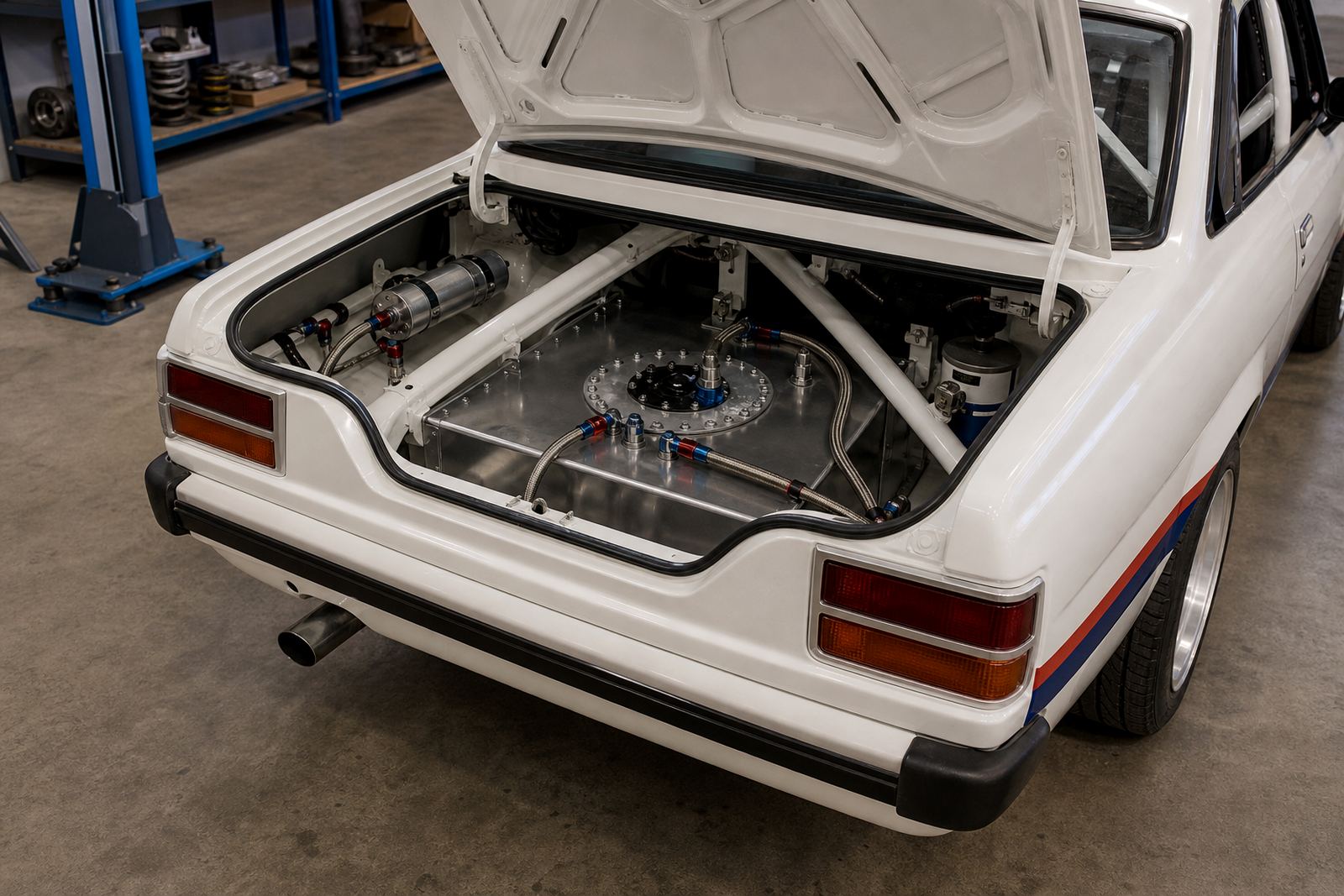
- Fuel cells, lines and clutch parts where the event schedule puts stress on the system
Not every car needs every item. A well sorted brake package and a careful alignment can do more for a mid-range build than a long shopping list with no plan behind it.
Planning the layout before buying parts
The best results usually come from looking at the car as a system. If the front brake package is bigger but the rear balance is ignored, the pedal can feel awkward. If suspension is stiffened without checking ride height and damping range, the tyres can skip instead of bite. If seat position is rushed, the driver may sit too high or too far from the wheel, which affects confidence and control.
For tar rally work, we talk through the car’s current setup, the event type and the sort of surface the driver expects. That helps with choices such as brake bias, pad compound, fluid spec, wheel clearance, spring rate and cooling capacity. It also avoids buying parts that fit the car on paper but clash with the way the car is actually driven.
- Check wheel and caliper clearance before changing brake hardware
- Measure the current seat and harness position before refitting anything
- Match spring and damper changes to the tyre and surface, not just the power figure
- Look at heat management early if the car runs long stages or repeated runs
Brake feel, compliance and driver confidence
Tar rally braking is about more than stopping distance. The driver needs a pedal that stays stable, a pad that comes in consistently and fluid that holds up when the brakes are getting hot. On sealed road events, compliance matters too, because the car may still need to pass scrutineering and remain practical to move around between stages and service points.
We often see issues caused by mixed components. A hard pad on tired discs can feel numb in the first part of the stroke. Old fluid can turn a promising setup into a long pedal after a few heavy stops. Poor bleed procedure can leave a car feeling uncertain even when the parts themselves are suitable. The same goes for harness fitment and seat position, if the driver is bracing themselves in the seat, they cannot work the pedals properly.
A careful brake bleed, good fluid choice and sensible pad match can give the driver a calmer car without chasing unnecessary complexity.
Common mistakes that cost time on tar stages
Some of the mistakes are simple and expensive. People fit stiff suspension and then leave the alignment untouched. Others upgrade the brakes but keep old hoses, tired fluid and worn discs. A few build for peak grip and forget that the car still needs to travel on public roads to and from the venue, so the setup ends up unpleasant and nervous.
A frequent error is to alter too many things at once. That makes it hard to tell whether the improvement came from the brakes, the damping, the ride height or the tyre choice. A staged approach usually works better. Set the seating, belts and driving position first, then sort the braking feel, then move into suspension and cooling once the baseline is clear.
- Do not fit a brake pad purely for its name or reputation
- Do not lower the car until clearance, geometry and bump travel are checked
- Do not ignore cooling when the engine is already working hard on tar
- Do not guess on harness angles or seat location
Practical Rand budget ranges for getting started
Budgets vary by car, class and how complete the current setup already is. A focused brake service, fresh fluid and setup advice can sit in a modest range, while a full suspension, brake and safety refresh moves up quickly. The useful approach is to spend where the car is losing control, not where a part simply looks race ready.
For a basic tar rally refresh, many teams begin around R4 000 to R12 000 for brake consumables, bleed work and small fitment items. A more serious setup with coilovers, alignment checks and corner weighting can sit from roughly R12 000 to R35 000, depending on what is already fitted to the car. Safety and cockpit changes such as seats, harness checks, roll cage fit advice and fuel system layout work can add more, especially where the car needs careful fabrication or multiple parts at once. Cooling upgrades and clutch or shift work can push the total higher again.
That range is not a promise of a fixed bill. It is a practical way to think about the build before parts are ordered and the car is booked into the workshop.