

Sprint cars need parts that stay predictable
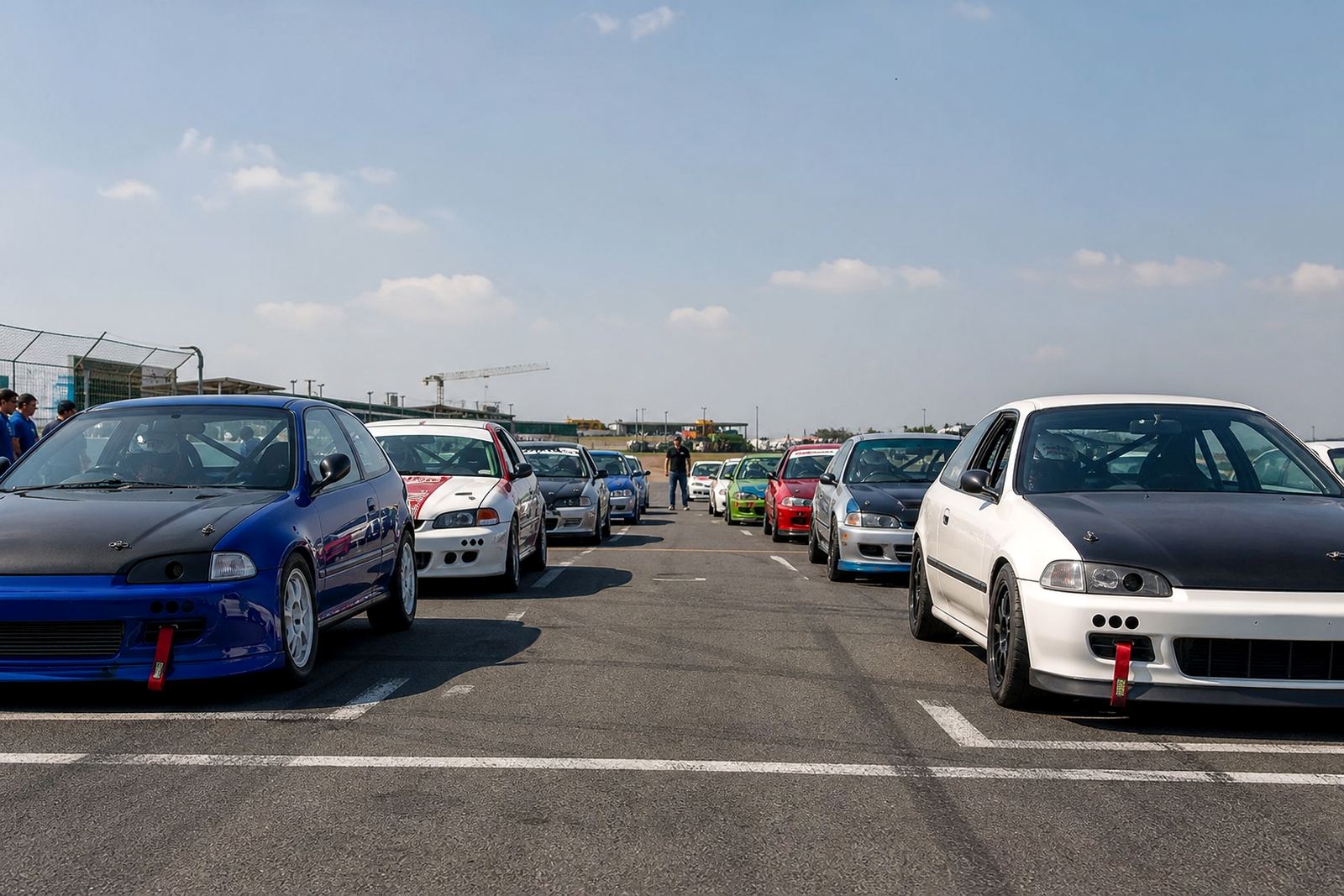
Club racing usually asks for the same things every weekend: stable braking, repeatable turn-in, and parts that can be checked without turning the car into a workshop project. A sprint car does not need every upgrade at once, but it does need the right order of work so the money goes where the lap time is actually won.
On cars running short races, we often start with brake pad compound, fluid choice, pedal feel and tyre support through suspension. After that comes cooling, seat position and harness fitment, then the smaller adjustments that make the car easier to drive over a full season. In Midrand and the Gauteng circuit scene, that sequence matters because many cars see street miles, trailer miles and track miles in the same month.
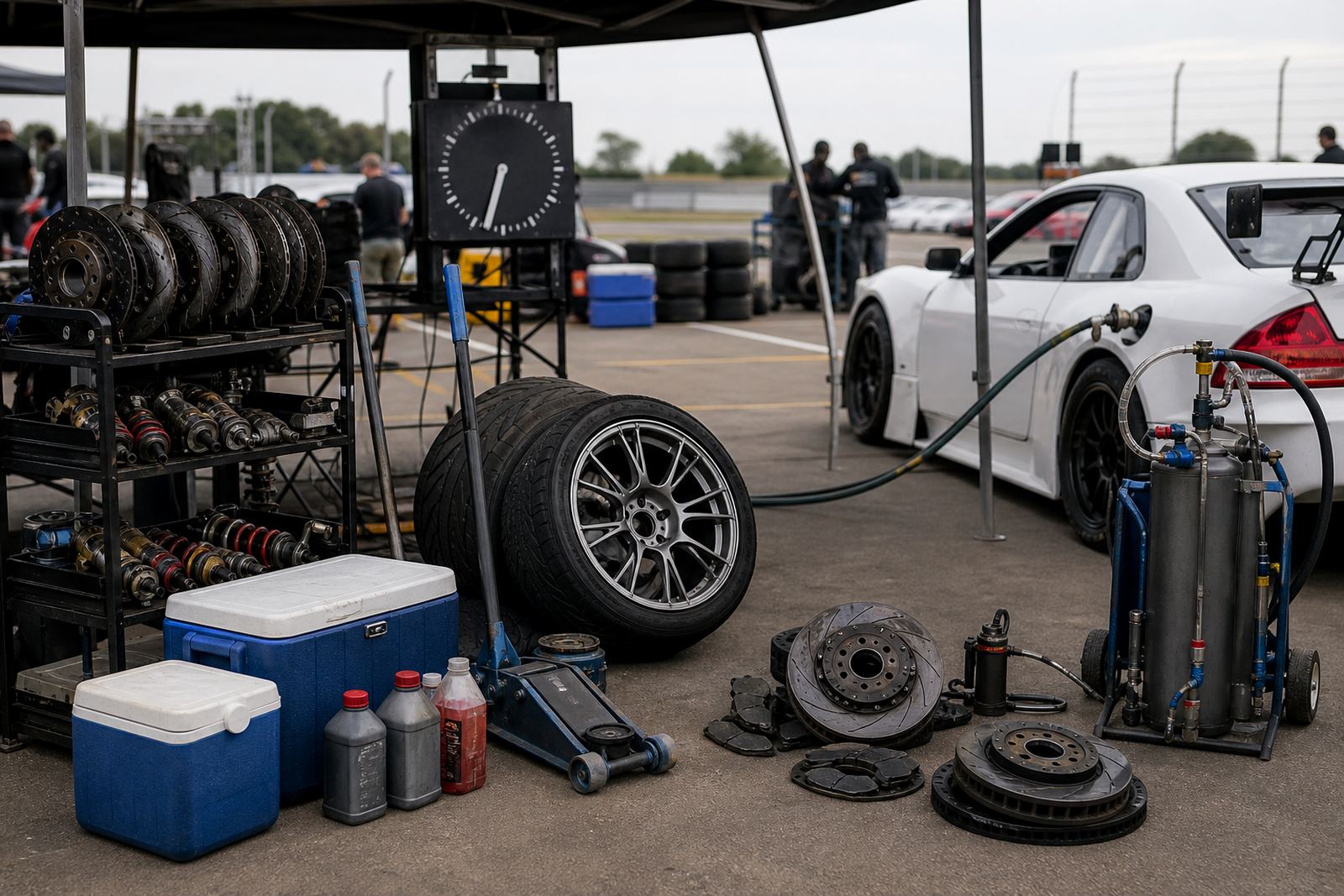
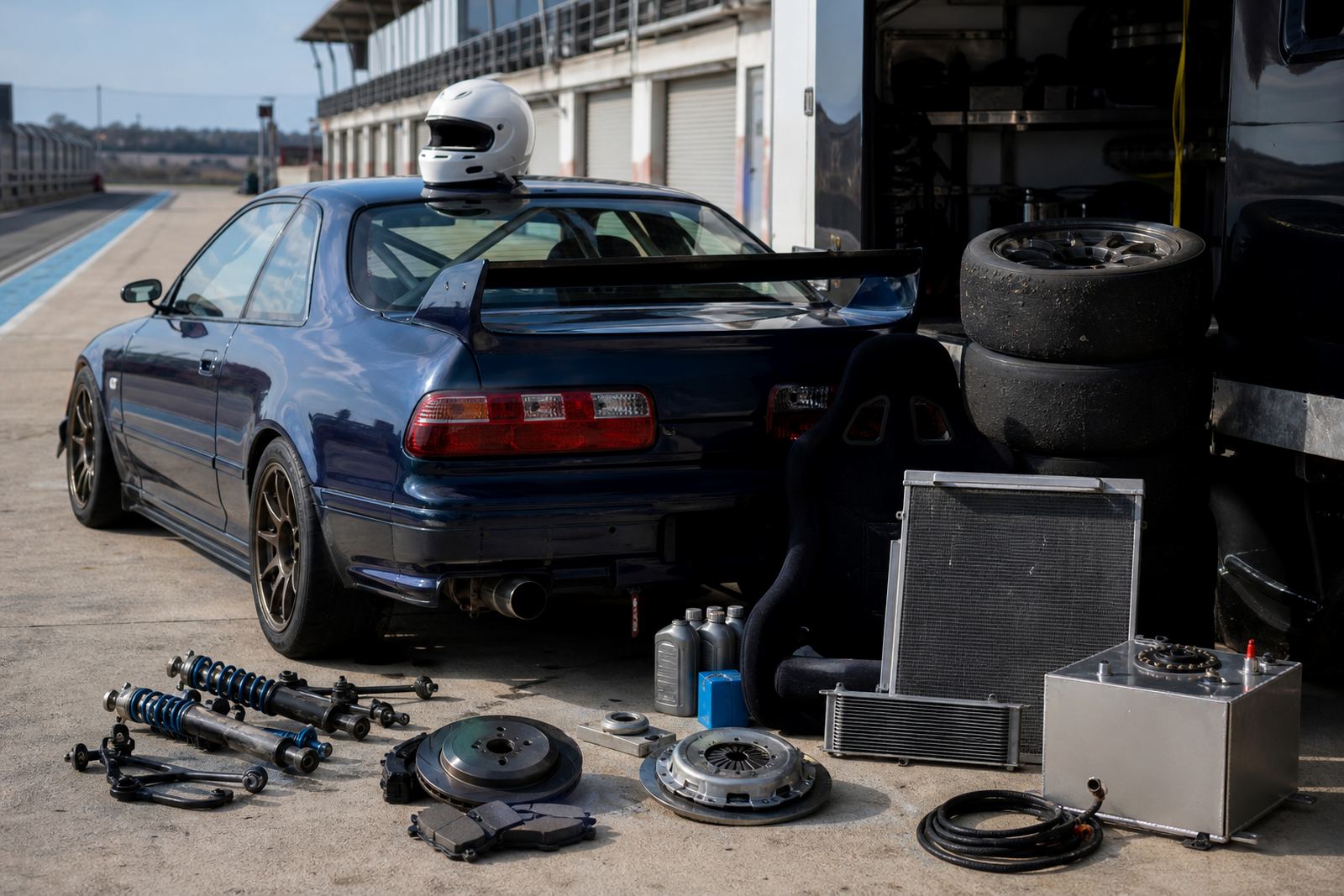
The usual equipment set for a club racer
Most club racing builds lean on a fairly steady list of parts. The exact combination depends on class rules, tyre choice and how hard the car is pushed over a session, but the same items show up often.
- Brake pads with a compound suited to repeated hot stops
- High temperature brake fluid and fresh brake lines where needed
- Coilovers or matched dampers with sensible spring rates
- Bushes that hold geometry under load without making the car harsh
- Radiator upgrades and oil coolers for heat control
- Seats, harnesses and mounting hardware that suit the driver
- Roll cage fit advice where the car is being built for stronger use
- Fuel cells, clutches and shift parts for harder launches and gear changes
Some cars also need differential checks, alignment corrections and a basic corner balance. Those details are easy to ignore until the car starts pulling on entry or wearing one tyre faster than the others. A neat build is not the aim on its own, it is the way the car behaves under pressure that counts.
Layout choices that make the car easier to work on
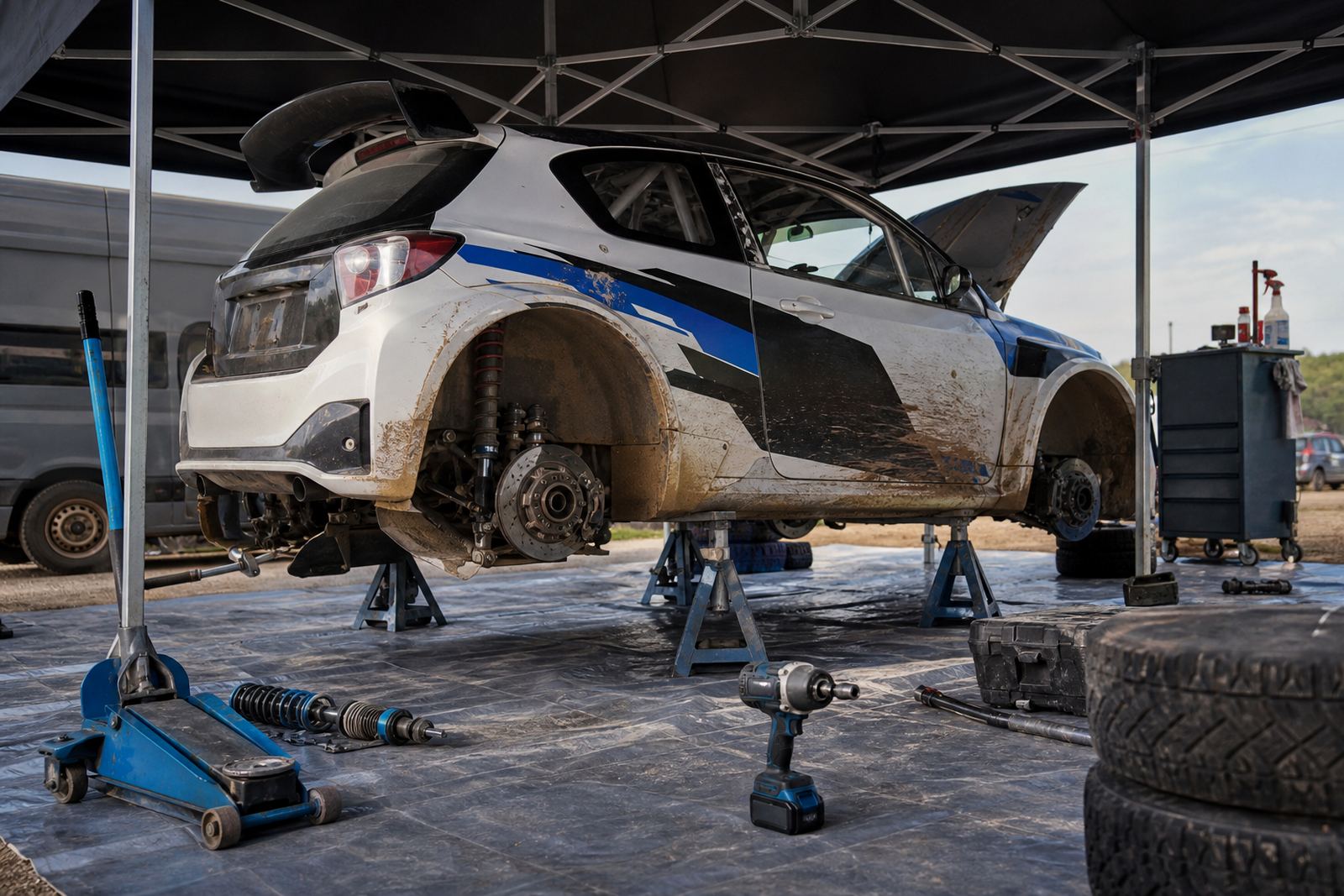
Serviceability matters in club racing because the same car often gets inspected, cleaned and altered between rounds. A brake pad swap should not fight the wheel arch. A brake bleeding point should be reachable. Cooling hoses and oil lines should be routed so they can be checked without stripping half the front end.
Inside the car, seat placement and harness angles affect both comfort and control. A driver who sits too high or too far forward often works harder than needed, and that shows up in braking and steering consistency. Roll cage fit advice should also take into account helmet clearance, steering wheel position and how easy it is to get in and out at the pits.
- Keep service points visible where possible
- Allow room for brake cooling and airflow paths
- Check that the driver can reach controls without stretching
- Leave space for safe hose routing and heat shielding
- Set alignment with the tyre and spring package in mind
Common mistakes on sprint race builds
One common mistake is buying parts in isolation. A strong brake pad on its own will not fix a soft pedal if the fluid is tired or the system still has air in it. The same applies to suspension, where firmer dampers can expose a poor alignment, worn bushes or a spring rate that is not matched to the car weight.
Another issue is overbuilding for the class. A very stiff setup can be quick on one surface and awkward on another, especially when kerbs, heat and tyre wear start to shape the weekend. Club racers across Johannesburg, Pretoria and Kyalami usually need balance more than drama, and that means the car should be honest in the hands of the person driving it.
Budget bands in rand for club racing work
Budgets move around with class rules, car type and how much of the work is already done. For a modest club racer, a sensible brake and service package can start in the low thousands of Rand, while a more complete package with dampers, bushes, cooling and safety items can move into the mid tens of thousands. A full refresh on a hard-used car with cage-related work, fuel system changes and proper setup time can go higher again.
It helps to split the spend into stages rather than treating the whole car as one bill. Many drivers begin with braking and control, then move to cooling and seating, and only then look at larger changes like a cage, fuel cell or clutch package. That approach keeps the car usable while each part is checked against the next one.
- Entry level refresh: brake service, fluid, alignment and small suspension fixes
- Mid-level package: coilovers, bushes, cooling parts and seat or harness changes
- Higher-commitment build: cage advice, fuel system layout, clutch work and full setup days
Track day support that fits the race calendar
Setup days are useful when a club racing car needs a proper look at how all the parts work together. Corner weighting, alignment checks, brake bleeding, coilover setup and seat positioning are easier to sort when the car is on the ground, warmed up and being measured with a purpose. That is where small changes often turn into cleaner lap times.
RaceHouse supports drivers from Midrand, Kyalami, Centurion, Durban and Cape Town, with the same practical view of what the car needs next. Some cars arrive with a list of issues, others just need a better plan before the next event. Either way, the work usually starts with the basics that keep the car safe, consistent and simple to service.
Parts planning for the next event
If a club racing car is missing pace, the answer is not always more power. Many sprint cars gain more from better brake control, tighter suspension geometry and a cooler engine bay than from chasing another engine change. A balanced package makes the driver more confident, and confidence matters when the laps are short and the field is tight.
When the setup is mapped properly, the car becomes easier to maintain between rounds and easier to adjust when the circuit changes. That is usually the point where the parts start working as one package instead of as separate upgrades.