

Single Lap Pace Starts With A Calm Platform
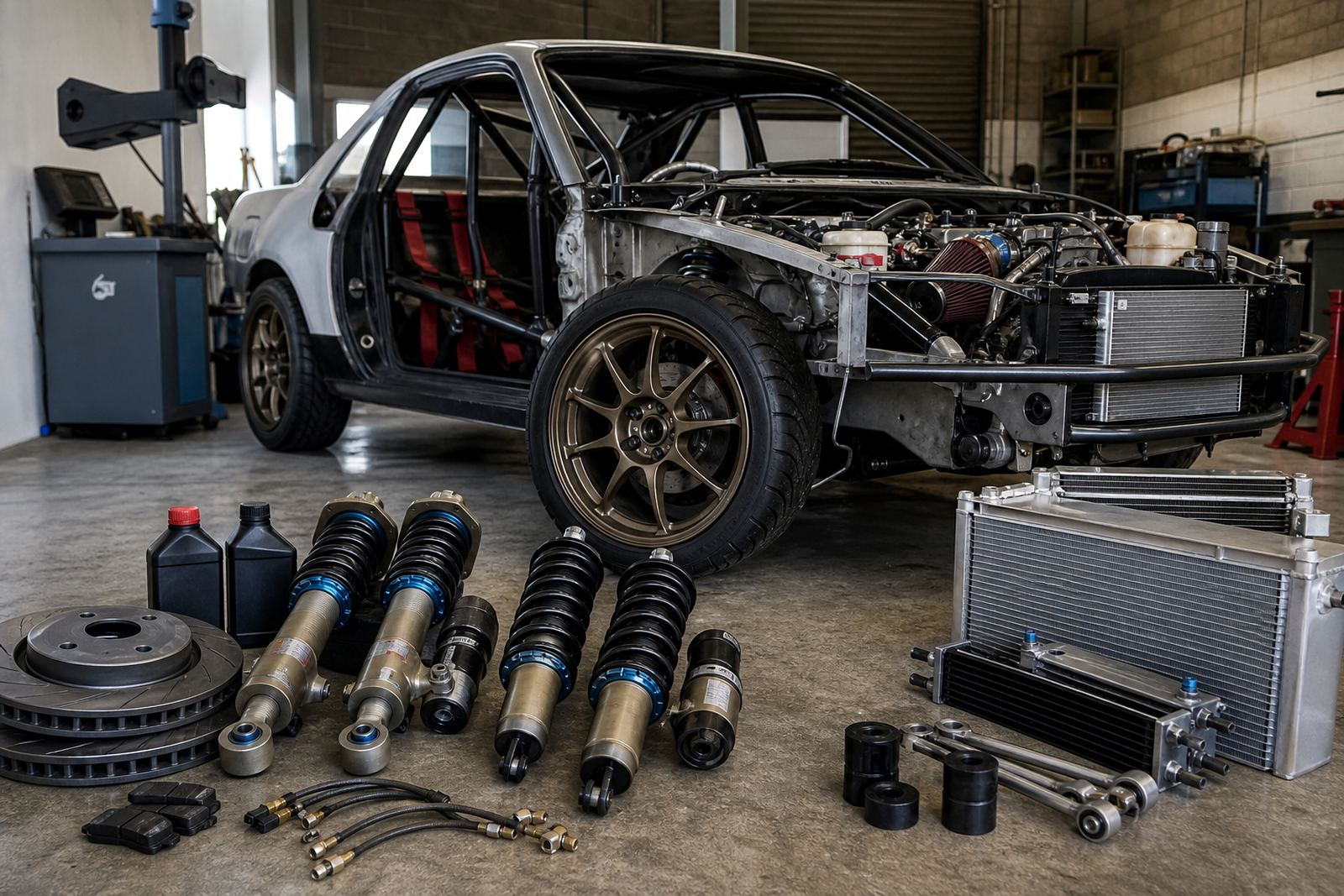
Time attack cars are not built for one flashy part. They need a stable base that lets the driver place the car the same way every lap. That usually means firmer springs or coilovers, sensible damping, fresh bushes, strong brakes and cooling that can cope with heat soak after a few hard runs. On Gauteng circuits and sprint layouts, a car that stays predictable in the second sector is often worth more than one that feels sharp for two corners and then falls away.
We look at the car as a package. The front axle may need more support for turn-in, while the rear needs enough compliance to keep traction on corner exit. Tyre wear matters too. If the inside edge is scrubbing or the outside shoulder is cooking, the clock starts to move in the wrong direction. A good time attack setup gives the driver confidence, not a nervous car that changes balance every lap.
- Brake pad compound matched to lap length and heat
- Brake fluid with a high boiling point for repeated stops
- Coilovers with usable damping range, not just stiffness
- Fresh control arm bushes or spherical joints where suitable
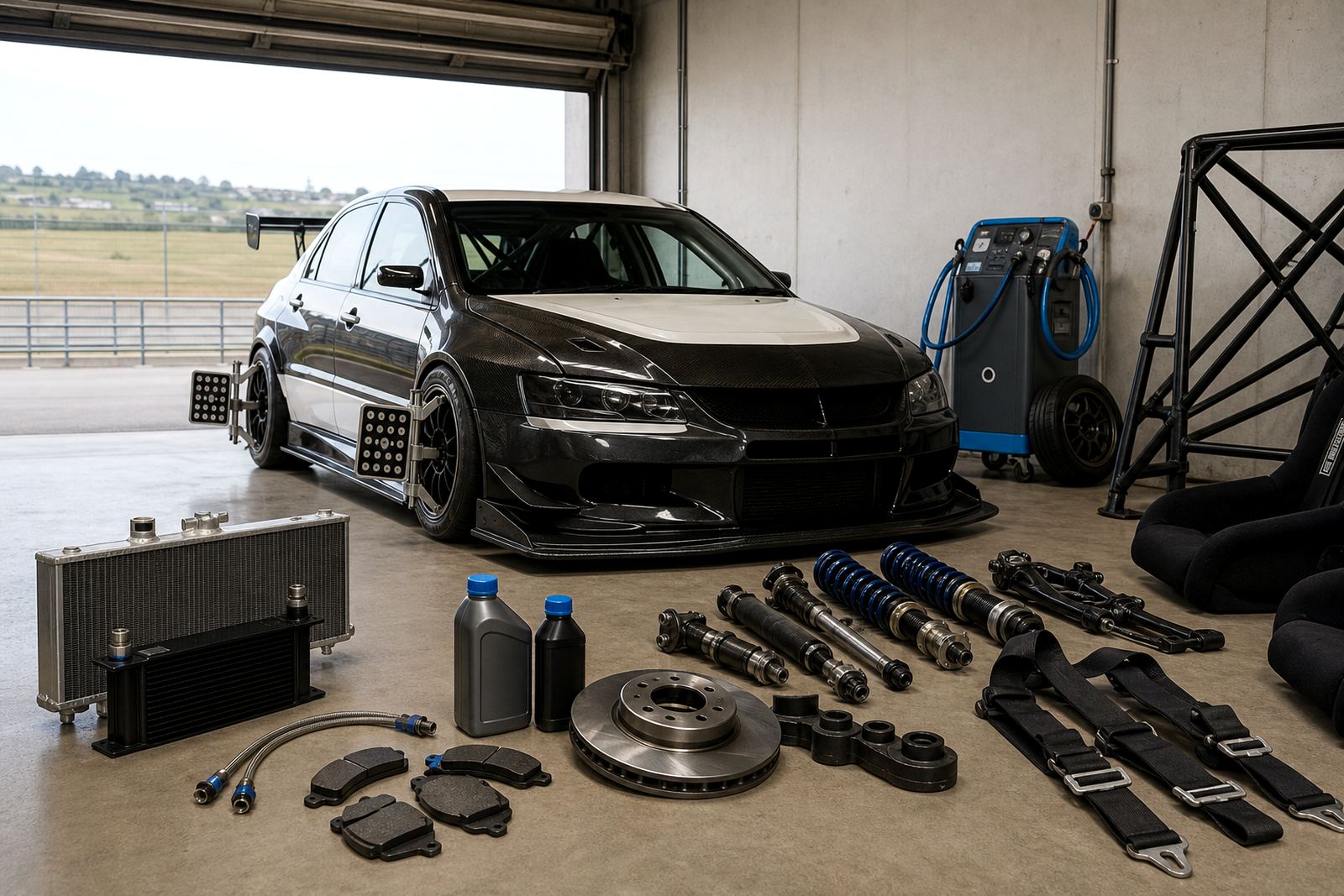
- Alignment that suits the circuit and the tyre size
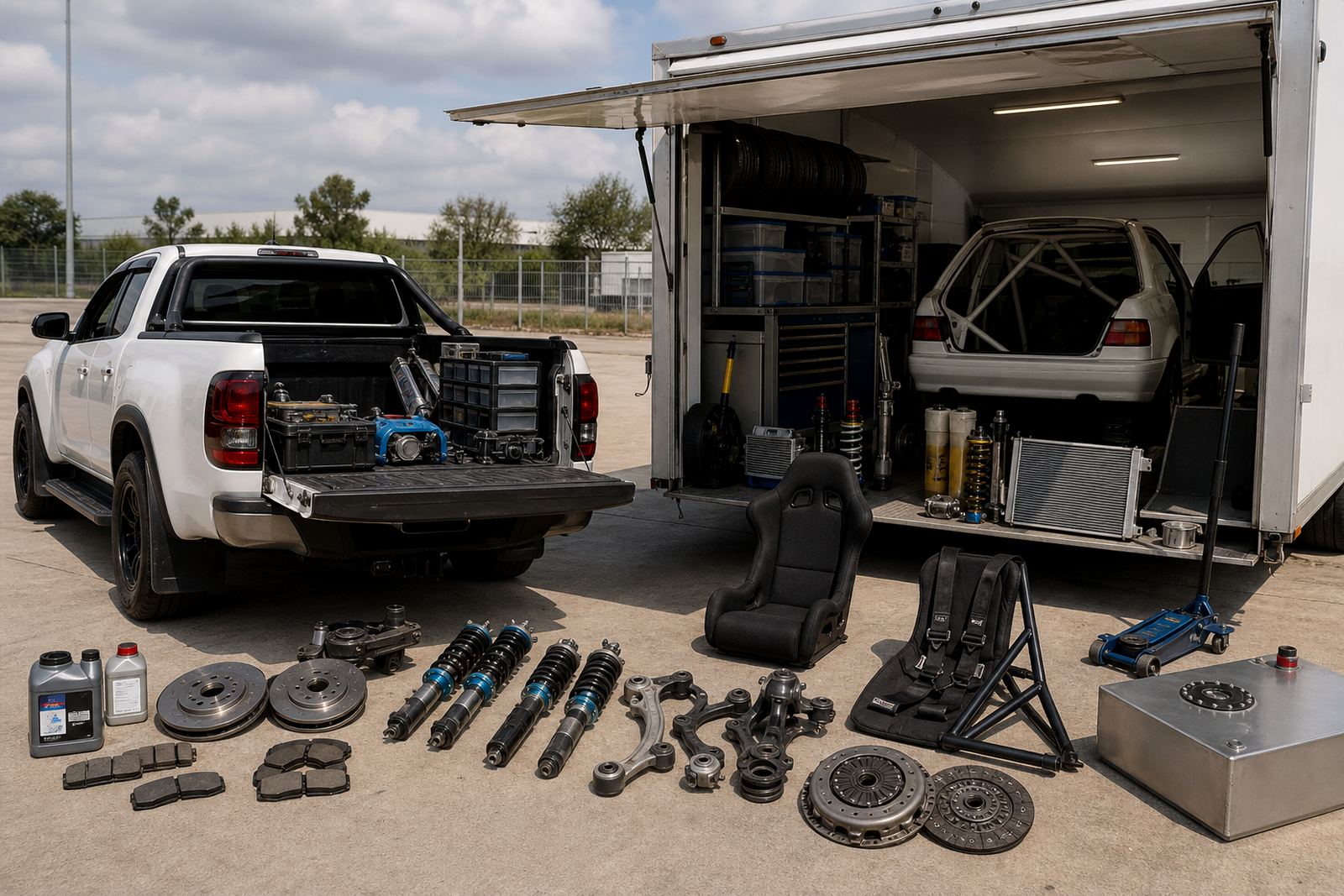
Typical Parts That Belong In A Time Attack Package
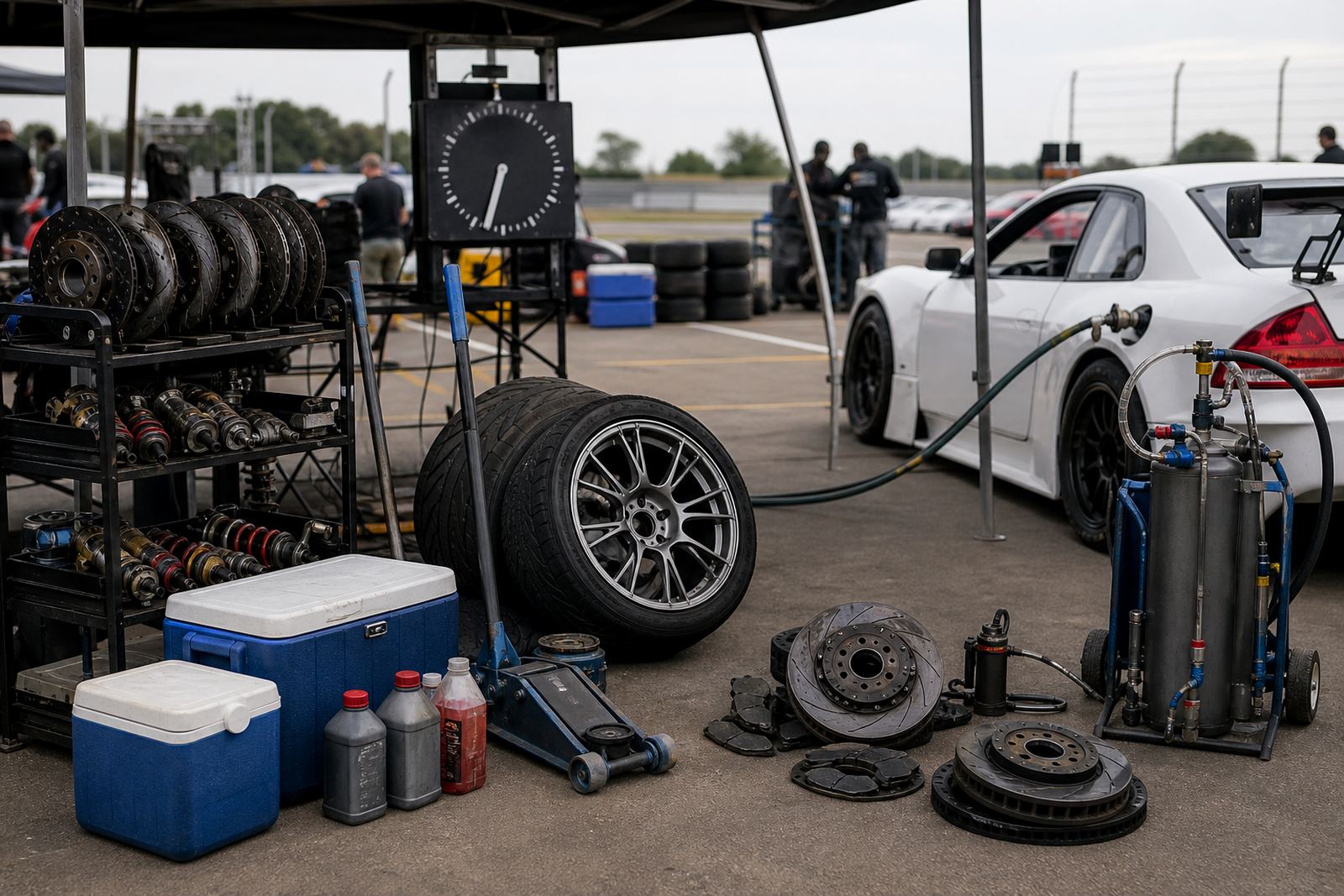
Most builds start with the parts that affect grip and heat management. Brake pads, fluid and cooling are usually first on the list, followed by suspension, seat positioning and harness fitment. For cars running sticky tyres, the load on the chassis rises quickly and weak links show up fast. That is why we look closely at wheel fitment, hub condition, brake ducting where applicable, and whether the car can keep oil and water temperatures in check through a full session.
We also see a lot of benefit from weight control and driver placement. A seat that sits too high shifts the centre of gravity and can make the car feel vague. A harness that is mounted poorly changes how the driver braces in the seat under braking, and that affects repeatability. For a proper time attack car, the driver should feel anchored, with the steering and pedals doing the work rather than body movement.
- Radiator and oil cooler checks for heat-heavy layouts
- Seat positioning to lower the driver and improve feel
- Harness fitment checks so lap after lap stays consistent
- Fuel system layout review for safe cornering and stable delivery
- Clutch and shift setup for quick, clean gear changes
Layout Advice For Midrand, Kyalami And Fast Regional Circuits
Time attack planning changes with the venue. A Kyalami-style lap asks for strong braking, stable direction changes and a car that can handle compressions without unsettling the platform. A tighter regional layout may need sharper response and better low-speed traction. Durban humidity and heat put more pressure on cooling and fluid choice, while Cape Town can bring different temperatures and crosswinds that affect aero balance and tyre behaviour. The same car can need a different alignment window depending on where it runs.
We usually start with the circuit character, then work back through tyre size, brake package and suspension travel. If the car is running a limited-slip differential, the way it locks under power matters as much as spring rate. If the car has a heavy front end, cooling and brake balance need extra attention. A setup day is useful because the small changes, one click at a time, show up clearly when the driver is chasing a single clean lap.
Good planning also means knowing what not to chase. Too much negative camber can heat the inside edge and hurt traction. Excessive toe can make the car nervous in a straight line. Overly stiff damping may feel tidy in the pit lane but lose grip once the tyres are hot. The fastest time attack cars are often the ones that stay honest under pressure.
Common Time Attack Errors That Cost Lap Time
A lot of time is lost through overbuilding one area and ignoring the rest. A bigger brake kit will not fix a car that runs out of grip because the suspension geometry is wrong. A stiff coilover package will not help if the tyres are overheating after two laps. We often see poor pad choice, fluid that boils too early, loose seat mounting, or a harness that does not hold the driver in the right position. These are small issues on paper and big issues on the stopwatch.
Another common mistake is setting the car for looks rather than function. A lowered car can look right and still have poor bump travel. Wheels that fill the arches nicely may not clear the suspension under load. Even a simple alignment check can expose an issue that was hiding in plain sight. The best result usually comes from measured changes and a clear record of each one.
- Chasing stiffness before checking tyre pressure and temperature
- Ignoring brake fluid age after repeated high-heat sessions
- Mounting seats and harnesses without checking driving position
- Running a cooling package that suits road use, not track use
- Changing many settings at once, then losing the trail of cause and effect
Budget Bands In Rand For A Practical Build
Time attack spend is easier to manage when you split it into rounds: safety first, then tyres and brakes, then power. A practical entry package may fall in the low tens of thousands of Rand if the car only needs brake pads, fluid, alignment, a basic seat setup and a few suspension tweaks. Once coilovers, radiators, oil coolers, harnesses and more serious brake work enter the picture, the number climbs quickly. Cars that need corner weighting, fuel system work and a proper roll cage layout will sit in a different bracket again.
We usually group the work into three broad zones: entry, committed and serious. Entry means making the car consistent and safe. Committed adds better damping control, cooling margin and more precise driver support. Serious time attack work can include system-by-system refinement, more fabrication, and a full track setup day with repeat checks after the first test run. The right budget is the one that matches the class, the venue and the driver goals, not just the parts catalogue.
- Entry level: brake, alignment and seat support work
- Mid level: coilovers, cooling, harness and clutch updates
- Higher level: corner weighting, cage advice and system rework
What A Setup Day Usually Covers
Our setup days are useful when the car is already built but still not matching the driver’s hands. We look at brake balance, pedal feel, alignment, corner weights where suitable and the way the suspension settles under load. If the steering is too light on entry or the rear feels loose on exit, those clues lead us back to the hardware and the settings. It is often the fastest way to turn a rough build into something the driver can trust through a hot session.
What the driver feels through the wheel counts alongside the data log. A time attack car can look good on paper and still feel awkward in the seat. We pay attention to brake release, steering effort, gear change quality and the way the car behaves over kerbs or compressions. That mix of measurement and seat time is what makes the car repeatable. For drivers across Johannesburg, Pretoria, Centurion, Durban and Cape Town, the aim is the same: a clean lap, less tyre waste and a chassis that behaves the same way under pressure.