
When the test car has to tell the truth
A development car is not there to look complete. It exists to show what a brake change, spring rate, cooling change or seat position does under load, and the parts on it need to be clear in purpose. If a car is being used for tyre work, braking trials or repeated laps at Kyalami or test runs around Midrand, the list usually starts with items that are easy to measure and easy to swap.
The early decision is often not power, it is control. That means brake pads with the right bite, fluid with sensible boiling resistance, coilovers that allow repeatable height changes, and bushes that do not add unwanted movement. A test car should make each change visible in the steering, pedal and tyre wear, not hide it under soft or tired parts.
We work with drivers who want the car to behave the same at the beginning of a session and at the end of one. That is where careful part selection matters, because a development build can be punished harder than a race car that is already settled into a known spec.
A useful parts list for a proper test session
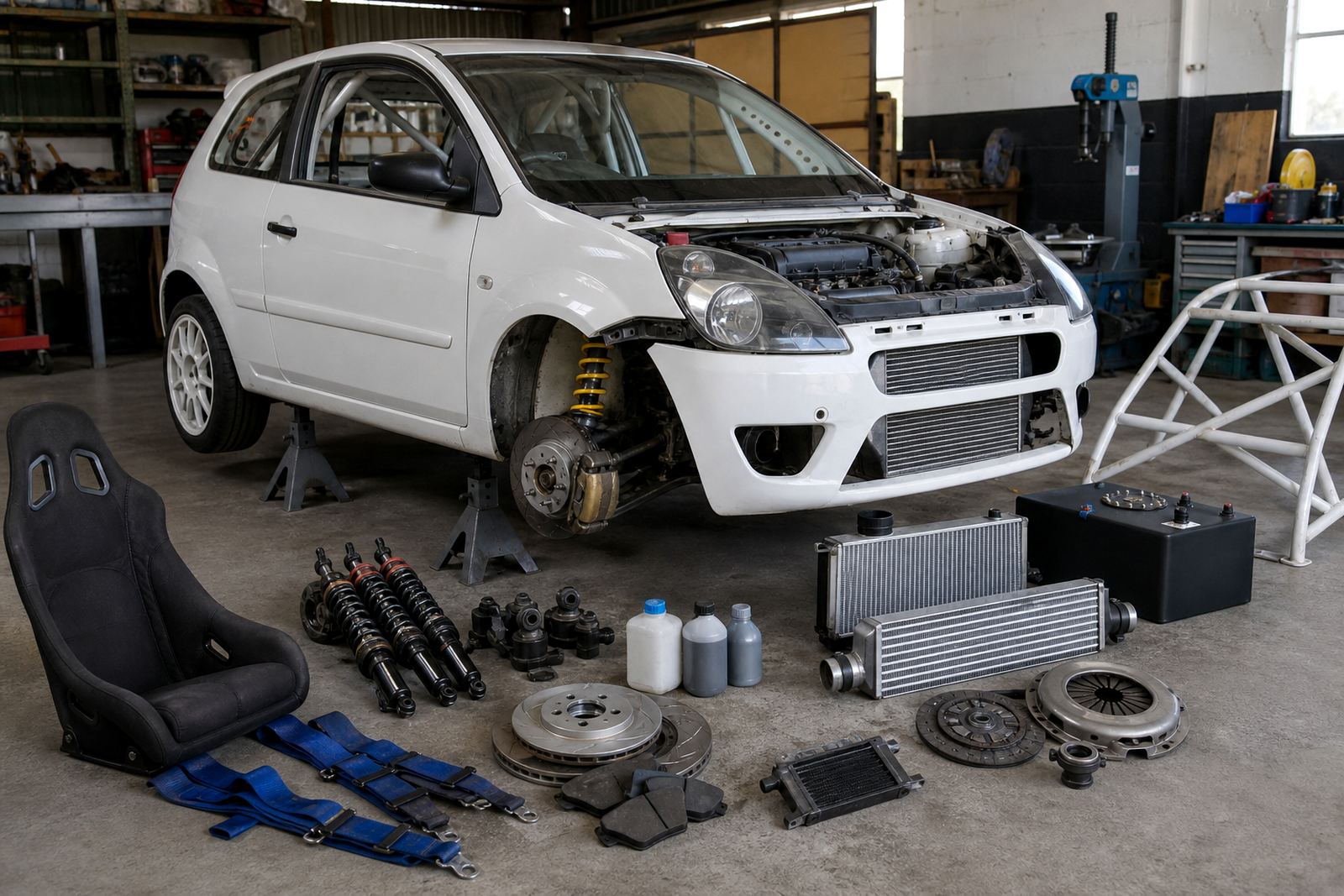
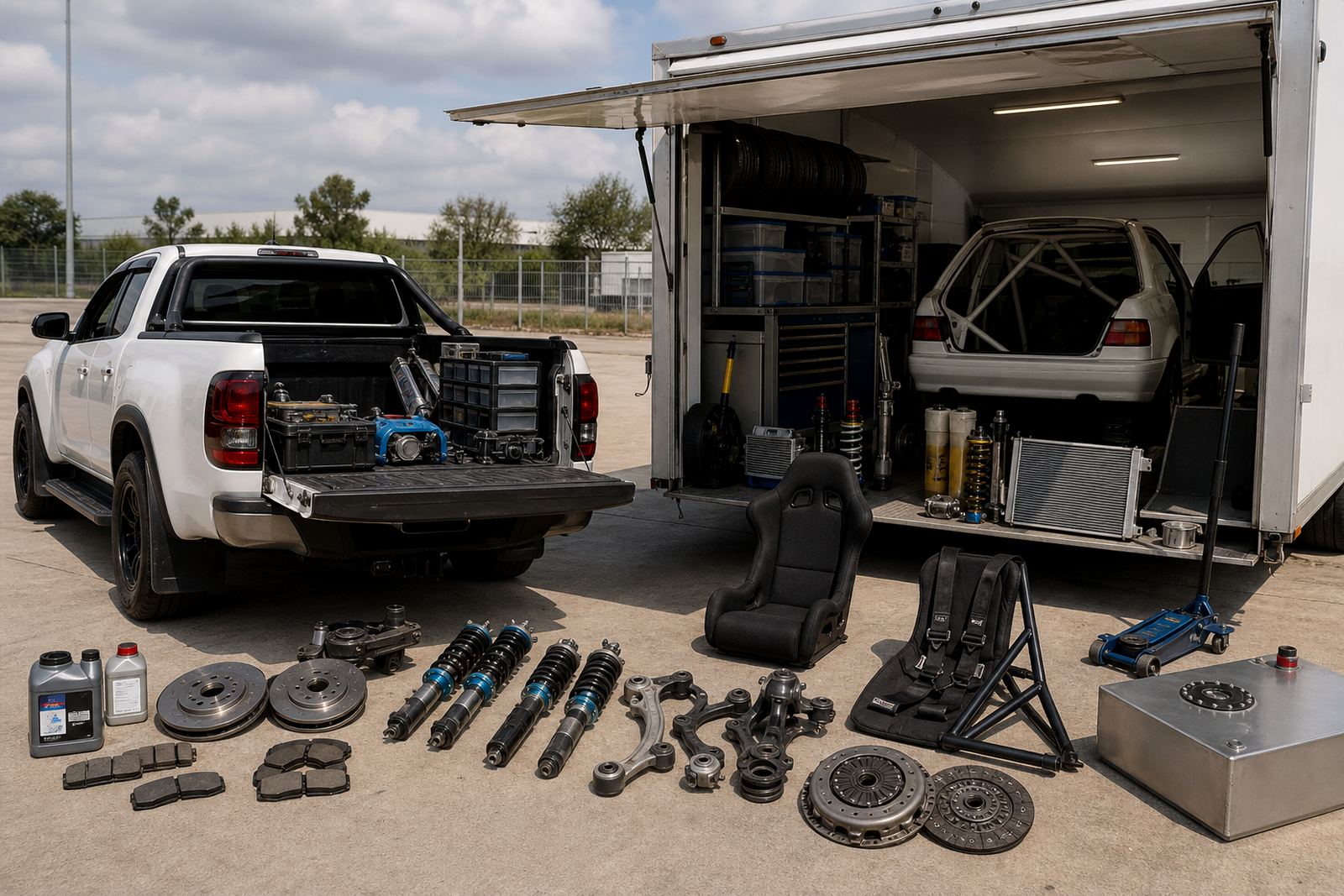
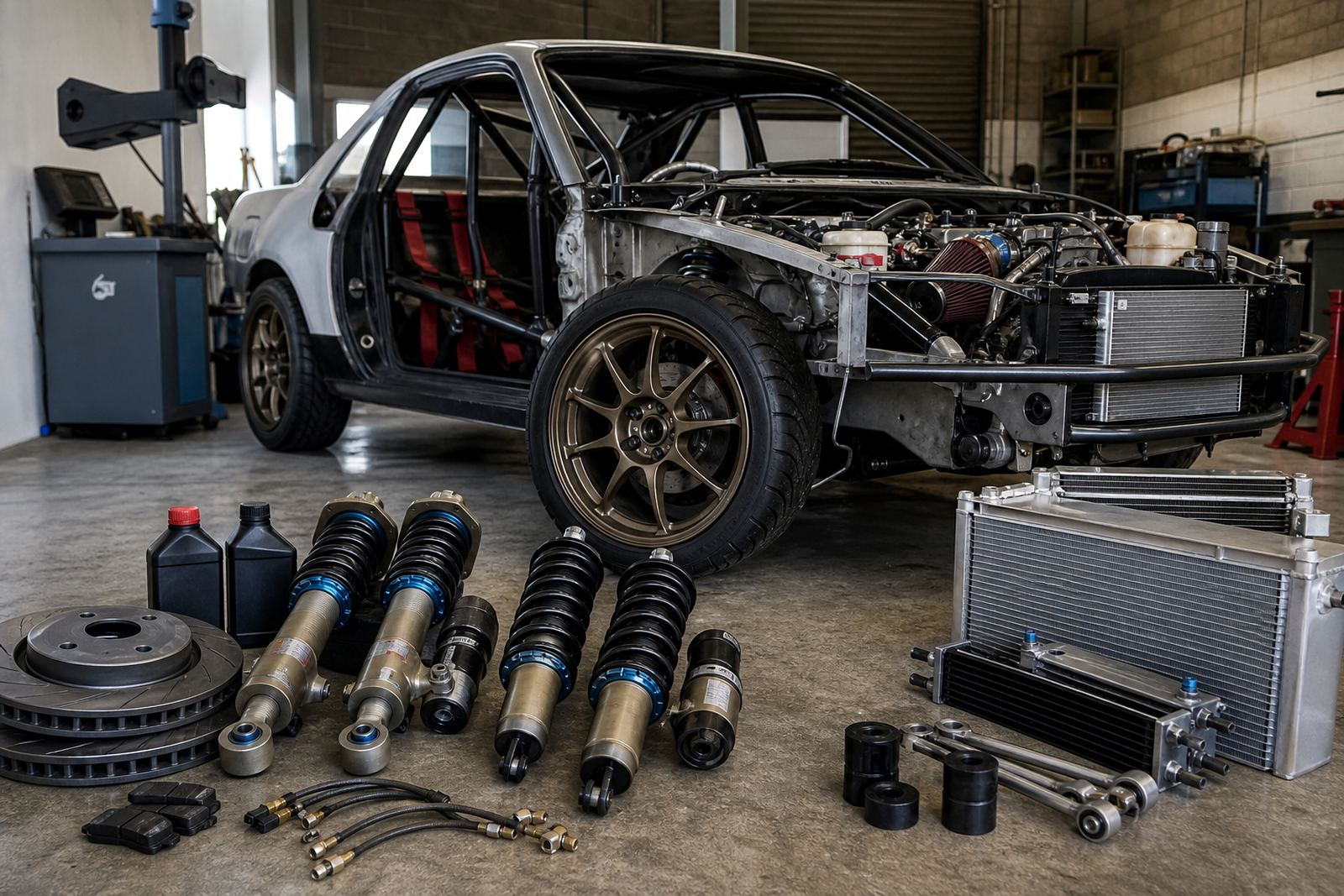
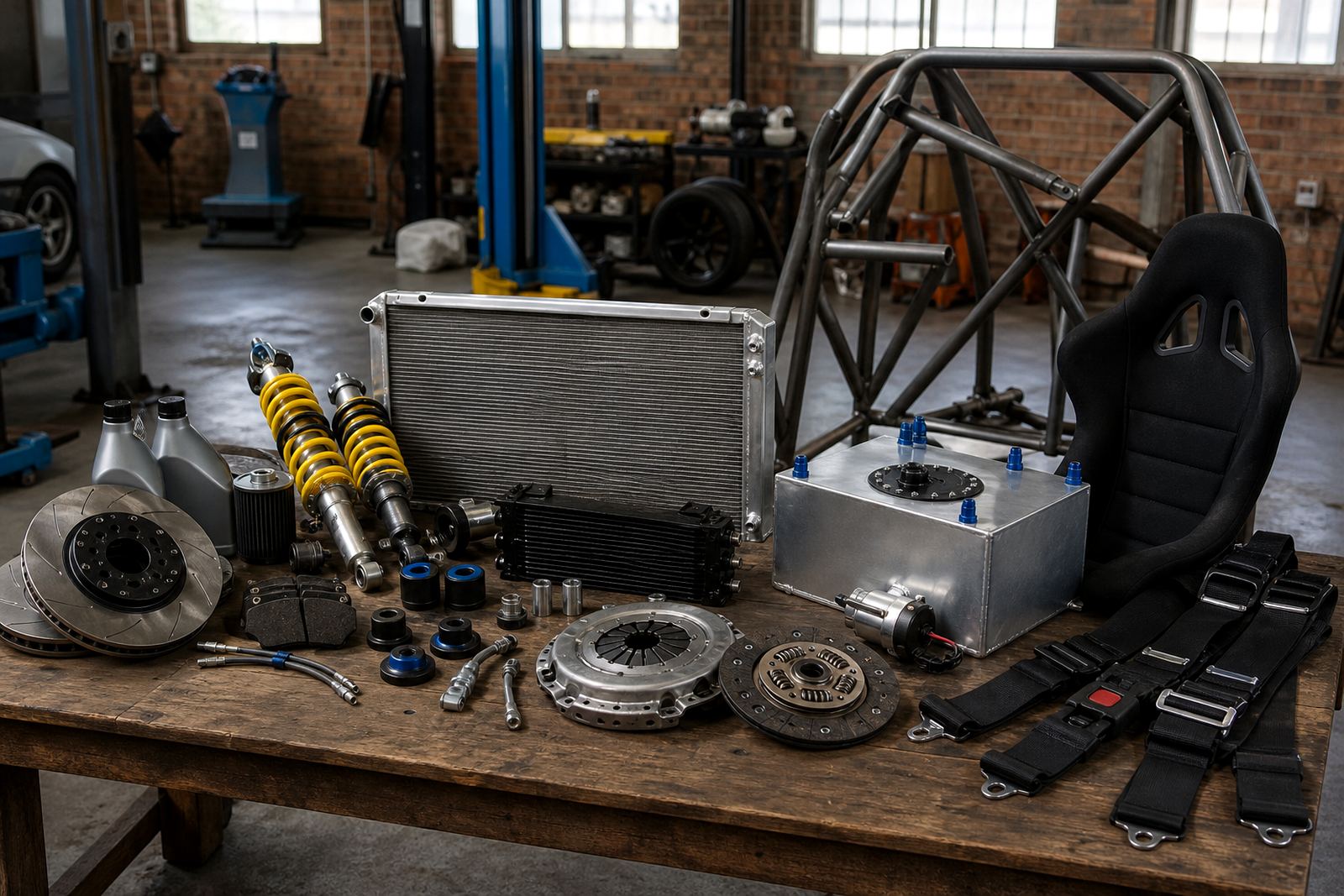
The equipment set depends on the test plan, but the usual kit is familiar. Brake pads, high temperature brake fluid, braided brake lines, coilovers, top mounts, control arm bushes, radiators, oil coolers, seat mounts, harnesses, and sometimes a basic fuel system refresh. On cars that are being pushed hard, clutch and shift parts also enter the conversation.
- Brake pads and fluid for repeated stops without pedal fade
- Coilovers and springs for ride height, damping and balance work
- Suspension bushes to remove slop and improve feedback
- Radiators and oil coolers for heat control during longer runs
- Seats and harnesses so the driver stays placed correctly
- Roll cage fit advice where the shell needs extra protection or stiffness
- Fuel cells and fuel system layout for safer packaging on race builds
- Clutches and shift parts when the gearbox behaviour needs tightening up
For development work, the point is not to overload the car with parts. It is to fit the parts that let you isolate one issue at a time. If the seat moves, the driver changes shape in the car and the data becomes messy. If the brakes overheat, suspension notes become difficult to read because the whole car starts to feel vague.
Layout choices that save time on a test car
Good layout work is a major part of the job. A seat that sits too high changes helmet clearance and weight transfer. A harness that angles badly can make a driver brace against the wheel, which affects steering feel. Cooling parts need space for airflow and service access, not just a place to sit in the bay. The same is true of brake ducting, where neat routing matters more than shiny parts.
On development cars, small errors are expensive because they blur the result. A poor master cylinder choice can make a brake upgrade feel wrong even when the pads are fine. A badly matched spring and damper combination can leave the car twitchy on entry and lazy on exit. That is why setup days matter, especially where a car is being tuned for different venues such as Midrand, Pretoria or Kyalami.
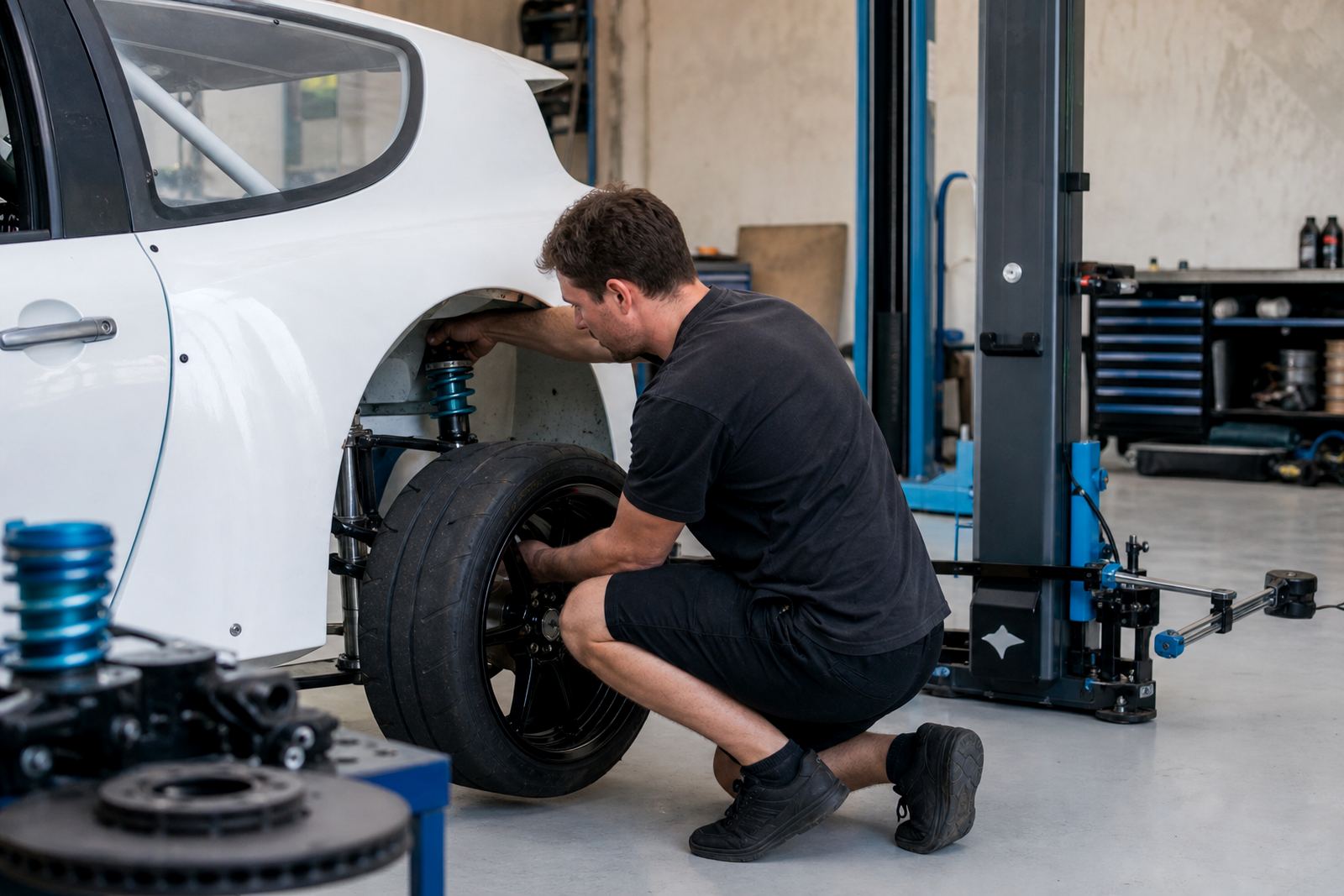
Our advice usually starts with packaging the system properly before chasing the final balance. Once the parts sit correctly, alignment checks and corner weighting become far more useful. Then the driver can test changes in tyre pressure, pad compound, anti-roll bar setting or damping clicks with less confusion.
Common mistakes that waste a development day
Development cars usually go backwards when three things change on the same weekend. A driver fits brakes, coilovers and a different seat position in the same session, then cannot tell which change improved the car. Another problem is buying parts that suit a road car feel rather than a test car purpose. Comfort does not help if the plan is repeatable braking data and stable corner balance.
We also see cars running cooling parts that are too small for South African heat and long sessions. A radiator that works in town may struggle once the car sits on limiter or spends time in traffic during an event day. Oil temperature matters just as much, and a proper cooler setup can protect the engine when the car is being used hard all morning.
- Mixing road comfort ideas with track testing requirements
- Ignoring alignment before judging the new suspension parts
- Using worn bushes and expecting fresh geometry results
- Overlooking seat and harness placement before seat time
- Running the wrong fluid for repeated hard braking
Another error is assuming a cage or fuel system only matters later. On some shell builds, those items influence weight, balance and service access from the beginning, so they need to be planned together with the rest of the car.
Budget ranges that make sense in Rand
A development build can be lean or fairly serious, depending on the car and how far the testing goes. For a focused brake and suspension test package, the spend may sit in the low thousands of Rand if the car only needs pads, fluid and small setup items. Once coilovers, bushes, alignment work and a proper cooling package are added, the budget climbs in steps rather than in one jump.
For more complete test cars with seats, harnesses, fuel system work and safety items, the figures can move into the higher Rand ranges very quickly. A sensible plan is to separate must-have items from items that can wait until the first round of testing shows a real need. That approach keeps the car useful without loading it with parts that are not yet proven.
Drivers from Johannesburg, Centurion, Durban, Cape Town and Port Elizabeth often start with the parts that affect feel and repeatability first, then add the remaining pieces after the car has shown its weak points. That is usually the cleanest way to spend money on a development car because it keeps the build honest.
What gets discussed before parts are ordered
The conversation usually centres on the car, the circuit or surface, and the problem being solved. A rally test car may need more clearance, stronger protection and different cooling priorities from a club racing car. A track-only shell in Midrand may focus more on brake balance, corner weighting and seat position than on rough-road clearance.
Our team looks at what the car already has, what can be re-used, and what must be replaced for proper testing. Anele, Johan, Lerato, Morne, Sibusiso and Candice handle the moving parts of that process, from sales through workshop planning and logistics. The goal is to keep the build practical, so the car can be tested, adjusted and understood without unnecessary detours.
Development car owners tend to send us a parts list to sanity-check before they spend. For a first pass, it helps to note the car model, the type of testing, and which parts are already on the car. A plain brief is enough to start the layout work.