

Front-end load changes the whole car
A hot hatch usually arrives with more grip at the nose than the factory ever expected, then the brakes, bushes and dampers get punished lap after lap. The usual brief is not full race spec, but a car that turns in cleanly, stops hard without a long pedal, and keeps the front tyres alive for longer.
We look at the whole balance first. If the rear is too loose under trail braking, or the front is diving hard into every braking zone, the answer is rarely one single part. It is often a mix of pad choice, fluid condition, spring rate, damper control and a sensible alignment setting for the circuit you run most often.
On many front-wheel-drive hatchbacks, the basic package starts with better brake pads, high-temp fluid, firmer suspension and a careful check of bushes and mounts. That keeps the car predictable on a weekday road drive too, which matters for many club racers who tow no trailer and still drive the car to the circuit.
The parts list that usually earns its keep
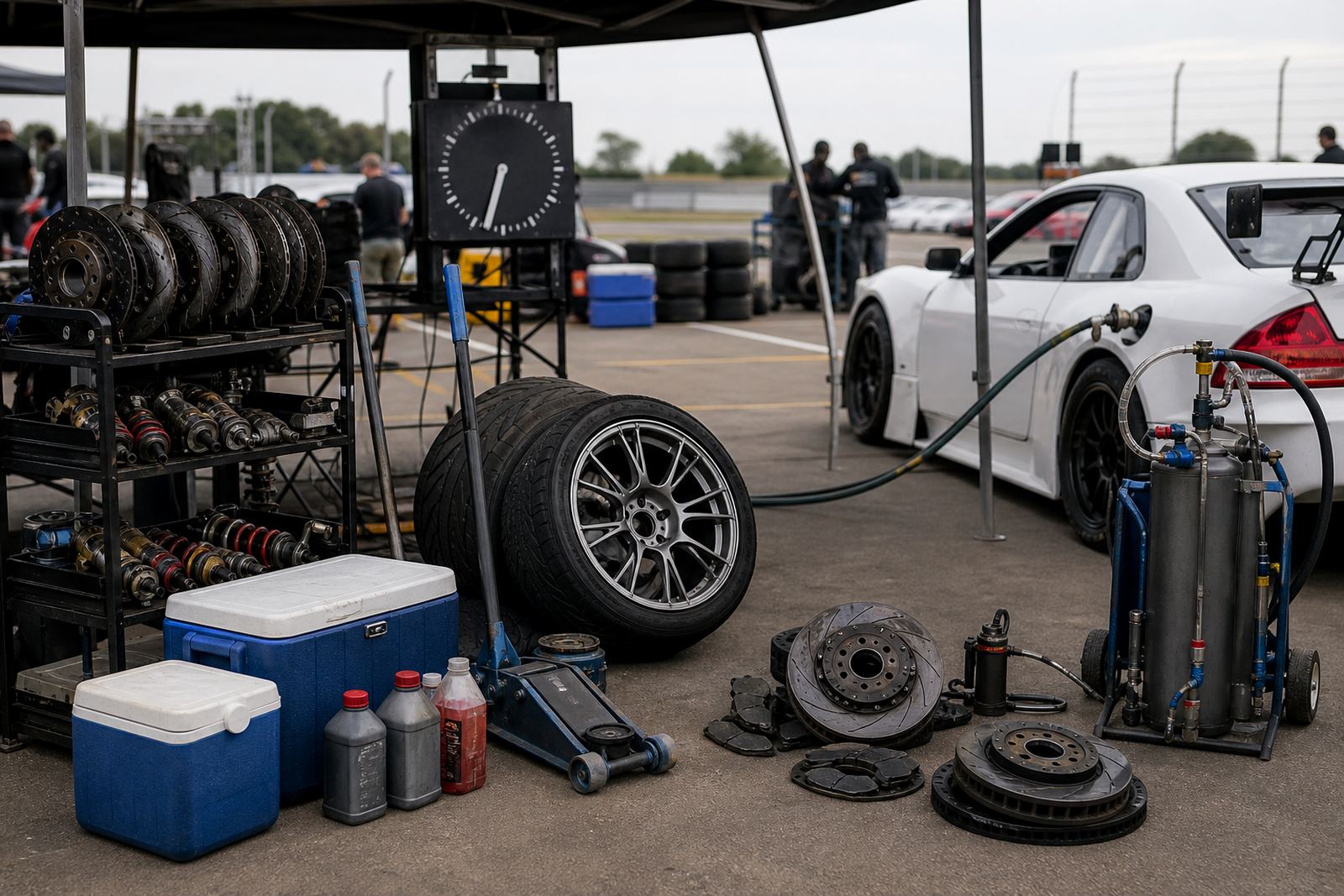
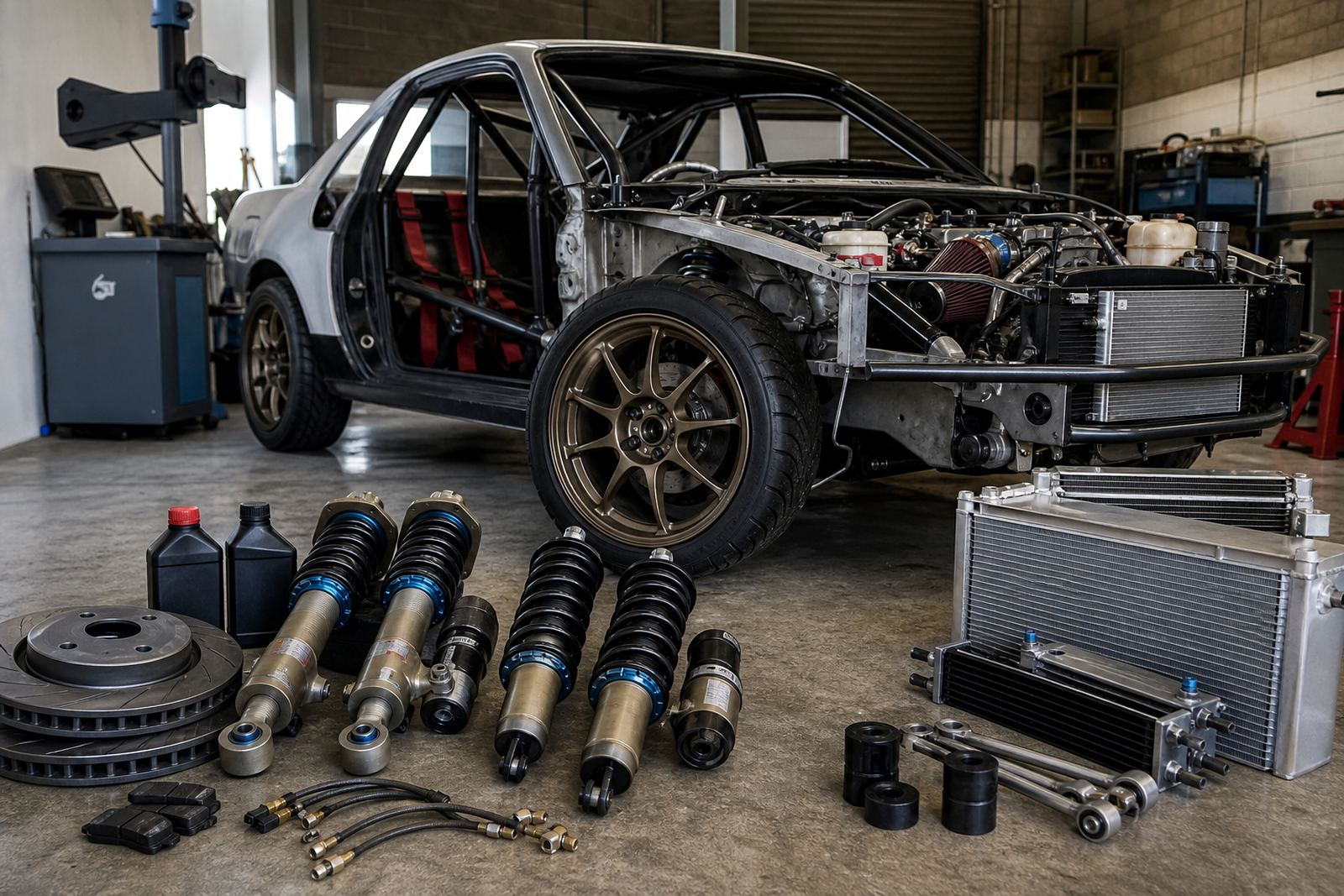
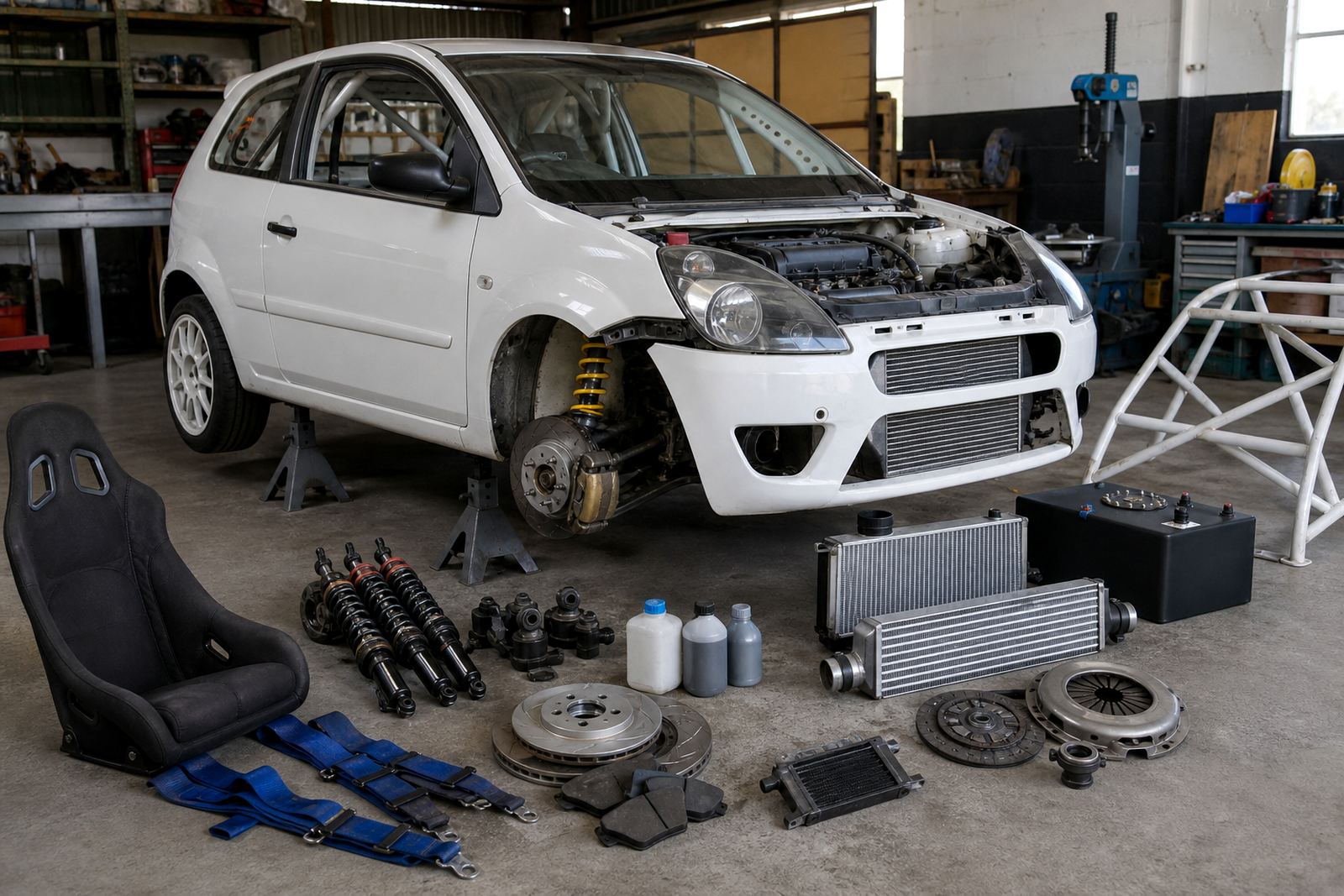
Most hot hatch builds do not need a long shopping list. The useful items are the ones that manage heat, motion and control. Brake pads with a firmer bite, fresh brake fluid, lines in good condition, and a sensible rotor size if the car allows it. A coilover setup or matched spring and damper package can reduce roll and keep the tyre contact patch more stable through a long corner.
Bushes matter more than many drivers expect. Tired lower control arm bushes, top mounts and rear beam bushes can make alignment wander under load. Once those are sorted, corner weighting and alignment checks become far more meaningful. Cooling also matters when the engine is working hard in traffic on the way to an event, then running flat out on track an hour later.
- Brake pads chosen for track temperatures, not just road use
- Fresh fluid with a higher boiling point
- Coilovers or matched dampers and springs
- Control arm and rear axle bushes that hold geometry
- Radiator or oil cooler support where heat soak is a problem
- Seats, harnesses and mounting checks for drivers who spend long sessions in the car
How we shape the setup around the circuit
Midrand drivers often bring cars used for both road and track, so the setup has to make sense in traffic, at the gate and in the pits. A circuit with heavy braking and quick direction changes wants a different balance from a short technical track day where the car spends more time rotating than stretching its legs. That is where fitting advice and setup days help more than guessing from a parts catalogue.
We check seat position, steering reach and pedal feel before moving deeper into suspension settings. If the driver sits too far from the wheel or braces badly under braking, the car will feel nervous even when the parts are decent. Harness fitment checks also matter where a full restraint setup is used, because a loose or awkward install can spoil driver confidence very quickly.
For hot hatches that understeer on entry, the first correction is often front geometry, not a bigger rear wing or some other drama. Small changes in camber, toe and ride height can shift the whole car without making it harsh. We also look at tyre wear after sessions, because the pattern across the tread tells a lot about whether the car is running too much pressure, too little camber or an unhappy damper setting.
Mistakes that make a quick hatch feel tired
One common mistake is spending the budget on visual parts and leaving the brakes half-baked. Another is fitting stiff springs without checking damper control, which can make the car skate over bumps and lose traction on corner exit. People also underestimate the effect of old fluid, cooked pads and stretched mounts. Those faults do not always show up on the road, but they show up fast when the car is pushed harder.
Another problem is mixing road settings with track expectations. A hatch can be comfortable on the N1 and still be poor on circuit if the geometry is vague. Likewise, a hard setup can look impressive in the workshop yet punish the driver through a long stint. Balance matters more than one big number on a spec sheet.
- Fitting pads without checking fluid condition
- Using very stiff springs with weak damping control
- Ignoring tyre wear after the first outing
- Leaving tired bushes in place because they still look presentable
- Running aggressive alignment without checking straight-line behaviour
Budget ranges that make sense in Rand
A sensible entry package for a club hot hatch often starts around R8 000 to R18 000 if the main need is pads, fluid, a basic alignment and some fitment labour. Once coilovers, bushes and a more serious brake package come into play, the budget can move into the R20 000 to R45 000 range depending on the car and the condition of the existing parts.
If the brief includes seat mounting, harness checks, cooling improvements and corner weighting, the figure can climb further. That is normal on a car that is being used hard and expected to stay consistent. The cheapest route is rarely the one that works best over a full season. It is usually better to stage the work so the braking and suspension changes support each other.
For racers in Johannesburg, Pretoria, Centurion, Kyalami, Durban, Cape Town and Port Elizabeth, the useful question is not only the price of the parts. It is also how the car will behave after a few hot sessions, a wet meeting, or a long run home on public roads. The right setup should still feel settled when the day is over, not only when it is fresh off the lift.
What drivers usually bring to the first discussion
Most hot hatch owners arrive with lap notes, tyre pictures and a list of noises they have learned to ignore. That gives us enough to map out a proper plan. We look at how the car is used, what the driver wants from the front end, and whether the car needs brake upgrade planning before suspension work or the other way around. The order matters.
For a front-wheel-drive hatchback, a good first stage often means sorted brakes, controlled suspension, tidy geometry and a cabin that keeps the driver planted. From there, clutch and shift setup can be checked if the car is missing gears under pressure, and fuel system layout can be reviewed on more serious builds that spend long periods at high load.
Our contact form is where drivers send the vehicle details and the current setup. That helps shape the plan before any parts are picked, and it keeps the discussion focused on the car you actually run, not some generic build chart from another machine altogether.