

Sharp Course Cars Need Shorter, Harder Stopping Power
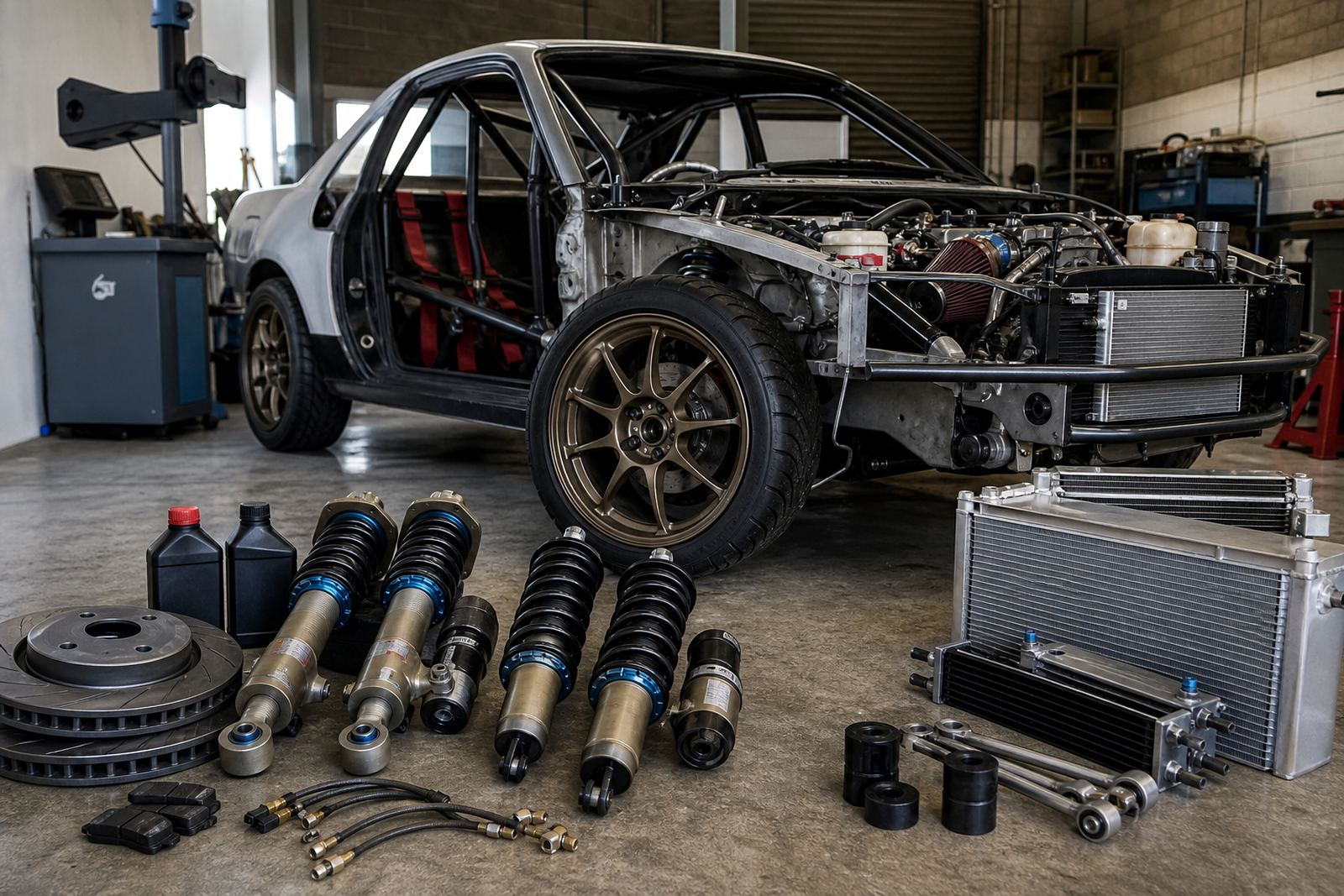
A gymkhana car spends most of its life on brake-throttle-brake work, with weight transfer happening in quick bursts and very little time for the chassis to settle. That changes the parts list. Brake pads need a strong initial bite without going vague after a few runs, and fluid must stay stable when repeated stops heat the calipers and lines. On shorter courses, many drivers also move to a firmer pedal feel so modulation is easier when the rear needs a little rotation and the front tyres are already working hard.
We look at the whole stop package, not just the pads. Disc condition, pad compound, fluid temperature tolerance, hose condition and the balance between front and rear all matter. If a car still feels long in the pedal after a proper bleed, the answer is often in the setup rather than a single part.
- Brake pad compounds for repeated short stops
- High temperature brake fluid and clean bleeding practice
- Disc, hose and caliper checks before track use
- Pedal feel that helps with turn in and rotation
Suspension That Stays Calm Through Flicks And Weight Transfer
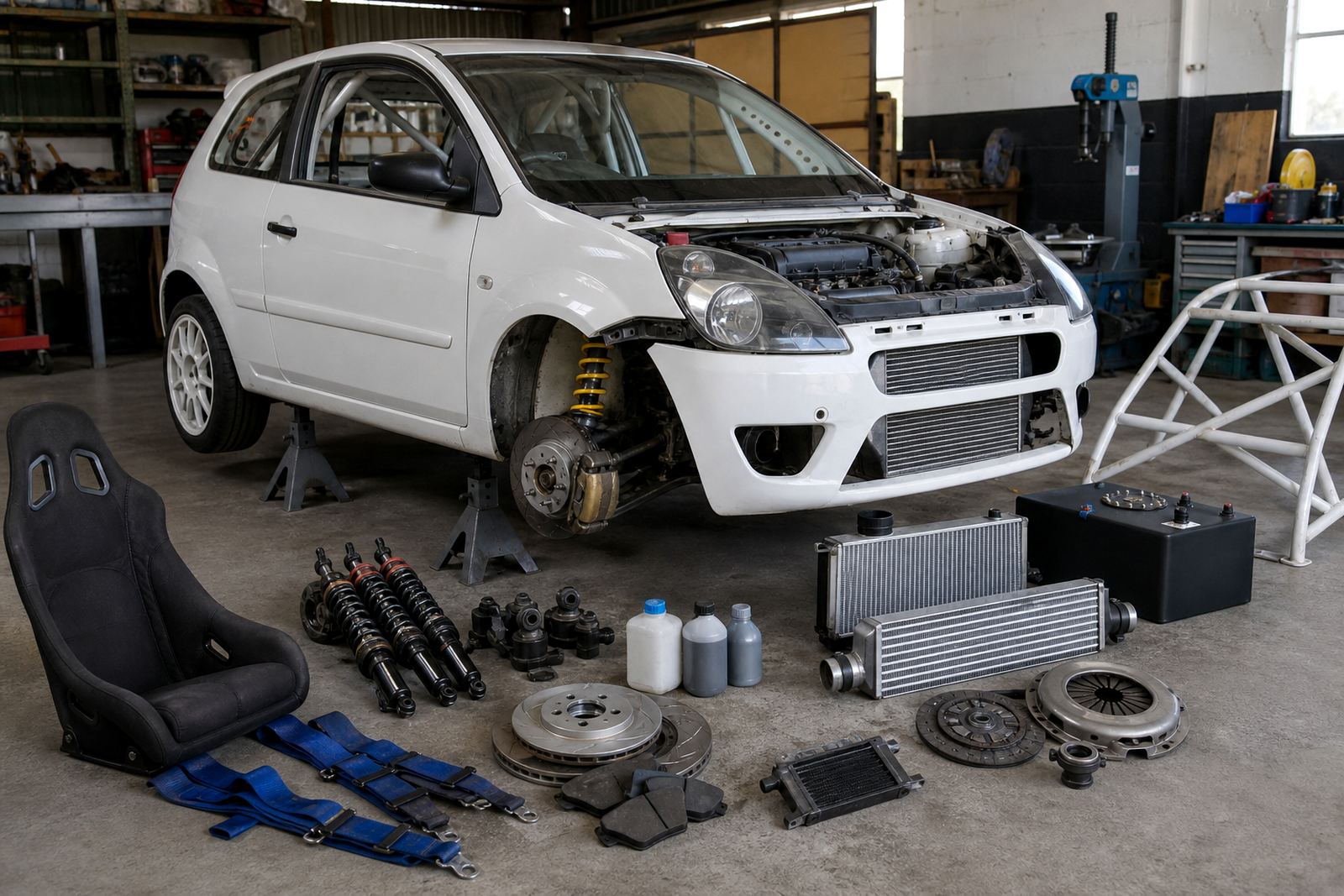
Gymkhana course work asks a car to change direction quickly, then settle, then turn in again without rolling onto the outside tyre too slowly. Coilovers, spring rates, damper settings and bushes all shape that response. A car that is too soft can feel delayed and sloppy, while a car that is too stiff may skate across the surface and lose front grip when the driver needs it most.
Our workshop looks at ride height, damper range, bump travel and whether the current bushes still hold alignment under load. Polyurethane bushes can sharpen response in some builds, but they must be used with care so the car does not become noisy or harsh in the wrong places. Alignment matters too, especially front camber and toe, because a small change there can alter how the car rotates through a tight box or slalom.
- Coilover setup for turn in and weight transfer
- Alignment checks for camber, toe and self centring
- Corner weighting for balanced left and right response
- Bush condition checks where the chassis has started to move
A car set for gymkhana is not always the same as one built for circuit work. The tighter course often needs a more responsive front end and a rear end that is predictable rather than loose all the time.
Cooling And Driveline Details That Get Missed
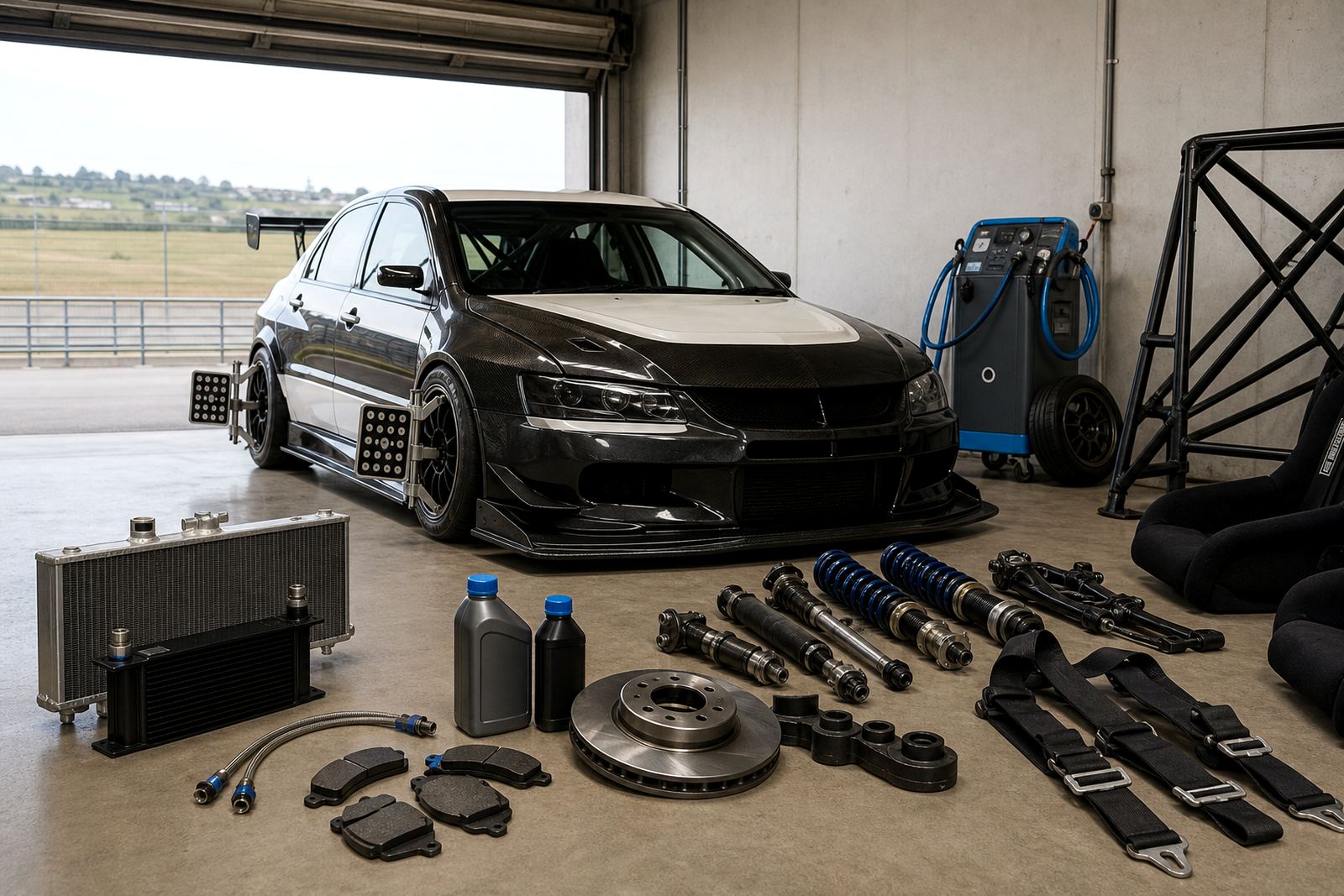
Short technical courses can still put real strain into the engine bay, especially when a car is held at higher revs between changes of direction and then driven hard off the line. Radiators, oil coolers and ducting deserve proper attention because heat soak builds quickly in a busy session. If a car already runs warm on the road, it will usually show the problem much sooner on course.
The driveline needs the same practical eye. A clutch that starts slipping when heat rises will ruin a run, and a shift setup that feels vague can cost time in a layout with tight transitions. Fuel cell placement and fuel system layout also matter where the build is being cleaned up for safety and repeatable delivery under hard cornering. None of this needs race theatre, just tidy planning and parts that suit the way the car is used.
- Radiators and oil coolers matched to heat load
- Clutch condition and shift feel under repeated use
- Fuel system layout where cornering loads are high
- Hose routing and clearance around moving parts
Seat, Harness And Cage Advice For A Driver Who Works The Wheel
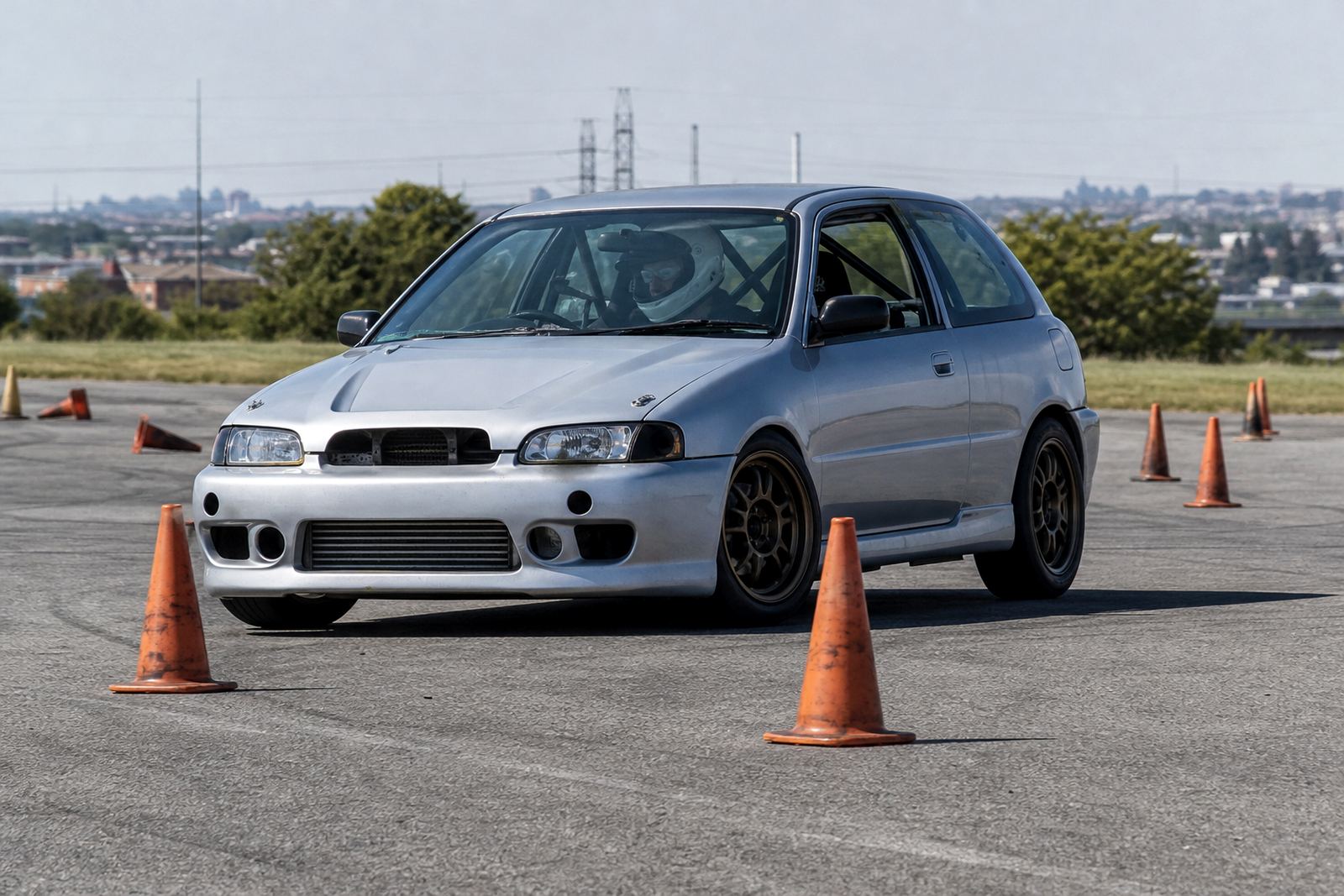
On a gymkhana car the driver is moving constantly, so the seat position must allow steering, pedal control and body support without bracing against the wheel. Seat positioning is not only about comfort. It affects whether the driver can hold a line through a tight section without overcorrecting, and whether the harness is sitting at the right angle when the body loads up in a fast transition.
We give fitment advice around fixed back seats, harnesses and roll cage clearance, especially where the car still needs to be practical for local events and road transport. A cage can be a good move when a build is growing beyond basic upgrades, but the layout must suit the shell and not block access or create awkward driving position issues. The aim is a car that feels secure, not cramped.
Common mistakes include mounting the seat too high, running harness straps at the wrong angle, and fitting safety gear before the driving position has been settled. Those errors make the car harder to place in a gymkhana section, and the driver ends up fighting the cockpit instead of the course.
Budget Bands For A Gymkhana Build In Rand
Most gymkhana projects grow in stages. A sensible first step may be brake pads, fluid, alignment and a basic suspension check. From there, the next stage might include coilovers, bushes and corner weighting. Higher budgets go into seat, harness and cage planning, plus cooling and driveline work where the car is being pushed harder.
The numbers move with the car, the class and the condition of what is already fitted, but these ranges help owners plan the month without guessing.
- Brake refresh and fluid service: about R2,500 to R8,000
- Alignment, corner weighting and basic setup: about R1,500 to R4,500
- Coilovers and bush work: about R10,000 to R35,000
- Seat, harness and fitment advice: about R4,000 to R18,000
- Cooling, clutch and fuel system updates: about R6,000 to R25,000
Parts choice, fabrication needs and the condition of the car will move those figures. A neat build on a tidy shell often needs less correction than a car that has already been through a few rough seasons.
Setup Days For Cars That Need A Cleaner Run Through The Boxes
Our track setup days are useful where a driver wants a sharper package rather than isolated parts. The car comes in, we look at brakes, suspension, alignment, seat position and the way the chassis sits under load. Then the practical decisions follow. Some cars only need a firmer front end and better pedal feel, while others need a wider reset because the current package is fighting itself.
Gymkhana work rewards honest setup. If the front refuses to bite, the rear is too eager, or the car feels busy in the hands, those signs show up quickly in a short course. We work through the usual fixes in a sensible order and keep the changes tied to the car rather than to guesswork.
- Brake Upgrade Planning for bite and consistency
- Coilover Setup with usable damping range
- Alignment Checks and Corner Weighting for balance
- Seat Positioning and Harness Fitment Checks for control
Drivers from Midrand, Johannesburg, Pretoria, Kyalami, Centurion, Durban, Cape Town and Port Elizabeth use the same practical approach. The course may be short, but the car still needs proper planning behind it.