

Cars that live on lock, heat and hard resets
A drift practice car is not treated like a normal road car with one or two playful laps on the weekend. It sees repeated wheelspin, high coolant temperatures, fast steering inputs and clutch work that can expose every weak point in the drivetrain. The usual call is for parts that hold together through training days, not show car parts or soft road replacements.
Most owners start with the basics and then refine the car as seat time grows. That usually means a cooling package that can manage slow-speed airflow, a clutch that takes repeated engagement without glazing too fast, and suspension parts that stay predictable when the rear axle is working hard on entry and exit. Bush wear, fluid choice and alignment all show up quickly in this kind of use.
For Midrand workshops and private builders, the aim is to keep the car trainable. If the cooling package is marginal or the pedal feel changes after a few runs, the driver starts missing the point of the day. A proper drift practice setup should let the driver focus on throttle, angle and transitions, not on wondering whether the next lap will overheat something important.
The parts that usually earn their place first
Practice cars usually need a sensible order of upgrades. There is little value in fitting a stiff suspension package if the cooling system is already struggling or the clutch pedal is inconsistent. We often see owners work through the car in layers, starting with the parts that affect heat, control and repeatability.
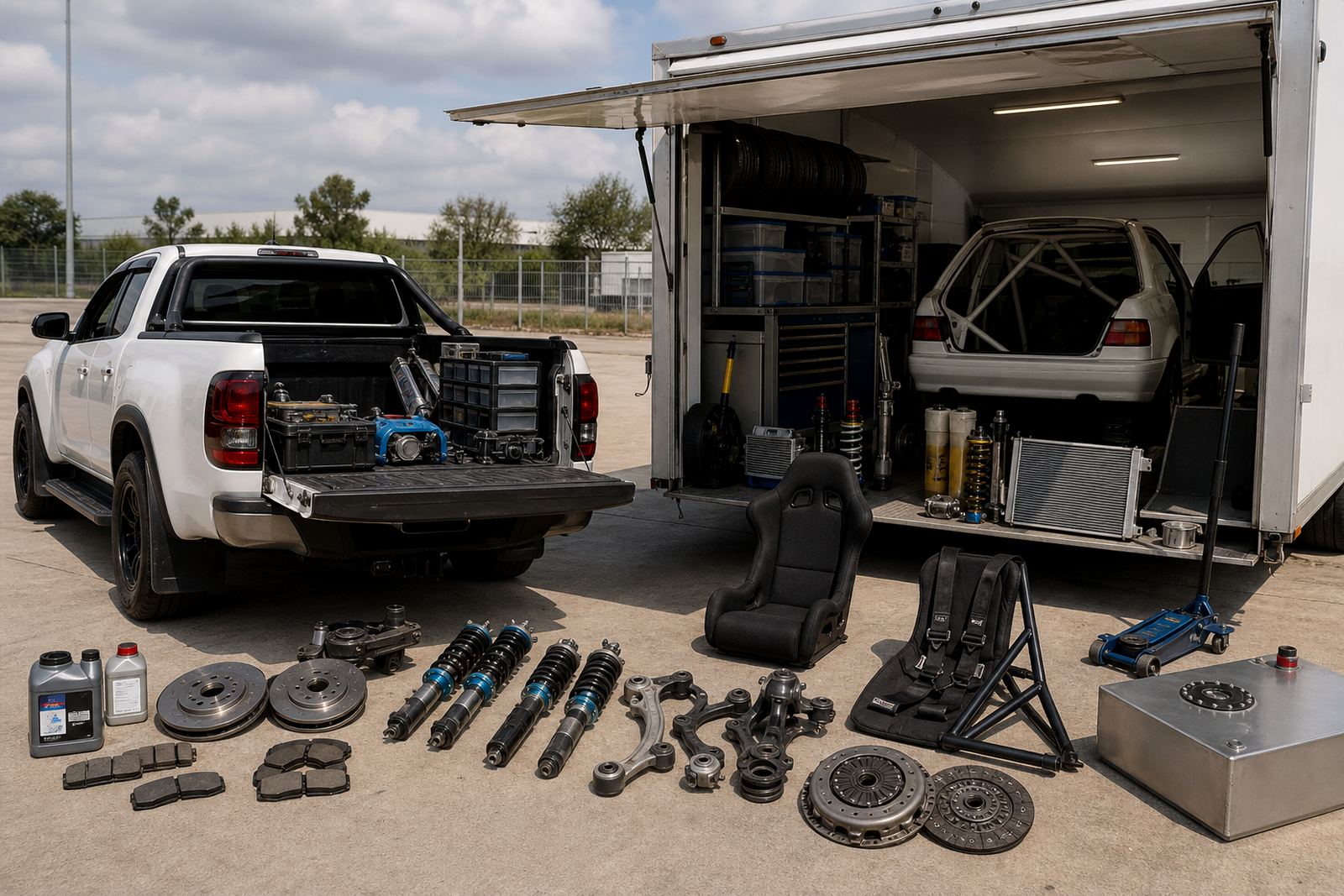
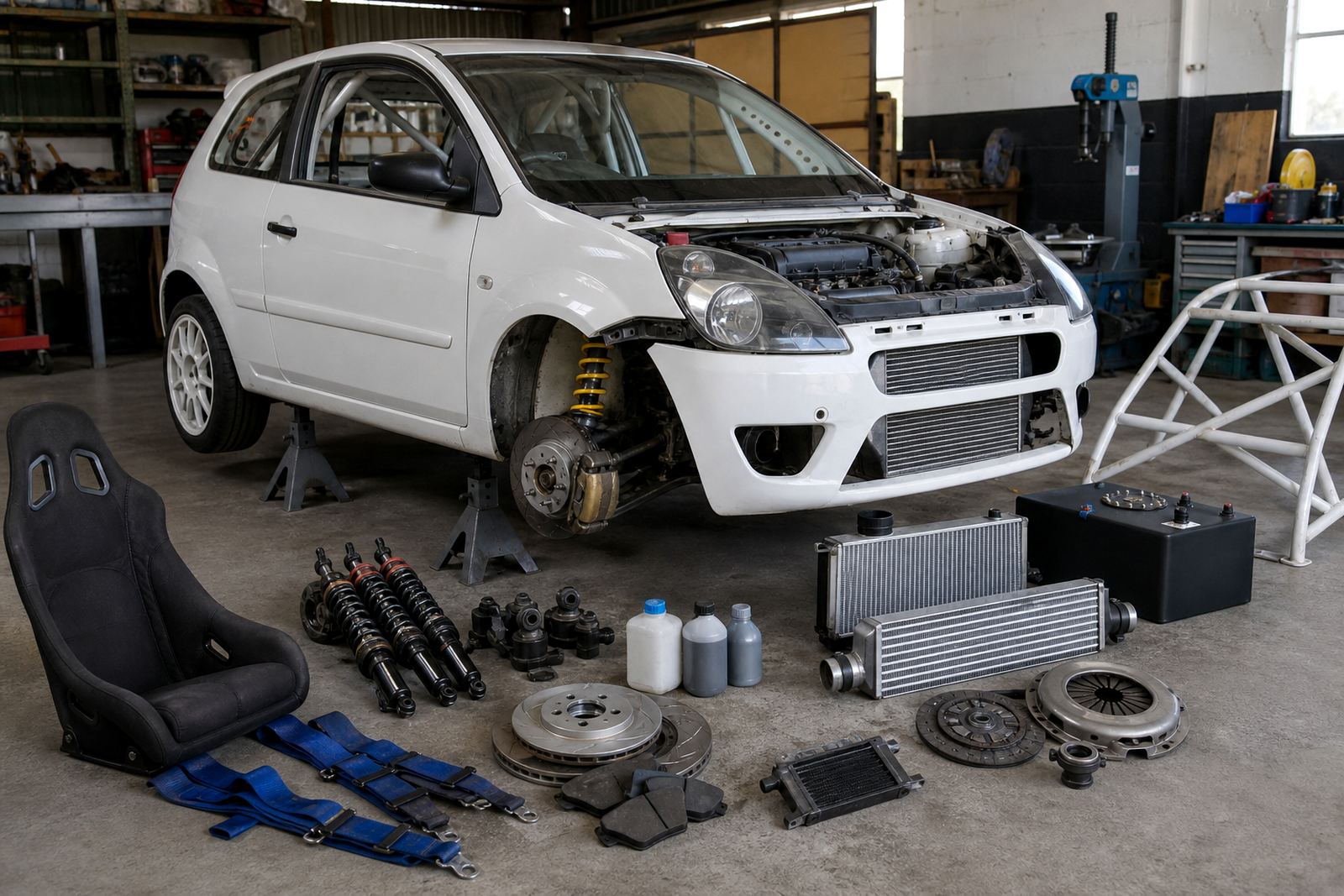
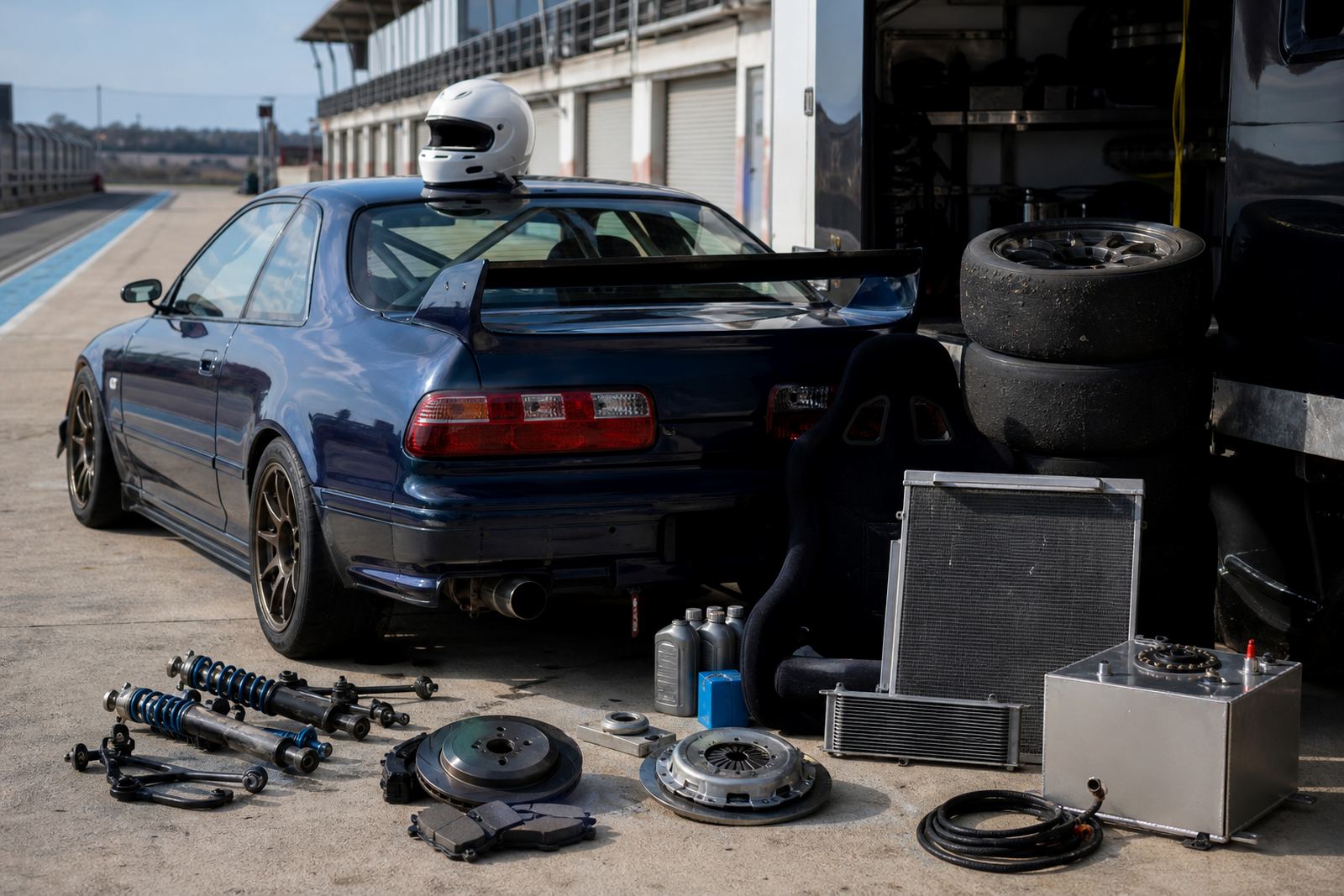
- Radiators and oil coolers with enough capacity for low-speed sessions
- Brake pads and fluid that keep pedal feel steady after repeated stops
- Clutches that can handle clutch kicks and repeated launches without going vague
- Coilovers or matched dampers and springs for better body control
- Bushes that reduce slop where standard rubber has become tired
- Seats and harnesses that hold the driver in place for cleaner inputs
- Fuel cells and fuel system layout checks where slosh or pickup issues appear
Not every drift practice car needs a full race shell. Some cars do better with targeted changes, especially where the owner still drives it to and from the venue or uses it for other motorsport work. In those cases, a good compromise can be more useful than a full strip-out that makes the car unpleasant to live with.
Layout choices that save headaches later
Drift builds reward neat planning. Radiator position, oil cooler position, ducting and hose routing all affect how cleanly the car works under repeated load. If the front end is crowded, the answer is not always a bigger part. Sometimes it is a cleaner layout, better air path and less heat soak around the engine bay.
Cooling is only one side of the story. Clutch setup and shift feel matter just as much in a practice car. A pedal that bites too high or too low can make the car hard to read, and a vague gearbox setup can make transitions messy. On the suspension side, good coilover setup and alignment checks help the driver keep the rear predictable without making the car nervous on entry.
Our fitting advice usually looks at how the car is actually used. Some cars see tight indoor practice spaces, others run longer club sessions at Kyalami or open tarmac days around Gauteng. A car that runs constant transitions needs different support from one used for a handful of warm-up runs and short coaching laps.
Faults that only become clear after a few laps
Most drift practice mistakes are not dramatic at first. They show up as heat, fade, chatter or a car that feels good for one run and then less settled on the next. The common issue is mixing parts that were never matched to the same job, or fitting harder components without checking the rest of the car around them.
- Oversizing parts before solving airflow and ducting
- Ignoring old bushes that let geometry move under load
- Running brake fluid that boils too early for repeated sessions
- Using a clutch that feels fine on the road but slips under training use
- Skipping corner weighting after suspension changes
- Setting ride height by eye instead of measuring the full setup
Another easy mistake is building the car only for one driver. If two or three people share the same drift car, seat position, pedal reach and harness setup matter more than many owners expect. A car that suits one driver perfectly can feel awkward to another, and that makes training less useful.
Budget bands that make sense for a practice build
There is no single Rand figure for a drift practice car, because the starting point changes everything. A tidy base car with serviceable suspension and cooling can need a modest refresh, while a tired shell with worn mounts, weak brakes and a poor fuel setup can swallow a far larger number before it feels ready.
As a rough working range, many owners begin with a focused spend of R8,000 to R25,000 for core consumables and corrective parts, especially where the car is already sound. A more involved package with coilovers, bushes, brake upgrades, cooling changes and seat or harness work can move into R25,000 to R70,000 or more depending on the car and how much labour is needed.
For more serious practice cars, the budget often shifts again once roll cage fit advice, fuel system layout and clutch control work are added. That does not mean every build has to go all-in at once. Some owners stage the work over a season, first fixing reliability and driver position, then moving into sharper suspension and more precise setup work.
Midrand support for drivers working across Gauteng and beyond
RaceHouse works with motorsport drivers who need parts and setup support for drift practice, testing and club use. From our Midrand base, we support cars heading to Johannesburg, Pretoria, Centurion, Kyalami, Durban, Cape Town and Port Elizabeth, with advice shaped around the way each car is actually used.
The team can help with brake upgrade planning, brake bleeding, coilover setup, alignment checks, corner weighting, cooling system checks, seat positioning, harness fitment checks, roll cage fit advice, fuel system layout, clutch and shift setup and track setup days. The point is to keep the package practical, so the car is safer, easier to read and less likely to waste a training day on avoidable faults.
Most drift drivers come to us needing parts matched to an existing build or a fresh practice car plan. The best results usually come from a clear picture of the car, the type of practice it sees and the parts already on the car, even if the list is a bit untidy at first.