

Pedal feel is usually the first clue
A healthy brake pedal feels firm and consistent. When the pedal starts to travel further than usual, feels spongy after a few laps, or needs a second press to give the same stopping feel, the fluid deserves attention. In motorsport use, that soft change often appears before anyone sees a leak or a worn pad.
Brake fluid absorbs moisture over time, and that water lowers the boiling point. On a hot day at Kyalami or during repeated braking into tight corners, the fluid can heat up enough to leave tiny vapour pockets in the system. Vapour compresses, the pedal goes long, and the driver loses confidence where the car should feel most settled.
Heat makes old fluid show its age
Track work, rally stages and spirited club racing all push the braking system harder than normal road use. The more often the brakes work near their limit, the faster the fluid cooks and the more often it needs checking. A car that feels fine on the way to the track can feel very different after ten hard laps or a dusty stage section.
Watch for these signs before the next event:
- Pedal travel changes after a few hard stops
- Brake feel fades as the session goes on
- The pedal firms up again after a cool-down lap
- One wheel or corner feels less consistent under repeated braking
- The fluid in the reservoir looks dark, cloudy or tired
Those signs do not always mean the whole braking system is failing, but they do mean the fluid is no longer giving the headroom the car needs under heat.
Moisture, age and storage all matter
Brake fluid does not wear out from distance alone. It also changes with time, humidity and how the car is stored. Midrand, Johannesburg and Pretoria see plenty of dry days, yet moisture still enters the system through vents, seals and service intervals. On coastal runs to Durban or Cape Town, humidity can work against the fluid even faster.
Cars that sit between events are not exempt. A race car parked in a workshop for weeks can still pick up moisture, especially if the cap has been off or the system has been opened during pad changes, caliper work or hose replacement. Once the fluid has absorbed enough water, the boiling point drops and the margin against fade shrinks.
- Frequent heat cycles shorten fluid life
- Open service work exposes the system to air
- Older fluid often darkens and loses clarity
- Coastal humidity can accelerate moisture intake
A Midrand setup day story that shows the pattern
At a setup day in Midrand, a club racer came in with a pedal that felt fine on the first few stops, then long and vague after a handful of hard braking zones. Pads were still in decent shape and there was no obvious leak. The car had fresh suspension checks and alignment notes, yet the brake fluid had been in service for longer than the owner expected.
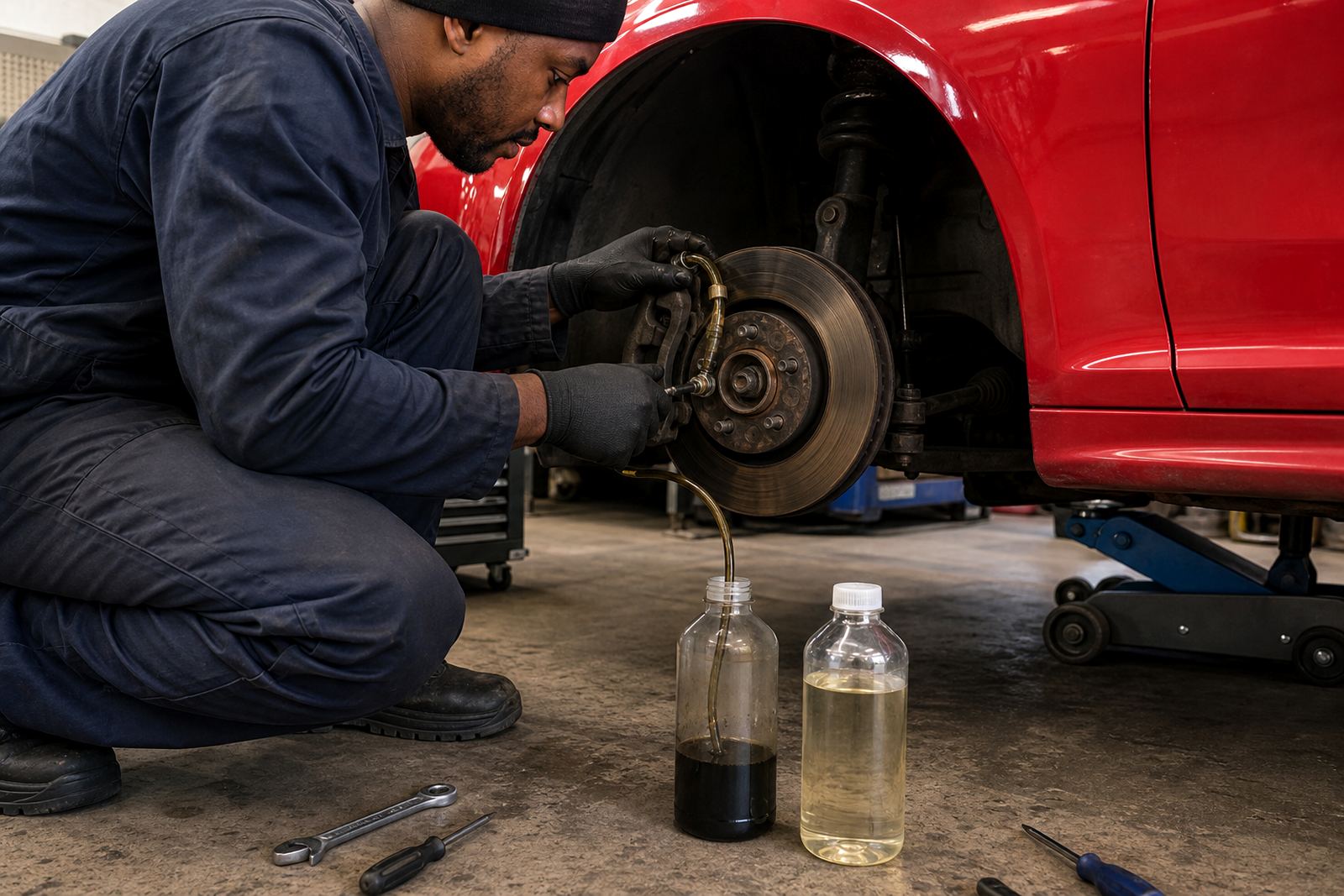
After a proper bleed and fresh fluid, the pedal feel returned to what the driver needed for threshold braking. The point was not that the car had a major fault. It was that old fluid had become the weak link. That is a common pattern when the rest of the car is working well and the driver is pushing harder than the fluid can comfortably handle.
When the pedal changes only after heat builds, the system is giving a useful clue. Ignore the clue and the next warning may arrive at the braking point instead of in the garage.
What gets checked before the next event
Brake fluid is only one part of the picture, but it should be checked alongside the full system. A careful look at pad wear, caliper movement, hose condition and master cylinder feel gives a clearer picture than one symptom on its own.
On track cars we often look at these points together:
- Fluid condition and bleed quality
- Pad thickness and even wear
- Disc surface condition
- Hose age, swelling or cracking
- Caliper movement and slider condition
- Reservoir level after repeated hard stops
If the pedal feel changes but the pads still have life left, the fluid may be the first item to service. If the pedal feel changes with uneven pad wear or a dragging corner, the system needs a wider check before the next outing.
Changing fluid before it complains saves the weekend
For motorsport use, brake fluid should be treated as service item, not a once-off fill. The right interval depends on heat, event frequency and how hard the car is driven. A rally car running rough roads and repeated braking zones will ask more from the fluid than a car used for the odd sprint day. A car that runs a bigger brake package still needs fresh fluid if the pedal is meant to stay consistent.
Fresh fluid helps the driver trust the pedal on turn-in, trail braking and emergency stops back in traffic. That matters whether the car is headed to Kyalami, a regional meeting in Centurion or a club event out of Johannesburg. Heat is part of racing, but a pedal that goes soft for preventable reasons should not be part of the plan.
If the pedal has started speaking up, listen early. Fluid is cheaper than lost confidence, and far easier to sort before the car is back on grid.