

The small notebook that saves a lot of second-guessing
A pressure log sounds plain, yet it often explains the biggest swings in balance. A car that feels sharp on the first laps can push wide later, or start moving around under braking once the tyres have picked up heat. Without a written record, that change is easy to blame on the driver alone.
At our Midrand base, we see the same pattern on club cars, rally cars and track builds from Johannesburg through to Durban and Cape Town. The driver feels a shift in grip, but the tyres have already told the story. A simple log records where the cold pressure started, what it rose to, and what the car did when it changed.
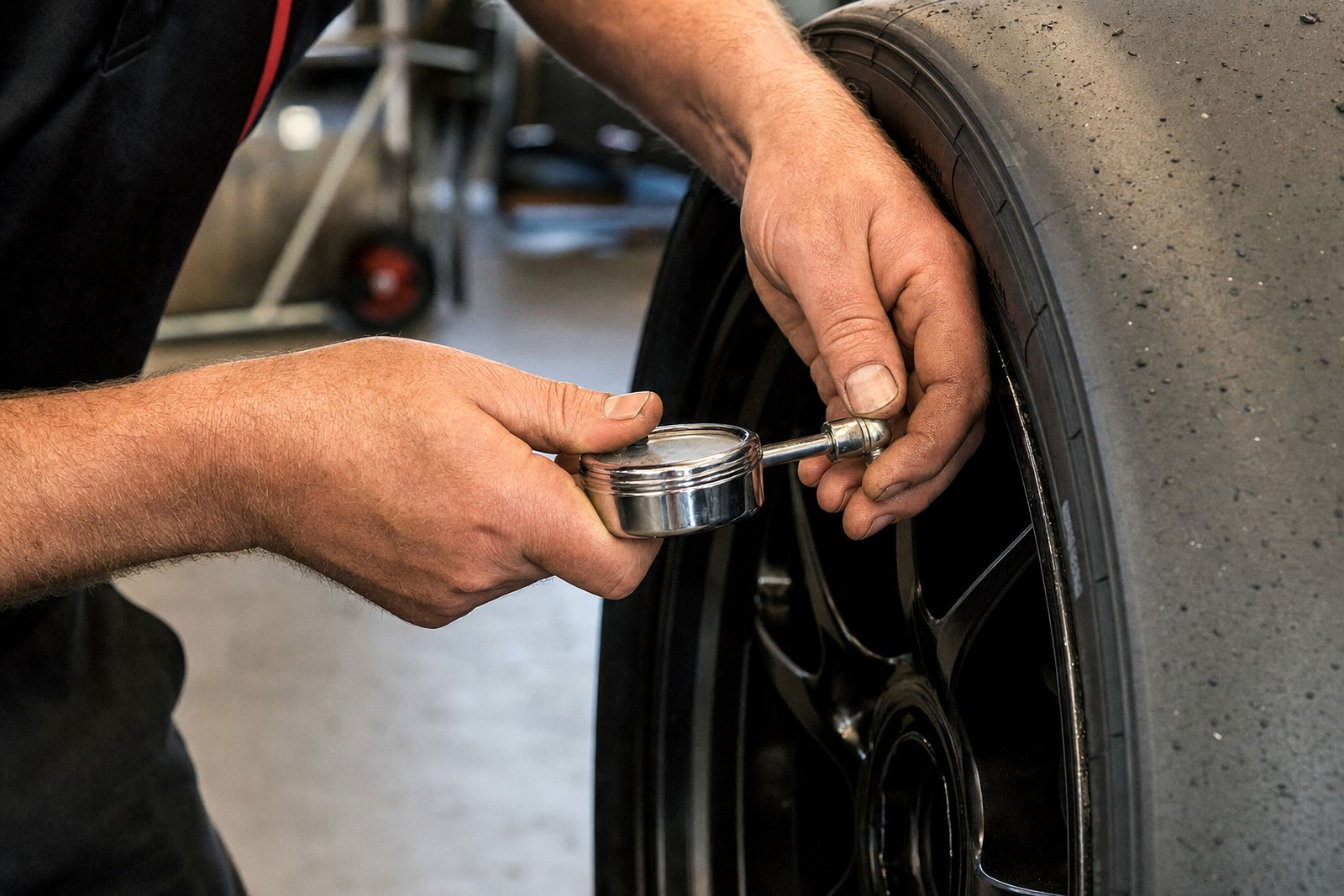
You do not need a complicated system. A clipboard, a tyre gauge and a tyre marker are enough to begin. What matters is consistency: same gauge, same method, same order around the car. That keeps the notes honest when you review them after the run.
What to write down before the car leaves the pits
Notes are useful when we can repeat them. Start with the basics before the session, then add the conditions that may have affected the tyres. A windy morning, a hotter afternoon and a longer out-lap can all move the numbers.
- Cold pressure at each wheel, written in the same unit every time
- Tyre position, so front left does not get mixed with rear right
- Ambient temperature and track surface temperature if you have it
- Session length and whether the pace was steady or hard from the start
- Any visible wear, graining, blistering or unusual shoulder scuffing
Some drivers also note whether the fuel tank was full or light, because weight changes affect how the tyre loads up. That matters on a car with a firm suspension setup or coilovers, where a small pressure change can show up quickly in the steering feel.
Heat, grip and the story in the shoulders
Tyre pressure rises as the carcass flexes and warms up. That rise is not a fault by itself. It becomes useful when you compare the numbers with the feel in the car. Too much pressure can reduce the contact patch and make the car nervous on turn-in. Too little can let the tyre roll onto the shoulder and scrub heat into the sidewall.
The wear pattern often tells you which end of the car is carrying the wrong load. If the front outside shoulder is getting chewed up at Kyalami, the pressure may be too low for the cornering load, or the alignment may need attention. If the rear feels loose on turn-in and the rear tyres are running hotter than expected, there may be too much pressure at the back or too much rear roll for the spring and damper package.
This is where a pressure log works with other setup notes. Brake upgrade planning, corner weighting and alignment checks all affect the same bit of rubber. The log helps separate a tyre issue from a suspension or braking issue, which saves time when the car is back in the workshop.
A Midrand session note from a Gauteng club car
A local club racer from Centurion came through for a setup day with a front-wheel-drive car that felt tidy in the morning and edgy by the last run. The driver had tyre notes from the start of the day, but not in a steady format. We sorted the log, then matched it against the alignment settings and the brake balance.
The front tyres were arriving at pit-in with more heat than expected, while the rear stayed flat and unremarkable. The car was carrying more load at the nose than the driver realised, partly because of the braking pattern and partly because the tyre pressures had been set to a cold figure and left there all day. Once the notes were written clearly, the change across the day made sense.
- Morning pressure was recorded wheel by wheel
- Post-run figures showed the front rising more sharply
- Wear marks on the outside shoulder matched the pressure data
- A small adjustment improved consistency through later sessions
That same sort of note keeping works for a rally car on mixed surface stages too. Gravel, tar and heat do not treat the tyres the same way, so the log needs to match the surface and the stage length.
How to keep the log useful after the car is parked
A tyre log works best when it stays brief enough to use after every session. Once it turns into a page of guesses, drivers stop filling it in. The strongest notes are the ones that matter to the setup, with only the figures that change the car. A few clean lines after each run are usually enough.
We suggest keeping the same sheet for the whole event, then adding one line for each tyre change or pressure adjustment. If a car runs brake ducting, a big front splitter or a different wheel size, note that too. The tyre does not care what the part is called, only how much heat and load it sees.
- Use the same gauge throughout the day
- Write the pressure before and after each session
- Mark any adjustment in quarter psi or tenth of bar if that is your habit
- Note the driver comment in plain words, such as push, loose, nervous or stable
- Keep the page with the car so the next event starts with real numbers
For drivers in Midrand, Johannesburg, Pretoria, Durban or Cape Town, that habit makes setup days more useful. It gives the workshop a clean trail of what the car did on tar, in heat and under race pace, not just what someone remembered later.
Where tyre notes fit with the rest of the car
Tyre pressure is only one line in the setup book, but it sits close to the rest of the car. Brake bleed quality changes pedal feel, a harness that holds the driver better can change how the steering is judged, and a suspension package that is too stiff can make the tyres work harder than they should. All of it shows up in the log if the notes are honest.
When a driver brings the car in for brake upgrade planning, cooling checks, seat positioning or fuel system layout, the tyre notes help shape the conversation. They show whether the issue starts with grip, heat or balance. That is often the difference between changing one small setting and replacing the wrong part.
For track, rally and club racing cars, pressure logging is not paperwork for the sake of it. It is part of reading the car properly, much like listening for pad knock-back, watching oil temperature or checking how the clutch takes up under load. The notes do not need to be clever. They only need to be there when the tyres start telling the truth.