

Dust build-up starts at the intake, not the engine bay
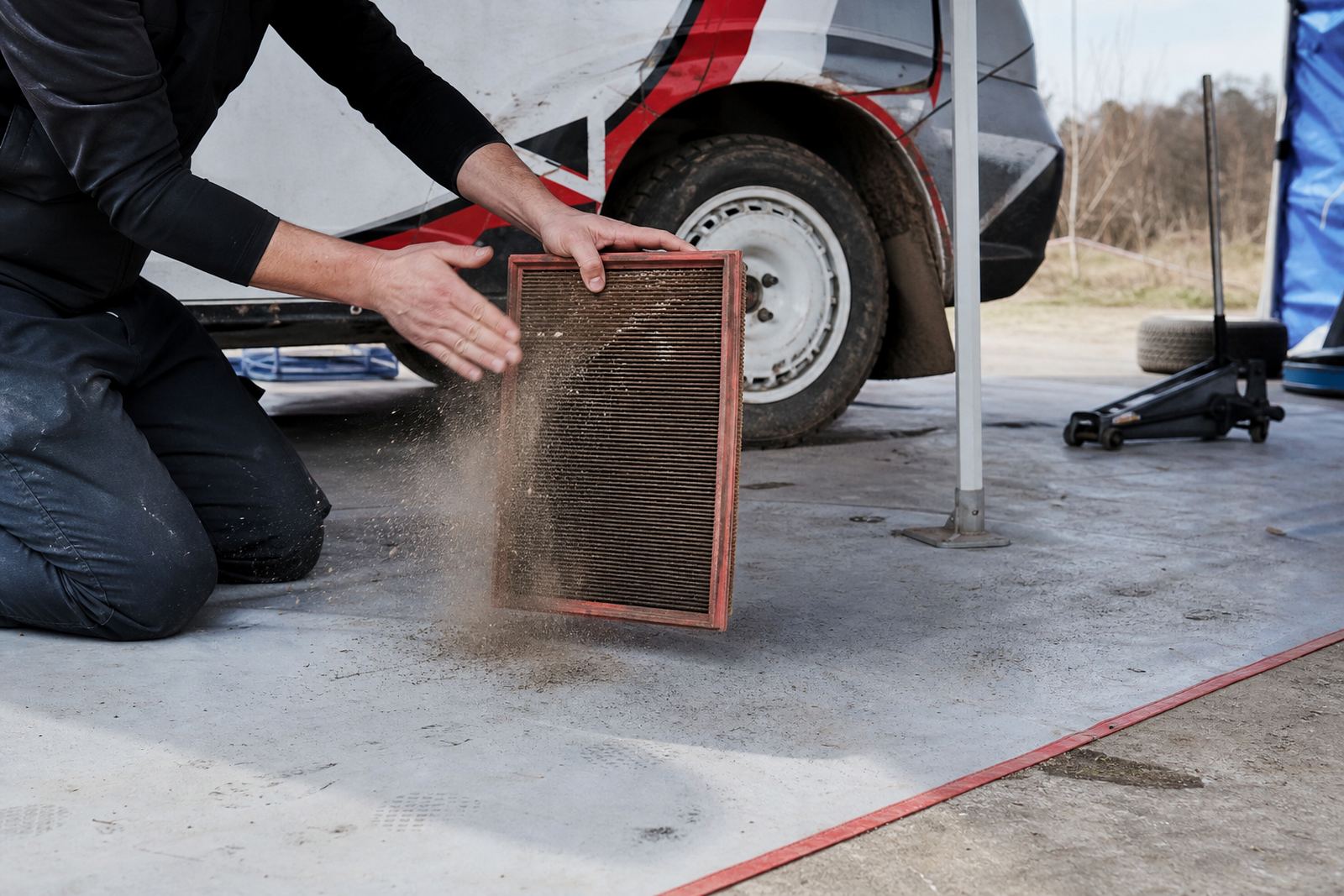
On a track or rally car, the intake filter is the first line between airborne grit and the rest of the engine. Fine dust carries through Kyalami pit traffic, gravel service roads and dry Highveld test days, then settles into pleats, foam and filter oil. Once the surface load rises, airflow drops and the engine starts working harder for the same result.
That is why filter care is not just a tidy-up task. It sits alongside brake checks, cooling checks and clutch setup when a car is being prepared for repeated hard laps or stage runs. If the filter is packed with dirt, the engine may feel flat at high revs and more uneven on long pulls out of slow corners.
Midrand roads can be dusty after wind and construction traffic, and that dust does not vanish once the car reaches the circuit. A clean filter does more than protect the motor, it keeps throttle response more consistent when the driver is pushing through a session.
How dusty conditions change the service rhythm
Dusty conditions shorten the gap between inspections. A car running at a club event in Gauteng may need a closer look after one weekend than the same car would need after several weeks of clean road use. Rally cars often need even more attention because surface conditions vary from one stage to the next.
- Check the filter after every dusty event, not only when symptoms show.
- Look for dust lines on the clean side of the housing and intake tube.
- Inspect seals, clips and filter edges for movement or poor seating.
- Review the service interval after gravel, dirt or windblown conditions.
- Keep spare cleaning materials ready for the next event day.
When the dust load is heavy, the filter should be treated as a service item rather than a permanent fitment. The cleaner the intake path, the less strain there is on the engine over a long race distance.
Two minutes in the pits: what the filter tells you
A short inspection can reveal more than many drivers expect. Open the intake housing and look for loose dust sitting on the clean side, dark staining near the edge of the filter, or small stones trapped where the seal should be doing its job. A filter can look acceptable from the outside and still be letting dirt past an edge or clamp point.
The housing itself matters too. If the lid is distorted or the retaining clips do not pull down evenly, the filter may not seat properly. On some cars, heat and vibration can shift an intake pipe slightly, which then allows dust to bypass the filter during a hard run.
- Check the seal line all the way around the filter frame.
- Make sure the housing closes evenly with no warped corner.
- Inspect intake ducts for cracks, loose joins and rubbing marks.
- Confirm that no cleaning oil has pooled where it should not.
A filter service should leave the whole intake path neat, secure and ready for another session. Anything less leaves room for grit to move further into the system.
Cleaning methods depend on the filter type
Different filter materials need different handling. A dry panel filter cannot be treated the same way as a foam element, and an over-oiled filter can create its own problems by restricting flow or attracting extra dust. The goal is not to make the filter look new, it is to restore usable airflow while keeping the media intact.
Washable filters need careful cleaning, full drying and the right amount of re-oiling if the media requires it. Over-treatment can be as unhelpful as neglect. Paper-style filters are usually replaced rather than pushed beyond their limit, especially if the car has spent time in dirty conditions.
- Use the cleaning method matched to the filter material.
- Let foam or fabric media dry fully before refitment.
- Avoid heavy oiling that blocks airflow at the face of the filter.
- Replace any filter that shows damage, collapse or torn seams.
On a track car, a filter that has been over-cleaned, crushed or poorly reinstalled can cost more in engine wear than the price of a proper replacement. That is a poor trade on a car that already sees high heat and sustained load.
Dusty summer testing and a clogged element
A club racer coming out of Midrand for summer testing in Gauteng may start the day with a clean intake and still end up with a heavy dust layer after a few runs. If the car has a low front opening, the filter can pick up fine grit from the pit area and from cars ahead on the same access road. The driver may notice a slight loss of pull on the straight and then find the filter face coated by the end of the day.
In that sort of session, the sensible move is not to wait for a warning light or a bigger problem. The intake should be opened, the filter checked, the housing wiped clean and the sealing points examined before the next outing. That habit saves time later and keeps the setup notes honest, because a dirty intake can mimic other faults in fuelling or ignition.
Dust care is especially useful before long-distance travel to Durban, Cape Town or Port Elizabeth events, where the car may cover a mix of road and track kilometres. A clean filter and a sealed housing help the engine arrive in better shape and stay predictable under load.
Make filter care part of the full setup checklist
Filter checks work best when they sit beside other prep tasks. Brake balance, cooling flow, corner weighting and seat position all affect how a car behaves on track, but intake cleanliness affects how the engine delivers power through that package. A good setup can still feel off if the motor is breathing through a clogged filter.
For cars that run rally stages or dusty circuit sessions, a full check should include the intake route, clamps, couplers and the space around the filter box. Heat soak from nearby pipes or poor panel fit can also change how dust settles inside the bay. The cleaner the installation, the easier it is to spot a problem before it becomes expensive.
- Pair filter checks with cooling and brake inspections.
- Review intake routing after any engine bay change.
- Log the condition of the filter after each dusty event.
- Plan replacements around event use, not calendar guesswork.
That method keeps the car more even from run to run. It also gives the team a clearer view of what the engine has been facing in real motorsport use.