

What your left foot is actually feeling
When drivers talk about clutch pedal feel, they are usually describing three things at once: effort, travel and bite point. Effort is the weight of the pedal. Travel is how far it moves before the clutch starts to release. Bite point is where drive starts to come in, and that point can feel sharp or soft depending on the parts in the system.
A clutch that feels heavy is not automatically better for track work. Too much pedal effort can slow changes, tire the driver and make smooth launches harder. Too little effort can hide what the clutch is doing, especially in traffic on the way to Kyalami or during a rally stage where the car needs clean, repeatable engagement.
Pressure plate load and the shape of the bite
The pressure plate is the first place to look when pedal feel is wrong. A higher clamp load can hold more torque, but it often brings a firmer pedal and a narrower sweet spot. That may suit a hard used circuit car, yet it can make hill starts and pit lane crawling unpleasant.
Engagement shape matters as much as peak load. Some setups take up gently, then bite hard near the top of the travel. Others come in more evenly. For club racing, that difference can decide whether a driver leaves the paddock with a calm left leg or a tired one after a short session.
- Single plate setups usually feel lighter than multi plate systems.
- Organic or road biased discs often engage softer than race pads for clutches.
- More spring pressure can improve hold, but it usually raises pedal effort.
- Heat cycling can change the way the clutch takes up after repeated laps.
Hydraulics, pedal ratio and the hidden levers
Hydraulic clutch parts can make a good package feel awkward if the balance is off. Master cylinder bore size, slave cylinder stroke and pedal leverage all work together. If one part is mismatched, the driver feels it as a long pedal, a sudden bite, or a pedal that feels wooden near the floor.
Bleeding quality matters too. Air in the line compresses under load, which softens engagement and changes the bite point from one lap to the next. On a humid Durban weekend the system may not care about the weather, but moisture in old fluid and tired seals can still change the pedal more than people expect.
- A larger master cylinder often gives a firmer pedal with less travel.
- A smaller slave cylinder can reduce travel but may need more pedal pressure.
- Poor bleeding creates a spongy feel and uncertain take-up.
- Old fluid can boil or fade, especially in repeated stop start use.
Heat, repeat launches and what changes at the end of a session
Clutch feel is rarely static across a day of driving. As temperatures rise, friction material and release parts can behave differently. A clutch that feels neat in the first session may start to shudder, drag or grab harder once the car has seen repeated launches and longer runs.
For sprint cars, the first warning is often a change in bite point. For rally cars, the warning can be a smell or a slight hesitation when selecting gears after hard sections. That is where cooling, bellhousing airflow and sensible parts choice matter. It is also where a driver learns that a clutch issue is not always a gearbox issue.
- Heat can make friction surfaces change character during the day.
- Dragging on a hot clutch can point to release travel that is too short.
- Judder on pull away may come from contamination or uneven wear.
- Repeated abuse can make even a good setup feel inconsistent.
Engine torque, flywheel mass and drivability balance
Pedal feel does not live in the clutch alone. Engine torque decides how much holding force the clutch must manage, while flywheel mass shapes how the car picks up speed and how forgiving the launch feels. A lighter flywheel can sharpen response, but it can also make take-up more abrupt and expose a weak launch technique.
For a naturally aspirated club racer in Johannesburg, a slightly more forgiving engagement may help through paddock traffic and short practice runs. A turbo car heading to Cape Town or Port Elizabeth for a track day may need a stronger clutch with more defined bite, especially if the torque comes in hard and low in the rev range.
Setting the car up for a cleaner left foot
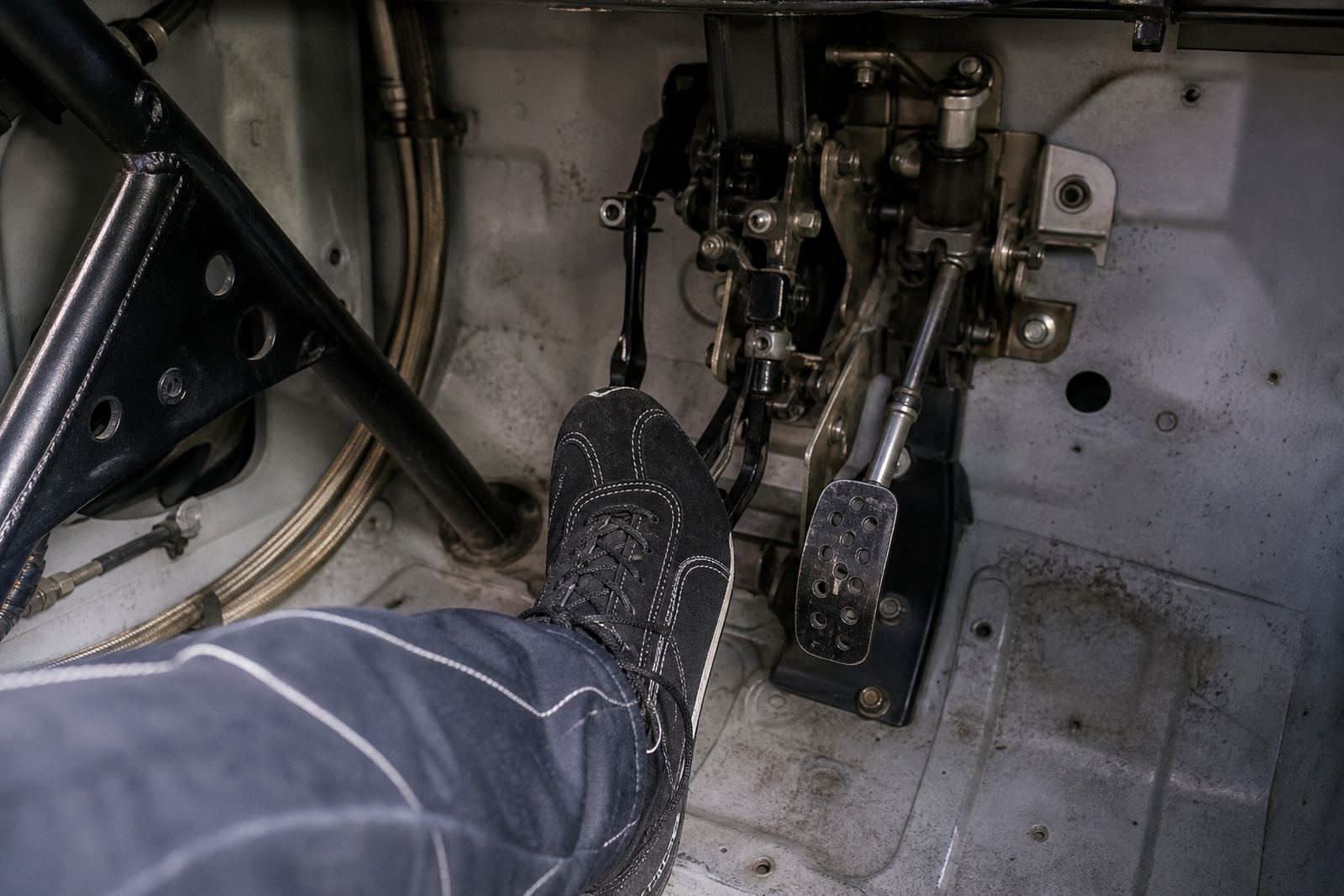
When clutch feel is part of the setup conversation, it should sit beside seating position, pedal height and shifter reach. If the driver is too far from the pedal box, or the seat position forces the ankle into a poor angle, the clutch will feel heavier than it really is. Small changes can improve consistency more than a long list of expensive parts.
At RaceHouse in Midrand, a clutch setup discussion often sits next to brake balance, coilover settings and alignment checks. A driver who is comfortable in the seat and properly braced through the harness tends to read pedal feel better and use it more accurately. That matters on setup days, where the same car can feel very different once the driving position is sorted.
- Check the driver can press the pedal without twisting the hip.
- Make sure the bite point is repeatable from session to session.
- Look for shudder, drag or slipping under heat.
- Confirm the pedal return is smooth and full.
A Midrand setup day lesson from a Kyalami regular
A Kyalami regular came in with a complaint that the clutch felt too heavy and inconsistent after a few hard laps. The car was not slipping, which is why the issue had been ignored for a while. Once the hydraulic travel was checked, the seating position measured and the release points examined, the real problem was easier to see. The pedal effort was being amplified by a poor driving position and a setup that had too little usable travel.
After that, the clutch no longer felt like a mystery. The driver could predict the bite point, shift more cleanly and stop fighting the pedal on every launch. That is the value of looking at the whole car rather than one part in isolation, especially for drivers moving between Midrand traffic, Kyalami sessions and long road sections.