

Start with the hottest and busiest areas first
Before a hose is clipped into place, look at the route as a whole rather than line by line. The engine bay, turbo area, firewall and front wheel arches are usually the places where heat, vibration and steering movement all meet. A hose that passes near a manifold or sharp bracket may seem fine at rest, yet it can touch once the engine rocks under load or the suspension compresses on kerbs.
On a race car, the first job is to keep any hose away from pinch points. That includes steering shafts, bonnet hinges, pedal linkages and sharp body edges. If a hose must cross a panel opening, fit a grommet or proper edge protection and leave enough slack for movement without letting the line bow into another hot surface.
- Map the route with the bonnet open and the wheels at full lock.
- Check where the hose touches when the engine moves under blip and braking.
- Keep lines clear of exhaust heat, rotating pulleys and suspension travel.
Give clamps and clips a proper job, not a decorative one
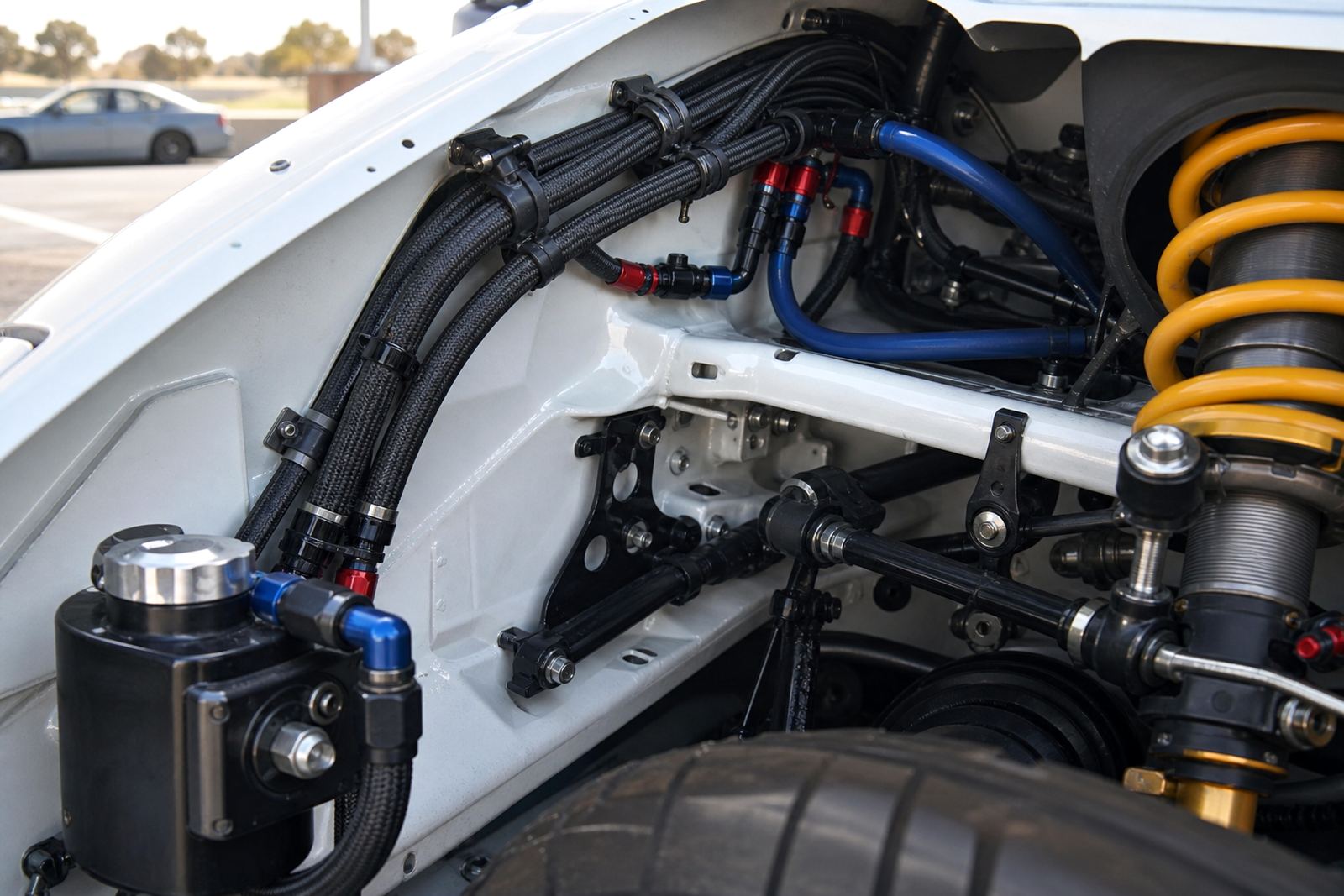
Good routing depends on support. A hose that is only held at the ends will flap, chafe and work on the fittings. Use clips, P-clamps and cushioned mounts at sensible spacing, then tighten them enough to steady the line without crushing it. If the hose is fuel, coolant or brake related, the support points need to suit the diameter and the surface they sit against.
Many problems start where a clip is fixed to a thin panel that vibrates. The hose then wears through from the back side, where nobody checks first. It helps to anchor the line to a firm bracket or structure and to keep the clamp edge smooth. If a section passes near another hose, leave a small gap between them so the movement of one does not saw into the other during a long session.
In Midrand workshops we see plenty of race cars that were tidy on day one and rough after a few events. That is usually because the support points were chosen for appearance rather than load path. A neat line is useful, but a line that can survive gravel, heat and wheel movement is far more important.
Leave access for bleeding, checking and swapping parts
Hose routing should make maintenance easier, not turn every service into a strip-down. Brake lines, cooling hoses and fuel hoses all need room for inspection at unions, bleeders and hose ends. If a fitting is buried behind a brace or trapped under another line, you will waste time every time the car needs a check.
Plan for the jobs that happen often on a club or rally car. A brake system may need bleeding after pad changes or after a long event. A cooling hose may need to be removed after a radiator flush. A fuel line may need inspection around filters, connectors and the tank area. Leave enough hand space and spanner room at each service point, even if that means the route is a little longer.
- Keep unions visible where possible.
- Do not hide bleed nipples behind fixed panels.
- Allow enough slack to remove a hose without bending the fitting.
- Think about future clutch, brake or cooling work before final tightening.
Heat shielding helps, but distance still matters
Heat sleeve and reflective wrap have their place, yet they are not a licence to run a hose anywhere you like. A protected line still suffers if it sits too close to a manifold, turbo housing or oil cooler ducting that bakes the same area every lap. The cleanest answer is usually to move the hose away first, then use shielding only where the route cannot be changed.
For coolant and oil cooler lines, look at how air moves through the bay. A hose tucked into a dead pocket can pick up more heat than one placed where airflow can strip temperature away. On some cars, the best route is along a cooler inner wing or undertray edge, provided the line is protected from road debris and stone strike. On others, the route must rise higher to clear suspension travel and the steering rack.
Fuel and brake hoses deserve extra caution near heat sources because both fluid type and fitting condition matter. A hose that hardens over time will not bend kindly around a tight corner, and that is when cracks and weeps begin. If a bend looks too sharp to be comfortable by hand, it is too sharp for the car too.
Build around steering lock and suspension movement
One of the easiest mistakes is routing with the car at ride height only. A front hose that clears the tyre in the workshop may rub at full lock or under compression on a bumpy stage. Rear lines can suffer the same fate when the axle or trailing arm moves through its arc. Always check the route at the extremes, not just in the middle.
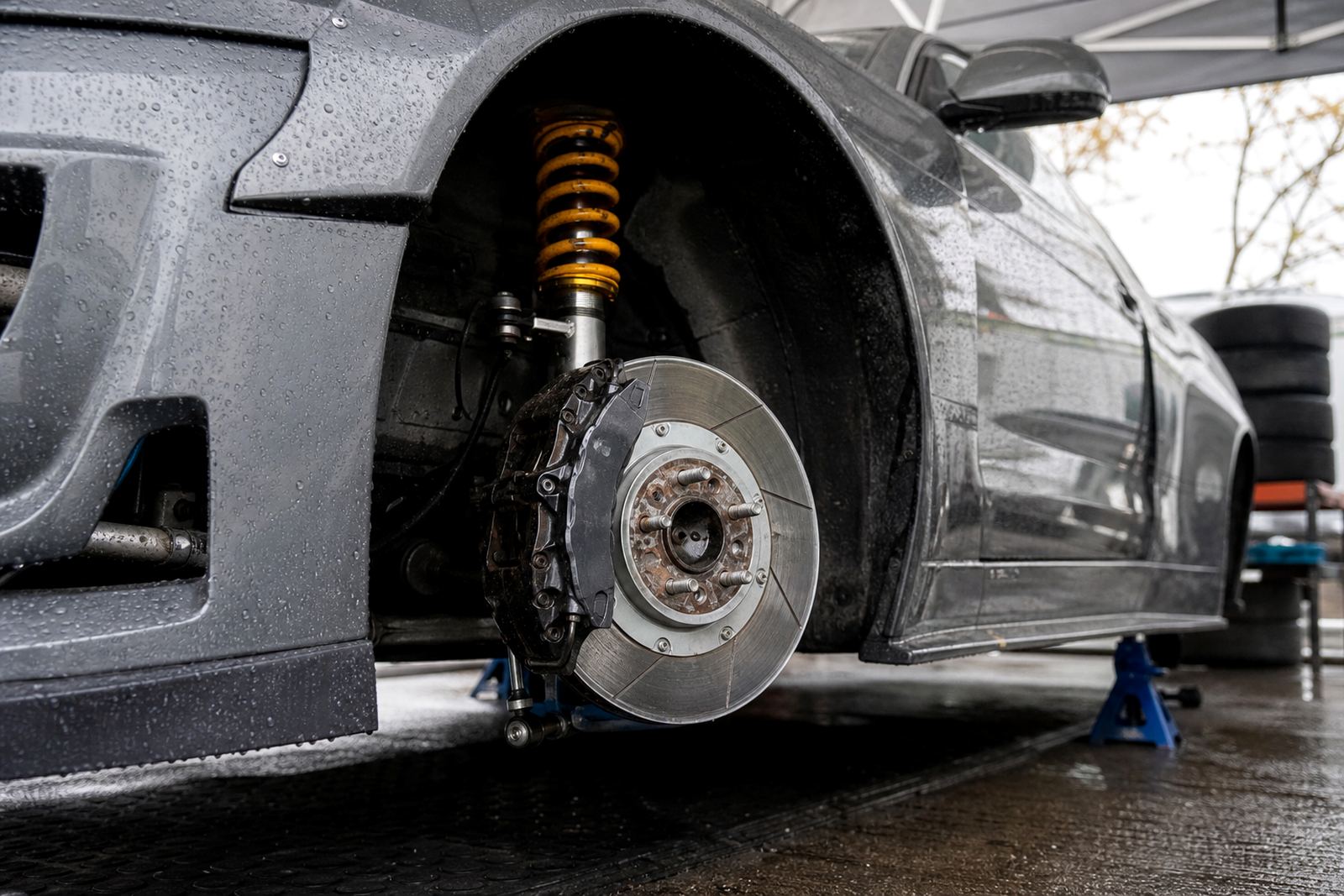
For coilover-equipped cars, the suspension can move more predictably but still far enough to catch a line that is too proud of the body. Keep hoses inside safe channels where possible and use enough restraint to stop them wandering. If a hose crosses near the wheel well, it should be high enough and fixed well enough that a tyre cannot kiss it under load or with a worn bush in the mix.
- Turn the steering from lock to lock while watching the hose path.
- Compress the suspension and inspect for contact points.
- Check for rubbing where bush movement changes the geometry.
A Durban car, coastal air and the cost of sloppy routing
Coastal humidity changes the way a build ages. In Durban, a car that lives near the sea can show corrosion on clips, brackets and fittings sooner than a dry inland car. That does not mean the hose itself is the problem, it means the routing needs better support, cleaner hardware and less chance for trapped moisture around the mount points.
A rally customer bringing a car through Gauteng for setup days might arrive with a line that was perfectly fine on a sunny test route but not on wet roads, gravel and long transport sections. We would look at the hose path, the clip positions and the fittings near the tank, brake master cylinder or radiator. Often the fix is small: move a clip, shorten a loop, add protection at a body edge, or change the angle of a fitting so the hose stops fighting its own bend.
That sort of practical check matters on club racing cars as much as on full track builds. A neat route makes the bay easier to work on, but more important, it reduces the chances of a rub-through that only shows itself after the car has already been pushed hard.
Finish with a serviceable route, not a clever one
The best hose routing is usually the plainest route that satisfies heat, movement and access. If a line is tucked away so neatly that nobody can inspect it, the job is not finished. If a hose is short enough to look tidy but tight enough to pull on a fitting, it needs more room. The final check is simple: can the car be serviced without fighting the route each time?
At our Midrand base, hose routing is often checked alongside brake upgrade planning, cooling system checks, clutch and shift setup, and track setup days. That matters because one line can affect more than one system. A brake hose that rubs near a wheel can ruin confidence, while a fuel line that sits awkwardly over a service point can slow every inspection after an event.
Good routing does not need drama. It needs enough space, steady support and a clean path from one end to the other. Get those three things right and the car is easier to live with on the road, in the paddock and on the stage.