

The first signs sit in the pedal and the wheel
Most brake wear starts showing through feel long before anyone strips the caliper. A longer pedal, a softer bite, a slight pull to one side or a change in how the car settles under hard braking all deserve a closer look. On track cars and rally cars, those changes can show up after a few hard sessions even when the pads still look thick from the outside.
Wheel dust tells a story too, but it is not the only one. Heavy dark dust on one corner may point to a dragging caliper or a pad that is wearing unevenly. A shiny disc face can be normal after heat cycling, yet a blue patch, crack line or ridge at the outer edge means the disc has been working hard and may be near its limit.
At the Midrand base we see this often on cars that do weekend work around Kyalami and local club events. The driver feels the brakes still work, but the car asks for more pedal than it used to, and that is usually the point where a careful check saves a lot of grief later.
How to read pad wear without guessing
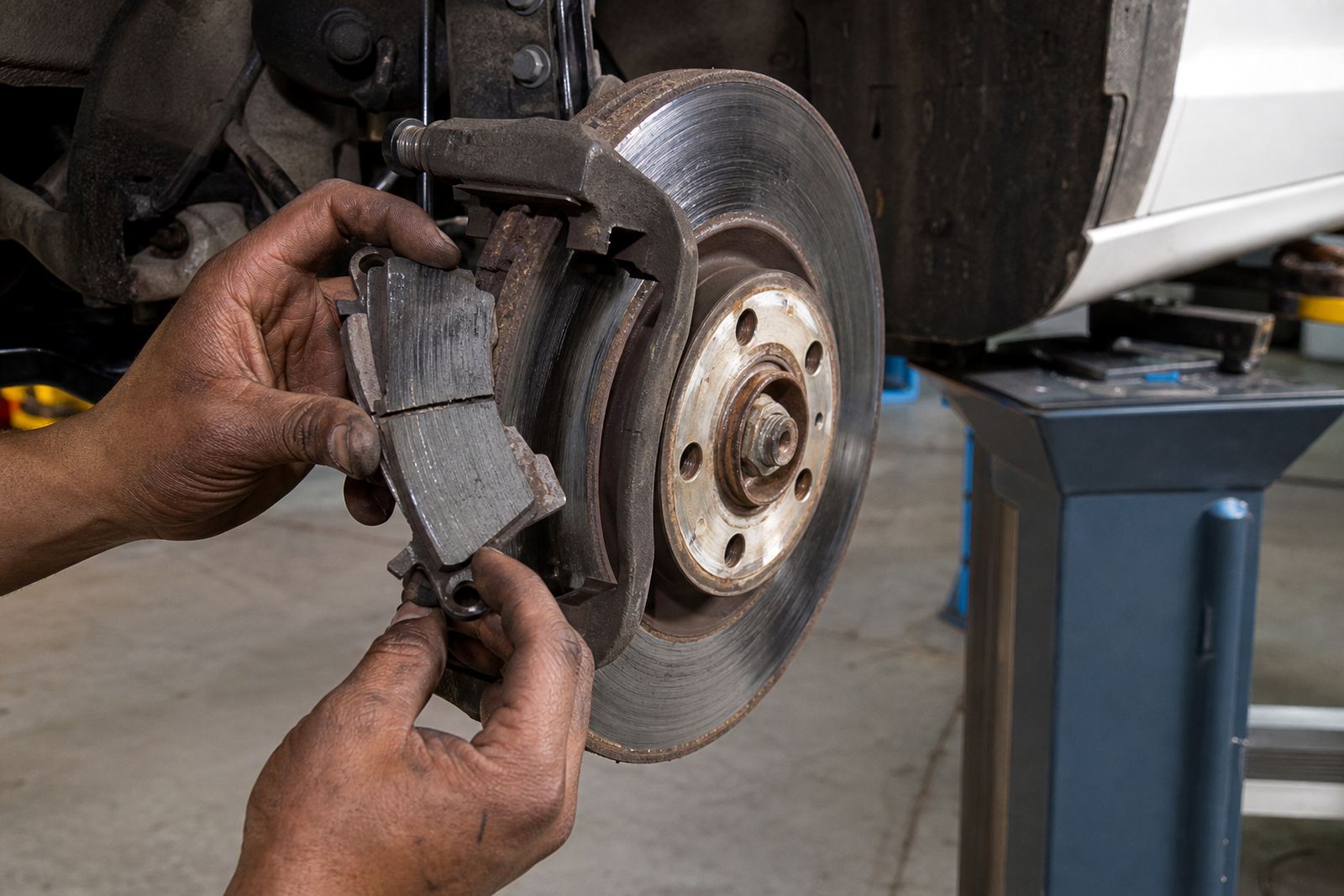
Pad thickness is the easy part. The useful part is looking at how the pad is wearing across its face. A pad that is thicker at one end can mean the caliper is not floating as it should, the guide hardware is sticky, or the alignment on that corner is causing extra heat and pressure. Outer and inner pads should be close in wear if the system is healthy.
Use a torch and compare both sides of the axle. If the inner pad is much thinner than the outer, the piston side may be doing more work than expected. If both pads have a tapered edge, the fitment or the braking style may be pushing heat into one part of the pad more than the rest. That matters on cars that get used for rally stages, where repeated heavy stops are common.
- Check each pad through the inspection window or by removing the wheel.
- Look for cracking, glazing or chunks missing from the friction material.
- Compare inner and outer pad wear on the same corner.
- Measure remaining thickness on all four corners, not only the front axle.
Disc marks that are useful, and the ones that are warning signs
Brake discs can look tired without being unsafe, but there are lines that matter. Fine surface marks are normal after grit and heat. Deep grooves are not always a problem on their own, yet if the groove catches a fingernail it is worth measuring the disc and comparing it with the minimum thickness marked on the disc or listed in the workshop notes. Thin discs hold heat badly and can fade more quickly on a long run.
Heat spotting looks like tiny hard marks on the disc face and usually means the disc has seen repeated high temperatures. Cracks that run from the inner edge towards the outer face are a stronger warning. If the disc shows a lip at the outer edge, the pad is no longer sweeping the full surface evenly and braking performance can become less predictable.
For a Johannesburg driver heading to a sprint event, that can mean a brake pedal that feels fine on the road but changes after two laps. A disc that is near its wear limit may still stop the car, but it will not deal with heat in the same way, and that is what matters when the car is pushed hard lap after lap.
Fluid condition matters more than many people expect
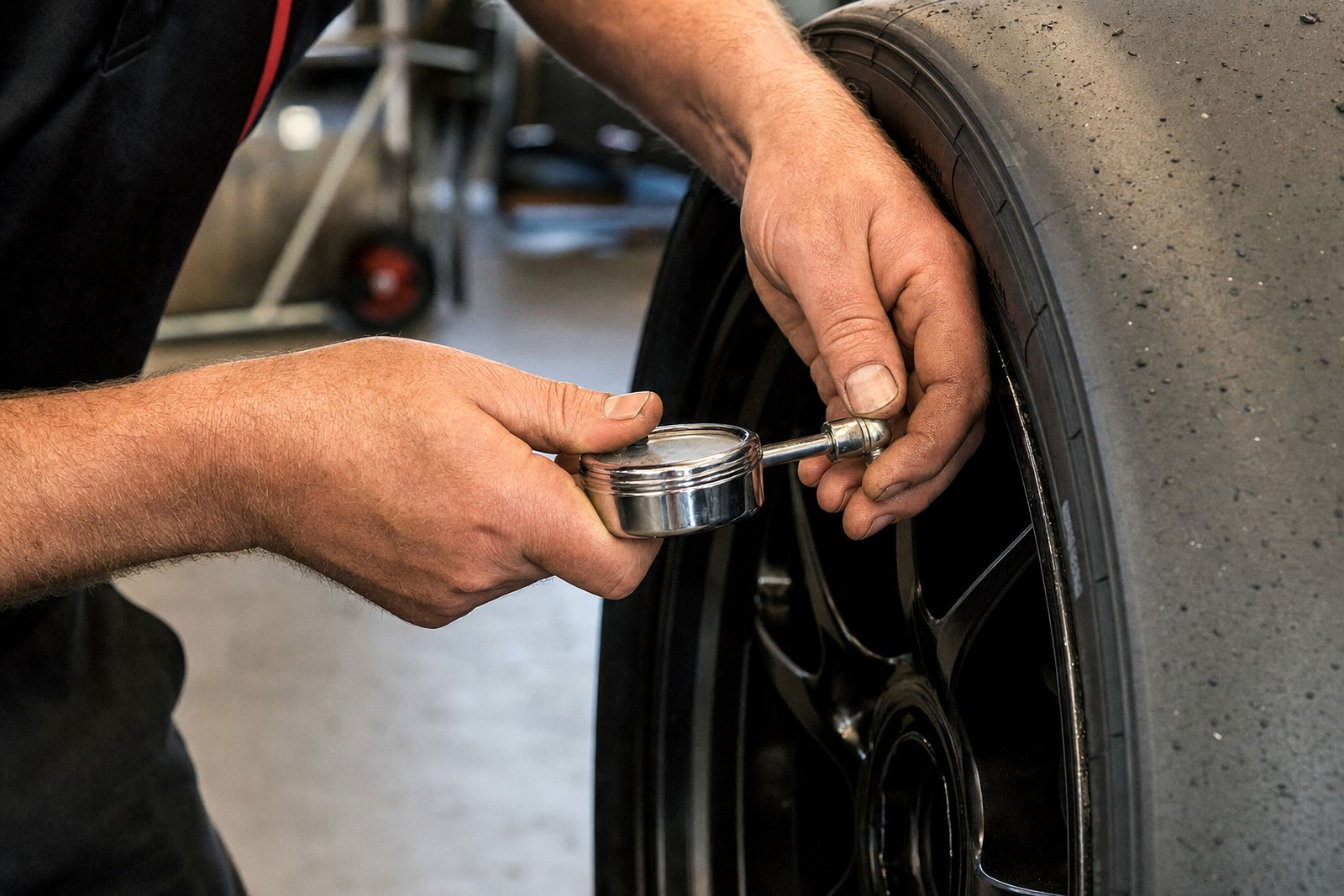
Brake fluid does not wear like a pad, but it ages in the system and absorbs moisture over time. That lowers its boiling point, which is when the pedal can go long after repeated stops. A car that sees track days, rally stages or mountain runs needs fresh fluid at sensible intervals, especially if the fluid has gone dark or the pedal has started to feel vague after heat builds in the system.
Bleeding the system also helps reveal small issues. Air in the lines, tired flexible hoses or a caliper that does not release cleanly can all make wear patterns look worse than they should. If one corner gets hotter than the rest, the fluid may be fine but the hardware needs a closer look. That is where brake bleeding and brake upgrade planning work together rather than being separate jobs.
- Check the colour of the fluid in the reservoir and at a bleed point.
- Feel for a pedal that softens after several hard stops.
- Watch for uneven heat from one wheel compared with the others.
- Inspect hoses for swelling, cracks or rubbing marks.
When the wear pattern points to the setup, not only the parts
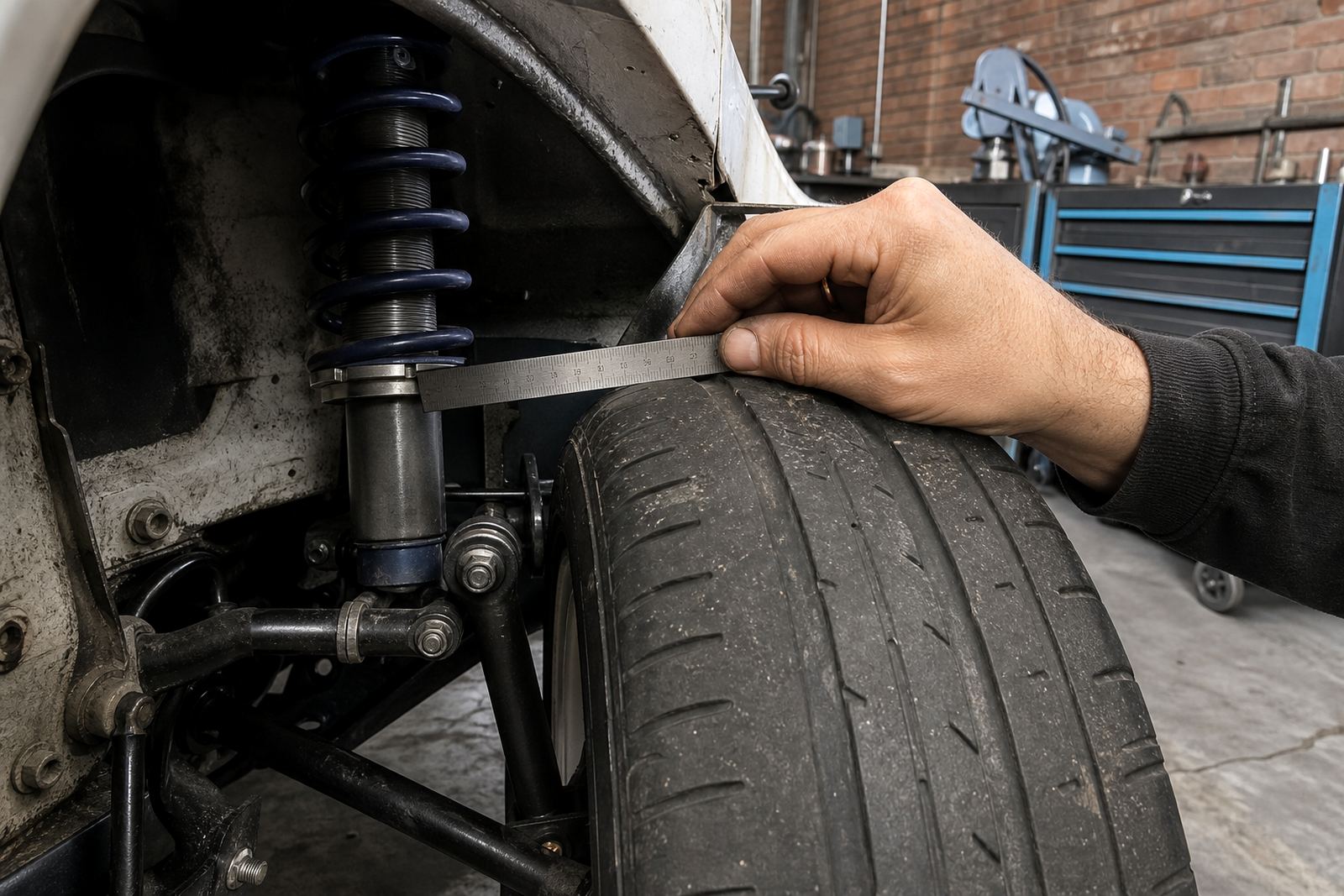
Not every brake issue comes from a worn pad or disc. A poor setup can make good parts look tired too soon. If the car is nose heavy under braking, the front pads may do too much work. If the rear brakes are too aggressive, the car can feel nervous on turn-in. Corner weighting, alignment checks and suspension condition all affect how the brakes are loaded.
Coilover setup and bush condition also matter. A car with a loose rear end can transfer weight unevenly, and that changes the way the brakes heat up. A driver may think the pad compound is wrong when the real issue is that one corner is carrying more load than it should. On a club racing car, that sort of fault can show up as fast wear on one side only.
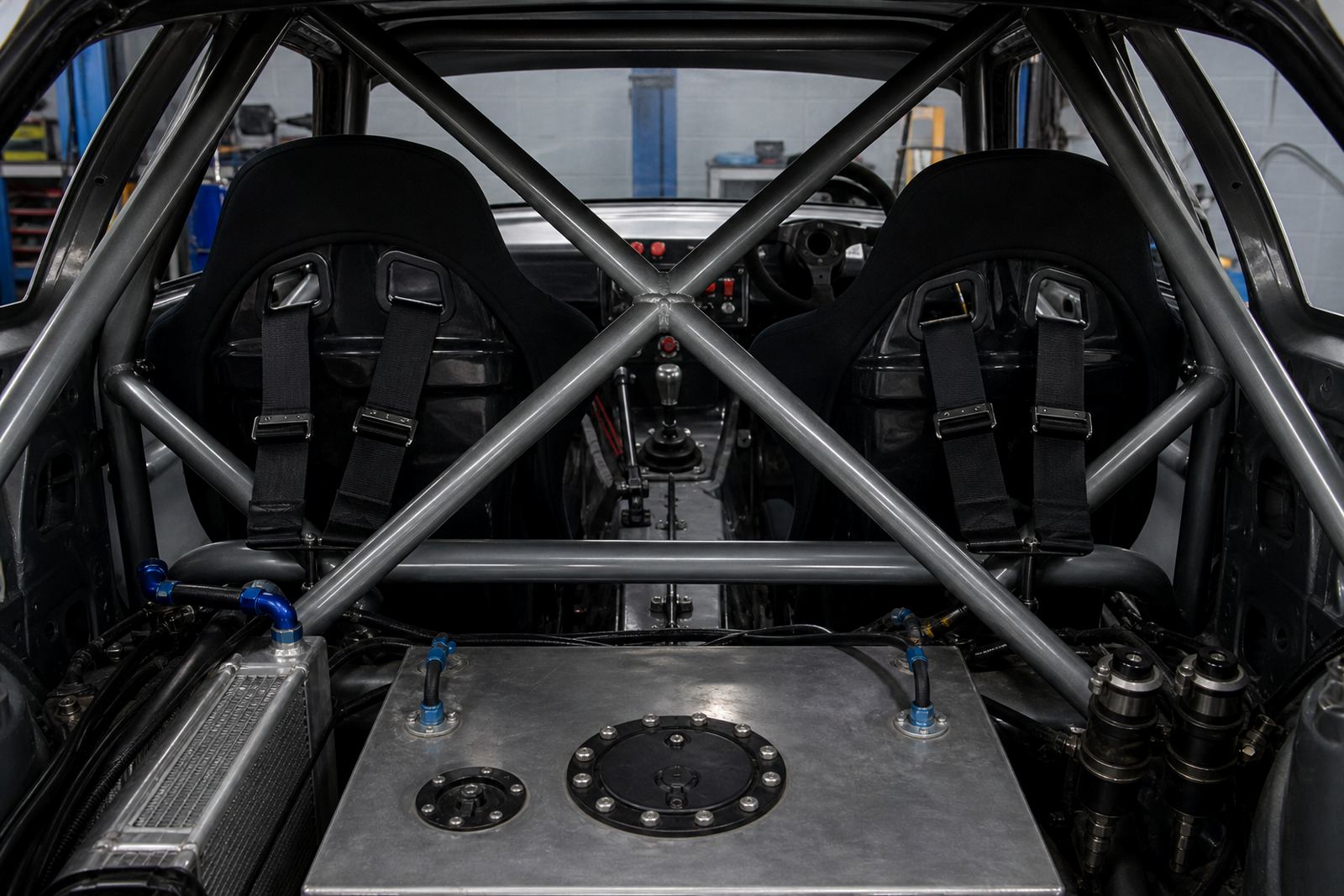
Our workshop team often checks the brakes together with suspension and seating position. A seat that is not centred properly can change pedal feel for the driver, and a harness that sits wrong can make the driver brace through the pedals. Small details like these add up when the car is being driven flat-out.
Pad wear on a car that sees road and track
A driver from Pretoria brought in a car used for club events and local track sessions. The brakes still worked, but the front left pad was wearing much faster than the others and the outer edge of the disc had a clear lip. The pedal also felt longer after a few hard laps. The root cause was not just the pad compound. The caliper hardware needed attention, the fluid had gone tired and the front suspension setup was loading that corner harder than the rest.
After a brake bleed, a suspension check and a closer look at the corner weights, the wear pattern made far more sense. That is the point of reading brake wear properly. The pad tells one part of the story, the disc tells another, and the setup explains why the damage showed up where it did. Once those pieces are read together, the car is easier to prepare for the next outing.
For drivers heading from Centurion, Kyalami or Johannesburg, a careful brake inspection before an event is cheaper than guessing after the fact. It also helps with planning parts like pads, discs, fluid, bushes and clutches before the calendar gets busy.
A short brake check before the car goes back on the trailer
Before the next outing, it helps to work through the brakes in the same order each time. Start at the pedal, then the fluid, then the pads, then the discs, and finish with the hardware that holds everything together. That keeps the inspection practical and makes it easier to spot changes from one event to the next.
- Check pedal feel with the engine running and again after a few hard stops.
- Measure pad material on all four corners.
- Inspect disc faces for grooves, cracks and heat marks.
- Look at caliper movement, hose condition and bleed quality.
- Ask whether suspension or alignment changes may have altered brake loading.
RaceHouse works with track, rally and club racing cars from Midrand across Gauteng and to Durban, Cape Town and Port Elizabeth. Our team can help with brake upgrades, brake bleeding, cooling checks, alignment checks and the rest of the setup work. That keeps the car on the right side of the next green flag instead of leaving brake wear to chance.