
Where the tube sits matters more than how neat it looks
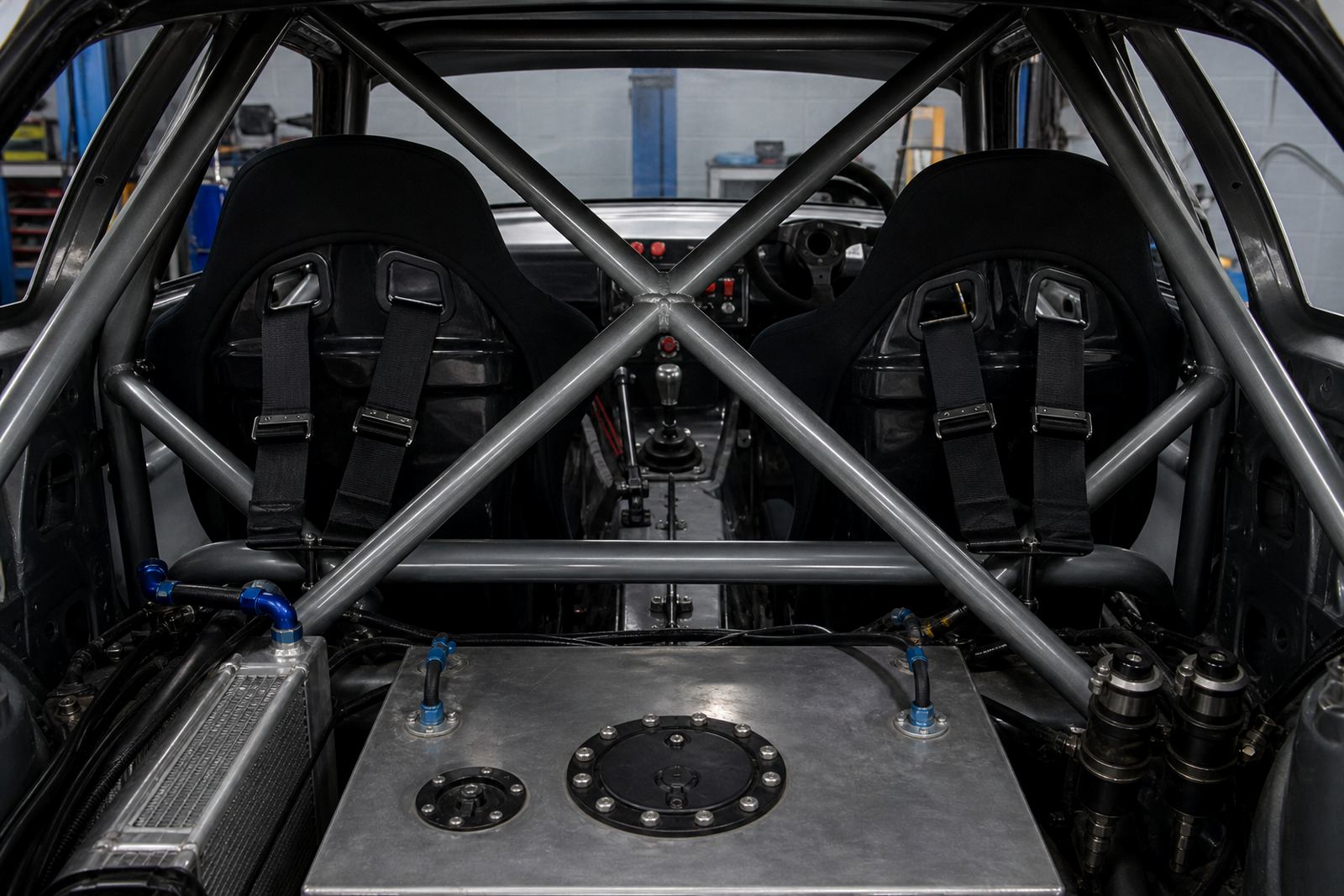
A cage can look tidy and still get in the way. The important point is where each tube sits around the helmet, shoulders, elbows and knees once the seat is installed and the harness is pulled tight. If a driver has to wedge into position, brace against a tube, or twist awkwardly to reach the wheel the car is asking for trouble on a long stint.
Clearance needs to be checked with the seat in its final position, not guessed from a bare shell. Fixed-back seats, side mounts, and seat rails all change the space around the driver. A tall driver in a coupe will need a different tube layout from a shorter driver in a hatchback, even if the same shell is being prepared for Midrand track days or a local rally class.
In practice, you want enough room for gloves, elbows and helmet movement without having the driver strike the cage in a side load. The idea is not to leave empty space everywhere. It is to leave the right space where the body moves during cornering, braking and a quick correction.
The driver’s line of movement should stay clean
Clearance is not just measured from the head. A driver needs to get in, tighten the harness, work the gear lever, reach the fire bottle if fitted, and get out without snagging on padding or tube ends. That is why the door bars, dash bar and side structure must be considered together.
On some builds the cage is too close to the lower dash and the driver’s right knee catches the tube during heel and toe work. On others the door bar sits where a left foot may brush it when climbing in. These are small things until the car is on a wet circuit or a dusty rally stage and the driver is fighting the cockpit instead of the road.
- Check that both legs can work the pedals without rubbing hard on tubing.
- Make sure the harness buckle can be reached and released cleanly.
- Allow space for helmet, HANS type restraint, and shoulder movement.
- Leave a clear path for getting in and out with a steering wheel fitted.
We often see cars in Midrand where the shell was built for one seat style and later changed for another. That can alter everything. A different shell angle or mount height can shift the driver’s eye line, which then changes whether the front hoop feels close or properly placed.
Service access should not be forgotten in the cage plan
A good cage still has to let the car be maintained. If a tube blocks access to a fuse panel, coolant cap, battery isolator, brake bias adjuster or harness mount, the car becomes awkward to run. That matters on club racing cars where the same crew may be checking the car between sessions and the clock is always busy.
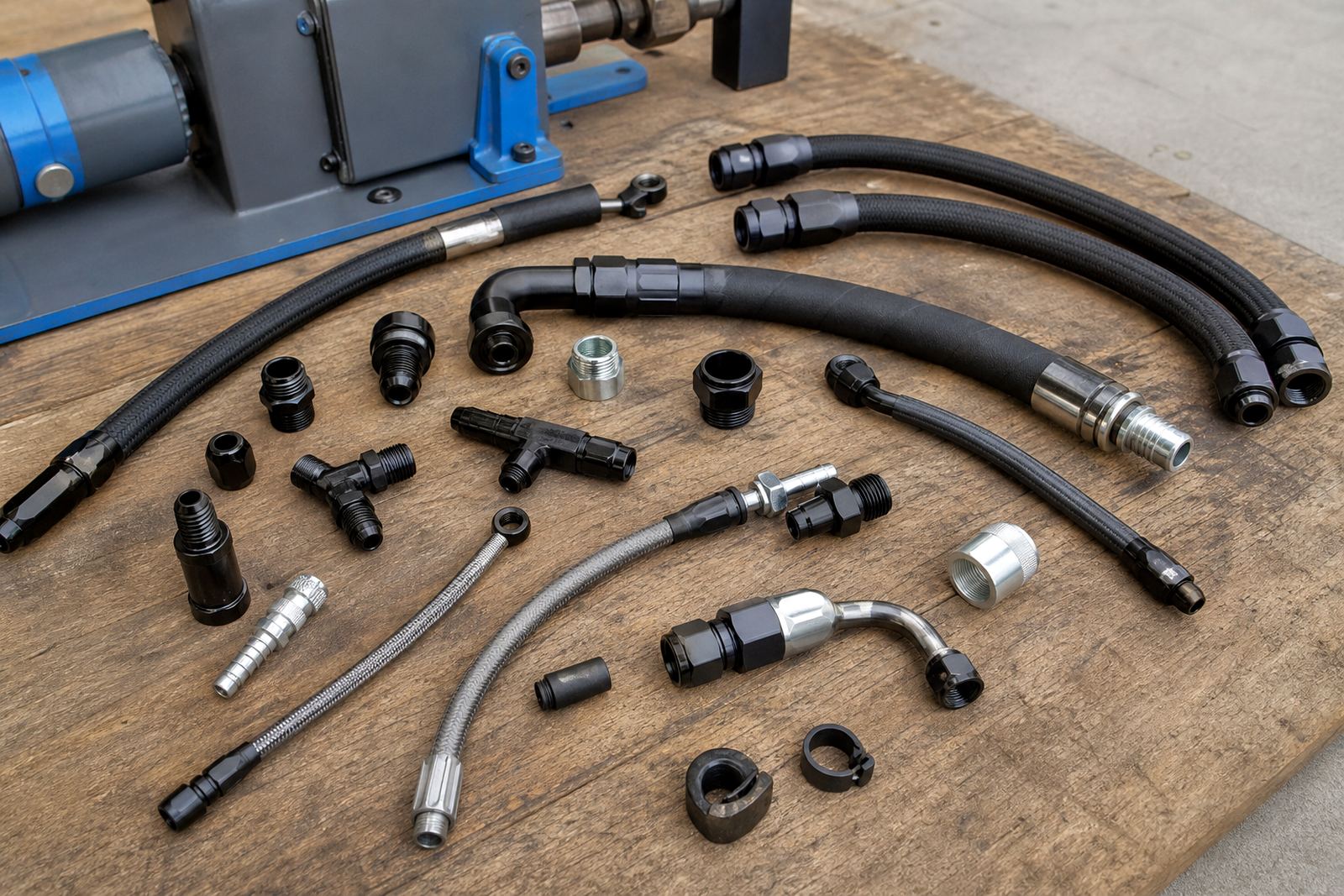
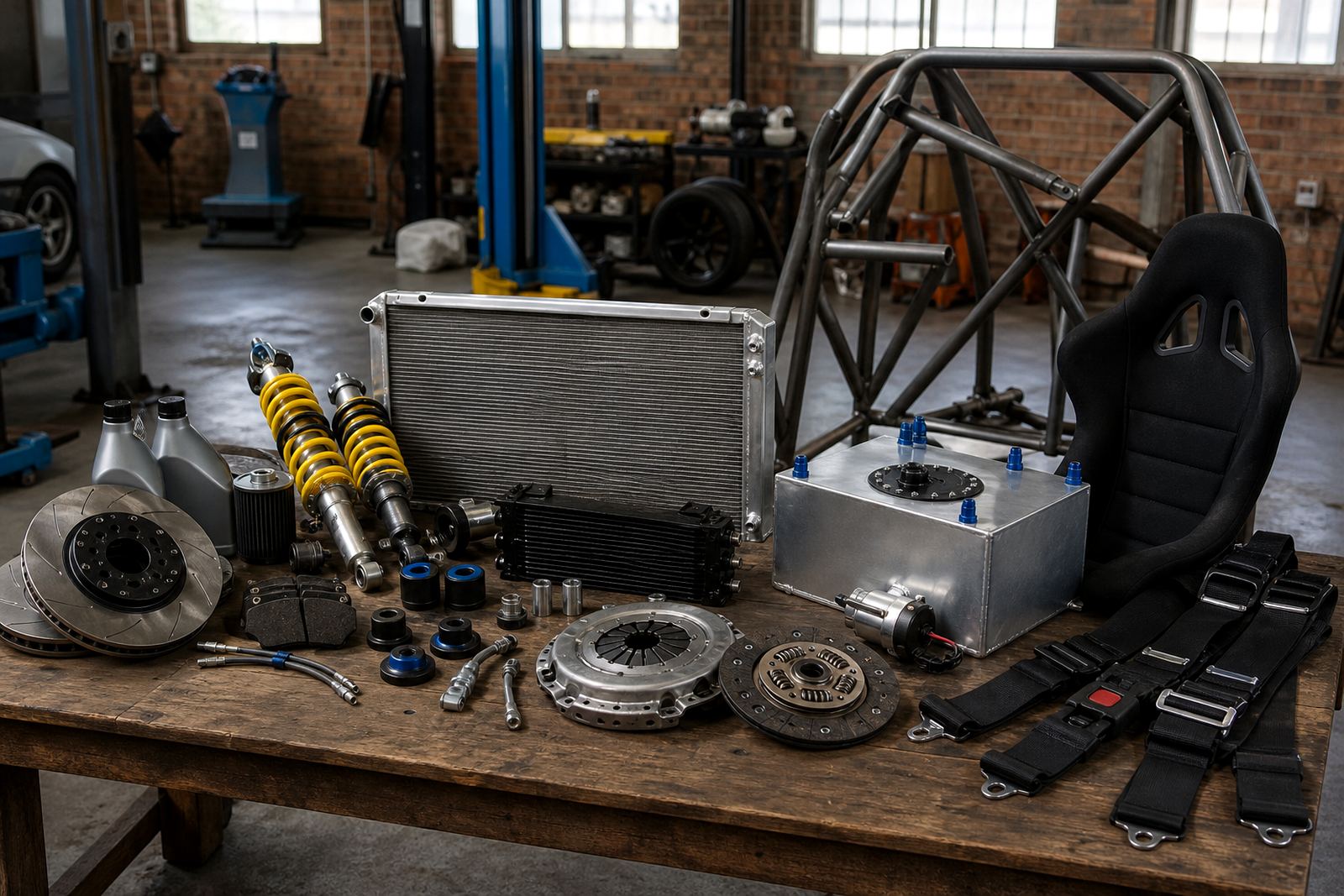
For motorsport parts and performance upgrades, serviceability has real value. Radiators, oil coolers, brake bleed points and fuel system fittings need room around them. A cage that crowding those zones may force awkward tools, slow inspection and make routine checks a headache. If the car is running brake pads and fluid changes often, or if the clutch and shift setup still needs small tweaks, the working space around the cabin matters just as much as tube placement.
- Keep access open to common inspection points.
- Leave room for harness bolts and seat hardware.
- Check that the dashboard or trim does not hide cracks, wear, or loose mounts.
- Make sure the fire bottle, if fitted, can be serviced without stripping half the cockpit.
On a rally car, mud, dust and vibration make poor access worse. A line that looked acceptable in the workshop can become a real nuisance after a week of hard use across gravel and tar.
Padding has a job, but it is not a fix for poor geometry
Padding is useful where the driver can strike a tube in a crash or hard slide. It is not there to excuse a bad layout. Thick foam wrapped around a tube can hide the fact that the bar sits too close to the helmet or shoulder. It can also reduce the usable room in an already tight cockpit.
The right answer is usually to place the tubing properly first, then add padding where contact is realistic. That way the cage does its work without turning the cabin into a cramped box. On a Kyalami track car, for example, a driver may be seated lower for stability, which changes the relation between helmet and side tube. On a Durban car, the same shell may see more heat and humidity, so trim and padding condition need closer attention over time.
It is also worth checking that the padding is secured neatly and does not peel at the edges. Loose sections can catch gloves or shift during entry. A tidy cockpit is easier to work in, but the more important point is that it supports repeatable driver position and cleaner movement under load.
Helmet room in a caged hatchback
A customer brought in a front-wheel-drive hatchback used for club racing, with occasional track days around Gauteng. The driver was comfortable in the seat, but the left door bar sat too close to the elbow and the harness straps crossed the shoulders at an awkward angle. The car also needed room for brake balance checks, a revised cooling layout and easier access to the rear electrical cut-off.
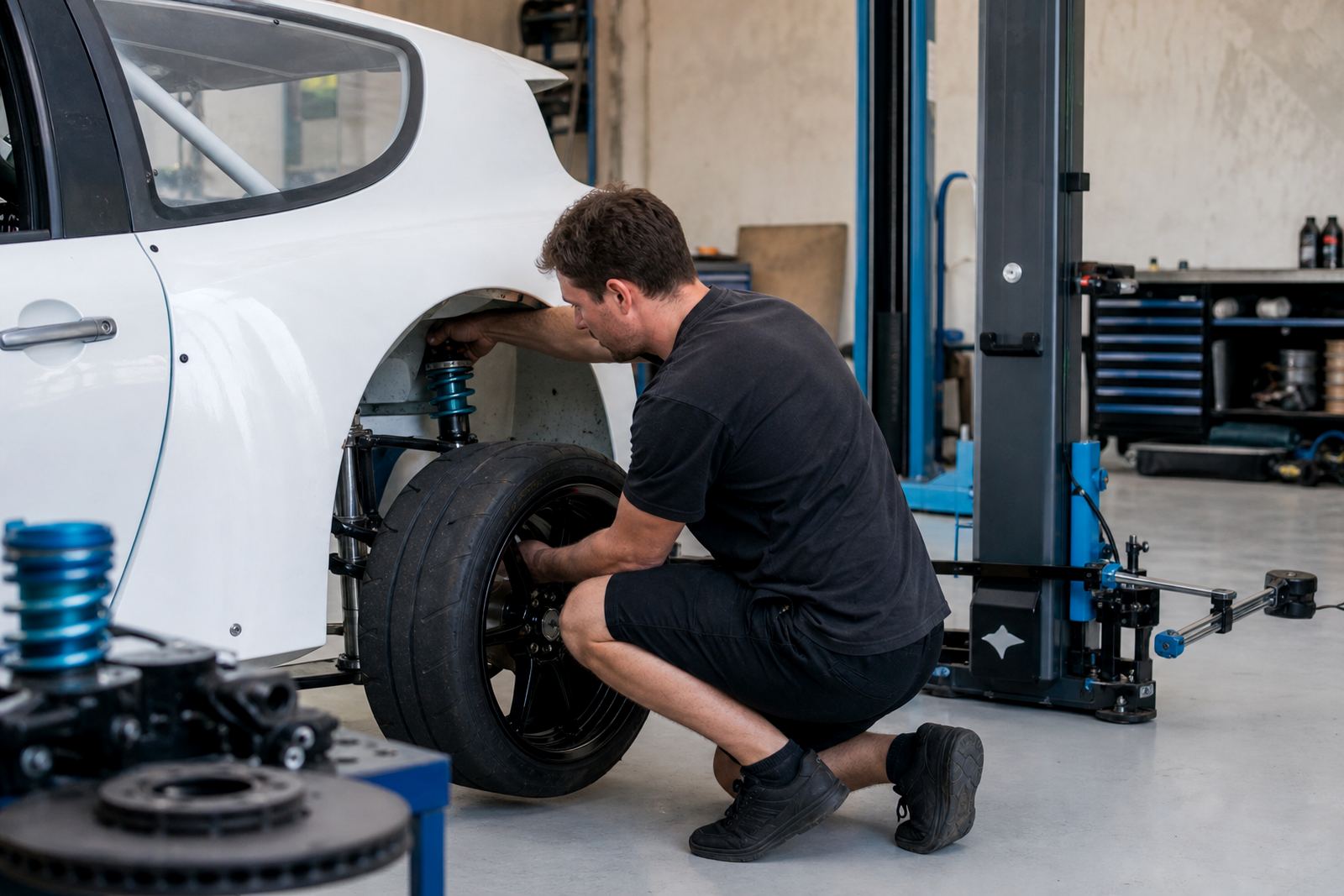
We treated the cage as part of the whole cockpit rather than a separate item. The seat position was checked first, then the driver’s reach to the wheel, gear lever and controls. After that, the service areas were reviewed so the cooling system checks and harness fitment checks could be done without fighting the tubing. That is the kind of practical detail that matters when the car is used in Johannesburg one weekend and Pretoria the next, with different drivers or conditions in between.
Once the clearances were sorted, the car felt less cluttered to drive and easier to work on. We changed it for function, not to make the cabin look flashy. It was about giving the driver clean movement and giving the crew a cockpit that made sense.
The check list we use before a cage is signed off
Clearance should be checked with the actual driver or a very close seating reference, not a guess. Body shape, helmet size, seat type and harness routing all affect the final result. The same cage can be acceptable in one car and awkward in another if the seating position changes by only a small amount.
- Confirm helmet clearance with the driver seated and strapped in.
- Check elbow room at the wheel, gear lever and window area.
- Inspect reach to controls, isolators and emergency hardware.
- Review seat mounts, harness angles and shoulder bar position together.
- Allow space for routine servicing around cooling, brakes and electrical items.
For drivers across South Africa, from Centurion to Cape Town and Port Elizabeth, the same principle holds: the cage must fit the car, the seat and the way the car is actually used. If the interior is being rebuilt, roll cage clearance should sit on the same list as seat positioning, alignment checks and cooling system work. That is the difference between a cockpit that merely passes a glance and one that works on a full racing weekend.