

Start with the fuel that runs through it
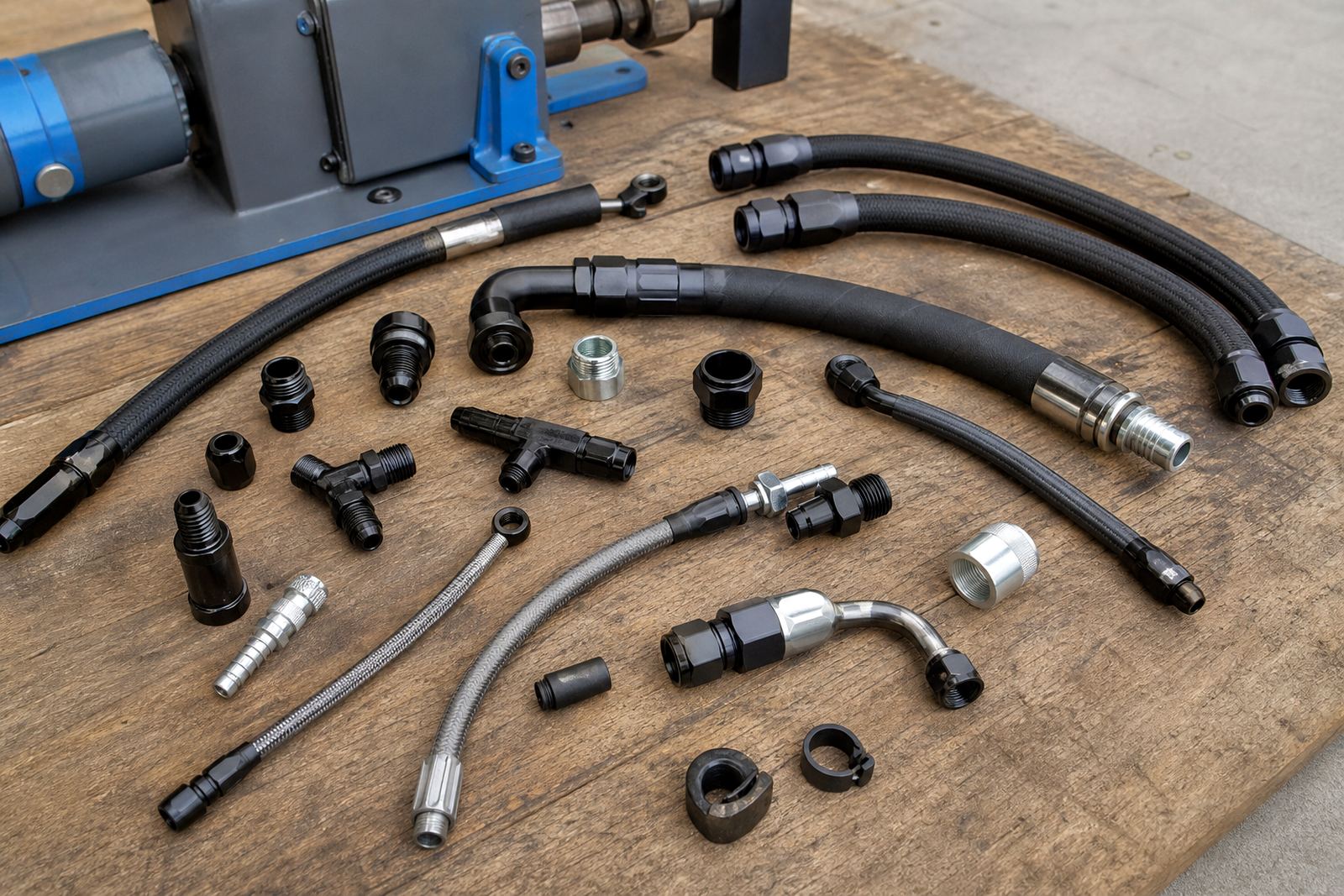
The first check is compatibility. A hose that works on a carburetted weekend car may be wrong for a high-pressure injection system, and a hose that handles petrol well can still struggle with modern fuel blends or long contact with heat under the bonnet.
In motorsport, a fuel hose has to be chosen with the rest of the fuel line in mind. That means looking at the fuel pump, regulator, fittings, filters and the return line if the car uses one. When one part is mismatched, the rest of the line carries the penalty.
Size the hose for the route, not the guess
Hose bore matters because fuel needs to move without restriction, but bigger is not always better. Too much hose volume can make priming awkward and can leave more fuel sitting in the line after shutdown. Too little bore can starve the engine under sustained load.
- Check the feed line and return line separately if the system uses both.
- Match the inside diameter to the pump output and the injector or carburettor demand.
- Keep bends gentle, especially near the firewall and tank.
- Avoid tight S-bends that trap heat and wear the outer cover.
Heat, abrasion and the areas that wear first
Most failures do not start at the middle of a clean run. They start where the hose rubs on a bracket, sits too close to a header, or flexes every time the engine moves on its mounts. In Gauteng workshop conditions, a hose can look fine on the outside and still be cooked underneath by repeated heat soak.
Use clips and separators where the line crosses metal edges, and leave enough slack for movement without letting the hose flap around. Where a line passes near the exhaust or turbo area, heat shielding and proper routing matter more than an expensive cover.
Fittings, clamps and the small details that stop leaks
Fuel hose selection is also about the ends. The hose must seat properly on the fitting, and the clamp or crimp has to suit the hose type. A clamp that bites too hard can cut into the hose. One that sits loosely may hold on the stand but not under vibration at Kyalami or on a rough rally stage.
- Use fittings sized for the hose type, not force-fitted pieces.
- Check that the barb length gives enough grip.
- Replace clamps that have started to deform or rust.
- Inspect every join after a fuel system change and before a test day.
If a car has been converted from a street layout to a track layout, it is worth checking every connection from tank to rail or carburettor. The weak point is often the shortest hose run, not the longest one.
Service intervals should suit the way the car is used
Fuel hose does not age evenly. A car that sits in a warm garage, then runs hard for a short event, ages differently from a daily-use road car or a club racer that sees regular heat cycles. Rubber hardens, braid marks the surface, and the inside of the hose can change even when the outside still looks presentable.
That is why service intervals should be set with the car's use in mind. A rally car that sees dust, gravel and movement needs different attention from a circuit car with neat routing and cleaner surroundings. If the hose has gone stiff, cracked, swollen or stained near a fitting, it has reached the wrong side of its service life.
A fuel hose chat at the counter
A Midrand club racer might arrive with a car that has a stronger pump, a new regulator and a tank layout that was never designed for the extra flow. The hose size on paper may look acceptable, but the bend near the rear bulkhead is too sharp and the line sits against a body seam. That setup can work for a short outing and still cause trouble once the car is pushed hard for longer periods.
In a case like that, the fix is usually practical rather than flashy: reroute the line, choose a hose that suits the fuel and pressure, secure it properly, then check the whole route again after the first heat cycle. That is the kind of detail that saves time later at the circuit or on a transport leg to Durban.
RaceHouse works with motorsport fuel system layouts, fitting advice and track setup days for drivers across Midrand, Johannesburg, Pretoria, Kyalami, Centurion, Durban, Cape Town and Port Elizabeth. For a fuel hose question or a broader fuel system check, send the car details and the current line layout.