
Reach matters before anything else
In a race car, a fire kit is not a decoration tucked into a quiet corner. If the handle is buried behind the seat, under loose wiring or beside a tight tunnel brace, the driver may waste precious seconds trying to find it. That is why position matters as much as cylinder size, nozzle count or the quality of the fittings.
The best location is usually one that gives a clear line of access from the driving position, without forcing the driver to stretch far or twist out of the seat. In club racing and rally cars, the cockpit gets crowded quickly, so the fire kit has to sit where the hands can find it under strain, gloves on and windows up.
- Mount the control where the driver can reach it from the strapped-in position.
- Keep the bottle secure, with metal brackets and proper retention.
- Avoid places where seat rails, harness straps or loose trim can block access.
Where the system usually fits best
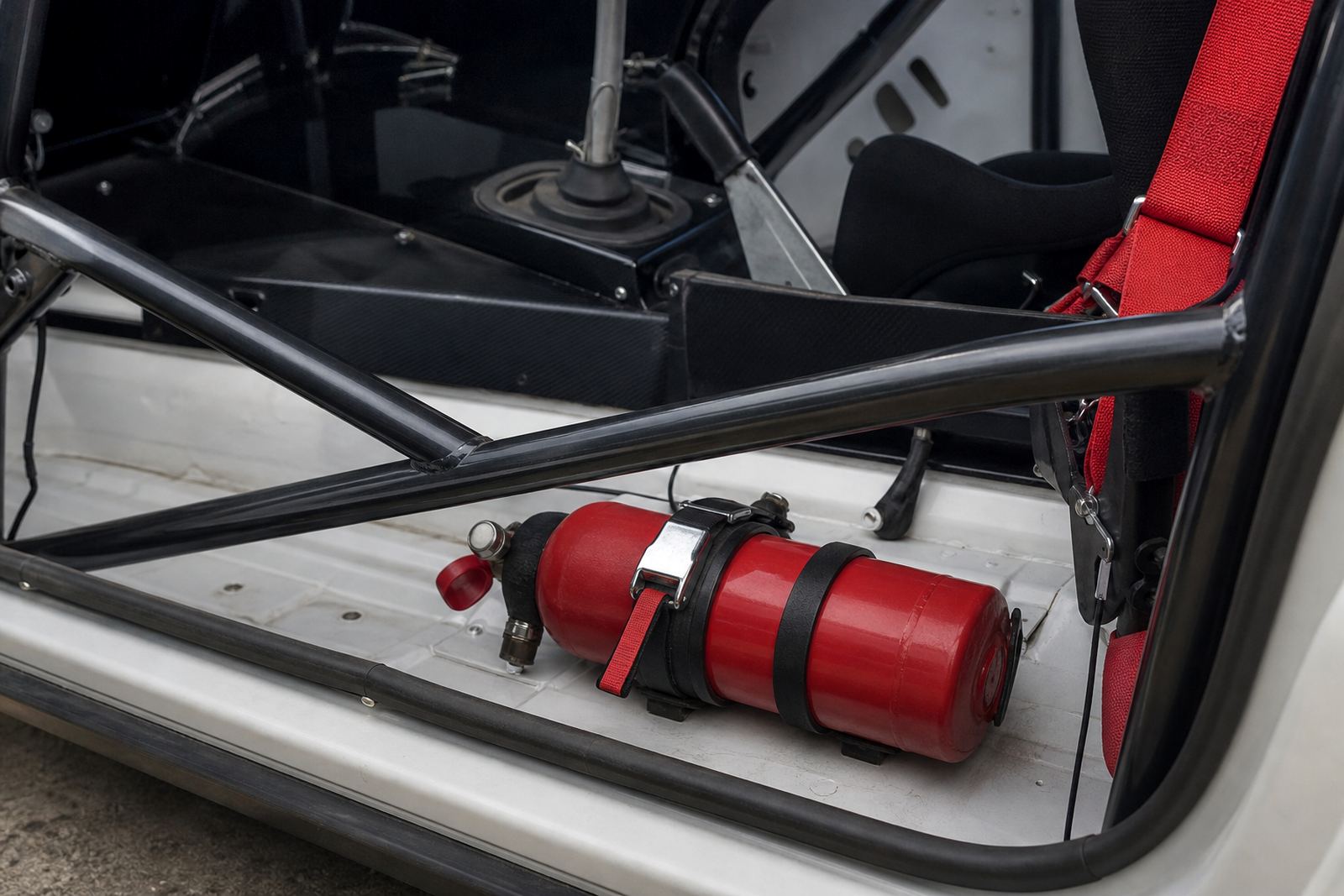
Most builders work from the same question first, which is not where the bottle looks neat, but where it can be used fast and checked often. A central tunnel mount, passenger footwell mount or a side-mounted position near the seat base can all work, depending on cage bars, harness hardware and how the driver enters the car.
In some cars, the bottle sits low and central so the weight is kept close to the middle of the shell. In others, the layout of the cage and seat shell means a side placement gives better access. Either way, the aim is to keep the pull cable or actuator path short, tidy and free of sharp bends.
- Central mounting can help with balance and clean routing.
- Side mounting may improve hand access in tighter cockpit builds.
- Boot mounting is usually less practical for in-car use under pressure.
Inspection is easier when the bracket is sensible
A fire kit that is hard to inspect is often a fire kit that gets neglected. If the gauge cannot be seen without removing trim, or the bottle label is hidden behind a harness bar, then routine checks become awkward. That matters in South Africa where many cars move between track days, scrutineering and workshop time in the same month.
Good placement helps the crew inspect the pressure, check the pin, confirm the hose route and see whether the brackets have loosened. On rally cars especially, vibration can work on any weak mount and a bottle that shifts by a few millimetres can start rattling against metalwork.
- Leave the gauge visible without dismantling half the cockpit.
- Keep hose ends free from rubbing points and hot exhaust zones.
- Check that the bottle cannot slide when the car takes kerbs or gravel hits.
Safety gear has to work with the rest of the cockpit
Fire kit position cannot be decided in isolation. Seats, side mounts, harnesses, steering wheel clearance and roll cage padding all influence what fits cleanly. A bottle fixed too close to the lap belt can become annoying during fastening, while a nozzle placed badly may never point where it should in a real incident.
The same is true for cars with proper shell seats and tighter cockpit geometry. What looks fine on an empty floor can become a nuisance once the seat is fitted and the harness is wrapped in place. That is why fitting advice matters, because the hardware has to serve the driver rather than fight with the cabin.
- Check belt movement before drilling final mount points.
- Keep nozzle placement clear of knees, elbows and sharp brackets.
- Confirm the driver can still enter and exit without snagging gear.
Where the extinguisher ended up in a rally car
On a Midrand rally build, a driver may need the fire kit reachable from a tight seat, with a cage running close to the sill and a harness bar across the rear. In that situation, a neatly mounted unit beside the seat base can work better than a bottle hidden behind the passenger side trim. The difference shows up when the car is strapped in, helmet on and the cabin feels far smaller than it did in the workshop.
That kind of car also sees dust, vibration and quick checks between stages. A mount that is easy to inspect and easy to service saves a lot of awkward work later. It also keeps the system visible enough for the crew to spot wear on the brackets, pins or cable ends before the next session.
- Rally cars need secure mounting against vibration and dust.
- Track cars benefit from quick reach and clean cockpit access.
- Club racers often need a balance between neat fitment and practical use.
Setup days expose the weak points
Fire kit position often looks acceptable on paper until the car is driven, seated and checked during a proper setup day. Once the driver is strapped in, the real hand position becomes obvious. Small issues show up fast, like a pull handle sitting too low, a bracket rubbing on the seat shell, or a hose line crossing a busy footwell.
That is why mounting advice should happen alongside brake upgrade planning, seat positioning, harness fitment checks and the rest of the cockpit layout. The goal is not only compliance, but clean use when it matters. In motorsport, neat packaging is useful only if the system can still be reached under pressure.
- Test the reach with full seat and harness tension.
- Check that gloves do not hide the operating point.
- Make sure the route stays clear during rough driving.
Practical habits that keep the kit honest
A well placed fire kit still needs regular attention. Inspect the brackets for movement, check the pins, confirm the pressure reading and make sure the nozzle path has not shifted after a hard weekend. If the car is used in Johannesburg, Pretoria, Kyalami, Durban or Cape Town, different road surfaces and transport routines can all influence what stays tight and what starts to work loose.
Good placement makes all of that easier. It saves time during inspection, keeps the driver closer to the controls and makes the whole system more dependable when the car is being pushed. In a race car, practical use always beats a clever idea that nobody can reach when the cabin is hot and the belts are tight.