

Toe is a small angle with a large say in behaviour
Toe is the direction the wheels point when viewed from above. If the fronts of the wheels point slightly toward each other, that is toe-in. Splayed outward instead, the setting is called toe-out. The numbers are usually small, often measured in millimetres across the wheel rim or in fractions of a degree, but the effect on feel can be immediate.
On a racing car, toe is not just a comfort setting. It changes how quickly the car takes a set, how calm it feels down the straight, and how much the tyres scrub as they roll. A little movement in toe can be the difference between a car that turns eagerly and one that feels lazy at the front.
- Toe-out at the front usually sharpens turn-in.
- Toe-in at the rear often adds straight-line calm.
- Too much of either can waste tyre life very quickly.
Front toe and the first moment into the corner
Front toe is where many drivers feel the change first. A touch of toe-out can help the nose respond when the steering is loaded up at corner entry. That can be useful in a car that feels reluctant to rotate, especially on tighter layouts where the driver needs the front end to respond without delay.
Too much toe-out can make the steering nervous, with the car wandering on the straights and following every small ripple in the surface. At high speed, that extra movement becomes tiring. The tyres also work harder because each one is fighting the other before the car even reaches the apex.
- More toe-out can help with initial turn-in.
- Excess toe-out can make the car tramline and scrub tyres.
- On rougher roads between events, a milder setting is often easier to live with.
Rear toe and the way the car settles on throttle
Rear toe is about confidence. A little toe-in at the back helps the car track straight under power and during braking, which matters when the surface is uneven or the driver is trailing the brakes into a bend. It can reduce the feeling of the tail stepping out too early, especially in front-wheel-drive cars or lighter rear-drive cars with modest rear grip.
There is a trade-off, though. Too much rear toe-in can slow the car in the middle of the bend and make the rear tyres run hotter than they should. Too little rear toe, or a rear axle that is effectively loose, can leave the car edgy on power and less predictable when the driver asks for throttle early.
- Rear toe-in usually adds stability.
- Rear toe changes how the car behaves on exit.
- Rear tyre temperatures can rise if the setting is too aggressive.
Tyre scrub, heat and the cost of over-correction
Tyre scrub is the drag created when a wheel is not rolling perfectly in line with its direction of travel. A small amount is part of race set-up, but too much eats rubber, adds heat and can make the car feel sluggish. That is why toe should be matched to the circuit, the tyre, and the driver’s style instead of copied from another car with a different weight balance.
On a car running sticky tyres, extra scrub can show up quickly in shoulder wear, feathering and hot pressures after a few laps. On longer stints, the wrong toe setting can mask other issues as well. A driver may blame the damper or the tyre compound when the real problem is a front axle that is simply fighting itself.
- Heavy shoulder wear often points to too much toe.
- Uneven heat across a tread can follow a poor alignment setting.
- Scrub also affects fuel use and steering effort over a session.
A Midrand setup note from a Gauteng track day
A common local pattern is a club car leaving Midrand for a morning session at Kyalami with fresh tyres, a revised suspension setup and more front grip than before. The driver wants sharper response for the infield but still needs the car to stay tidy on the quicker sections. In that kind of case, a small front toe-out change can help the nose point in, while the rear stays slightly toe-in to keep the car settled under braking and on exit.
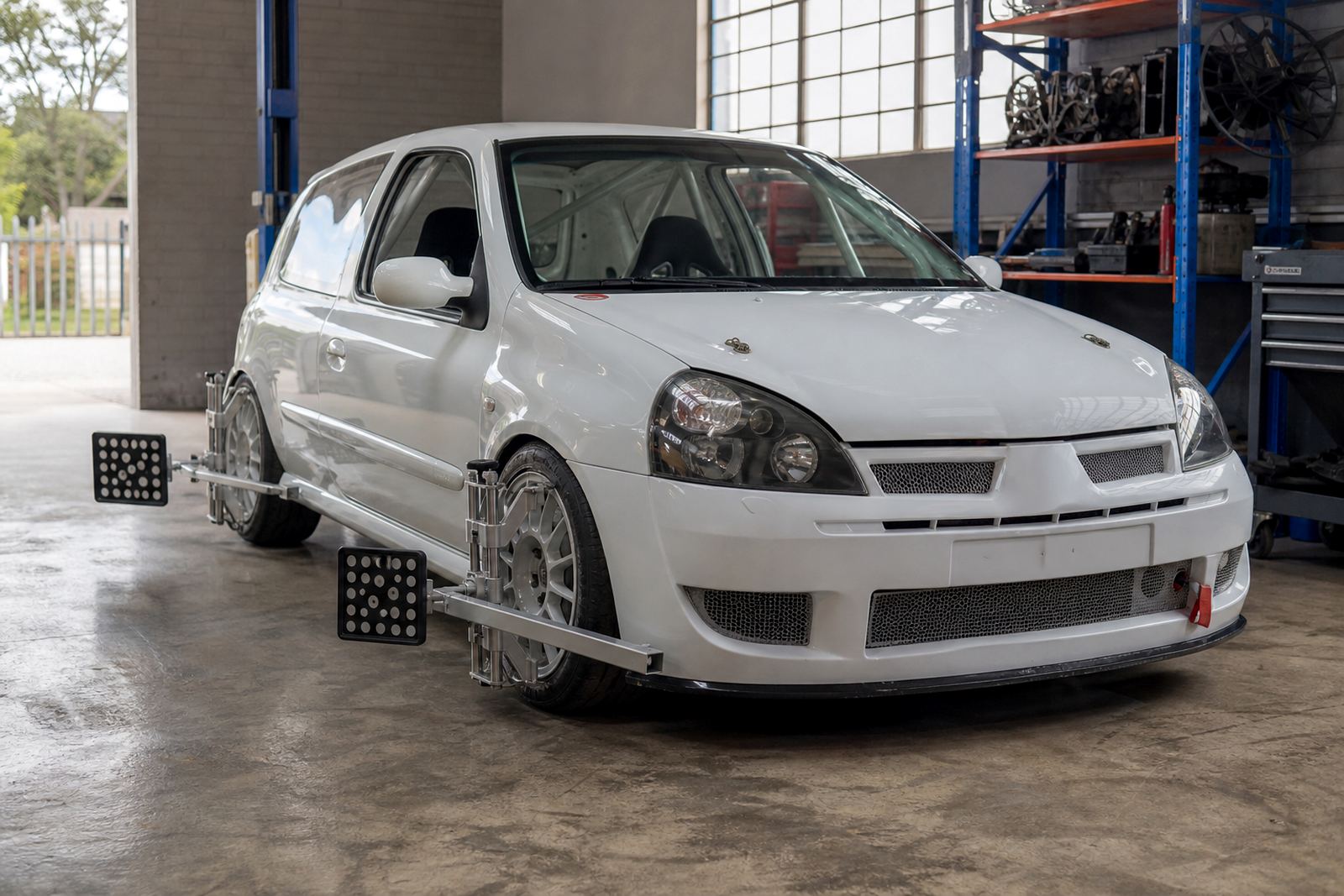
That change is not made in isolation. We still check the steering wheel centring, the bush condition, tyre pressures and corner weights before any toe setting is accepted as final. A worn bush or a bent component can shift the reading and leave the car behaving one way in the pit lane and another way on track.
- Small changes work better than big swings.
- Corner weighting and toe should be checked together.
- Track surface and kerb use can justify different settings.
How RaceHouse approaches toe on race cars
Toe settings are part of a wider chassis conversation. On a track, rally or club car, we look at the whole package: braking balance, suspension movement, tyre condition, ride height, and how the driver describes the car at turn-in and exit. Toe is then adjusted in measured steps, not guessed. That approach helps avoid chasing one complaint by creating another somewhere else.
Our Midrand base works with drivers from Johannesburg, Pretoria, Centurion, Kyalami, Durban and Cape Town. For motorsport cars, that can mean brake upgrade planning, coilover setup, alignment checks, corner weighting, cooling checks, seat positioning, harness fitment checks, roll cage fit advice, fuel system layout, clutch and shift setup, and track setup days. Toe sits inside that bigger setup picture, because a car that turns in well but tyres out badly is not properly sorted.
When the front end feels too quiet, or the rear end feels loose under power, toe is one of the first settings worth checking with proper measuring gear and a sensible driver report. It is a small number on the sheet, but on a lap time it carries more weight than many people expect.