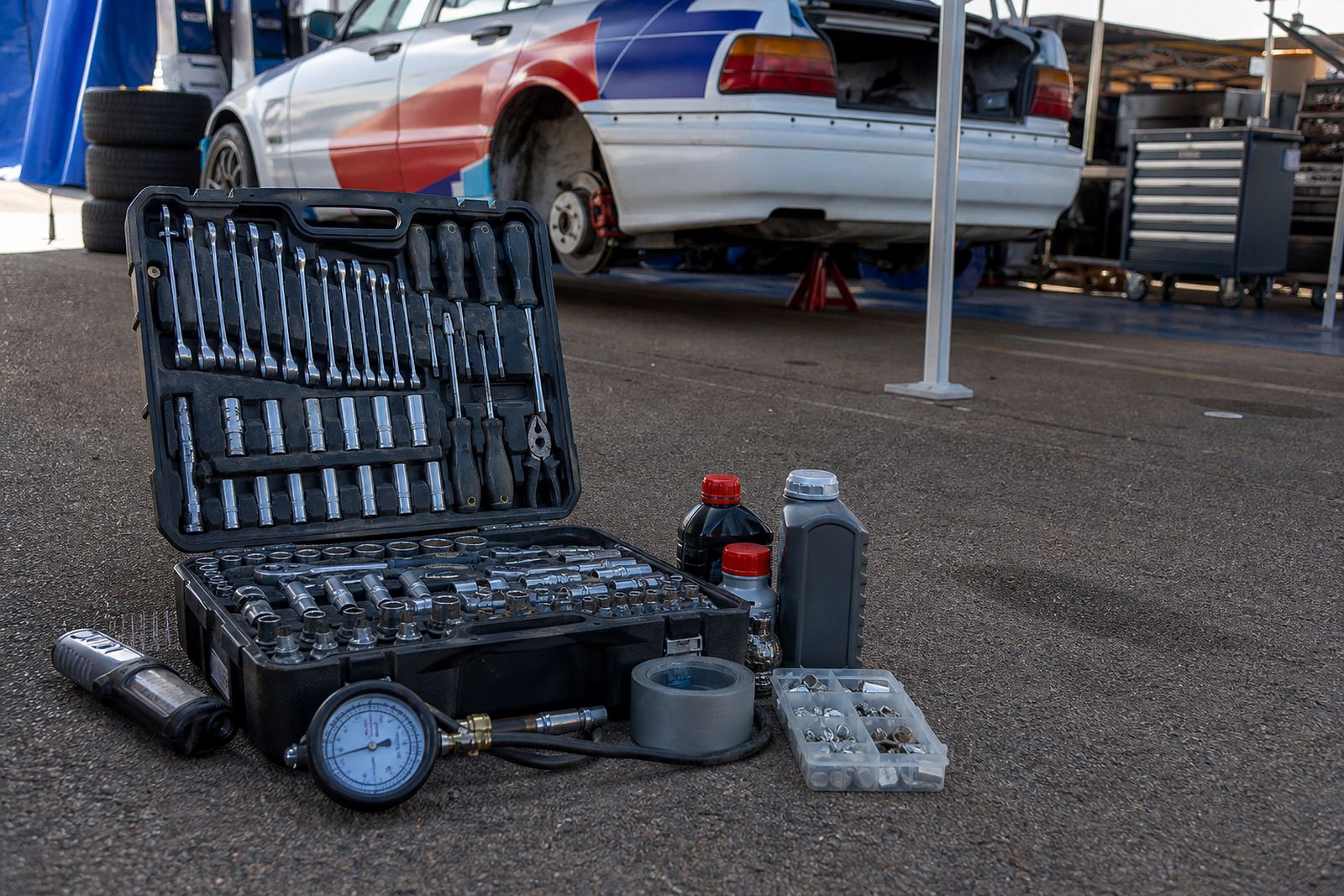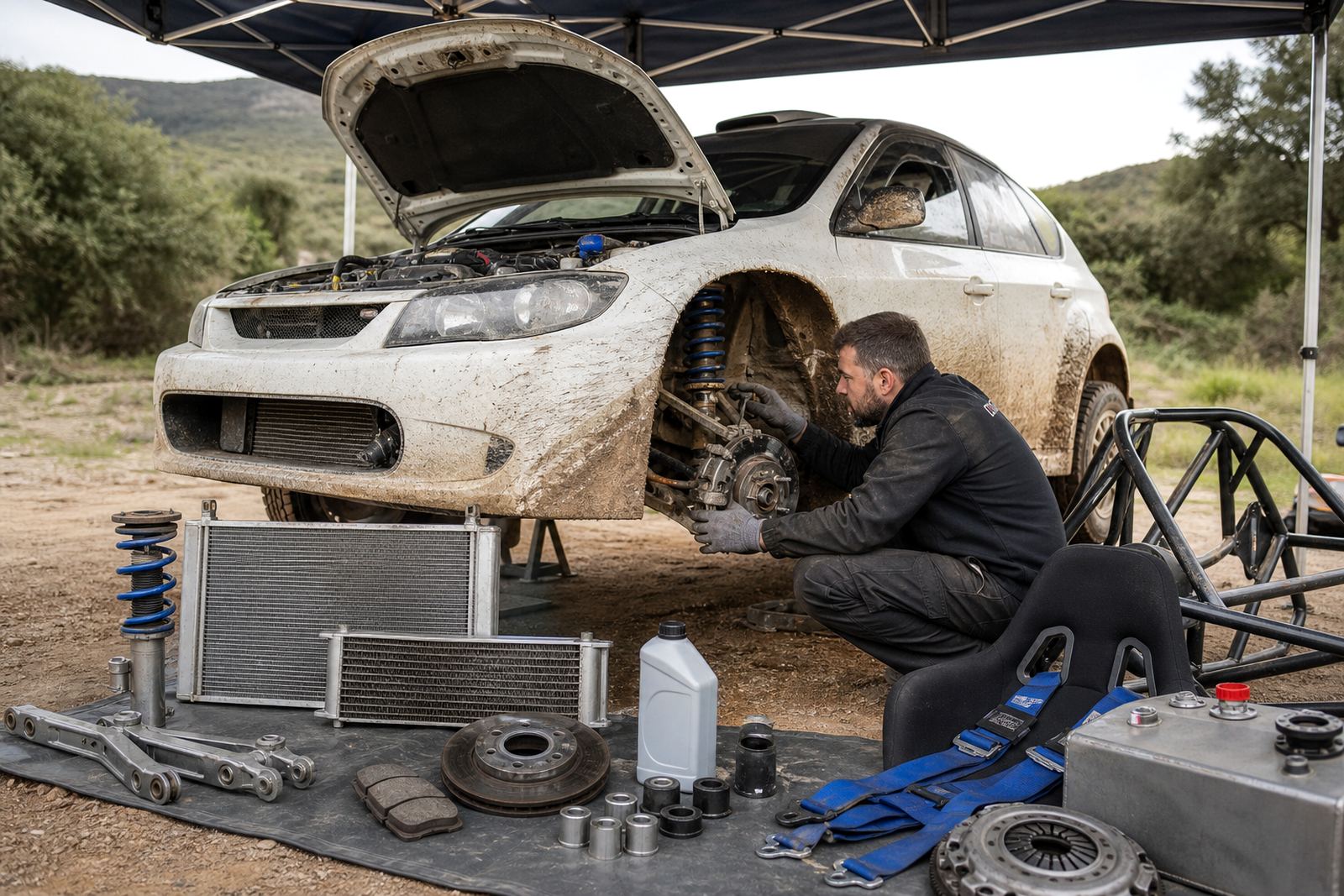


Start with the first walk around, not the toolbox
A useful stage service begins with a slow walk around the car while the bonnet is still warm and the dirt is fresh. Look for oil, coolant, brake fluid and fuel traces on the floor, then check for cracked hoses, split boots and loose clamps before anyone starts swapping parts in a hurry.
On a rally car, a small leak can turn into a bigger problem once dust, heat and rough surfaces join the picture. In Midrand, Johannesburg or Kyalami, crews often work in tight service windows, so the first pass should always separate real damage from grime thrown up during the stage.
Brakes, hubs and wheels take the worst pounding
Brake pads, discs, fluid and wheel hardware deserve close attention after every hard section. A rally car can come in with glazed pads, a softened pedal, stone bruises on the discs or a wheel nut that no longer feels right, and each one needs proper checking before the next run.
- Feel for uneven pedal travel or a pedal that sinks lower than earlier in the day.
- Check the calipers, lines and bleed screws for dampness or fresh dust streaks.
- Inspect wheel studs, nuts and hub faces for movement or impact marks.
- Look at tyre sidewalls for cuts, cords, bulges and bead damage.
If a car has been over a kerb or through loose rock, the wheel end gets a proper look. A bent rim or damaged hub can upset braking and alignment, and that can be the difference between a clean stage and a nervous one.
Suspension should be judged by marks, not guesses
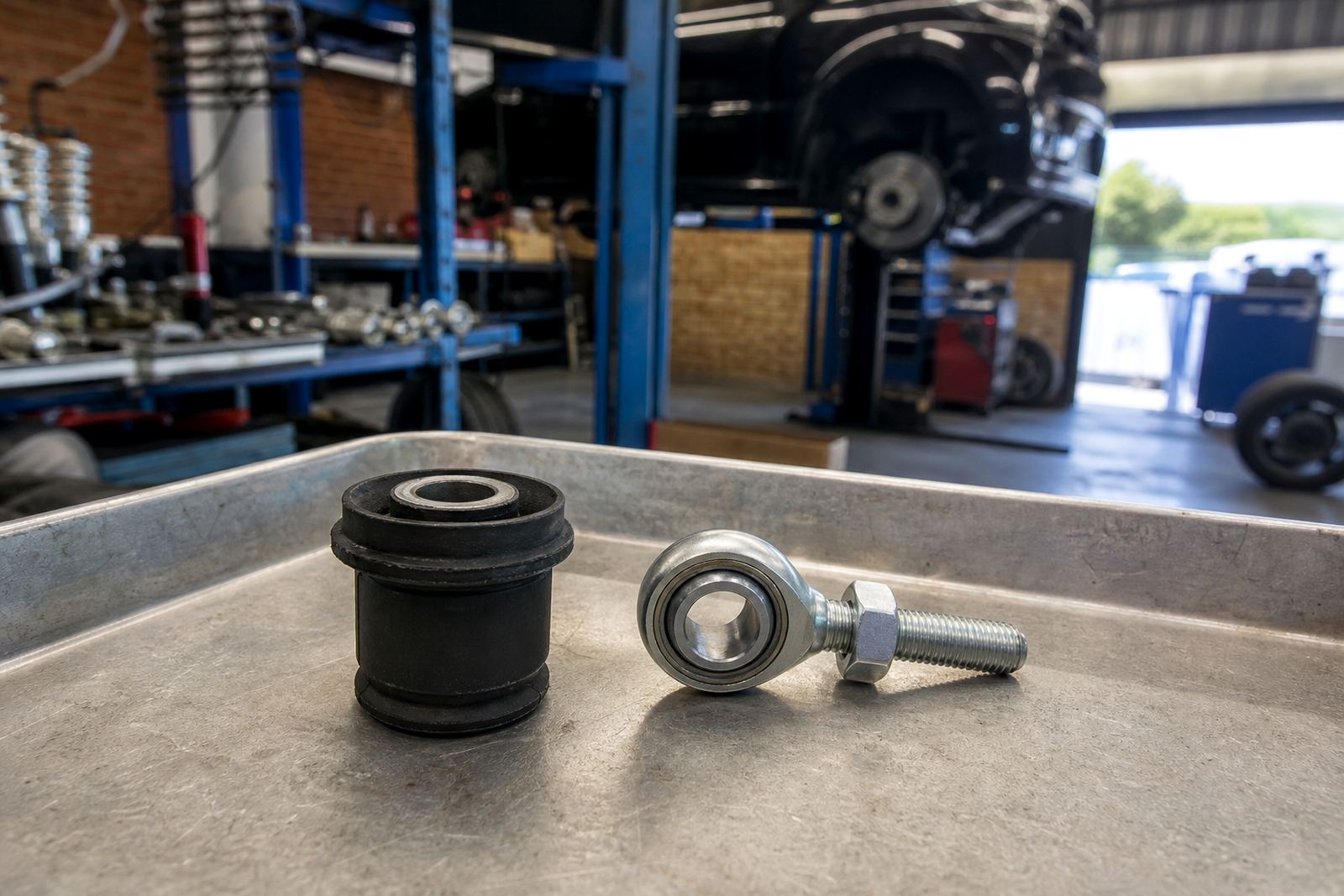
Coilovers, bushes, top mounts and control arms should be checked for play, oil seepage and fresh contact marks. Rally vibration works fast, and a loose lock nut or tired bush can change the way the car lands, turns and pulls out of a bend.
Alignment checks and corner weighting matter when the car feels different from one stage to the next. If the steering has gone vague, the rear steps out earlier than it should, or one corner sits lower after service, the issue usually lives in suspension geometry or a damaged mounting point.
- Check damper bodies for scoring, leakage and damaged adjuster knobs.
- Look at spring seats and helper springs for movement or misalignment.
- Inspect arms, bushes and ball joints for knock or visible shift.
- Confirm ride height after any heavy landing or contact with a rut.
Cooling and fluids do not forgive neglect
Radiators, oil coolers and hoses need careful inspection once the car cools enough to touch safely. Gravel can bruise fins, push debris into the core or chafe a hose where it passes a bracket, and that can turn into heat soak during the next section.
Fluid checks should cover engine oil, gearbox oil, brake fluid and coolant levels, plus any sign of foaming or contamination. A rally car that has worked hard on a hot Gauteng day can lose a little through breathers and minor seepage, so the service crew needs to look at the pattern rather than the gauge alone.
On a route that has long climbs and broken surfaces, a damaged hose clip or a slightly bent cooler bracket can matter more than a dramatic failure. That is why a proper service routine always includes a close look at clamps, rub points and bleed condition.
Seats, harnesses and cages need a second set of eyes
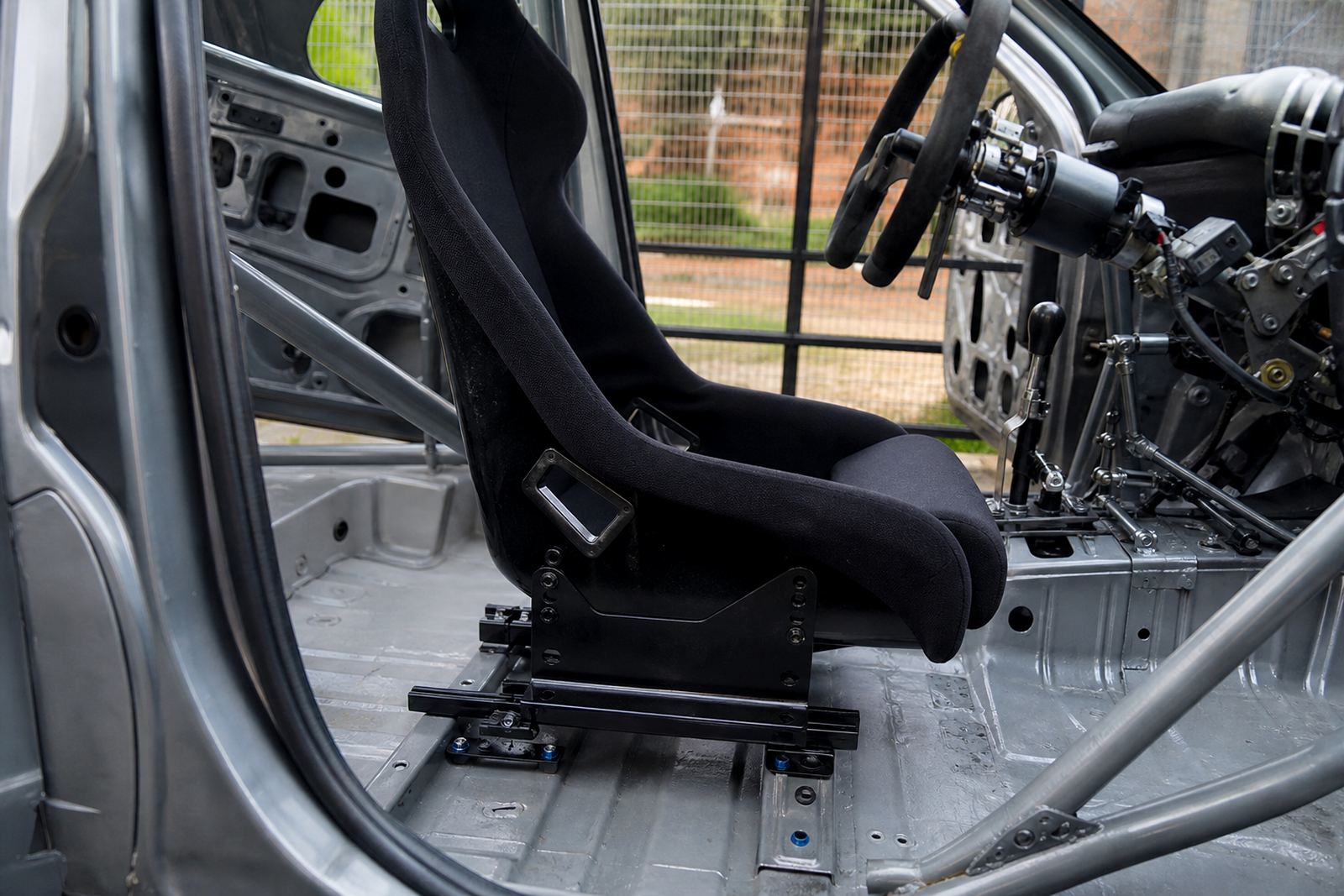
Safety gear gets checked at every service halt. Seats should sit solidly, harnesses should feed and lock cleanly, and the driver should not be forced to twist into the car because the position has shifted during the day.
Roll cage joints, padding, door bars and mounts also deserve a careful look after rough stages or a light knock. Even when the shell looks fine, a mount can work loose, a harness eye can settle or a seat bracket can move under repeated shock.
- Check harness webbing for fraying, twist and uneven tension.
- Confirm buckle action and shoulder strap routing.
- Inspect seat mounts for cracked welds or fresh witness marks.
- Look over cage padding, joints and nearby trim for impact signs.
Fuel, clutch and shift feel tell their own story
Fuel system layout matters because a stage car spends its life shaking, braking and pulling hard out of slow corners. Lines, filters, pumps and cell fittings should be checked for smell, dampness and secure routing, especially where the car has been bouncing over corrugations or hard compressions.
Clutch and shift setup also need attention when the driver reports missed gears, heavy pedal feel or a change in bite point. A small adjustment can be enough, but the technician still has to inspect the cable, hydraulics, linkage or shifter stops before making a call.
In Port Elizabeth or Cape Town, where events can bring coastal humidity into the service park, terminals and fittings need extra care too. Moisture does not need to cause a drama to start staining connections and softening a dodgy repair.
A local service rhythm that suits South African rally work
At a Midrand base, the best rally service routine is a disciplined one. The car comes in dirty, the driver explains what changed, and the crew works from leaks, damage and fastener security before moving to setup details like brake balance, damper clicks, alignment and seat position.
A good example is a club rally car returning from a rocky loop near Kyalami or a gravel day that has stretched into dusk. The usual pattern is simple enough: check the bottom of the car for fresh marks, check the wheels and suspension pickup points, then move through cooling, brakes and cabin safety before the next stage call.
That sequence works for Johannesburg, Pretoria, Centurion, Durban and Cape Town as well, because the surfaces and weather change but the basics do not. Dust, vibration and heat all punish loose parts, so the routine should always be practical, methodical and ready for the next road section.