

Where bushes earn their keep
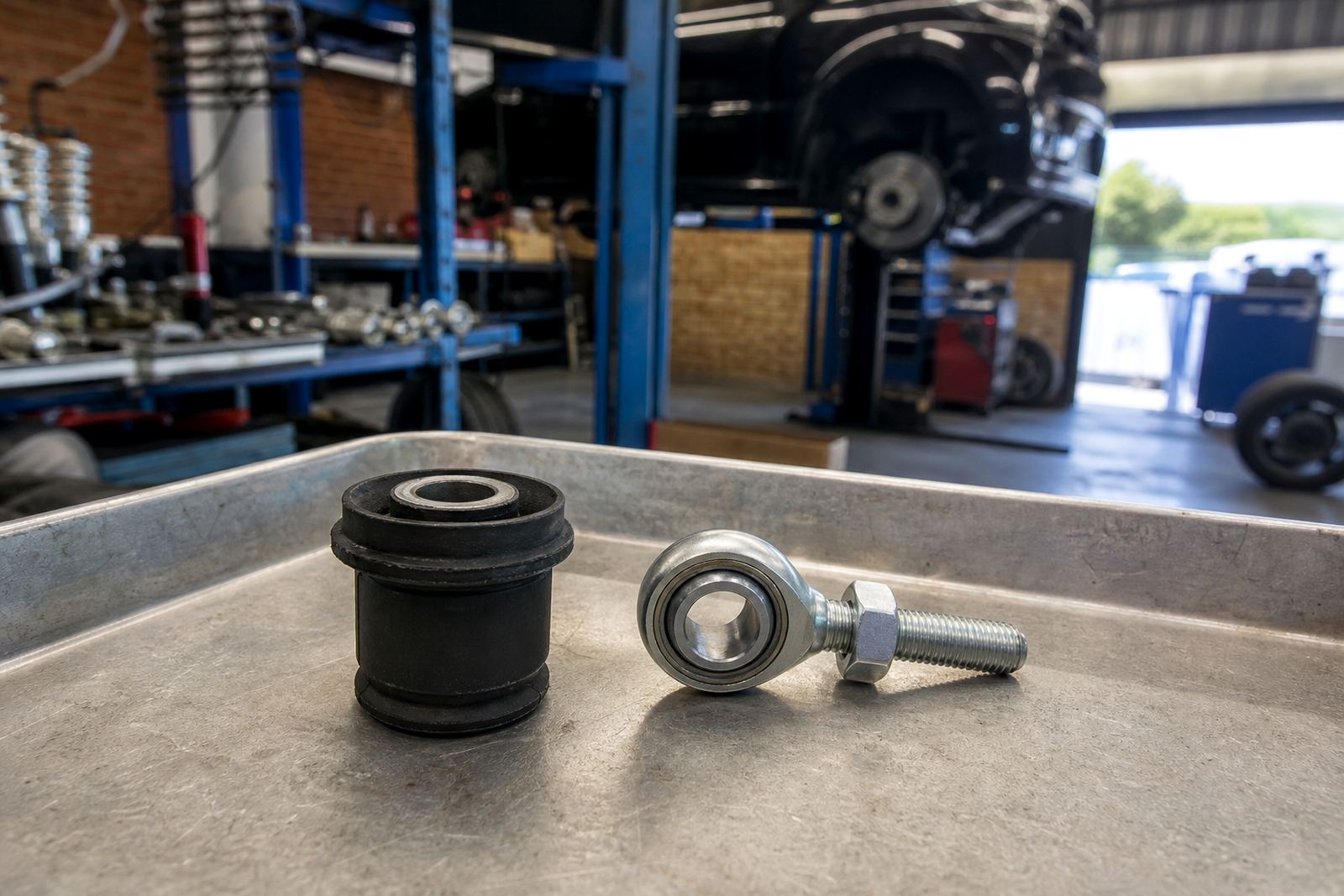
Bushes suit cars that still need some road manners, or where the suspension has to cope with rough surfaces and long transport legs between events. A good rubber or polyurethane bush can calm harshness, keep a car quiet enough for daily use, and still give more control than a tired factory part. On club cars in Johannesburg and Pretoria, that balance often matters more than chasing the last bit of sharpness.
They also help where the chassis is old, or where a setup needs a little forgiveness over kerbs and broken tar. A bush allows small deflection under load, which can reduce shock through the arms and mounts. That can be useful on rally stages, endurance use, and mixed road and track work, especially where dust and heat are part of the picture.
- Kinder on a car that also sees the street
- More comfort and less noise
- Useful on rough roads and long distances
- Can protect older mounting points from harsh loads
Where solid joints make more sense
Solid joints, rose joints and similar spherical hardware are chosen when accuracy matters more than comfort. They reduce unwanted movement in suspension links, so camber, toe and caster stay closer to the setup you asked for under load. On a car that sees regular circuit work, that can make the front end feel cleaner in turn-in and more consistent through fast direction changes.
The trade-off is clear. These parts transmit more noise, vibration and road shock into the shell. They also dislike neglect. In a wet and dusty environment, they need checking for play and corrosion, and that is not just workshop talk, it changes how the car behaves on the day.
- Sharper response under braking and cornering
- Less compliance in the suspension pickup points
- More NVH inside the cabin
- Needs careful inspection and proper lubrication where applicable
The wear pattern tells the story
Before changing parts, look at how the car has been used. Uneven tyre wear, wandering toe settings and a car that feels vague on initial turn can point to bushes that have gone soft or split. Clunks over load transfer can also mean the mounting points are no longer holding the arm in a steady position. In Gauteng, where many cars run hard on the road between events, heat and age can be enough to deform tired rubber.
Solid joints are not a cure for every handling complaint. If the dampers are tired, the alignment is off, or the corner weights are uneven, a joint will not rescue the package. It only removes compliance that was already in the system, so the rest of the setup must be sound first.
- Split rubber can throw alignment off
- Play at the mount shows up as vague steering
- Tired dampers make any joint feel harsher
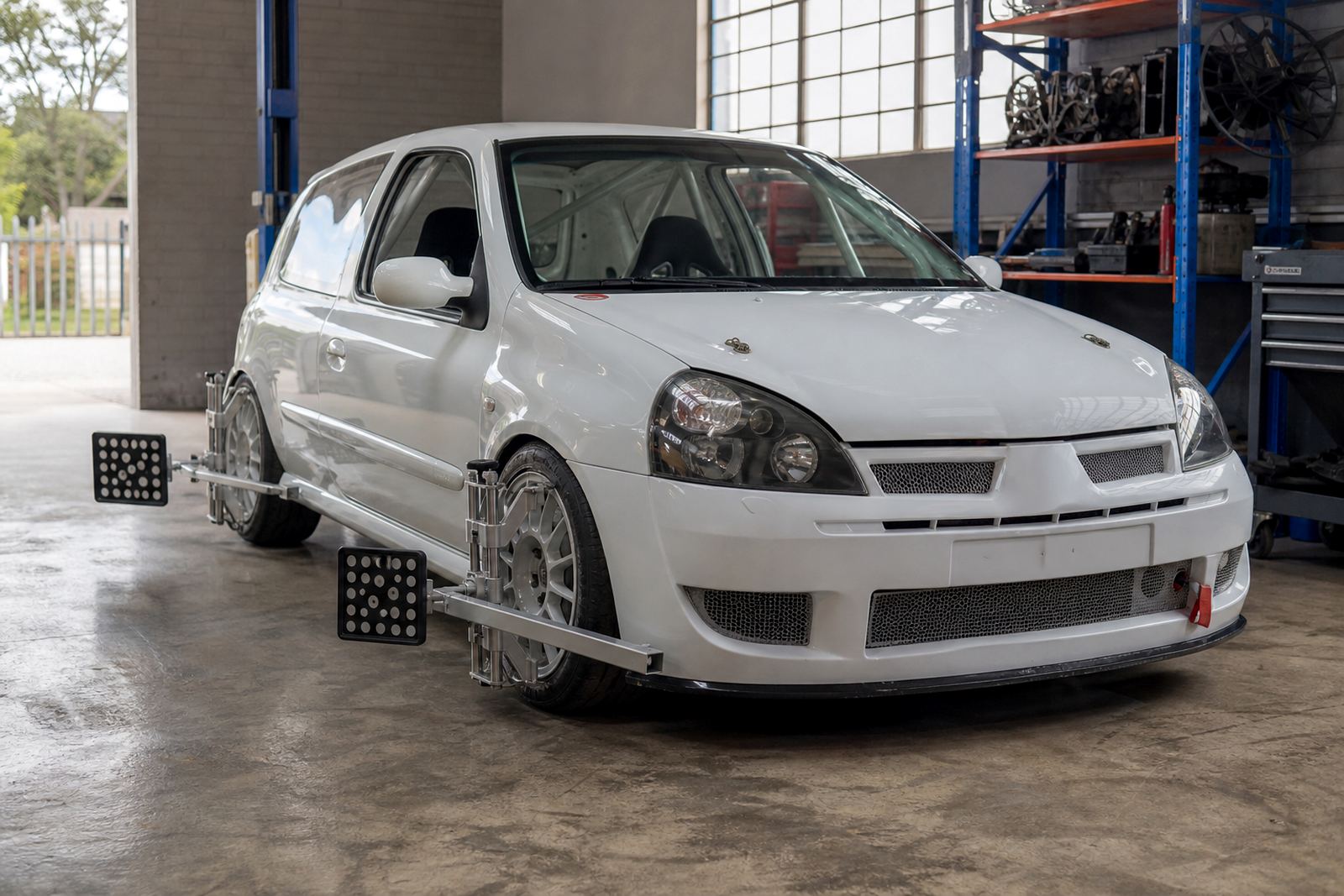
- Fresh geometry matters before new hardware goes in
A Midrand rally car that needed a middle ground
A Midrand rally customer came in with a car used for gravel practice, tar shakedowns and the odd road link. The brief was not about making it feel like a pure circuit car. It needed less slop in the rear, but the driver still had to live with the car on public roads and on corrugated sections outside town. That kind of use is where a mixed solution can work well.
We would usually look at the main arms, the ball joint condition, and which end of the car needs the most precision. Sometimes the answer is not full solid hardware across the car. A firmer bush in one area and a solid joint in another can give cleaner handling without turning every kilometre into a fight. That depends on the shell, the class rules and how the car is actually driven.
- Rear control under loose surface load
- Less movement where wheel location matters most
- Retained comfort for road sections
- More predictable setup changes at the workshop
Brakes, tyres and suspension must agree
Bushes and joints cannot be judged on their own. If the brake upgrade is aggressive, the front suspension needs enough control to keep the contact patch steady under heavy stops. If the car has sticky tyres, a soft rear end can make the whole balance feel lazy. If the cooling system runs hot, the driver may be dealing with heat soak and a changing pedal feel long before the final lap.
That is why setup days matter. A car that gets alignment checks, corner weighting and a brake bleed in one session tells a clearer story. The steering, the pedal and the way the shell takes load all show up together. On a track car in Kyalami or a club racer in Centurion, those links between systems are where the real decision sits.
- Brake bite changes how the front load builds
- Tyre grip can expose soft suspension points
- Heat can change driver feel and consistency
- Setup work should be judged as one package
Picking the right part for the class and surface
The right choice depends on rules, surface and how much road time the car still sees. A sealed street car that does a few track days will usually live happier on good bushes in the right places. A sharper machine built for repeat laps and faster steering input may benefit from more solid joints, especially where small geometry changes matter under brake and throttle load.
For Durban humidity, coastal dust and the stop-start punishment of long transport, material choice matters. Rubber can age, polyurethane can squeak if neglected, and metal joints need proper care. None of them are fit-and-forget items. They should be matched to the car, the event and the driver’s tolerance for noise, heat and maintenance.
- Road use favours comfort and tolerance
- Track use rewards precision and repeatability
- Coastal conditions demand more inspection
- Class rules can limit what is practical