

Wrap The Pipe, Not The Problem
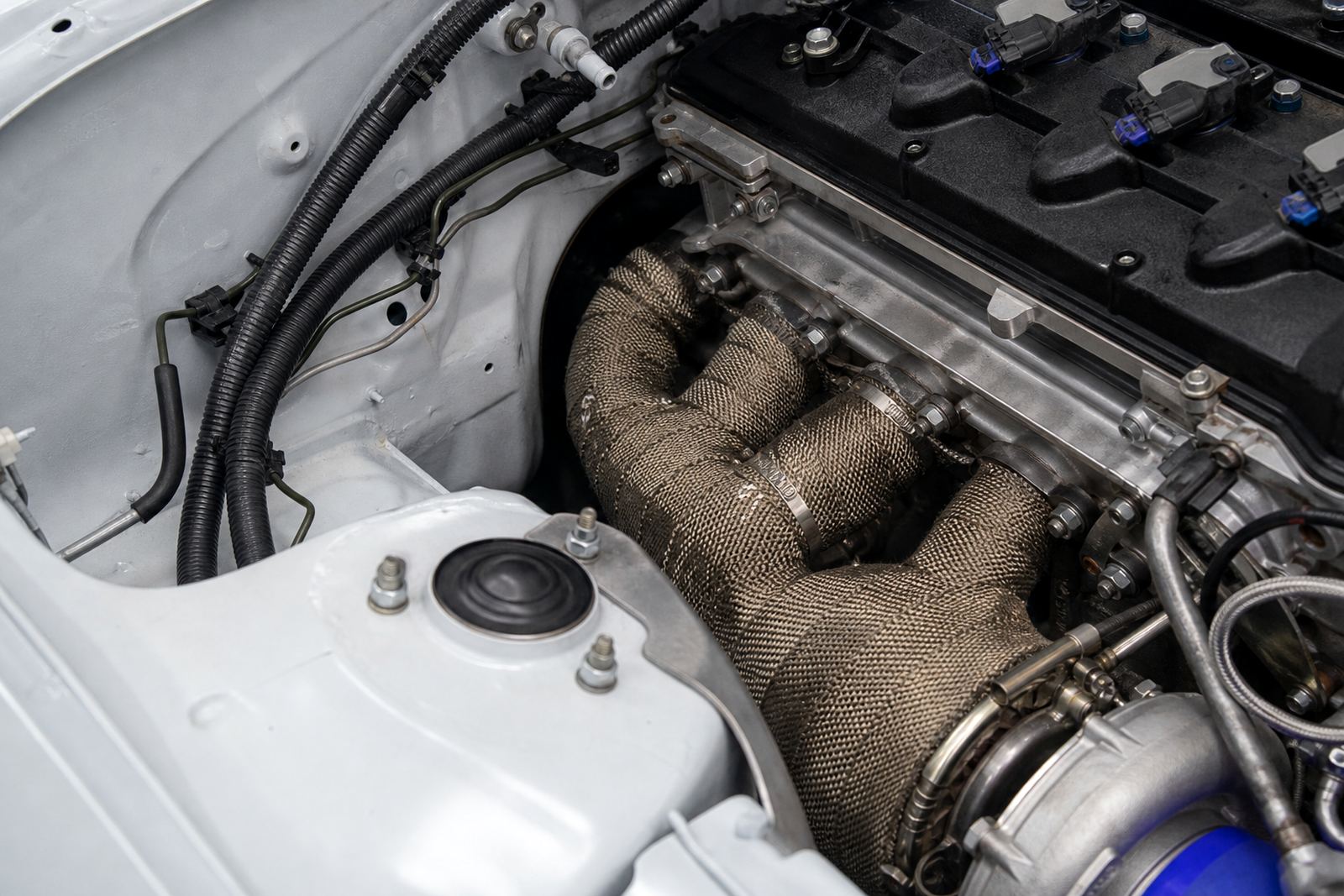
Heat wrap is often fitted around exhaust runners, downpipes and turbo sections, yet the first question should be what sits beside that part. A wrapped pipe can hold more heat in the metal and push that heat toward brake hoses, fuel lines, wiring looms and rubber mounts if the bay is crowded.
In a Midrand workshop bay, a neat wrap job can look convincing at first glance. The real test is clearance. If a hose passes within a hand span of the wrapped section, or a loom crosses above it, the wrap may need a shield, a route change or a different heat control method entirely.
- Check where the hose runs at full lock and under engine movement.
- Look for brittle insulation, softened rubber and heat staining.
- Keep an eye on clips, ties and grommets near the wrapped area.
Hoses And Wiring Age Fast In The Wrong Spot
Rubber hoses do not always fail in one moment. More often they harden, swell or start weeping after repeated heat soak. Wiring can suffer too, especially where insulation sits against a wrapped runner or a turbo blanket edge and sees vibration on every session.
On club cars running between Johannesburg and Kyalami, the damage is not always dramatic. A coolant hose may soften near a clamp, a sensor wire may crack at the bend, or a fuel line sleeve may discolour. Those are warning signs, not cosmetic quirks. If the area already runs close to its limit, a wrap can tip it over.
- Move vulnerable lines away from radiant heat where possible.
- Use proper heat sleeve on wiring that must pass nearby.
- Inspect for chafing after any suspension or engine mount change.
When A Shield Beats A Wrap
Not every hot spot needs cloth wrap. In some builds, a formed heat shield with an air gap does better work around master cylinders, steering parts and nearby plastics. Air gap matters because a shield can block radiant heat without holding it tight against the pipe.
That point matters on cars with tight engine bays and mixed use, from rally builds to circuit cars that spend time idling in the pits. If the bay already carries brake fluid lines, clutch hydraulics or a fuel system layout that leaves little room, a shield may be the safer move. The goal is to manage heat without creating a new problem beside it.
- Use shielding where the concern is nearby components, not just the pipe itself.
- Leave space for airflow rather than clamping material over everything.
- Check access to service points before closing up the bay.
Material Choice Changes The Risk
Some wrap materials cope better with moisture, oil mist and repeated heat cycles than others, but no material removes the need for care. In coastal humidity, a wrapped section that stays wet after washing or a wet race weekend can hold grime against metal and fittings. That can wear out clamps and the brackets close by sooner.
A wrapped surface also hides what is happening under it. Small oil leaks, cracked welds or loose fasteners can stay unseen until the smell changes or a hose nearby starts ageing faster than expected. That is why a quick visual check after fitting matters, especially on cars that run hard on track and then sit in the workshop for a week.
- Keep wrap dry where possible after washing or wet weather.
- Do not bury a known leak under insulation.
- Inspect the ends of the wrap, not only the centre section.
Heat Wrap On A Car Driven To The Track
A common local case is a turbo car moving from Midrand to Kyalami for a test day. The owner wants lower under bonnet heat, so the exhaust side gets wrapped. After a few sessions the car returns with a soft coolant hose near the back of the head and a brittle sleeve on a nearby wire. The wrap did not fail, but the surrounding packaging was too close for comfort.
That is the point many drivers miss. Heat control is not only about the hot part, it is about the full path around it. A cleaner result might have used a shield over the hose, a rerouted loom and a smaller wrapped section on the pipe. Small changes can spare the driver a bigger repair later.
- Review the full route from turbo or manifold to the front of the bay.
- Watch for parts that move under torque, not just at idle.
- Record what was changed so future setup work stays consistent.
Fitment Checks Before The First Session
Heat wrap is best handled as part of a wider fitment check. That means looking at brake lines, clutch lines, steering boots, sensor wiring and the places where they pass through panels. It also means checking the car after a short run, once the engine has seen proper temperature and the bay has settled.
RaceHouse works with motorsport parts and performance upgrades for track, rally and club cars, so the advice usually starts with layout rather than a single product. If a wrapped pipe sits beside a vulnerable line, the answer may be a different route, a shield, or a change in the surrounding setup. That practical order saves time and keeps the bay easier to live with between events.
- Make a heat map of the crowded side of the engine bay.
- Confirm that clamps, ties and shields can still be reached later.
- Recheck the bay after one heat cycle and again after a track day.