

Start With The Driver, Not The Seat Shell
Before drilling a rail or bolting in side mounts, check how the driver sits in the car with helmet on, gloves nearby and both feet on the pedals. A seat can look correct on the floor, yet still leave the driver perched too high or twisted toward the wheel.
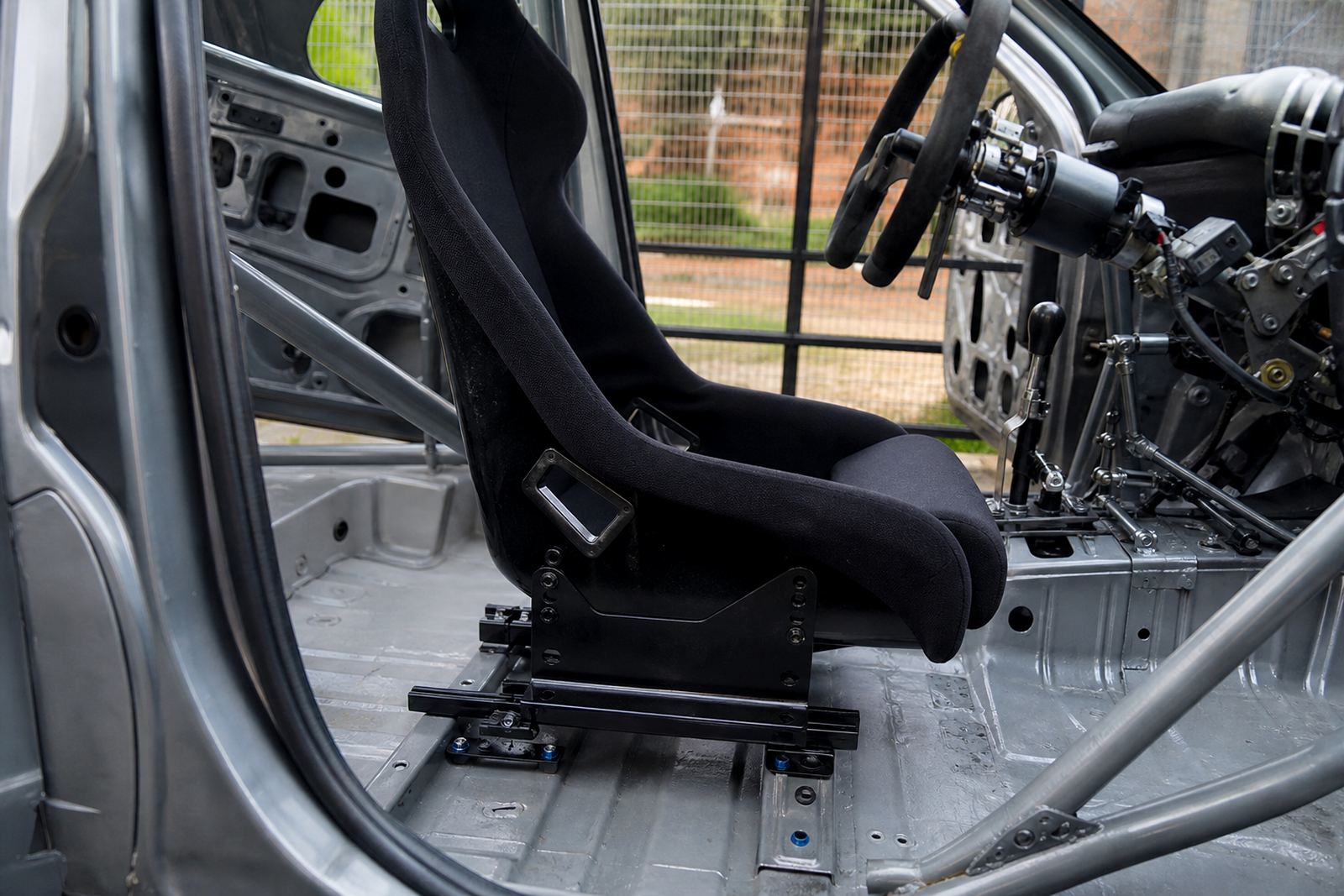
In motorsport, seat mounting is about control under load. Under braking, the body should stay put without bracing on the steering wheel, and the hips should sit low enough for the driver to work the pedals without lifting a heel off the floor. A good position also helps the driver hold a steady line through long corners, where small movements make a difference.
We often see cars where the seat was fitted to suit the shell rather than the person. That usually means the shoulders are too far forward, the helmet brushes the roof lining, or the steering wheel sits too close to the chest. None of that feels settled once the car is moving hard.
Clearance Checks That Matter Before The Bolts Go Tight
Helmet clearance is one of the first checks. The driver should have enough space above the helmet for head movement over kerbs and in a roll over situation, but not so much height that the head bounces around in the seat. The seat back angle also matters because a very upright seat can push the helmet closer to the roof.
Measure the space around the shoulders and the door side. Side mounts, runner height and base plates all change the final position by a surprising amount. In a hatchback or saloon with a low roof, a few millimetres can decide whether the driver sits comfortably or keeps touching the roof with a helmet on.
- Check helmet clearance with the driver fully strapped in.
- Make sure the head is not forced forward by the seat angle.
- Confirm that the steering wheel clears the thighs on full lock.
- Leave enough space for shoulder movement without side contact.
- Inspect the seat frame for flex before final torque is applied.
Reach, Pedal Feel And The Steering Wheel Triangle
The best seating position keeps the driver in one stable triangle between the seat, pedals and steering wheel. If the knees are too bent, the driver loses fine pedal feel. If the arms are too straight, the shoulders take the strain and the wheel gets pulled during quick direction changes.
For club racing and track days, the aim is usually a slight bend in the arms when the hands sit at the normal driving position. The brake pedal should be reachable without the driver sliding forward, and the clutch should be workable without the hip twisting. It sounds obvious, yet a lot of weekend-before installs skip it.
A seat positioned too far back can also make heel and toe work awkward. A seat too far forward can crowd the steering column and leave the driver feeling pinned in. The right balance depends on the car, the seat shape and the harness layout.
Harness Angles And Shoulder Height Need To Match
Seat mounting cannot be separated from harness fitment checks. Shoulder belts should leave the seat at an angle that supports the upper body without pulling down sharply on the shoulders. If the seat sits too low or too high, the belt path changes and the fit stops feeling natural.
Head and shoulder restraint systems need the seat to sit in the correct relation to the roll cage or harness bar. A poorly placed seat may force the driver into a belt angle that looks tidy from outside but works badly once the car loads up through a corner or under braking.
We also look at how the belt buckle lands over the pelvis. If the seat cushion is too soft or the base angle is wrong, the lap belts can ride up. That is not what you want in a hard stop at the end of a fast straight.
- Shoulder belts must sit evenly across both shoulders.
- Lap belts should meet the pelvis, not the stomach.
- The buckle should sit where the driver can release it cleanly.
- Seat side bolsters must not trap the belt webbing.
Seat Mounting In A Midrand Workshop, With Real Local Conditions
In Midrand, a lot of cars arrive after a mix of road use and motorsport use, which means the seat job has to handle both. A driver may need a position that works for Kyalami testing one weekend and a long haul to a rally stage the next. That makes repeatable comfort important, not just a neat-looking install.
Cars used in Johannesburg traffic, Pretoria commuting and Cape Town events all see different wear patterns. In humid coastal conditions, fixings and sliders need regular inspection, while inland cars often show looseness from vibration and repeated adjustments. A seat that moves even a little can change the driver’s feel for the pedals and steering.
During setup days, we check how the seat relates to the floor, the cage, the wheel and the pedals together. We also look at access for helmet removal, buckle release and quick exit, because a seat that feels right but traps the driver in a rush is not good enough for racing use.
Small Hardware Details That Stop Big Problems
Seat mounting hardware deserves the same care as the seat itself. Washers, spacers, brackets and fasteners need to be matched properly so the load spreads across the floor and bracket. A thin plate in the wrong place can deform under repeated load, especially where the car sees kerb strikes or rough rally surfaces.
We also check for interference with floor humps, tunnel shape and transmission movement. On some cars, the seat base needs a small adjustment to avoid contact with the handbrake, shifter or harness eyelets. Little clashes like that are easy to miss during a quick fit, and they become annoying once the car is on track.
If the car runs a welded cage, the seat position should still allow a sensible exit path. Nothing should force the driver to twist around a bar or catch the helmet on a cross brace. The aim is neat, functional placement that suits racing use without making the cockpit awkward.
A Simple Final Check Before The Car Leaves The Bay
The last seat check is done with the driver strapped in, helmet on and eyes forward. Reach for the wheel, press the pedals, release the buckle and move the head side to side. If anything feels cramped, the position needs another look before the car goes out.
For drivers moving between track, rally and club events, seat mounting is one of those jobs that pays back every lap. It can sharpen confidence, reduce fatigue and make the car feel calmer under braking. That is why fitting advice matters just as much as the parts themselves.
RaceHouse works with drivers across Midrand, Johannesburg, Pretoria, Kyalami, Centurion, Durban, Cape Town and Port Elizabeth on seat positioning, harness fitment checks and related setup work. If you need a practical look at your cockpit layout, our contact form is the easiest place to start.