

Camber starts with the tyre, not the number
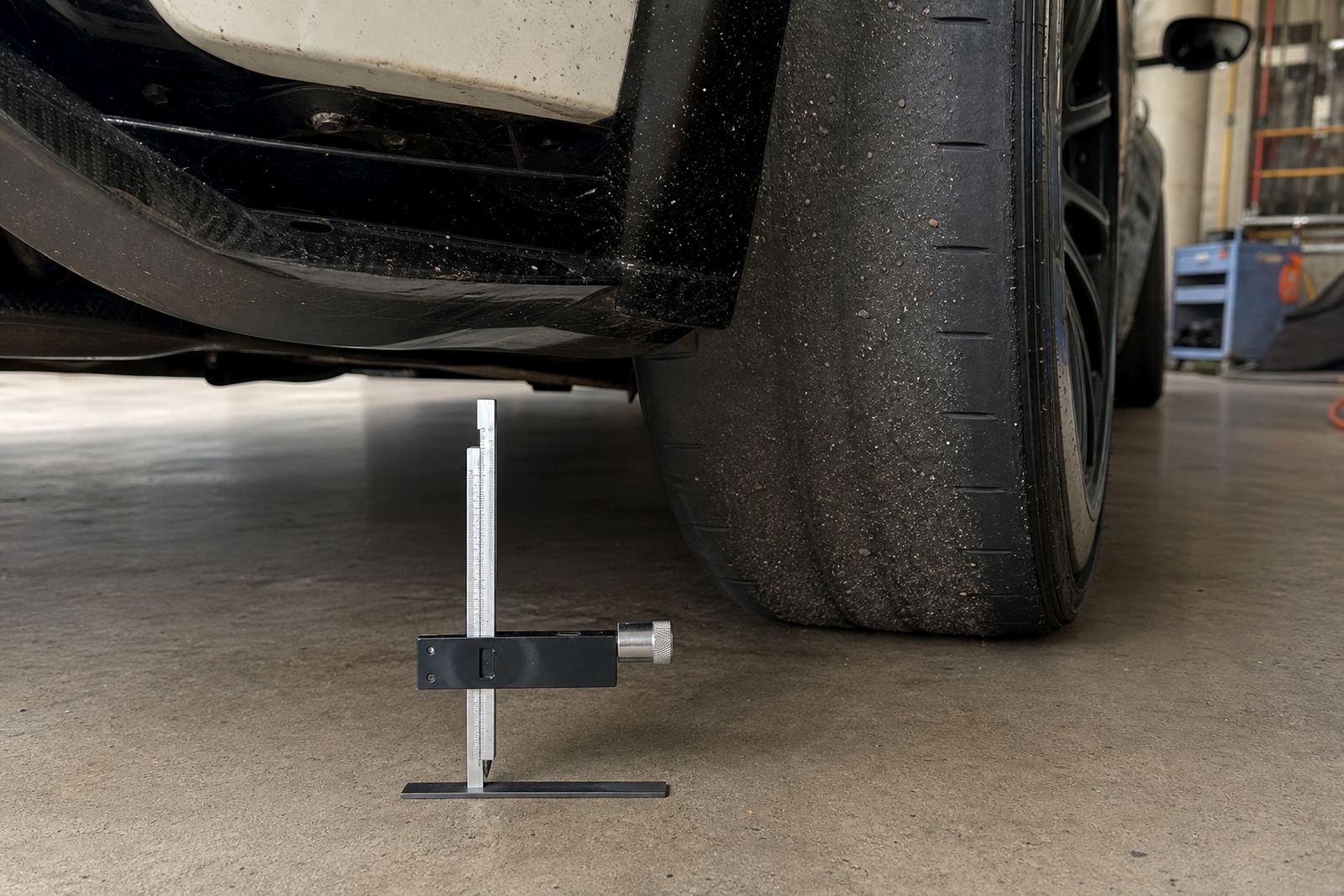
Club racers often chase more negative camber because the outside shoulder of the front tyre looks busy after a hard session. That can be the right direction, but the real question is how the tread is working across the whole contact patch. A tyre that is hot and torn on the outer edge may be asking for more camber, while a tyre that is cool inside and outside but gripping poorly may point to pressure or spring issues instead.
On a front wheel drive hatch or a light rear drive coupe, the pattern changes with the way the car rolls into the corner. Midrand, Kyalami and Zwartkops style circuits put different demands on the front axle, and the answer is rarely the same for each layout. A fast right hander, a rough kerb and a driver who brakes deep into the apex can all make the shoulder wear look worse than it is.
- Even heat across the tread usually means the car is close.
- Outer shoulder feathering can suggest not enough camber or too much roll.
- Inside edge wear with poor grip may mean too much camber for the tyre load.
- One tyre hotter than the others can point to balance or alignment drift.
Driver notes tell you what the tyre cannot
Tyre wear gives one part of the story, but the driver often feels the change before the surface shows it. A car that turns in better after a camber increase may still be unstable under braking, or it may lose mid-corner traction and force the driver to wait on the throttle. That is where short, plain feedback matters. Ask what the car does at turn in, on the brake release and as the steering starts to unwind.
In club racing, feedback should stay specific. A vague comment like the front feels nervous is less useful than saying the car pushes at apex but bites on exit. When the driver and the tyre data point in the same direction, the camber decision gets easier. If they do not match, something else may be in the way, like tyre pressure, bush condition, a soft damper setting or a bent component after kerb contact.
- Turn in laziness can mean the front tyre is not loading evenly.
- Mid-corner push may call for more camber or a balance change.
- Snappy rear grip can mean the rear camber is too aggressive.
- Brake instability is often not camber alone, so check the full front end.
Drivers racing in Durban’s heat may describe a tyre that starts well then fades as the session runs on. That can mean the camber works early but the pressure rise is too high, or the tyre carcass is being overloaded. The note that matters is not only how the car felt, but when it felt that way.
A setup day should read the whole front end
Camber changes should sit inside the rest of the chassis setup. At RaceHouse, setup work for club cars often starts with alignment checks, then moves into suspension, corner weighting and brake planning if the car needs it. A camber change without checking ride height or cross weight can hide the real problem. If one corner is carrying too much load, the tyre wear will mislead you.
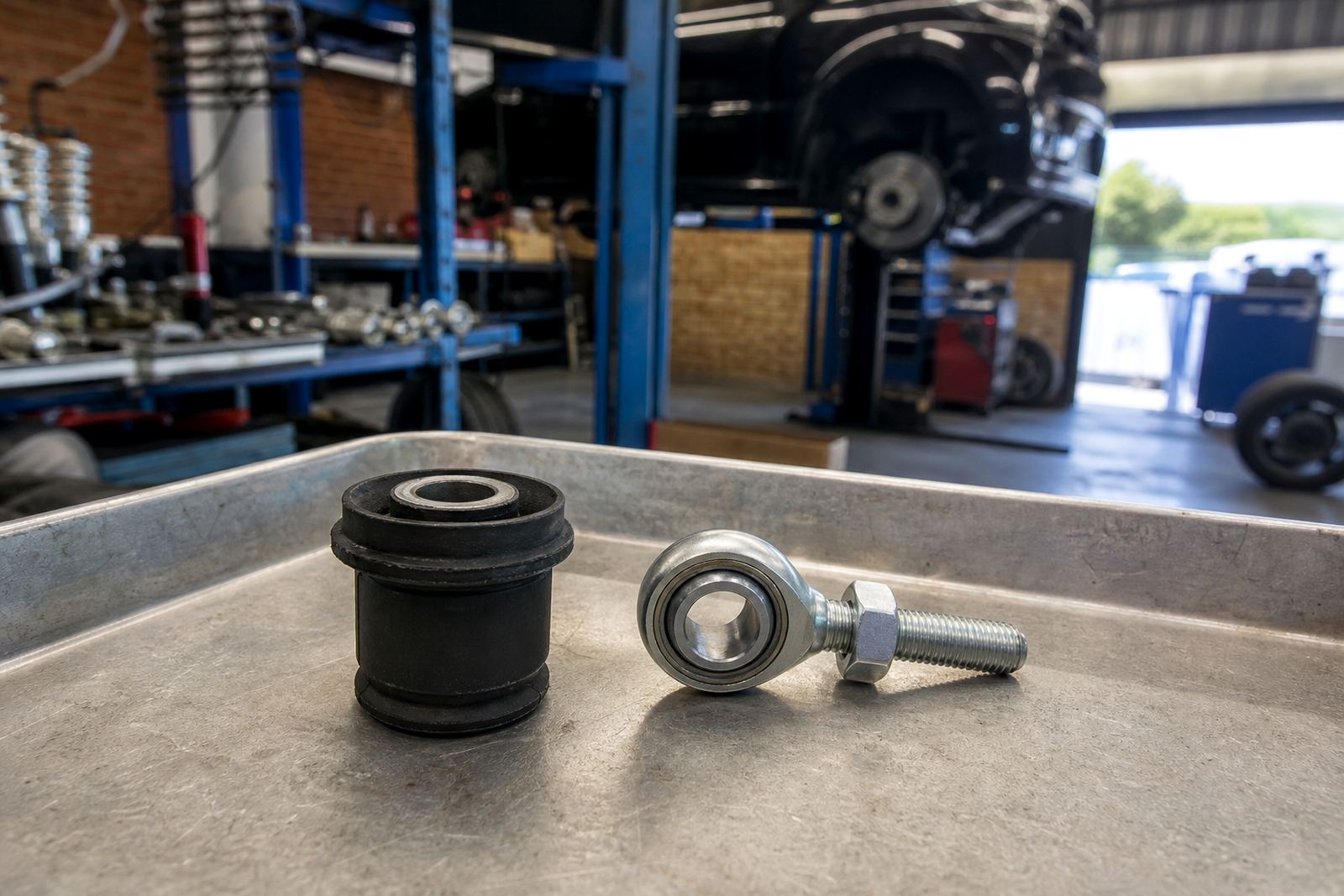
Suspension bushes, top mounts and coilover condition all matter. A worn bush can let the wheel move under load, so the camber number on paper is not the camber the tyre sees in the corner. On cars that run longer sessions or rougher tracks, that movement can make the outside shoulder look cooked even when the static setting looked safe in the garage.
- Check ride height before changing alignment targets.
- Look for play in bushes, bearings and top mounts.
- Measure camber left to right, not only the front axle as a whole.
- Note tyre pressure hot and cold, because that changes the read.
Front camber and rear camber do different jobs
Most club racers think first about front camber because turn in is easy to feel. The rear axle deserves the same attention. Too little rear camber on a lively rear drive car can make the back of the car slide early, while too much rear camber can rob traction on exit and make the driver work harder on the throttle. The balance between front and rear matters more than a single number written on a setup sheet.
On a Kyalami-style lap with long loaded corners, the rear can run hotter for longer than on a short Gauteng club circuit. That is why the same car may need different rear camber support for different meetings. A rally car on mixed surfaces brings a different set of demands, because the tyre has to handle bumps, dirt and changing grip instead of steady tarmac alone.
The best camber choice is the one that lets the tyre stay honest under load. If the car rotates neatly but runs the rear outer shoulder to death, the rear setting is too mild. If it hooks up on entry and slides on power, the rear may be carrying too much negative camber for the way the driver uses the throttle.
Camber on a club hatch between two Saturday meetings
A Gauteng club racer comes in after a weekend at Kyalami with front tyres showing heavy outer shoulder wear on one side and a cleaner pattern on the other. The driver says the car pushes into slower corners but feels good in fast sweepers. That mix usually says the camber is not the only issue. The team first checks pressures, then looks at corner weight and brake balance, because an uneven front load can change how the tyres read across the axle.
After that, a small camber increase may sharpen the car without making it nervous. If the driver reports better turn in but poorer traction on exit, the change went a little far. That is normal on club cars. The aim is not perfect numbers on a printout, it is a tyre that wears in a controlled way and a car that tells the driver the truth through the wheel.
For racers travelling from Johannesburg, Pretoria or Centurion to a setup day, the useful habit is to arrive with the last session notes, tyre temperatures if they were measured, and a clear idea of where the car lost time. With that, camber tuning becomes a practical job instead of a guess.
The camber check list that saves a lot of guesswork
A camber change should always be small enough to read. If you move too far in one step, the tyre wear pattern becomes harder to interpret and the driver loses the feel of what improved. A measured approach is better, especially on club cars where the same machine may race at different tracks through the season.
- Record the current camber setting on both sides.
- Mark tyre wear on the inside, centre and outside tread.
- Where possible, make one adjustment at a time.
- Compare the driver note with the tyre condition after each run.
- Recheck alignment after any contact with kerbs or cones.
When the numbers, the tyre and the driver all agree, camber stops being a debate and becomes a tool. A proper setup day serves that purpose. It gives the car a repeatable baseline, so the next adjustment has a clear reason behind it.