

A cockpit position that lets the car speak clearly
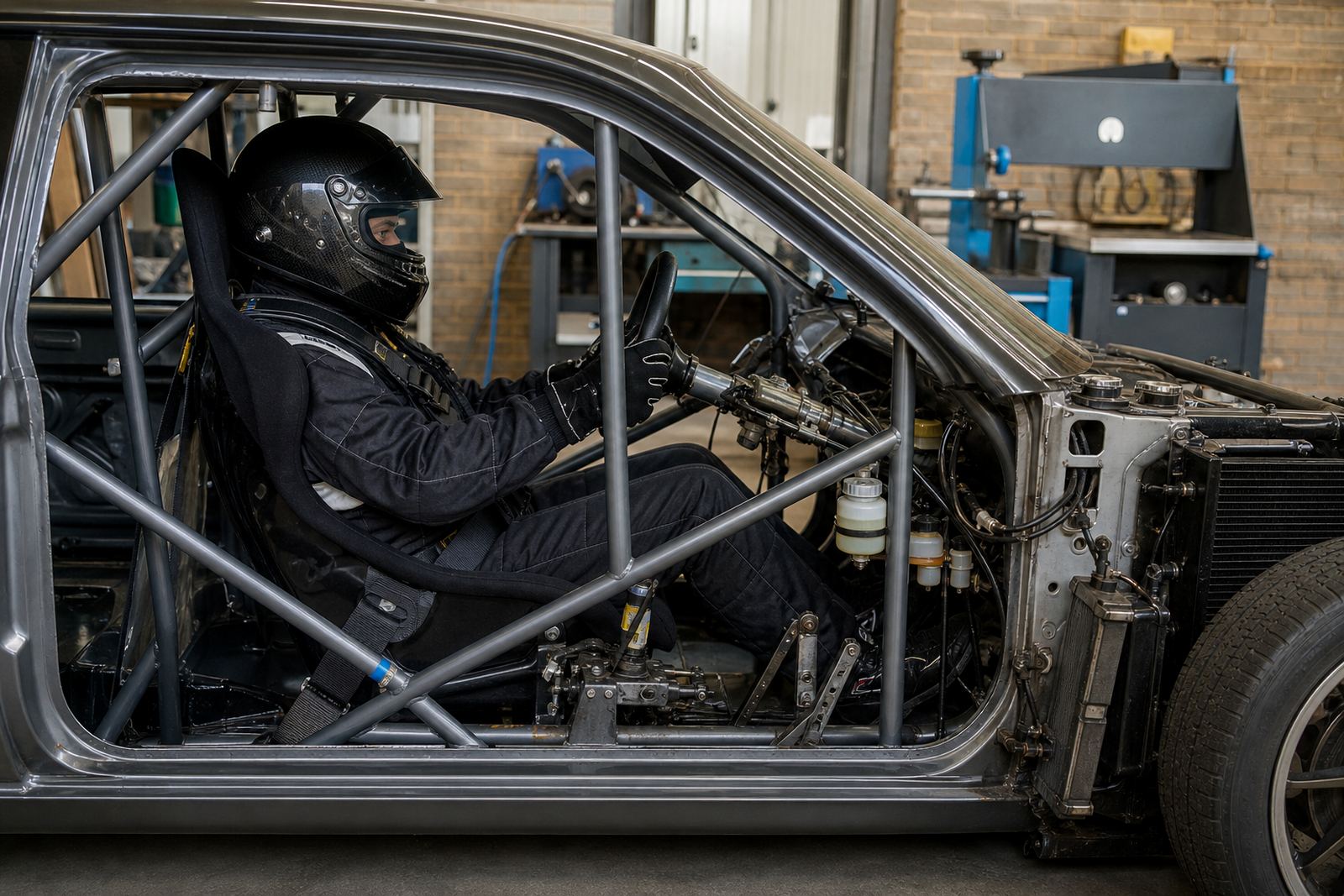
Driver seating posture starts with the basics: your pelvis anchored, shoulders supported, hands relaxed and feet able to move without stretching. If the seat is too upright or too far back, the driver starts using the arms for support and the pedals for balance, which blurs the feel through the chassis. On track, that usually shows up as late braking, uneven steering input and tired shoulders before the stint is done.
A good position lets the torso stay quiet while the hands do smaller work. That matters in club racing and rally alike, because the road surface, kerbs and bumps already ask enough from the driver. The aim is not comfort in the lounge sense, it is repeatable control when the car loads up hard in one direction and then changes direction again.
Seat depth, height and back angle do more than people think
Seat positioning begins with the hips. The base of the seat should hold the pelvis firmly so the lower back is not sliding around under braking. A driver needs enough thigh support to stay planted, but not so much that the knees jam into the steering wheel or the dash. In cars with limited cabin space, that balance can take a few rounds of adjustment.
- Seat base too flat can leave the driver bracing with the spine.
- Seat back too reclined makes head movement lazy and slows vision changes.
- Seat set too high can reduce helmet clearance under a roll cage.
- Seat too low can make pedal feel awkward and hinder quick heel-toe work.
For many cars, especially older shells used for rally or club racing, the driver sits lower than a road position but still needs a clear view of the bonnet line and apex markers. At that point the seat rails, mount height and steering wheel position all need to work together instead of being adjusted one at a time.
Harness fit changes how you sit
A harness that is fitted badly can undo a decent seat position. Shoulder straps need the right angle so they hold the upper body down without pulling the shoulders forward. Lap belts should sit across the hips, not over the stomach, while the crotch strap keeps the driver from sliding under hard braking. When those points are wrong, the body moves around and the steering wheel becomes a brace.
That is where fitting advice matters. We look at the seat shell, belt anchor points, cage layout and the driver’s build together. In some cars the solution is a small change to the belt route, in others the seat needs to move or the side mounts need a different height. A well set harness lets the driver stay calm through kerb strikes, long sweepers and repeated braking zones.
- Shoulder straps should leave the seat near shoulder height where possible.
- Lap belts must tighten onto the hip bones, not the soft stomach area.
- Crotch straps should stop forward slide without pinching.
- Belts should sit flat with no twist at the buckle.
The wheel, pedals and shifter must meet the driver halfway
Good posture is not only about the seat. If the steering wheel is too far away, the driver locks the elbows and loses fine movement. If it is too close, the arms bunch up and the wrists take too much of the load. The same goes for pedal reach and shifter position. A balanced cockpit keeps the elbows slightly bent, knees free to move and the right hand able to find the lever without a stretch.
In cars prepared for circuit work, small changes can have a big effect. A different wheel dish, a revised seat mount or a change in pedal pad spacing can improve control more than a firmer spring or bigger brake disc on its own. The driver should be able to stay planted under braking, then turn in without lifting the shoulders or sliding across the seat base.
Track days in Kyalami and Gauteng show the difference fast
A local example is a Midrand-based club car heading to Kyalami for a test day. The driver may arrive with a seat that felt fine on the road, then find the shoulders lifting under braking into Turn 1 and the helmet brushing the cage on left-hand transitions. Once the seat height, belt angles and wheel reach are corrected, the same driver often feels steadier through the first few laps because the body is no longer fighting the car.
That kind of change is common across Johannesburg and Pretoria too, where cars travel between workshop floors, track days and road transport with different loads in the tyres and fuel cell. A posture check before a session can save strain on the neck, the lower back and the wrists, which matters when a driver has to stay sharp through several runs.
A practical setup note for racers using our Midrand base
Our Midrand team works with seat positioning, harness fitment checks, roll cage fit advice and track setup days for drivers across South Africa. When a car comes in, we look at the full driving position, not only the seat on its own. That means checking where the driver sits in relation to the pedals, the wheel, the cage, the belts and any added equipment in the cabin.
- We look at helmet clearance before tightening the final position.
- We check shoulder support against the harness line.
- We consider the driver’s heel movement for brake and clutch work.
- We adjust for the type of event, from track use to rally stages.
Race cars in Durban, Cape Town and Port Elizabeth often see different conditions, from heat and humidity to long transport stretches before the event. A tidy seating position helps the driver stay consistent across those changes. If the posture is right, the steering feels lighter, the pedals feel clearer and the car gives better feedback through the seat and the wheel.