
What the can is actually doing
A catch can collects oil vapour, water droplets and fine sludge that travel out of the engine through the breather system. In a road car some of that mist gets carried back into the intake to be burnt, but on a track car that same mist can coat pipes, intercooler cores and throttle bodies with residue.
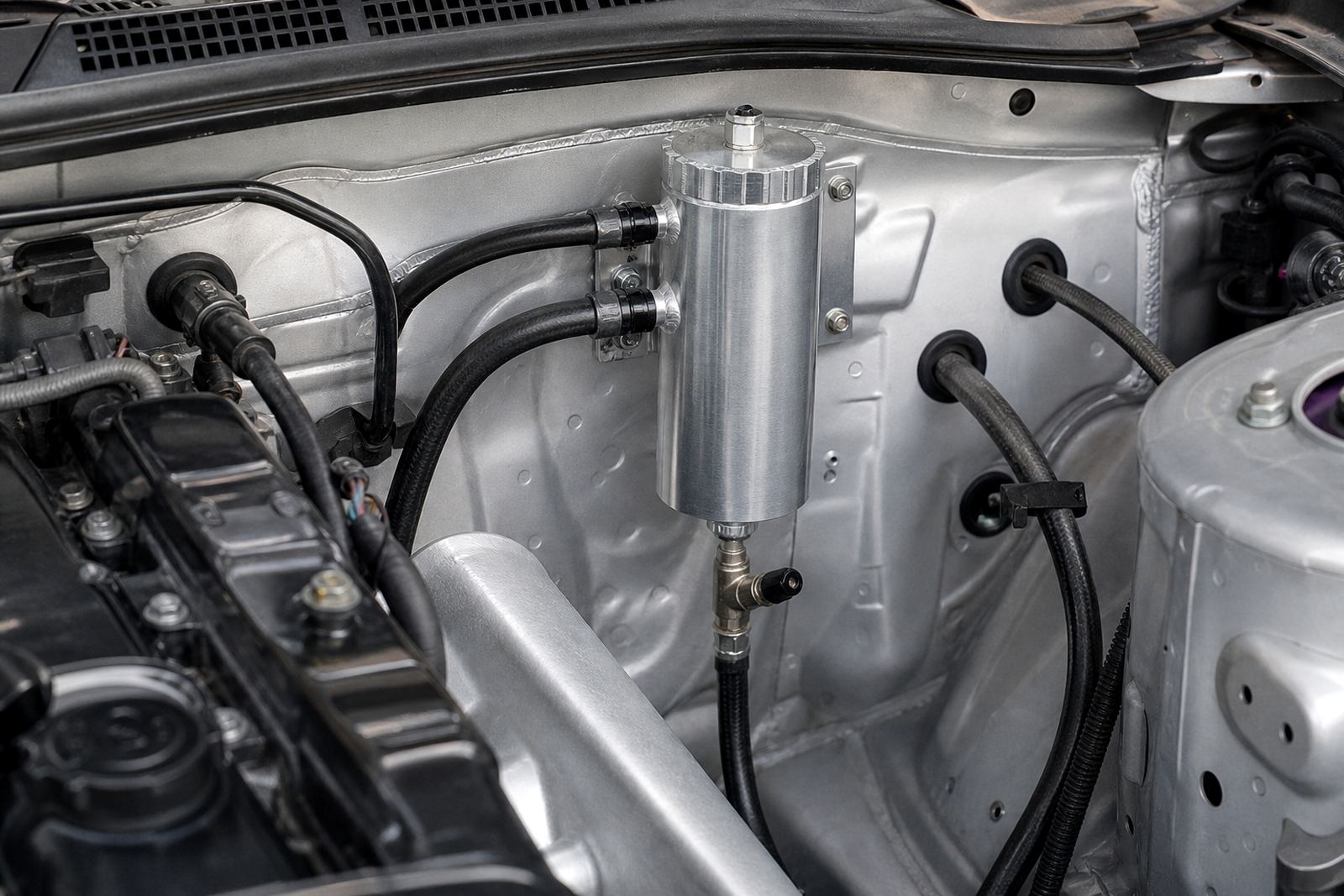
The can itself is usually a small aluminium vessel with inlet and outlet ports, a drain point and a filter or baffle inside. The job is not to add power on its own, it is to keep oily vapour out of places where it should not be settling.
Where it sits in the breather route
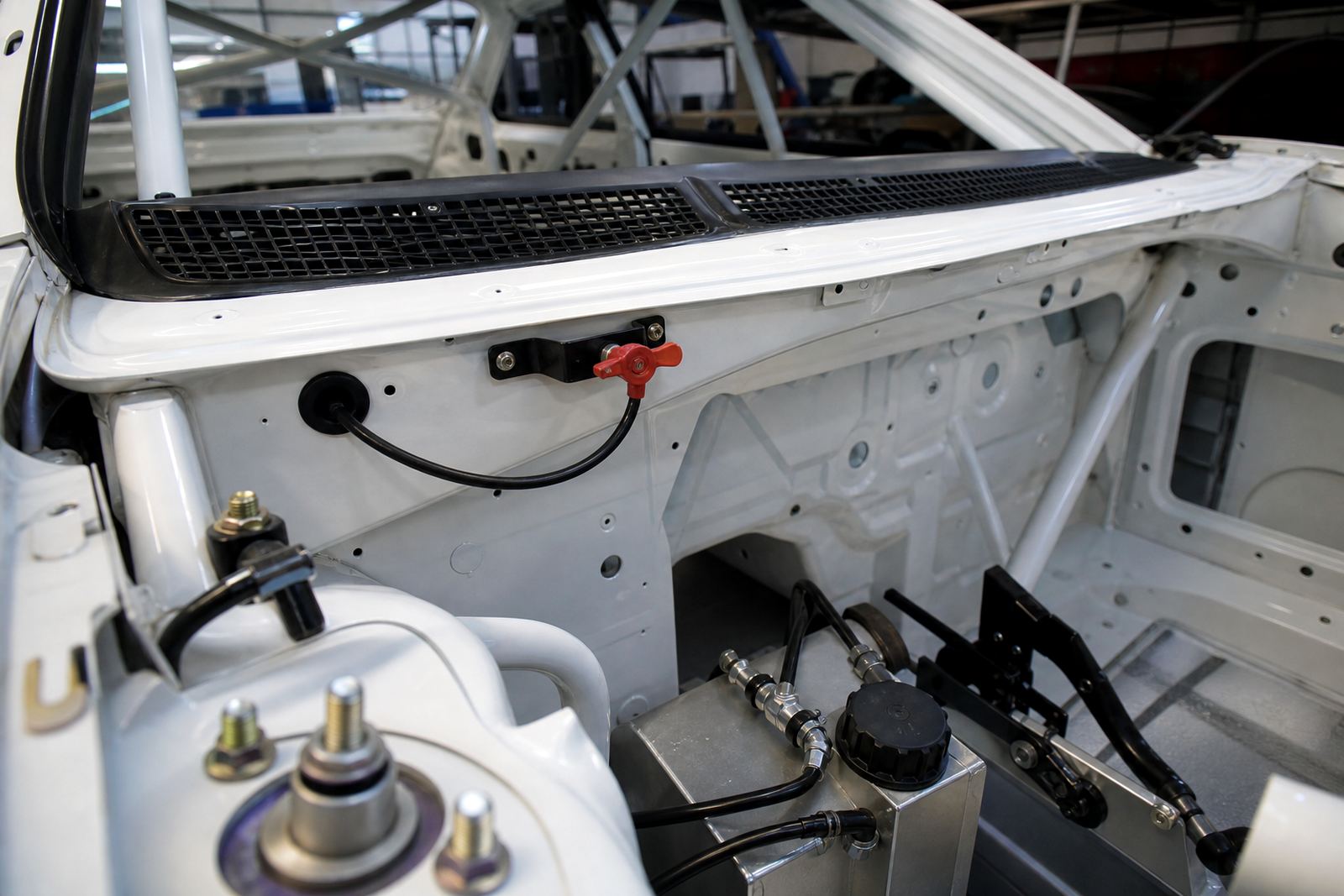
Most race engine bays place the catch can between the rocker cover breather outlet and the intake side, or in a vented setup where it works with a sealed or partially sealed system. The exact route depends on the engine, whether it has one or two breathers, and how the car is used on circuit or gravel.
- Keep hose runs short and tidy.
- Mount the can where it can be checked without removing half the bay.
- Leave enough room for heat and vibration.
- Use proper hose clamps and fittings, not loose push-on ends.
In Midrand workshop bays, the location usually comes down to bonnet clearance and how much space the car has around the firewall and inner guards. A tidy mount is easier to service and less likely to leak when the car is bouncing over kerbs at Kyalami.
Why track cars care more than road cars
A car that only does short trips can often live with a little oil vapour in the inlet tract. Track cars are different. They spend longer at high rpm, see more heat soak, and may run sticky tyres and aggressive cornering loads that stir oil mist more than a normal commute ever would.
When oil mist enters the intake, it can soften rubber hoses over time, dirty sensors and leave residue on the throttle body. On turbo cars, that residue can be worse because the pressure changes in the system move vapour through the breather path more aggressively.
- Cleaner intake tract.
- Less oily film in hoses.
- Better chance of keeping sensors cleaner.
- Less mess around the airbox and manifold.
How to spec one for a motorsport build
The right can depends on capacity, hose size, mounting space and how the engine breathes under load. A small naturally aspirated car doing club racing may need a compact unit, while a turbocharged build with more crankcase pressure may want a larger can with better internal separation.
Seal quality matters. If the can leaks or the hoses collapse under heat, it becomes another problem in the bay. Fitting advice usually starts with the engine layout, then moves to hose routing, drain access and whether the can is easy to inspect between sessions.
- Match hose size to the engine breather fittings.
- Choose a can with proper baffling or mesh inside.
- Check that the drain point is accessible.
- Make sure the mount can handle vibration.
Common mistakes in the pit lane
One mistake is treating a catch can like a universal cure. It will not fix worn rings, poor crankcase ventilation or a badly set-up engine. Another is mounting it where it is hard to inspect, then forgetting to empty it until the can is already full.
Some builds also use thin hose that softens with heat, or route the line in a way that traps liquid and blocks flow. A can that is too small can fill fast on a hard weekend, especially on cars that spend time at high rpm and high cornering load. That is when the breather system starts pushing oil where it should not.
What the catch can looked like after one event
A club racer from Gauteng might arrive with a car that shows oily residue inside the intake pipe after a few track days. The fix is not always a bigger turbo or a different filter. Often the first step is to inspect the breather path, then fit a catch can with cleaner hose routing and enough space for service access.
On a build like that, the aim is practical: reduce oil mist, keep the inlet tract cleaner and make under-bonnet checks less messy before a race weekend. For drivers travelling between Johannesburg, Pretoria and Kyalami, that extra bit of order in the engine bay helps when the car is being checked in the paddock and packed up again after the session.
What to inspect after fitment
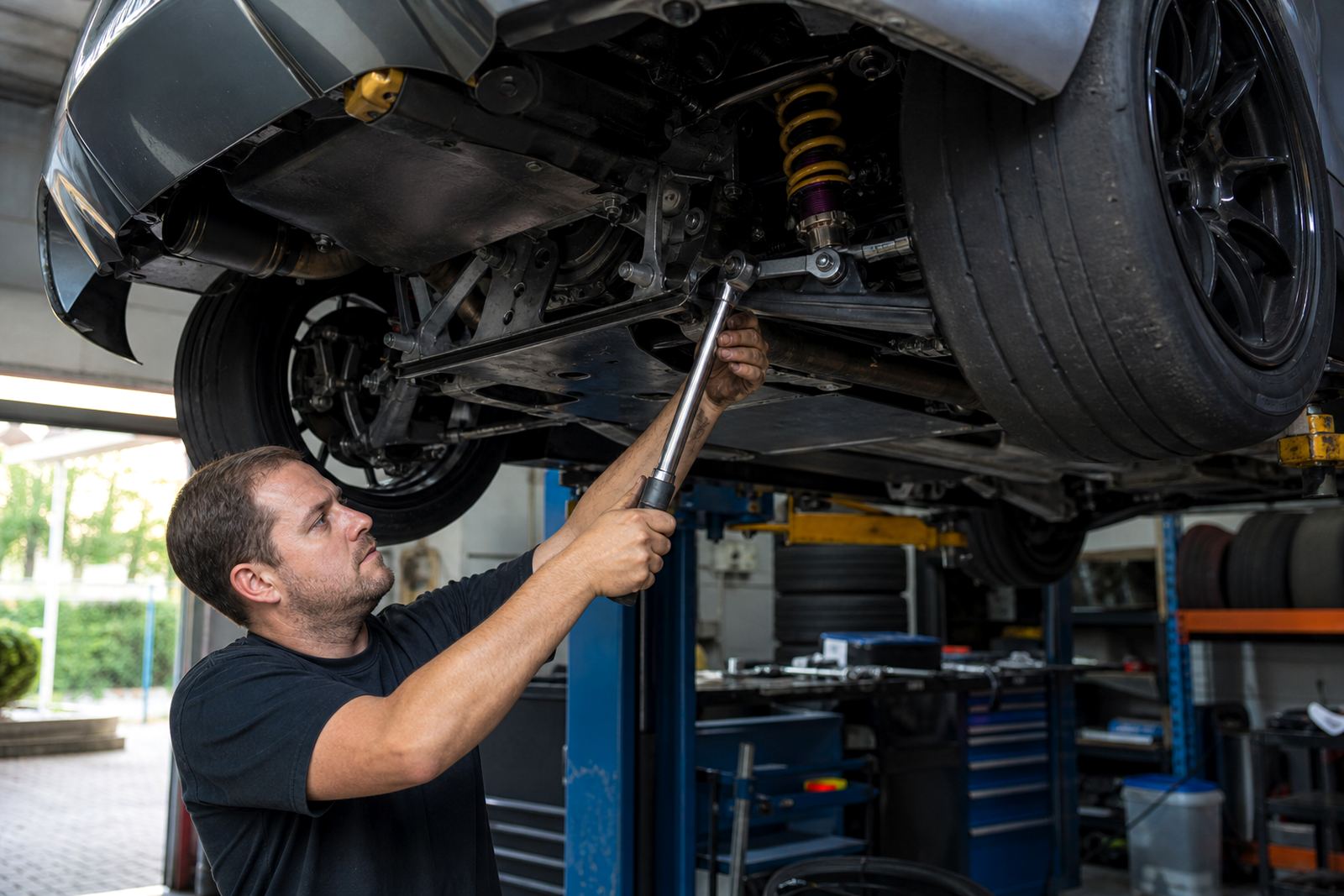
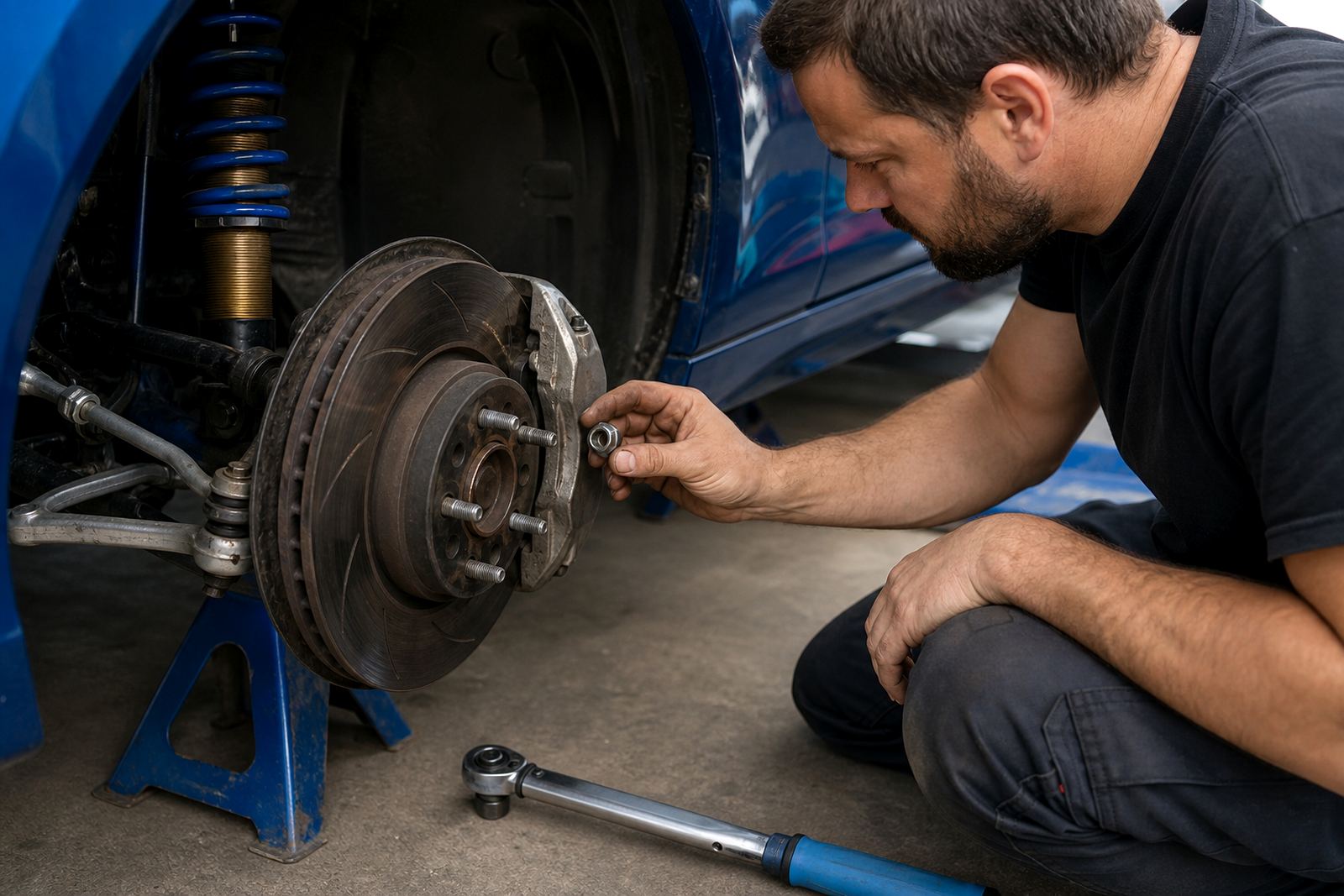
A catch can should be checked as part of normal race prep, just like brake fluid, tyre pressure and wheel nut torque. If the can starts collecting too much liquid, it can point to blow-by, hose routing issues or simply a system that needs a larger capacity.
- Look for oil level in the can.
- Check the drain plug and seals.
- Inspect hoses for soft spots or kinks.
- Confirm the mount is still solid after hard use.
For track, rally and club racing cars, the point is not to fit parts for the sake of it. It is to place the right part in the right spot and keep the engine bay easier to manage under race conditions. That is where a catch can earns its place.