

What the isolator is meant to do on track
A battery isolator cuts electrical power in a controlled way, which matters when a car has a short circuit, a damaged loom or a driver needs the car made safe after an incident. In a rally or circuit build, the switch is not just a box on the dash. It is part of the car's safety layout and it has to suit the way the car is used on a real event day.
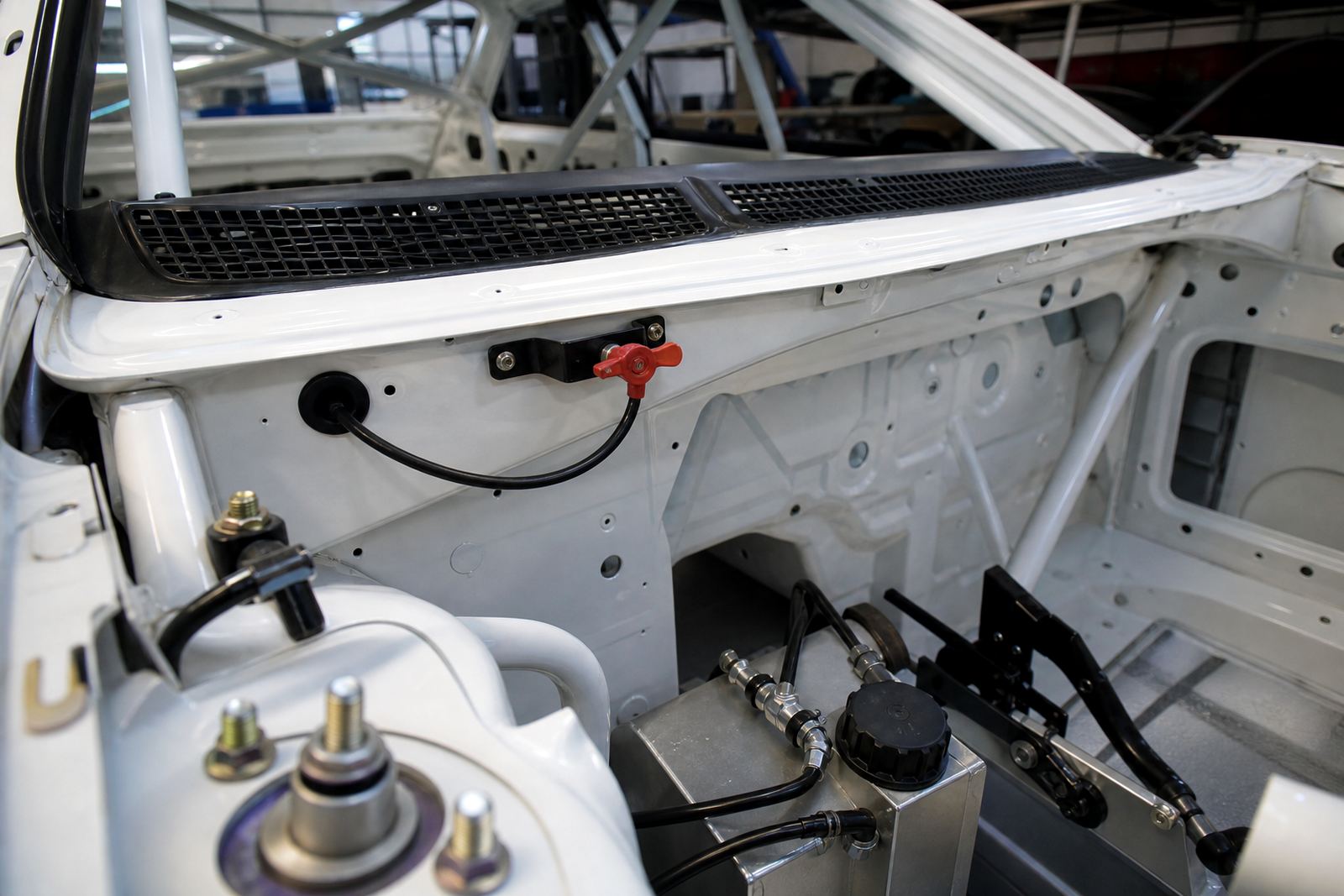
The isolator should interrupt the main supply cleanly, while leaving the installation easy to inspect. If the switch is buried under trim, mounted where a glove or helmet strap snags it, or linked through loose terminals, the whole point gets weaker. Good mounting starts with clear sight lines, tight fixings and cable paths that do not rub against sharp edges.
- Put the switch where marshals can reach it without searching.
- Keep the mounting plate stiff, not flexing under vibration.
- Use cable sizes that match the starter and charging load.
Clear mounting beats clever hiding
Track cars often gain panels, brackets and harness bars as the build grows, and it becomes tempting to tuck the isolator wherever there is spare space. That can leave the switch out of reach or hidden behind the seat shell. A better layout puts the handle, pull cable or rotary switch in a place that is obvious from outside and sensible inside the cabin too.
On a Midrand build we would look at where the driver enters, where the scrutineer stands and how the car is usually loaded onto a trailer. A switch that is technically fitted but awkward in practice causes problems at the worst moment. If the car is also used for club racing, the switch should work with helmets, window nets and any roll cage padding already in place.
- Mount away from seat bolsters that make access awkward.
- Leave enough room for insulated lugs and service checks.
- Avoid thin body panels that can fatigue around the switch.
Cable routing that stays calm under vibration
Routing is where many isolator jobs start looking tidy and end up failing later. Cable that sits on bare metal, passes too close to a steering column or hangs where the passenger seat once was can wear through under vibration. In motorsport, every cable should have a reason for being where it is, and every bend should be gentle enough to protect the conductor.
Use grommets where the cable crosses metal, clamp long runs properly and keep heat away from the insulation. Oil, water and tyre dust find weak points fast. Around the firewall and footwell, cable routing should be deliberate, with no sharp loop that can tug on the switch terminals when the car shudders over kerbs or rough rally stages.
- Separate power cables from fuel lines and brake pipes.
- Support the loom at regular points, not only at the ends.
- Label both sides of the isolator for easy fault tracing.
Earth paths and main feed details matter
Some cars only look isolated on the positive side, while the earth path still offers a sneaky route for current. That is where bad assumptions cause trouble. The isolator needs to sit in a system where the main feed, alternator circuit and earth strategy all make sense together. If the alternator keeps feeding the car after the switch is opened, the job is incomplete.
This is where fitting advice helps. A proper layout checks the charging path, the starter feed and any circuits that should stay live for data logging or pit lane use. In a rally shell with a long cable run to the rear battery box, the connections need clean crimping and protection from moisture. Coastal humidity in Durban or Cape Town can show up poor terminations faster than a dry inland garage.
- Check terminal tightness after the first heat cycle.
- Keep exposed joints covered and dry where possible.
- Make sure the isolator matches the battery location and load.
How we look at isolator work during setup days
On setup days we check the isolator with the rest of the safety kit. While checking seat position, harness fitment and roll cage clearance, we also look at whether the switch can be reached with gloves on and whether the driver can exit the car without snagging a cable. That kind of check saves time later, when a small fault can spoil a test day.
We also factor in the way the car gets used. A club racer in Johannesburg may want an easy dash-mounted switch for regular scrutineering, while a rally car based around Midrand may need a tougher external pull setup and better protection in the engine bay. The goal is not only to turn power off, but to leave the installation neat enough for repeated inspection.
- Confirm the switch action is positive, not vague.
- Check that labels remain readable after cleaning.
- Inspect the area around the switch for heat and abrasion.
The isolator on a Midrand track car
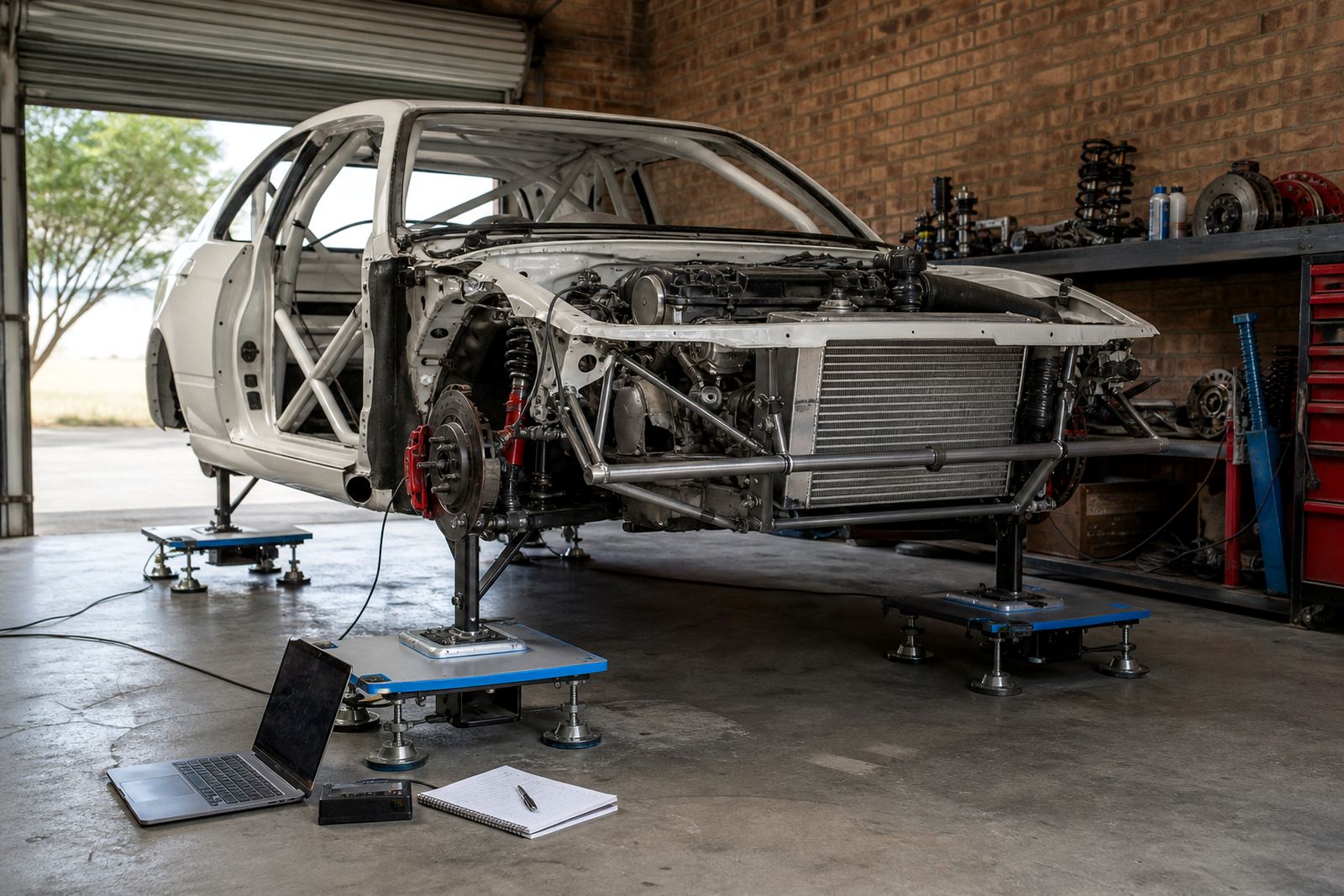
A Midrand circuit car coming in for brake upgrade planning and coilover setup had a battery isolator mounted low behind the seat, with the cable crossing a brace and rubbing lightly on the edge of a panel. The switch worked on the bench, but the layout was awkward once the harness was clipped in and the driver was fully strapped. We moved the switch to a cleaner location, improved the cable support and checked the earth path while the car was on stands.
That sort of job is common on cars that see Kyalami, local practice days and the occasional tow to other provinces. The lesson is plain: a battery isolator should be easy to find, easy to service and hard to damage. If the mounting is clear and the cable routing makes sense, the switch becomes part of the car's safety system rather than another loose item to worry about.