
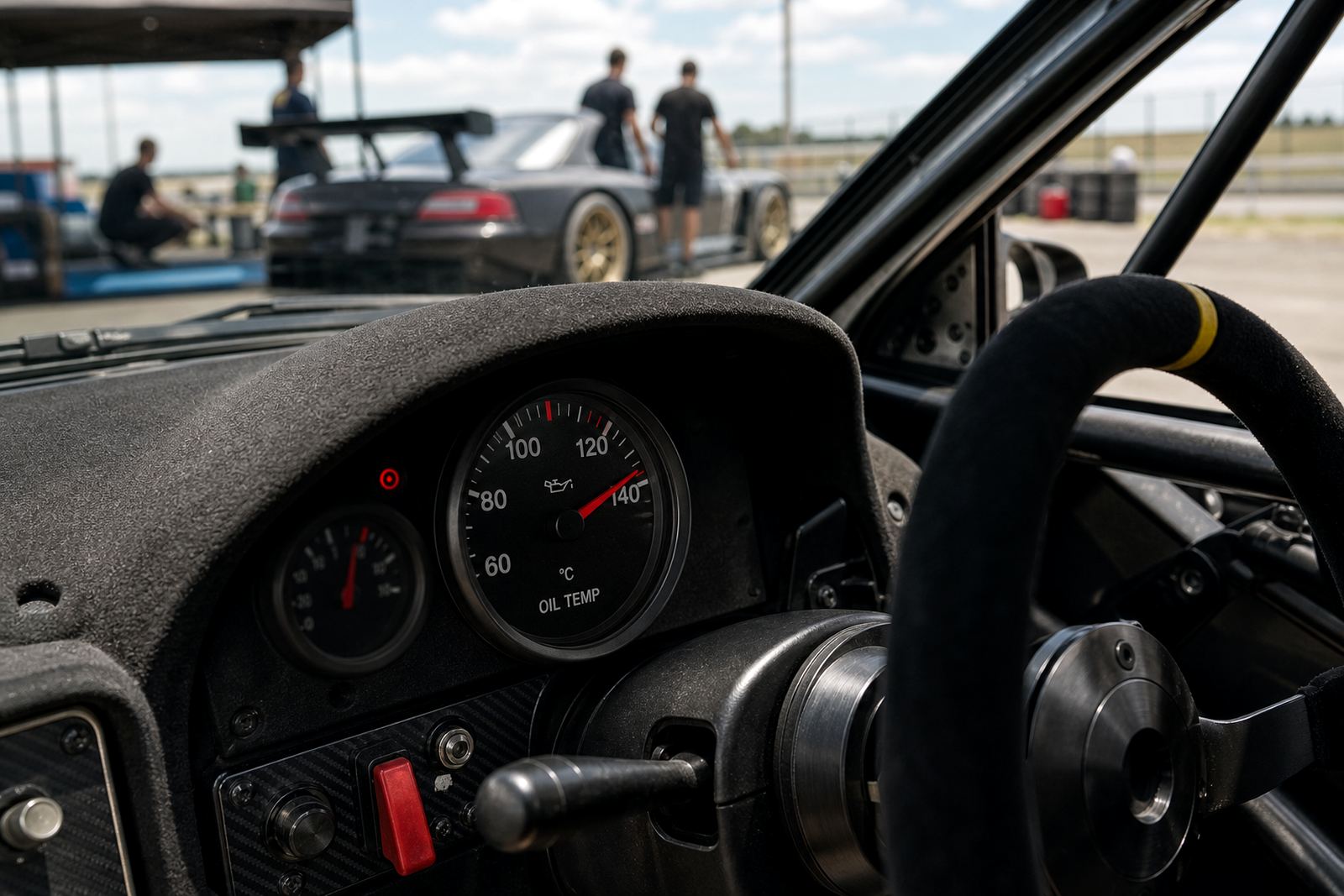
The gauge is not the story, the trend is
An oil temperature reading on its own tells part of the picture, but the movement of that reading tells more. A car that starts at 82 degrees C and settles at 104 degrees C after a hard lap is showing a different pattern from one that begins at 96 degrees C and climbs past 120 degrees C with each lap. The second car is usually carrying heat faster than it can shed it, and that can shorten oil life, thin out protection and put extra load on bearings and cam surfaces.
In motorsport, oil works as both lubricant and heat carrier. When the oil runs too hot, the film can thin out and the engine starts working with less margin. That matters on a short club race at Kyalami, but it also matters during a longer sprint at a regional event where the driver wants to stretch the session without gambling on damage. A temperature trace tells you whether the car is holding steady, creeping up or spiking under load.
What the number usually means in a race car
Different engines and oil grades tolerate different working ranges, so the exact figure is not the whole answer. What matters is whether the engine reaches a stable band and stays there under repeat load. A healthy setup often warms up cleanly, levels out and then rises only slightly as air speed, ambient heat and driver effort change. If the oil keeps climbing lap after lap, the system needs attention.
- Slow warm-up can point to overcooling, especially on cool Gauteng mornings.
- Fast heat rise may suggest restricted airflow, low oil capacity or hard use in a tight circuit section.
- Large swings between laps can hint at airflow disruption, poor ducting or a cooler that is too small.
- Hot oil at pit-in with stable water temperature often means the oil circuit needs more help than the radiator circuit.
The dash figure starts the conversation, and the cooler, the oil grade and the driving finish it. Oil pressure, coolant temperature, ambient heat and lap type all shape the decision on whether to change cooler size, ducting or driving routine.
Cooling hardware only works when the airflow is honest
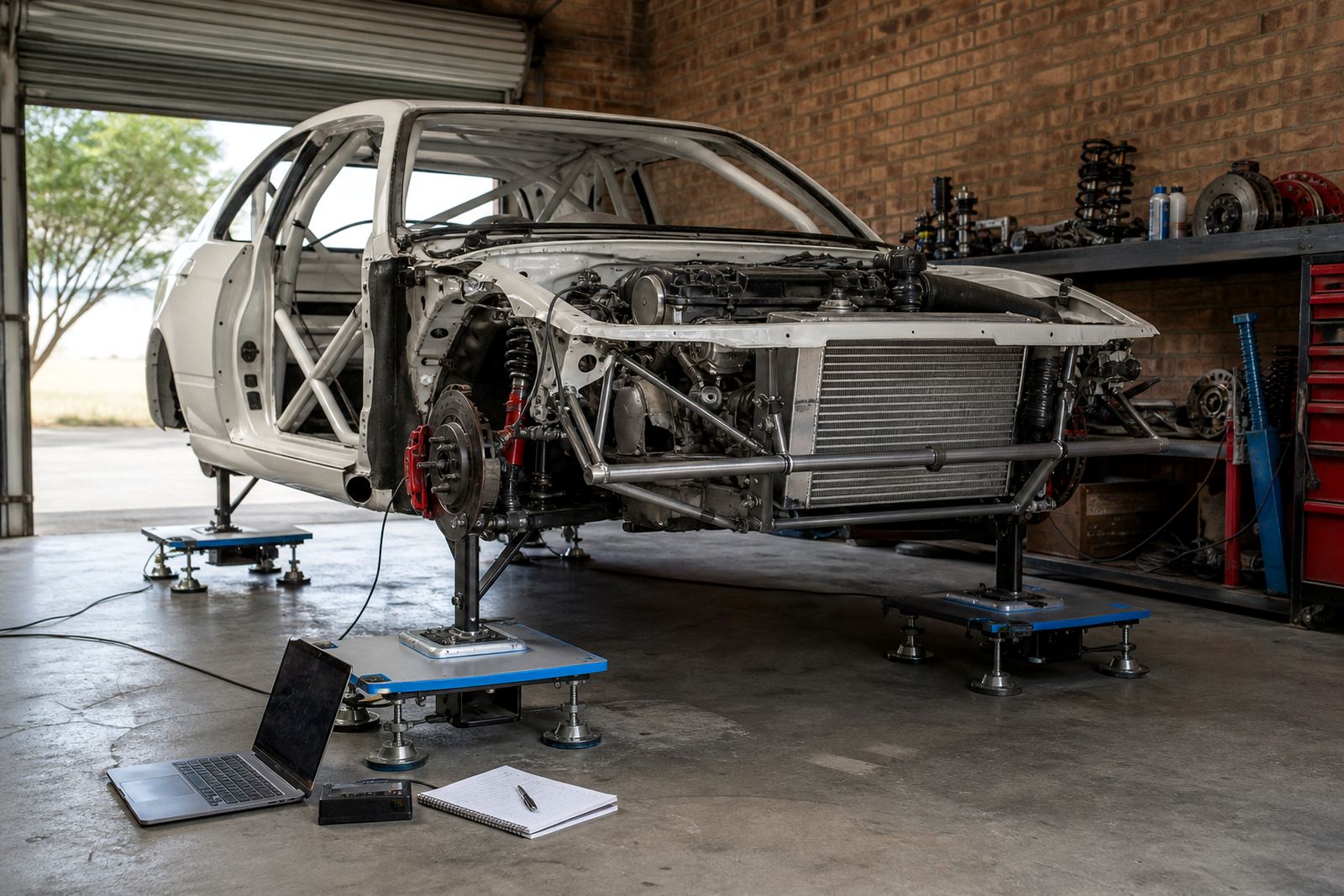
An oil cooler does its best work when air can reach it properly and leave without being trapped behind bodywork, wiring or loose trim. On track and rally cars, a neat-looking installation can still run hot if the cooler sits in dead air or if the ducting leaks around the edges. The same applies to radiators, hoses and splitters. Cooling parts should work as a system, not as separate pieces in isolation.
In the Midrand and Kyalami area, we often see cars that are fine on road use but run hotter once they are pushed through repeated laps. That is when the oil cooler position, front opening and heat soak from nearby components start to matter. A car that idles into the pits with a heat-soaked bay can take a while to settle, and the next run may start from a higher base temperature than the driver expects.
- Check for crushed fins, blocked ducts and missing air seals.
- Route hoses well clear of exhaust heat and suspension parts that move.
- Make sure the cooler gets air, not just space behind the bumper.
- Review whether the oil circuit matches the engine’s actual duty cycle.
Session planning starts before the green flag
Oil temperature trends help with race strategy long before the first lap. If the engine is known to creep up after six hard laps, the driver can plan shorter stints or manage the pace through the hottest section of the day. If the car takes a long time to reach safe oil temperature, the warm-up routine needs to be adjusted so the engine is not pushed too early. That is a practical way to protect the car and keep the weekend on script.
For rally cars, the picture changes again. A gravel stage with slower air flow and more dust can load the cooling system differently from a fast road section. A club racer from Pretoria heading down to a hotter event in Durban may need a different approach to oil control than the same car running in cooler inland conditions. This is where setup days help, because the oil system can be checked against the rest of the car rather than treated as a stand-alone item.
A club car that also does the school run
A common case in our Midrand base is a club racer that does track days, sprint events and the odd test session. The driver notices that oil temperature rises steadily after a few spirited laps, but coolant temperature stays close to normal. On inspection, the cooler is sound, yet the ducting is loose and the engine bay is holding too much heat after each run. The fix is not always a bigger part, sometimes it is a cleaner path for air and a better layout around existing hardware.
That kind of car may also benefit from a check on related items. Brake heat, radiator airflow and clutch loading can all affect how hard the engine works over a session. If the car is braking later, carrying more corner speed or sitting in traffic on pit lane, the oil system has to absorb the extra stress. A sensible check links the cooling system to the rest of the build instead of isolating one symptom.
Useful checks before the next outing
Getting oil temperature under control usually takes a few simple checks. We work through the system step by step and look for the places where heat is being added or trapped. That keeps the focus on what the car actually does on circuit, rather than what it should do on paper.
- Confirm the temperature sensor reads consistently and is mounted in the right place.
- Inspect the oil cooler, lines and fittings for leaks, abrasion and poor routing.
- Review engine bay airflow, including any panels that block exit air.
- Check whether oil grade and capacity suit the race length and ambient heat.
- Look at related setup items such as radiator placement, front brake heat and bonnet venting.
For racers across Johannesburg, Pretoria, Centurion, Durban and Cape Town, the goal is the same: keep the oil in a working range that suits the event, the track and the engine. Once the pattern is known, the car becomes easier to plan and less stressful to run.
Fitting advice that links the gauge to the garage
Oil temperature control is not only about buying another part. It is about reading the car, choosing the right cooling layout and making sure the installation matches the use case. That is where fitting advice and setup days are useful, because the cooling system can be checked against suspension clearance, brake heat and the rest of the build. A car that is stable in the garage but hot on track needs a practical look, not a guess.
RaceHouse works with track, rally and club racing cars from Midrand and beyond, including drivers from Kyalami, Durban, Cape Town and Port Elizabeth. When oil temperature trends are understood properly, session planning gets clearer and engine life is easier to protect. A small gauge, yet it tells us plenty.