

The spares bag that earns its place in the trailer
Most race cars do not fail in dramatic fashion first. They usually start with a small leak, a tired hose, a pad that is thinner than expected, or a bracket that loosens after a hard run over kerbs. Carrying the right parts means the workshop crew can sort the trouble before it turns into a lost weekend.
For track, rally and club racing cars, the best spare parts are the ones that match the weak points of the build. A front-wheel-drive hatch used in Kyalami circuit work will not need the same spares as a gravel car that lives on corrugated roads near Port Elizabeth. The mix should fit the car, the event format, and the sort of punishment it takes on a normal race day.
Brake parts that should never be left to chance
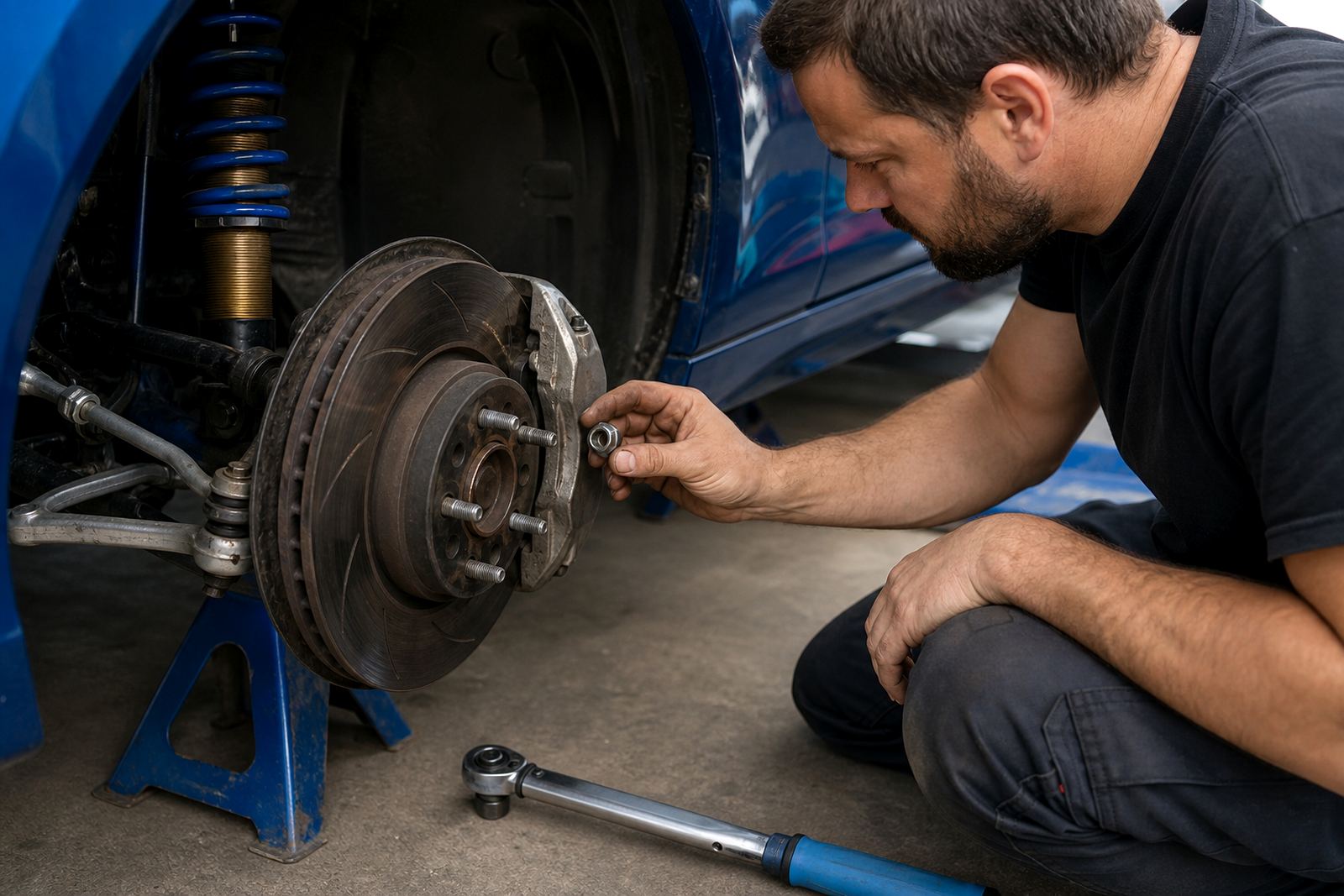
Brakes are usually the first system to show wear after repeated heat cycles. Pads glaze, fluid boils, and lines can take a beating from heat and movement. A spare set of pads and a sealed bottle of high-temperature brake fluid can save a day when pedal feel starts changing between sessions.
- Front and rear brake pads matched to the car's setup
- Brake fluid with a high boiling point for repeated hard stops
- Copper washers, bleed nipples and the small fittings that are easy to lose
- Brake cleaner and a clean rag pack for quick work at the trailer
In Midrand, a lot of teams keep a second set of pads in the box even when the first set still looks serviceable. That habit makes sense when a long braking zone and a hot afternoon can take the edge off the material faster than expected.
Cooling parts for hot days and long queues
An overheating engine can undo a whole meeting. Radiators, hoses and oil coolers work hard in traffic, in slow laps behind a safety car, and on days when airflow is not doing enough. A spare hose set, clamps and a pressure cap are cheap insurance compared with the cost of losing a session to steam at the pit wall.
Oil coolers and their fittings deserve the same respect. A cracked hose or loose union can put oil on the undertray and create a bigger clean-up than many drivers expect. If your car runs close to the limit, carry the small items that keep coolant and oil where they should stay.
- Top and bottom radiator hoses cut to the car's layout
- Hose clamps, joiners and aluminium repair sleeves
- Pressure cap for the cooling system
- Spare oil cooler fittings and sealing washers
Clutch, shift and fuel items that save a session
Clutch wear shows up as higher pedal effort, weak drive or a change in the way the car takes up power. A spare master cylinder seal kit, release bearing, cable or hydraulic fitting can be the difference between making the grid and watching from the pits. Shift issues are often just as small, with a bush, clevis pin or return spring making the whole lever feel wrong.
Fuel system parts belong in the same box. A blocked filter, cracked hose or tired clamp can show up after the car has been bounced hard over kerbs or loaded onto the trailer. For rally cars, where the tank and lines see more movement, the fuel side needs a careful spare list, not a guess.
- Clutch hydraulic seals or cable parts that suit the car
- Gear lever bushes, springs and linkage pins
- Fuel hose, clamps and a spare filter
- Small sealing rings and washers for the unions
Seat, harness and cage checks that need backup parts
Safety gear is not just about the big items bolted into the shell. Seat mounts, harness hardware and roll cage fixings all need a close look before the first session. A loose bolt, worn bracket or damaged clip can stop a legal and safe run, even when the rest of the car is ready.
That is why a sensible spares kit carries the small items that support the main safety equipment. If a harness tab wears unevenly, or a seat position needs a minor change after a new driver test, the right bolts and spacers matter. A proper kit also helps when a car is shared between drivers with different builds and seating positions.
- Spare hardware for the seat
- Harness clips, eyebolts and mounting hardware
- Cage padding pieces and trim fasteners where needed
- Spare pins and split pins for removable parts
Suspension spares for cars that travel on trailers and gravel roads
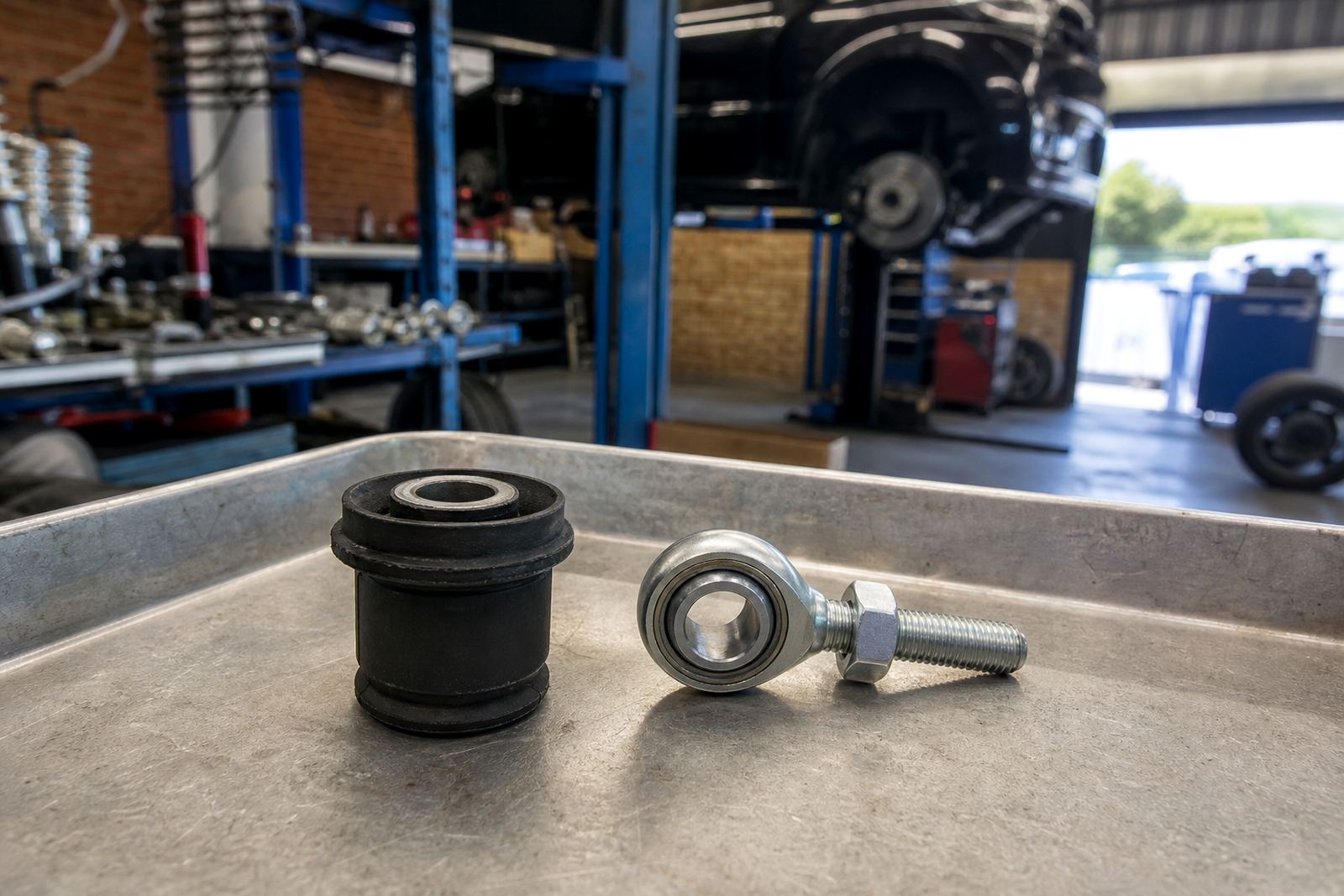
Suspension parts wear in quiet ways. Bushes crack, top mounts loosen, and adjusters can seize after long service or wet weather. A car that runs to Durban, then heads to a local track day the next month, will often need more attention than a vehicle that only sees short, gentle runs.
Keep a few items that help restore feel when the chassis starts talking back through the steering wheel. Worn suspension can make the car feel vague on entry, and that uncertainty is usually what bothers a driver most. Small parts make the biggest difference here, because they let the setup stay predictable.
Useful items often include:
- Control arm bushes and mounting hardware
- Top mounts and spring seats for coilover systems
- Spare adjuster knobs or lock rings
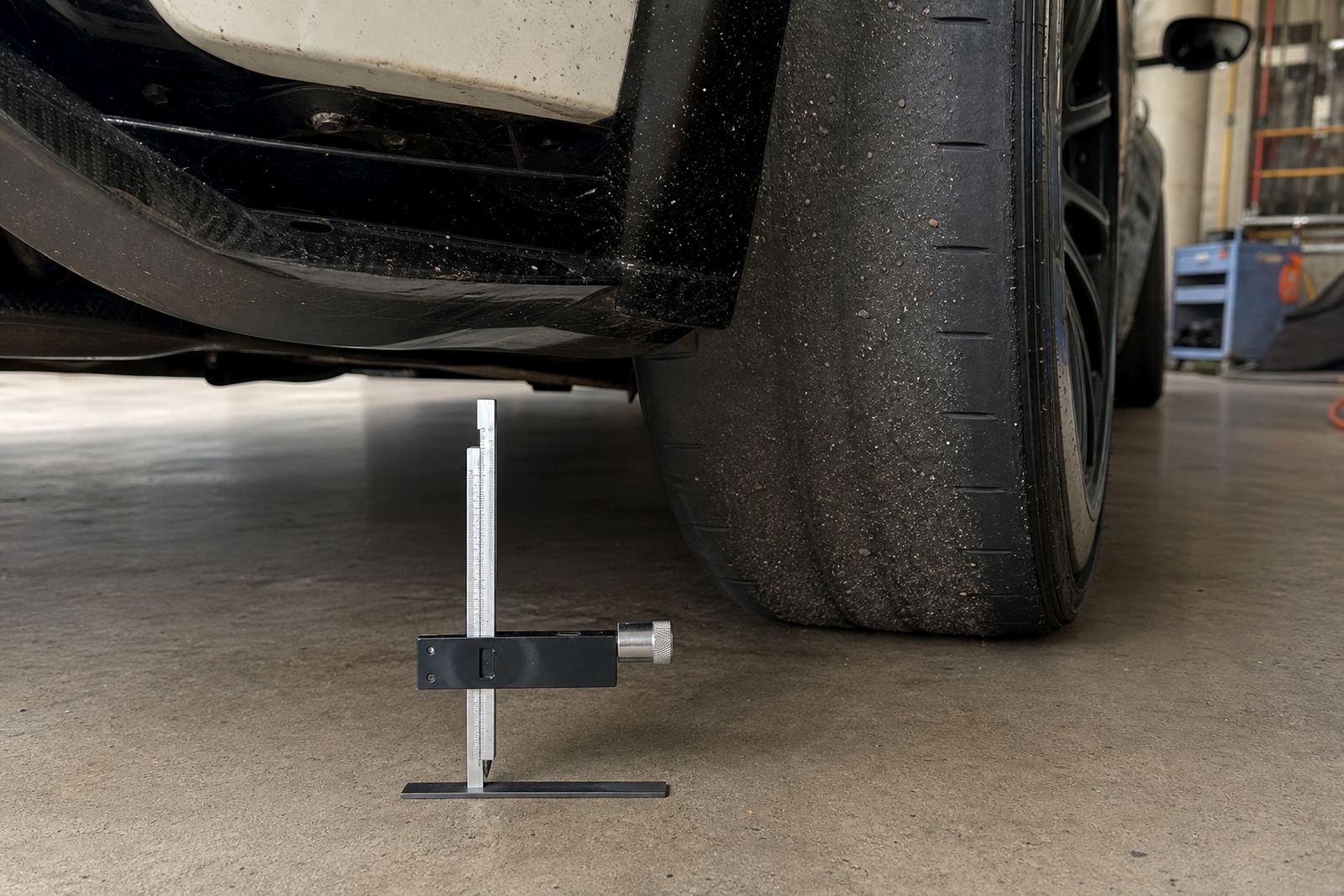
- Alignment shims and replacement washers
A Midrand trailer box for a Kyalami weekend
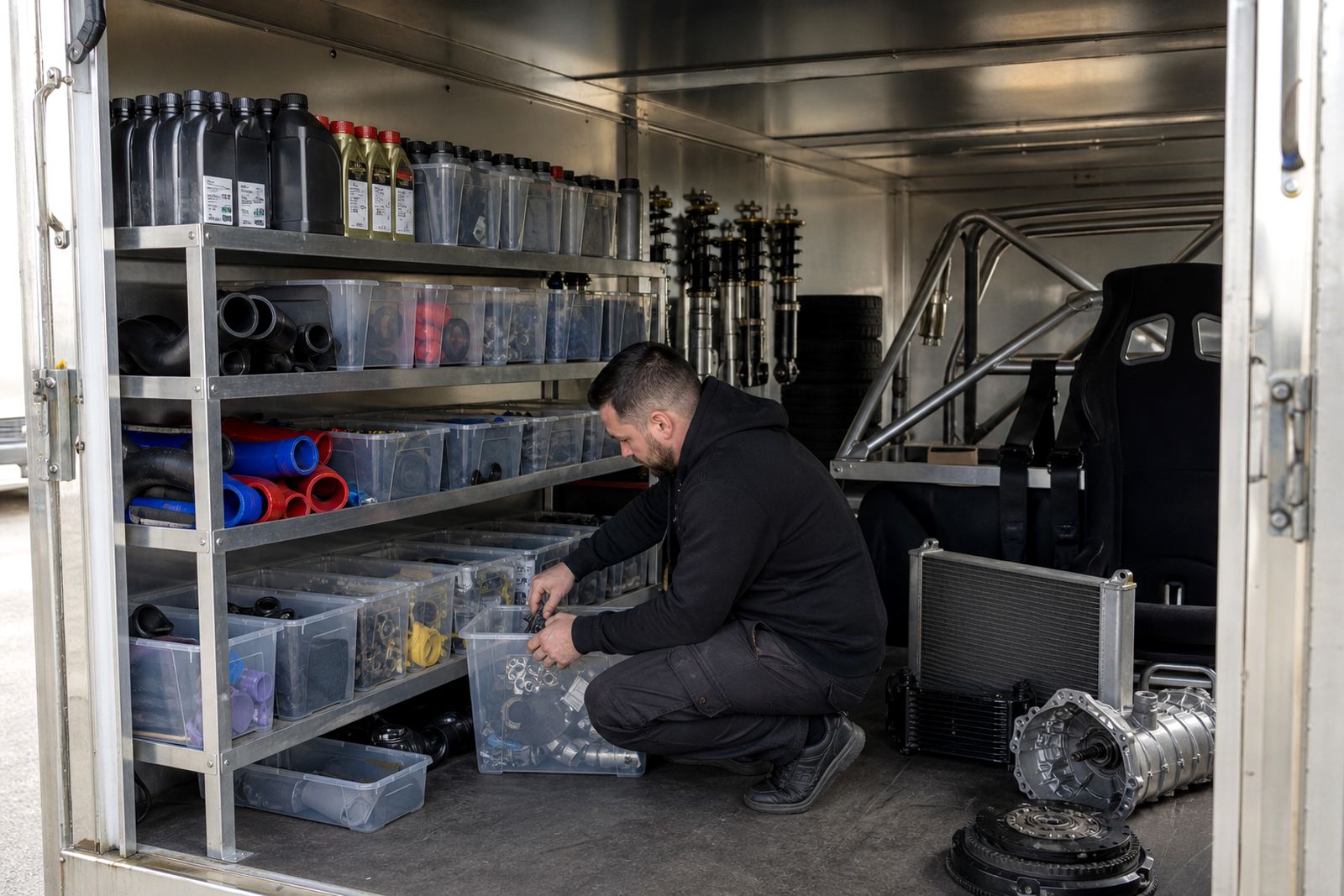
One local example keeps proving the point. A club racer based in Gauteng may head out of Midrand for a Kyalami weekend with brake pads, fluid, a coolant hose, a small clutch kit and a few suspension fasteners packed neatly in a labelled box. That box is not there for drama. It is there because a hot lap and a rough paddock can expose the weak point in a car that felt perfect on the drive in.
The best spares kit is not massive, and it does not need to look fancy. It only needs to suit the car, the circuit and the kind of work the car actually does. When the spares are chosen around those facts, the trailer becomes a useful workshop instead of only storage.
RaceHouse works with drivers across Midrand, Johannesburg, Pretoria, Kyalami, Centurion, Durban, Cape Town and Port Elizabeth on the parts that keep race cars moving. That includes brake upgrade planning, coilover setup, cooling checks, seat positioning, harness fitment checks and track setup days when a car needs more than a part in a box.