

The last lap should not be a parking brake moment
The worst habit is ending a hot session with a hard stop and an immediate shutdown. Brake rotors, pads and callipers carry a lot of heat after repeated laps, and the cooling air that helped on track disappears the moment the car sits still. A gentle cooldown lap lets air move through the bay, over the radiator and around the brakes, so temperatures drop in a calmer way.
That matters on cars running upgraded brake pads and fluid, because the system is working harder than standard road equipment. If the driver comes in hot, parks straight away and switches off, heat soak rises quickly across the brake master cylinder, hoses and nearby engine parts. In Midrand and Kyalami, we see this most often on cars that do a few hard sessions back to back without a sensible lap at the end.
What to do while the car is still rolling
The cooldown lap is not a slow cruise with no attention. It should be smooth, with lighter throttle, fewer brake inputs and enough speed to keep airflow moving through the nose and under the bonnet. If the session was long, it helps to keep brake use gentle and avoid dragging the pedal unless the circuit or marshal instructions require it.
- Lift off early before the last corner, then carry the car cleanly to pit entry.
- Use light braking rather than one heavy stop at the end.
- Keep steering inputs calm so hot tyres and suspension parts settle evenly.
- Leave enough time in the pits for heat to leave the car before touching major adjustments.
On a car with coilovers, fresh bushes and a sharper alignment, that last lap also gives the driver a chance to feel if the car has gone loose or taken a knock. A pull to one side, a long pedal or a strange vibration is worth noting before the car sits and the heat masks the clue.
Brakes need airflow more than drama
Brake cooling is one of the biggest reasons to keep habits tidy at the end of a session. Hot pads and fluid can feel fine at first, then change quickly if the car is stopped while everything is still glowing. Cooling ducts, if fitted, do their best work when the car is moving. Without airflow, the temperature rises around the same parts that were already loaded hard under braking.
Drivers running track pads or performance fluid should watch for a soft pedal, longer travel or smell after stopping. That does not always mean a fault, but it is a sign the brakes were worked near their limit. A proper cooldown lap helps those components settle before the next task, whether that is a pit lane check, a tyre pressure reading or a brake bleed later in the day.
- Do not clamp the handbrake on hot rear brakes unless the car setup calls for it.
- Let the wheels roll if the pits allow it, so heat does not sit in one spot.
- Check fluid condition and pad wear before the next outing.
Heat soak is the quiet enemy in the bay
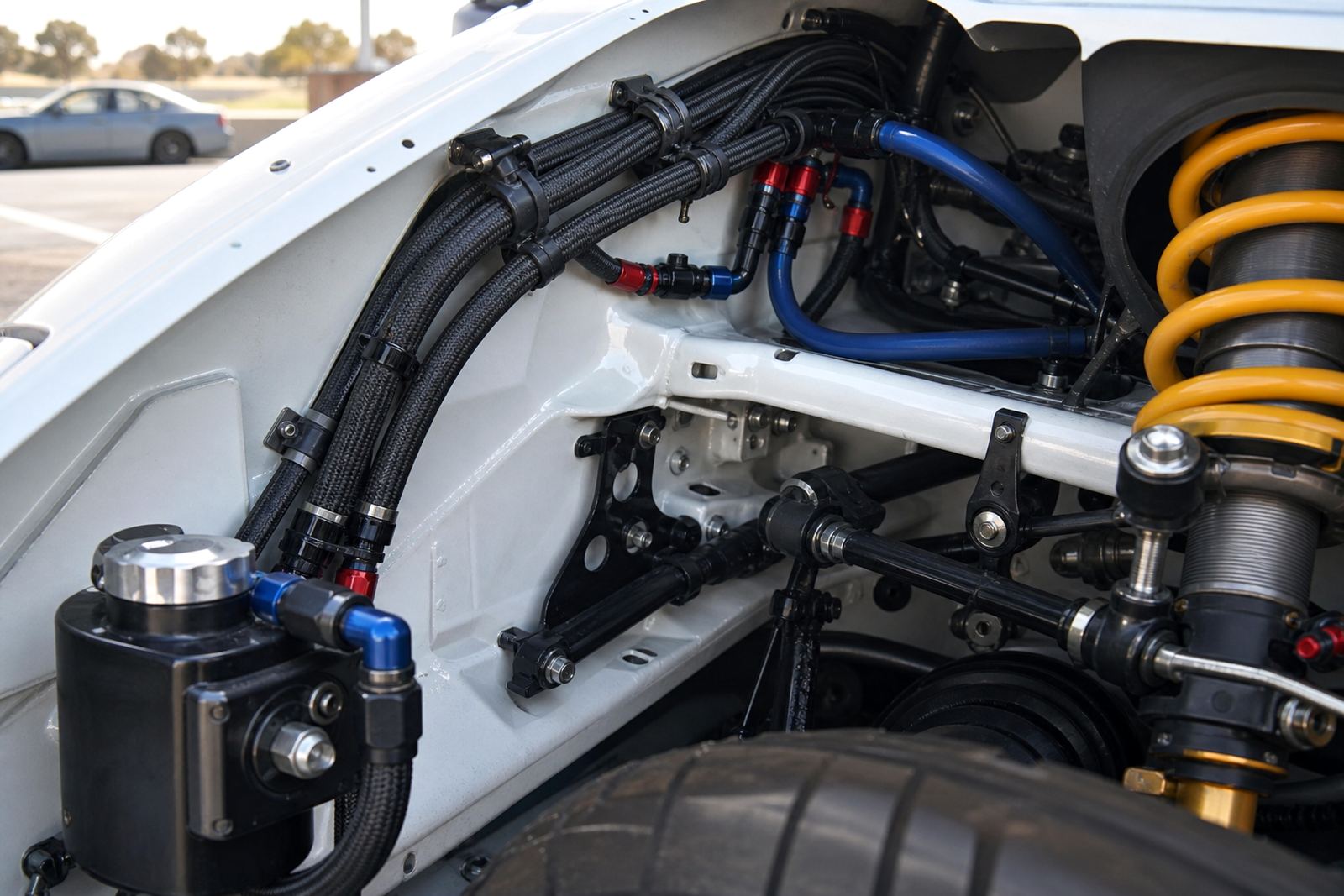
Engine bay temperatures can rise after the engine is shut down, even when the lap was finished cleanly. That is heat soak, and it can punish hoses, intake parts, oil lines and nearby wiring. Radiators and oil coolers do their work while the car is moving, so the final lap helps every cooling surface keep shedding heat before the key is turned off.
Cars with tight packaging, turbocharged engines or added cooling hardware feel this more sharply. If the car has a heat shield, ducting or a modified cooling layout, the cooldown lap is part of making those parts work properly. It is not only about the engine staying safe, it is also about making the next check under the bonnet less harsh on the parts sitting closest to the hot zones.
Brake temps after a Kyalami cooldown lap
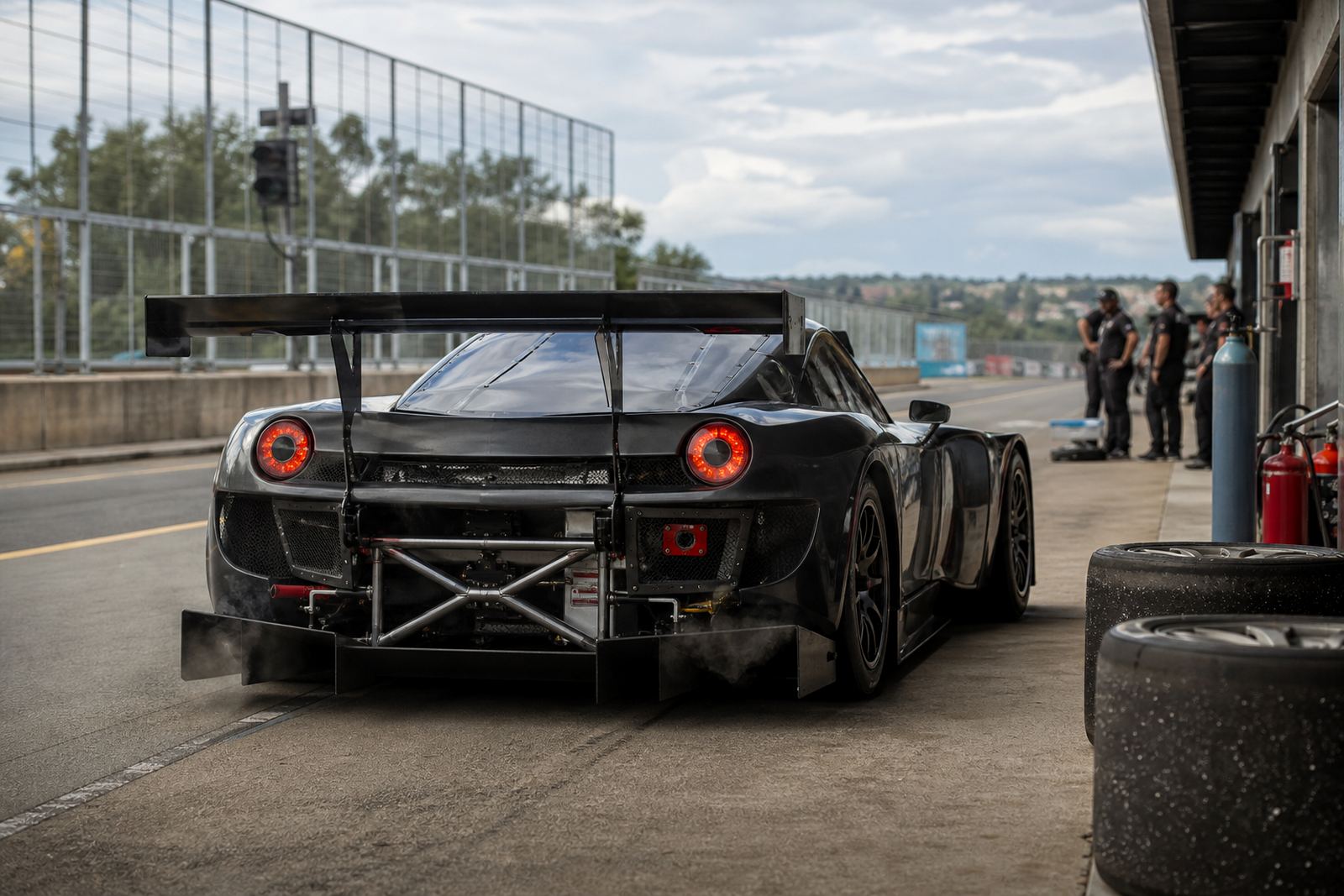
At Kyalami, a club racer can finish a session with brake temperatures high enough to change pedal feel and engine bay heat still moving upward after pit entry. If the driver shuts down immediately after a hard stop, the front brakes and cooling hardware keep cooking in place. If the lap is managed properly, the car rolls in cooler, the pedal stays more consistent and the bonnet area is less punishing when the team starts checking pressures, bolts and fluid levels.
That same pattern carries over to Durban in heavier humidity, where heat hangs around longer and cooling hardware has to work through damp air as well as high track temperature. The exact numbers differ, but the habit stays the same: finish the session with a controlled lap, not with a rushed stop and a hot restart cycle.
Small checks that belong after the lap
The cooldown habit works best when it is followed by a short, disciplined inspection. It does not need to be a long list, just enough to catch signs that the car is carrying too much heat or has shifted under load. Track, rally and club cars all benefit from the same common sense here.
- Look for brake fluid seepage around the reservoir, lines and callipers.
- Check tyre shoulders for odd wear after a hard run.
- Inspect wheel nuts, suspension joints and visible bush condition.
- Listen for fan noise, rattles or uneven idling that can point to heat-related issues.
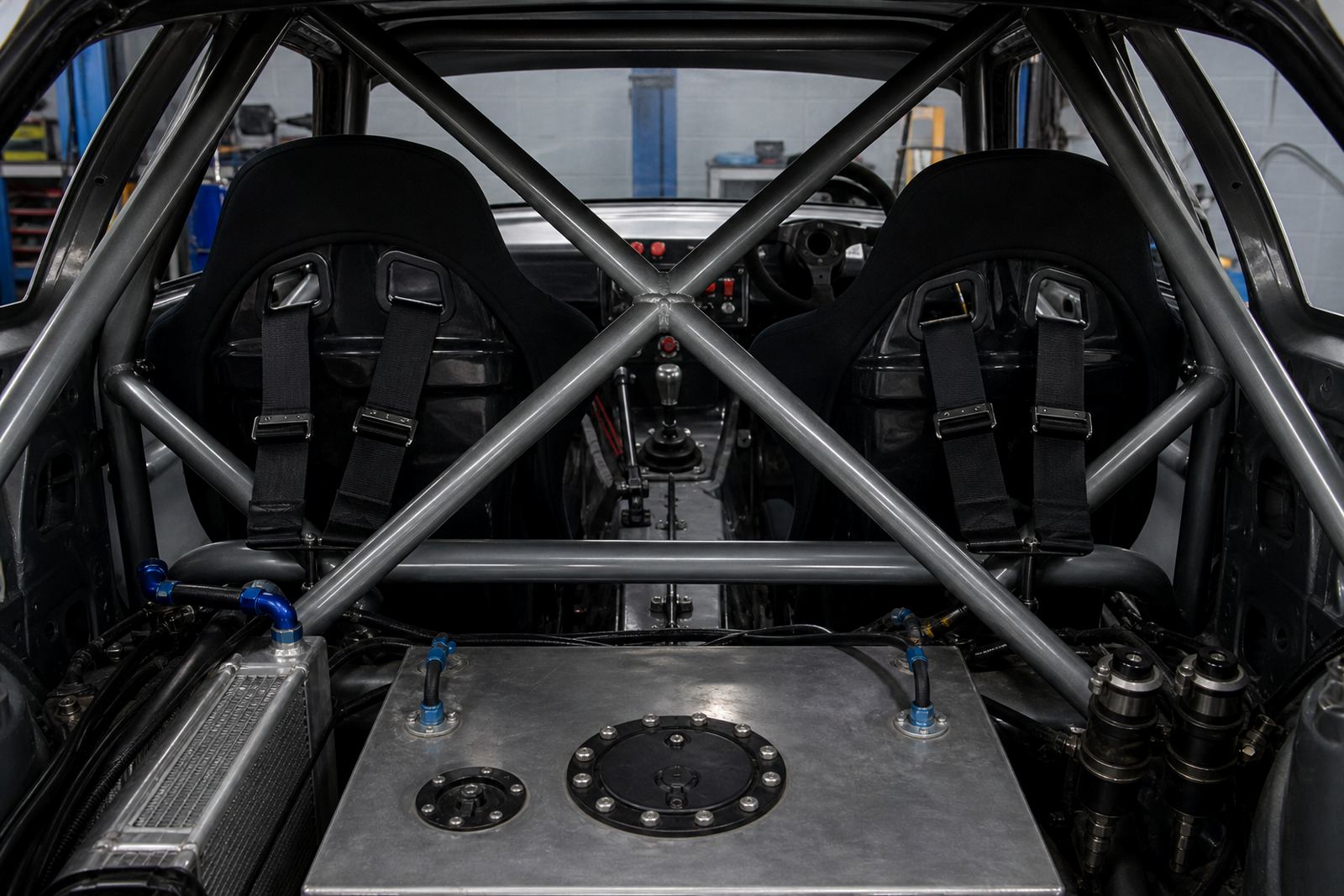
For cars with seats, harnesses and roll cage fitment that were set up for motorsport use, this is also a good time to note whether the driver is sitting squarely and whether anything has shifted. A harness that was snug at the start of the day should still sit correctly after repeated heat cycles and body movement.
Good habits protect the next session too
Cooldown laps are not only about the run that just ended. They set the car up for the next outing, the next setup change and the next event. When brake fluid stays healthier, when the engine bay is less heat soaked and when the driver finishes with a calmer car, the whole package is easier to manage. That is useful whether the plan is a track day in Johannesburg, a rally test near Pretoria or a club meeting that ends with long towing queues and warm pavement.
RaceHouse supplies motorsport parts and upgrades, and helps set them up properly. Our base in Midrand supports drivers across Gauteng and further afield, and our contact form is the place to send details for brake upgrade planning, cooling checks, coilover setup, corner weighting, seat positioning, harness fitment checks, fuel system layout and clutch or shift setup. Cooldown habits sit alongside those services because they affect how the car behaves when the pressure comes off.