

What the bush is doing when the car loads up
A suspension bush is not just a spacer in the arm. It lets the joint move through a controlled range while it absorbs vibration, road texture and some of the impact that comes through the chassis. On a track car, rally car or club racer, that movement affects camber hold, steering feel and how steady the rear of the car stays under throttle.
Soft rubber gives more compliance and usually less cabin noise. Firmer materials reduce deflection and can make alignment more consistent when the car is braking hard, changing direction or landing over rough surfaces. The right answer depends on the car, the event and the surfaces you run on around Gauteng or further afield.
Match the material to the job, not the trend
One material is not automatically better than another. A front-wheel-drive circuit car that leans hard on the front axle may need firmer bushes in the front arms, but still benefit from more compliance at the rear to keep the car settled. A rally car on rough roads can need more forgiveness than a sprint car on smooth tarmac. If the car is used on public roads between events, noise and vibration matter too.
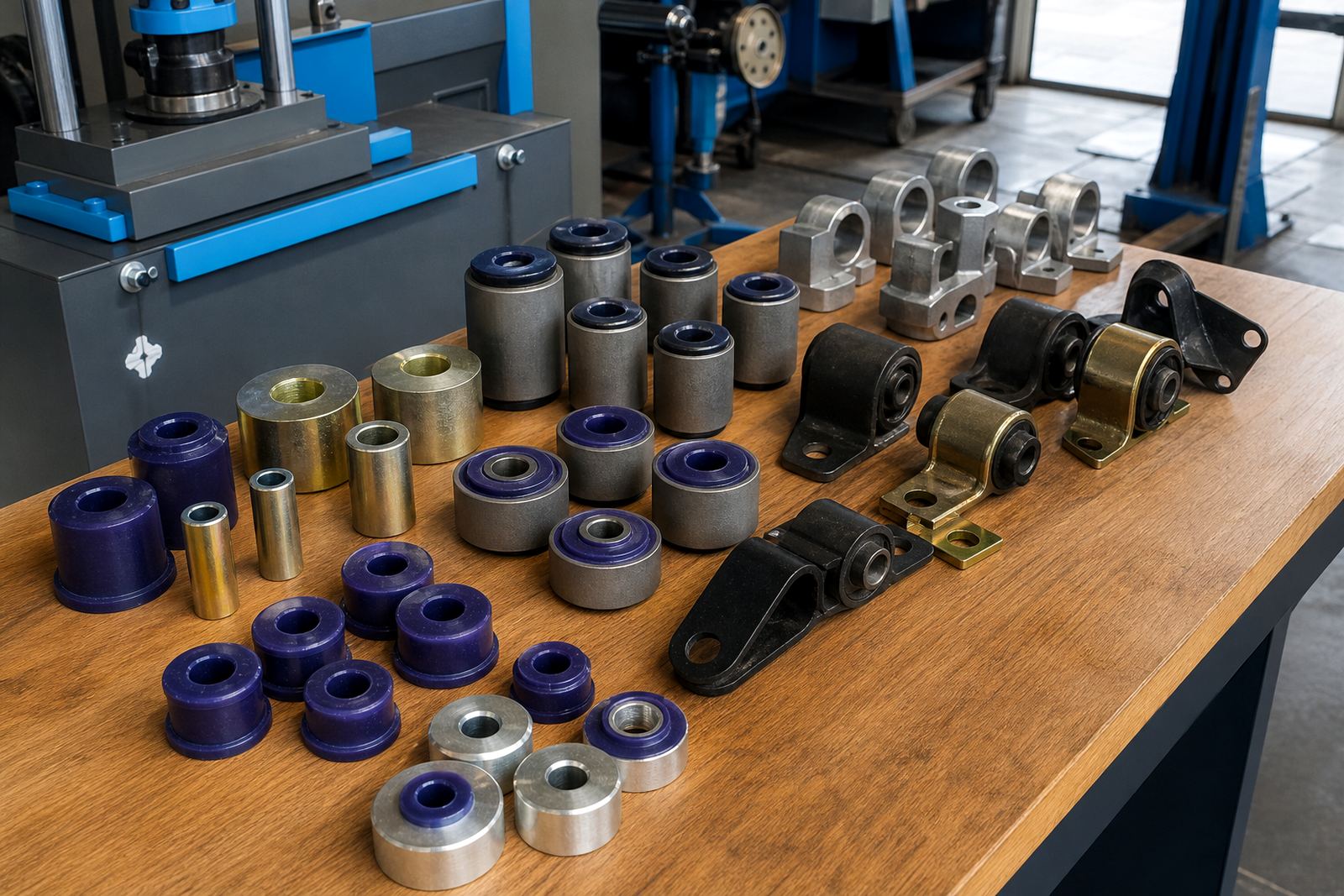
- Rubber bushes suit road-biased cars and lower noise use.
- Polyurethane bushes add control and often sharpen response.
- Solid or near-solid mounts are usually for very specific motorsport jobs.
- Mixed setups can work well when the car needs balance, not extremes.
Heat, dust and washing routines also matter. In Midrand, Pretoria or Kyalami, a car that sees regular heat cycles and frequent cleaning can show wear differently from one that lives in a cooler garage and only runs a few meetings a year.
Choose bush compliance with the setup in mind
Compliance means how much the suspension can move before the bush resists. Too much compliance lets wheel alignment wander under load. Too little can make the car nervous over bumps and can push stress into brackets, ball joints and mounts. The correct choice depends on the control arms, the spring rate, the damper package and the tyre you are running.
When we look at a bush package, the question is not only whether it feels tight in the bay. We look at what happens when the car is under braking, turning in late, or putting power down out of a slow corner. That is where the actual movement comes through.
- Check for play at the mounts before fitting new parts.
- Look at tyre wear, not only steering feel.
- Confirm whether the car needs pressed bushes or captive sleeves.
- Review the rest of the front end before blaming the bushes alone.
Noise, vibration and the long drive to the venue
Some drivers can live with extra cabin noise, others cannot. A harsher bush can send more vibration through the shell and make long freeway sections tiring. That matters for cars trailered to events as well as cars driven from Johannesburg to Durban or Cape Town for a weekend. The trade-off is simple on paper, but in the car it affects concentration and comfort.
On club cars, one common mistake is fitting the hardest bush available and then finding the car is noisy, tramlines and feels busy over rough surfaces. A better choice may be a slightly softer compound in selected positions, with firmer control only where the geometry needs it most.
Installation checks that stop repeat work
How the bush is installed counts as much as the part itself. A new bush can fail early if the arm is twisted during tightening, if the sleeve is the wrong length, or if the fastener is torqued with the suspension hanging at full droop. The car should sit at ride height when critical bolts are finally tightened, otherwise the bush may be preloaded in the wrong position.
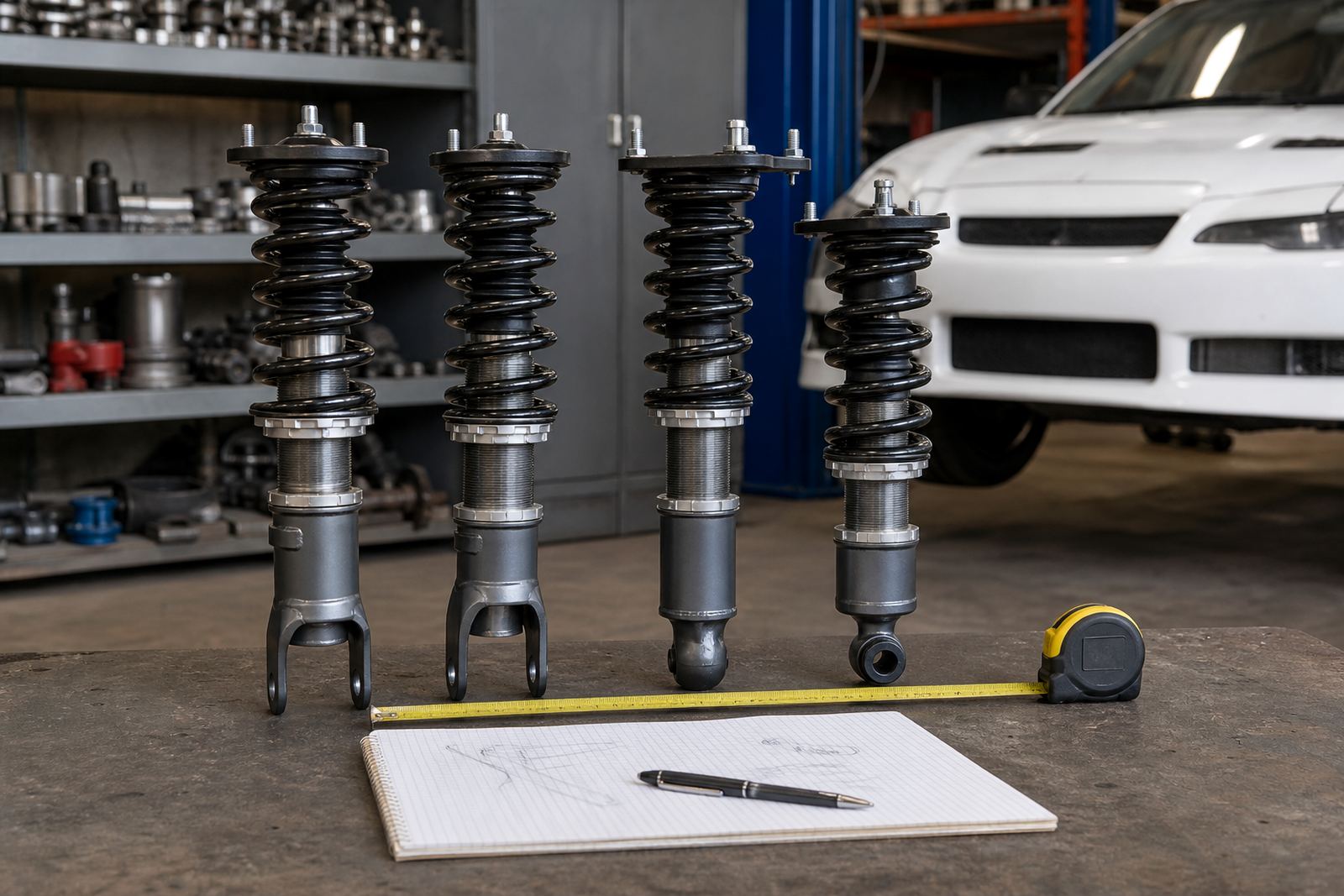
Before the job is closed out, it helps to look at the nearby parts as well. Worn ball joints, cracked top mounts, bent arms and tired dampers can all make the new bushes feel wrong. If the car is also having brake work, coilover setup or alignment checks, that is the right moment to line the whole front end up properly.
- Inspect sleeves, brackets and bolt holes for oval wear.
- Clean corrosion from seating surfaces before pressing in new bushes.
- Torque with the car at normal ride height.
- Check alignment after the suspension settles.
A practical checklist before you order the parts
Start with the car’s actual use. Is it a track-only hatch, a rally shell, a club sedan or a mixed-use car that still drives to work? Then look at the surfaces, the current spring and damper setup, and whether the goal is sharper turn-in, better braking stability or more predictable traction on exit. A useful bush choice supports the whole package, it does not fight it.
Bring the arm type, chassis code and any known modifications into the conversation. If the car has been lowered, widened or fitted with firmer dampers, the bush choice may need to change from standard thinking. For cars running in Midrand, Pretoria, Centurion, Kyalami or further across South Africa, the local roads and venue access roads can also affect what lasts.
- Note the car type and the events it runs.
- List the current suspension parts already fitted.
- Record any clunks, pull, vibration or uneven tyre wear.
- Decide what matters more, comfort, control or outright response.
- Plan alignment and corner weighting after the bush work.
Getting the bush choice right for the rest of the chassis
Suspension bushes should work with the rest of the setup. Brake Upgrade Planning, Coilover Setup, Alignment Checks, Corner Weighting and Track Setup Days all influence how much bushing compliance the car can tolerate. A car with aggressive geometry and high spring rates may need less movement at the arms. A milder setup may feel better with a little give left in the system.
For motorsport parts and performance upgrades in Midrand, the best result usually comes from looking at the full combination, not one part alone. The bush, the arm, the tyre, the damper and the seat position all feed into driver feel. When they are matched well, the car feels calmer in the hands and easier to place on corner entry and exit.
RaceHouse works with track, rally and club racing cars across Johannesburg, Pretoria, Kyalami, Durban, Cape Town and Port Elizabeth, with fitting advice and setup days from our Midrand base. Bush questions can go to the workshop through the contact form.