

Start With The Heat Your Car Actually Makes
Before you look at dimensions, work out how the car is used. A sprint hatch that sees short, hard pulls at Kyalami has a different cooling load from a rally car crawling through traffic, gravel and long idle periods between stages. The engine size matters, but so does boost, ignition timing, oil temperature and the amount of time the car spends sitting still with the bonnet shut.
Track cars usually need a radiator that can shed heat after repeated laps, not only on the first lap when everything is cool. If the car spends time in traffic between sessions, in the pits or on public roads, the cooling system needs more reserve. That is why radiator choice should sit alongside the rest of the cooling package, including fan shrouds, hoses, thermostat choice and any oil cooler already fitted.
Core Size, Thickness And Tube Design
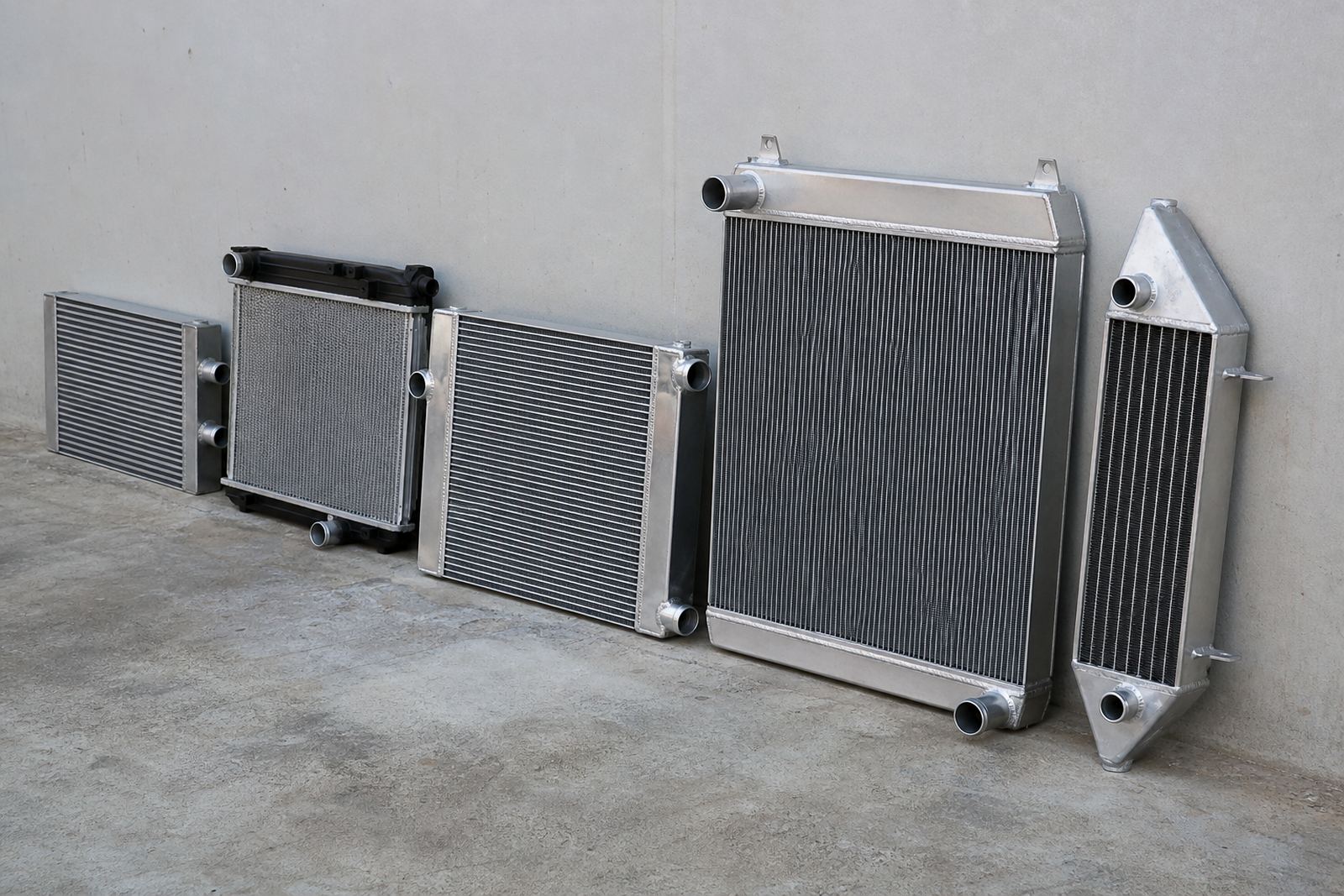
A radiator that fits the gap can still run hot. Core thickness, tube layout and fin density all change how the unit behaves once it is in the car. A thick core can add cooling capacity, but if the airflow through the core drops off too much, the extra size may not help at all. On some cars a slimmer radiator with better airflow works better than a heavy core that blocks the nose.
Aluminium is widely used in motorsport parts for its lower weight and good heat handling, while the end tanks and welds influence how long the unit lasts. The best match is the one that lines up with the mounts, clears the space behind the grille and follows the hose run without hard angles or strain on the plumbing.
- Measure the opening behind the grille and the depth available to the engine.
- Check whether the bonnet latch, ducting or crash bar limits the core area.
- Compare core thickness with the space needed for fans and hose clearance.
- Look at tube spacing and fin density, not only the outer dimensions.
Airflow Makes Or Breaks The Job
Air moving through the front of the car does most of the real work. If air leaks around the radiator, or spills over the top and sides, the cooling system loses effectiveness. Good ducting forces incoming air through the core and gives it a clean exit path out of the engine bay. On a well built setup, the radiator is only one part of the airflow route.
That means panel gaps, foam sealing and the shape of the front opening all deserve attention. A strong fan can help in the pits and in stop-start traffic, but it cannot fully fix poor ducting. For race cars that see long high-speed runs, the exit path is just as important as the inlet. Hot air has to leave the bay, or it will sit behind the core and raise temperatures again.
- Seal the radiator edges so air does not bypass the core.
- Use a shroud that covers the fan properly and pulls air evenly.
- Leave space for hot air to escape from the engine bay.
- Check whether brake ducts or oil coolers are stealing front-end airflow.
Plumbing, Cap Pressure And Hose Routing
Keep the plumbing neat, short and easy to inspect. Long hose runs, sharp bends and awkward clamp positions create weak spots that can show up when the car is pushed hard. The top hose, bottom hose and bleed points should sit where filling and checking are straightforward. If the car uses remote reservoirs or a swirl pot, the radiator layout needs to work with those parts rather than against them.
Cap pressure is another small detail that carries weight. Too little pressure and the system can boil early under load, too much pressure and you start stressing hoses, seals and the radiator itself. The right pressure depends on the build, the hose condition and the rest of the cooling circuit. Bleed points should be easy to reach, especially on cars that need frequent service between sessions.
When A Radiator Upgrade Needs Other Changes
Some cooling complaints are not really radiator problems. A car that runs hot may have a blocked grille, weak fans, a tired water pump or a cooling system full of trapped air. If the engine has been modified for more power, the oil cooler and the radiator must be considered together. One component can hide the weakness of another for a while, then the system falls apart when the pace rises.
On turbo cars, heat from the intercooler and exhaust side can load the radiator area heavily. On naturally aspirated cars, the issue may be less about peak power and more about sustained high revs and low road speed. That is why cooling checks should look at the whole front of the car, not only the core size.
- Inspect hoses for swelling, cracks and hard bends near the clamps.
- Check fan operation, fan control and shroud coverage.
- Look for signs of air locks after filling the system.
- Review whether the engine tune is adding avoidable heat.
Fitting Advice Before The First Session
A radiator can look perfect on the bench and still be awkward in the car. Mounting brackets need to hold it firmly without bending the tanks, and the core should not touch panels that vibrate under race use. Allow for engine movement, gearbox movement and the slight flex that happens when the car hits kerbs or rough roads. In rally use, that margin matters even more.
Before the car goes out, check the clamps after heat cycling, inspect the bleed points and confirm there is no rubbing on hoses or wiring. If the system is being set up for track, rally or club racing, a proper fitment check is worth more than guessing. The aim is a radiator that stays cool, stays secure and can be serviced without drama.
At our Midrand base, we work with drivers across Johannesburg, Pretoria, Kyalami, Centurion, Durban, Cape Town and Port Elizabeth on radiator choice, cooling system checks and the rest of the front-end package. our contact form is the simplest way to send through the car details and the current cooling layout.