

Begin with what the car must do
Clutch selection begins with torque, but it cannot end there. A road-based track car may need a mild organic disc with clean take-up, while a turbo car or a launch-heavy rally build may need a stronger pressure plate and a disc that can live with heat and repeated hard pulls. If the car spends more time in traffic than on a trailer, pedal weight and smooth engagement matter too. A clutch that is too aggressive can make the car unpleasant and harder to place accurately in slow corners.
Think about the engine tune, tyre grip and gearbox style together. Higher torque asks more from the clamp load. Sticky tyres and repeated standing starts do the same. If the current clutch is already near its limit, fitting a stronger disc without checking the flywheel, release system and hydraulic travel can leave the job unfinished.
Disc material changes the way the car leaves the corner
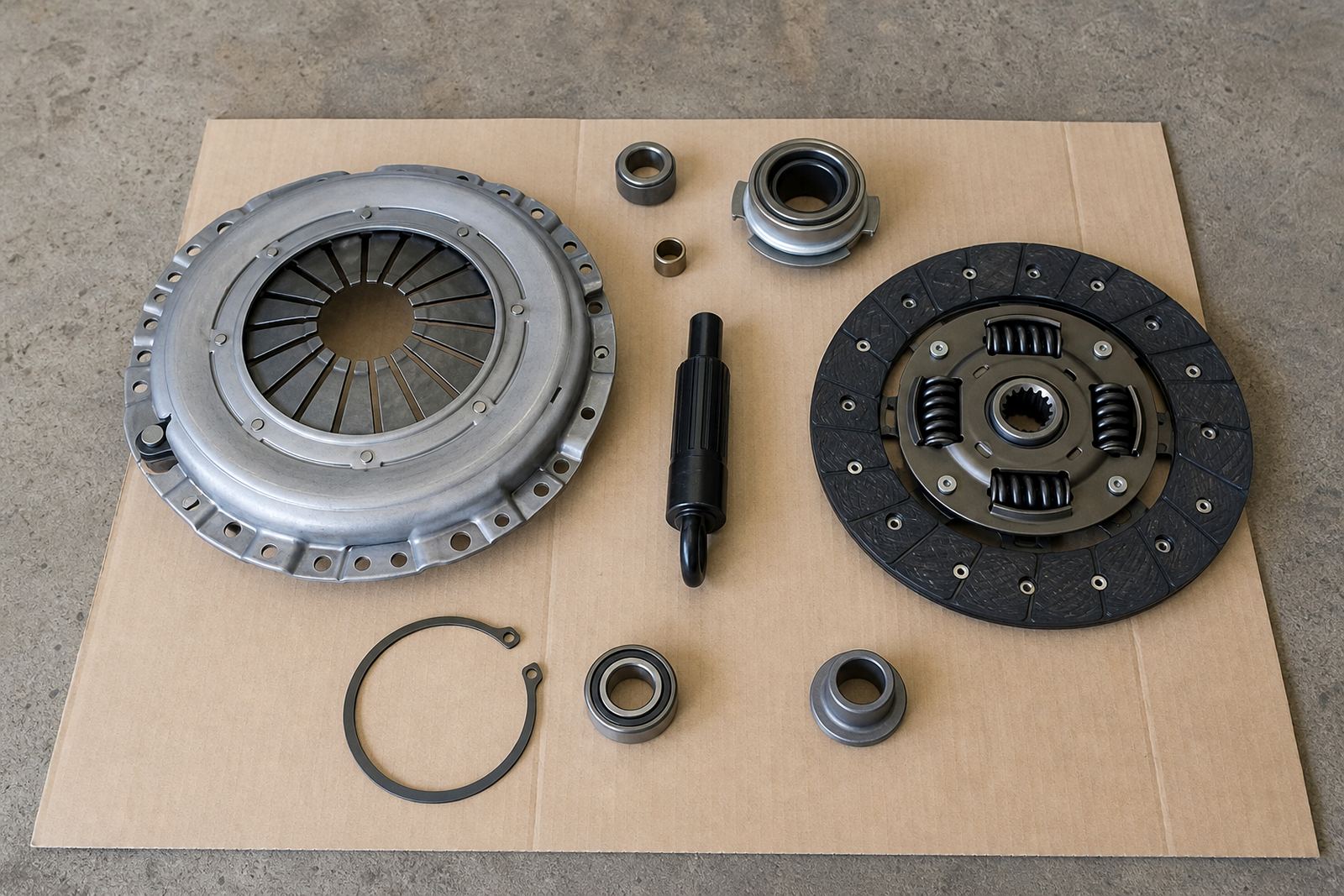
Clutch discs are not all trying to do the same thing. Organic linings usually give the smoothest take-up and are easier on the driveline, which suits lighter duty cars and drivers who need clean modulation. Puck-style or segmented discs can hold more torque and cope better with heat, but they may grab harder at low speed. A sprung hub can soften shock through the drivetrain, which helps on mixed surfaces and reduces snatch when the car is balancing on throttle.
When a car is used for rally or short circuit work, the decision often turns on how the driver feeds power back in after a braking zone. A clutch that bites too sharply can upset the car on corner exit. A clutch that slips under load will cook itself and leave a burnt smell long before the session is done.
Pressure plate load is only part of the story
Many drivers look at clamp load first, but the pressure plate has to work with the rest of the release system. A heavy pedal can wear the driver out and make consistent heel-and-toe work harder. In a car that sees setup days, consistency matters more than a dramatic pedal. A pressure plate that is matched well to the disc and flywheel will feel predictable as the car heats up.
Release bearing travel, master cylinder size and fork or concentric slave condition all affect the final feel. If the system does not release fully, the gearbox can become notchy and synchros take more punishment. If it releases too suddenly, the car may be difficult to launch cleanly from the pits or on loose ground.
Signs a clutch is the wrong fit for the build
The wrong clutch usually gives clues before it fails completely. Slipping in third under full throttle gets noticed, while the quieter signs often get missed. Judder when pulling away, a high biting point that keeps moving, or an odd smell after a few hard laps all point to a mismatch or wear. On some cars, the first sign is not slippage at all, it is a gearbox that becomes difficult to select cleanly after a session.
Drivers also need to judge feel honestly. A clutch that is too sharp can make the car harder to place at the edge of grip. A clutch that is too light for the torque can hide trouble until the disc is glazed. Either way the fix starts with a proper look at the whole system, not only the disc itself.
Fitment checks that save time later
Good fitment is part measurement, part common sense. The flywheel must be flat and within tolerance, the release system must move freely, and all fasteners need the correct torque. If the car has an upgraded engine or changed gearing, that information belongs in the fitment plan. Small errors at this stage show up as noise, drag or poor shift quality once the car is back on track.
For a clutch job on a race car, we also look at the related pieces that are easy to ignore. A tired engine mount can change alignment under load. A leaking rear main seal can contaminate the disc. On cars used in coastal humidity or dusty pit lanes, the inspection needs to include surfaces that often get missed between events.
- Measure flywheel thickness and face condition
- Check for oil contamination from the engine or gearbox side
- Verify spline fit and hub movement on the disc
- Inspect pedal return and release bearing operation
- Confirm that the chosen kit suits the actual gearbox pattern
How RaceHouse approaches clutch setup days
Clutch work sits alongside brake upgrade planning, cooling checks, alignment checks and corner weighting when a car is being prepared properly. At our Midrand base, the goal is to make the driveline work with the rest of the setup, rather than against it. That might mean pairing a clutch change with a fresh look at seat position, harness fitment or shift feel so the driver can use the car without fighting it.
For drivers across Johannesburg, Pretoria, Kyalami, Centurion, Durban, Cape Town and Port Elizabeth, the practical part stays the same: confirm the car’s use, the power level, the gearbox condition and the driver’s preference for pedal feel. Then the clutch choice becomes a measured decision rather than a guess. If you are weighing up options for track, rally or club racing, our contact form is the simplest way to begin and keep everything together.