

Start with the heat the engine actually makes
Oil temperature is not a guesswork figure. A car that spends short bursts at high revs, then cools between sessions, asks a different question from one that runs longer stints in summer heat at Kyalami or on a hot Gauteng day. The first step is to think about the engine, the gearbox if it shares cooling, and how much room the oil has to shed heat before it starts thinning out.
When the goal is control rather than a dramatic drop, the cooler should suit the car’s real duty cycle. Too small and the oil climbs fast once the car is pushed. Too large and the oil may run cooler than it should on the road or in shorter stages, which is not ideal for protection or stable pressure.
- Note the type of racing and session length.
- Check how often the car sits in slow traffic before the track.
- Look at oil temp trends, not a single peak figure.
- Keep the target focused on stable operating heat.
Mounting position decides how well air can do the job
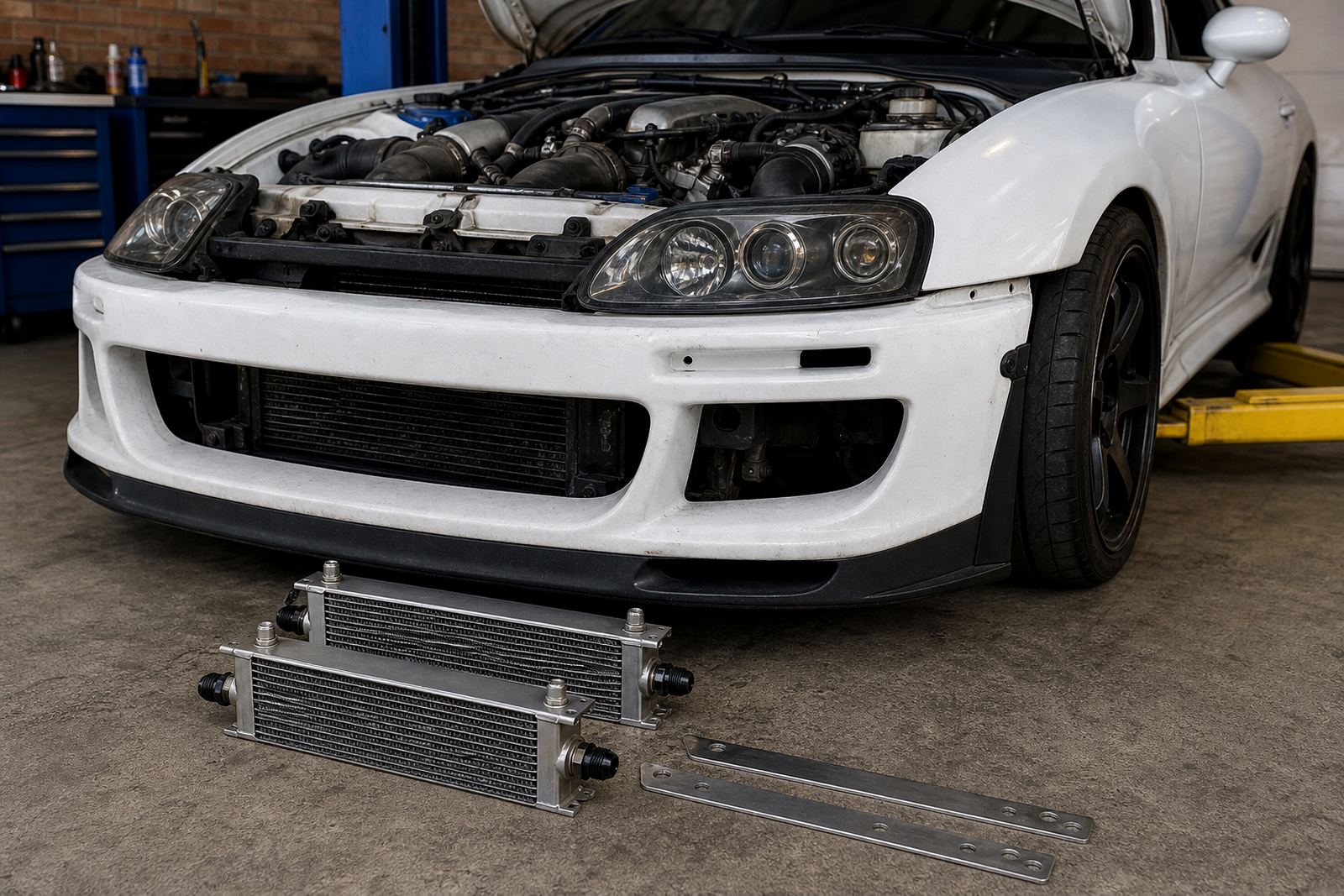
Where the cooler sits matters as much as the core size. A clean airflow path is worth more than an oversized core hidden behind bodywork, a number plate panel or a heat-soaked radiator pack. On many cars the best spot is one that sees direct air, yet still leaves room for steering lock, suspension travel and safe access when the nose comes apart.
We also look at what is already in front of the engine bay. Brake ducts, intercooler piping and radiator space all compete for the same air. If the cooler is mounted too close to hot surfaces it works harder than it should, especially in stop-start pit lane use or on a hot Durban afternoon.
- Leave enough space for airflow in and out of the core.
- Avoid blocking the cooler with trim, mesh or wiring.
- Keep it clear of tyres, belts and moving suspension parts.
- Check access for cleaning after dusty rally use.
Hose runs need to stay short, neat and protected
Long hose runs add volume, weight and places where heat can soak into the oil. They also make neat mounting harder. The hose route should avoid sharp bends, rubbing points and contact with exhaust heat. If the line has to cross a moving area, it needs proper support and enough slack for full lock and full suspension travel.
On a motorsport car, hose quality and fittings matter just as much as the cooler itself. A tidy run helps with pressure stability and makes future inspection easier. In Midrand workshop conditions, we often look for routes that keep the lines away from road debris and allow a clean drain if the system needs to be serviced.
- Keep bends smooth and avoid kinks.
- Protect lines from heat and abrasion.
- Support the hose so it does not flap at speed.
- Use the shortest practical route for the layout.
Temperature control goals should match the class and the car
Not every setup needs the same oil temperature window. A sprint car, a rally car and a club racer do not spend heat in the same way. The right cooler supports the target range without turning the whole system into overkill. That means balancing core size, airflow and the rest of the engine package so the oil reaches working heat and stays there.
It also helps to think about the engine tune, oil choice and ambient conditions. A car running in Johannesburg winter air can behave differently from the same car in Cape Town summer heat. The cooler should help the car keep pressure and consistency, not just chase the biggest possible drop on paper.
- Match the cooler to the class and session length.
- Allow for local weather and track surface heat.
- Keep oil pressure stable under load.
- Do not oversize without a clear reason.
Fitting checks that save problems later
A proper fitment check is more than bolting the cooler in place. We look at how the core is mounted, whether the brackets hold it steady and whether the hoses can move slightly without wearing through. A cooler that shakes or sits under strain will cause trouble later, even if it looks neat on the day.
It is also worth checking how the system is bled and filled after installation. Air pockets, loose clamps or poor routing can undo the benefit of the upgrade. During setup days, the team can go through the cooler position alongside brake, suspension and alignment work so the car leaves with one clear plan.
- Confirm bracket strength and mount security.
- Inspect every fitting for access and clearance.
- Check for rub marks after steering and suspension movement.
- Recheck the system after the first heat cycle.
A practical checklist before the first session
Before the car rolls out, the cooling setup should be checked as a whole. The cooler, hoses and engine bay airflow need to work together. A good layout is easy to inspect, simple to service and built for the way the car is raced. That is the sort of thinking that helps with track cars, rally cars and club machines used across South Africa.
If you are planning a new oil cooler or revising an old setup, bring the car details, the current heat concerns and the space available in the nose or side duct area. Our contact form is the best place to open the conversation, and it helps the workshop team work out whether the answer is a smaller core, a better mounting point or a neater hose route.
- Core size suits the engine and class.
- Air can reach the cooler without obstruction.
- Hose runs are short, protected and tidy.
- Mounts hold firm under vibration and cornering load.
- Temperature target matches the car’s real use.