

Start With The Numbers That Protect The Engine
Club racers often chase too many displays and still miss the readings that matter. Oil pressure, oil temperature, coolant temperature and fuel pressure give the clearest picture of what the engine is doing under load, especially when the car spends long periods at high rpm.
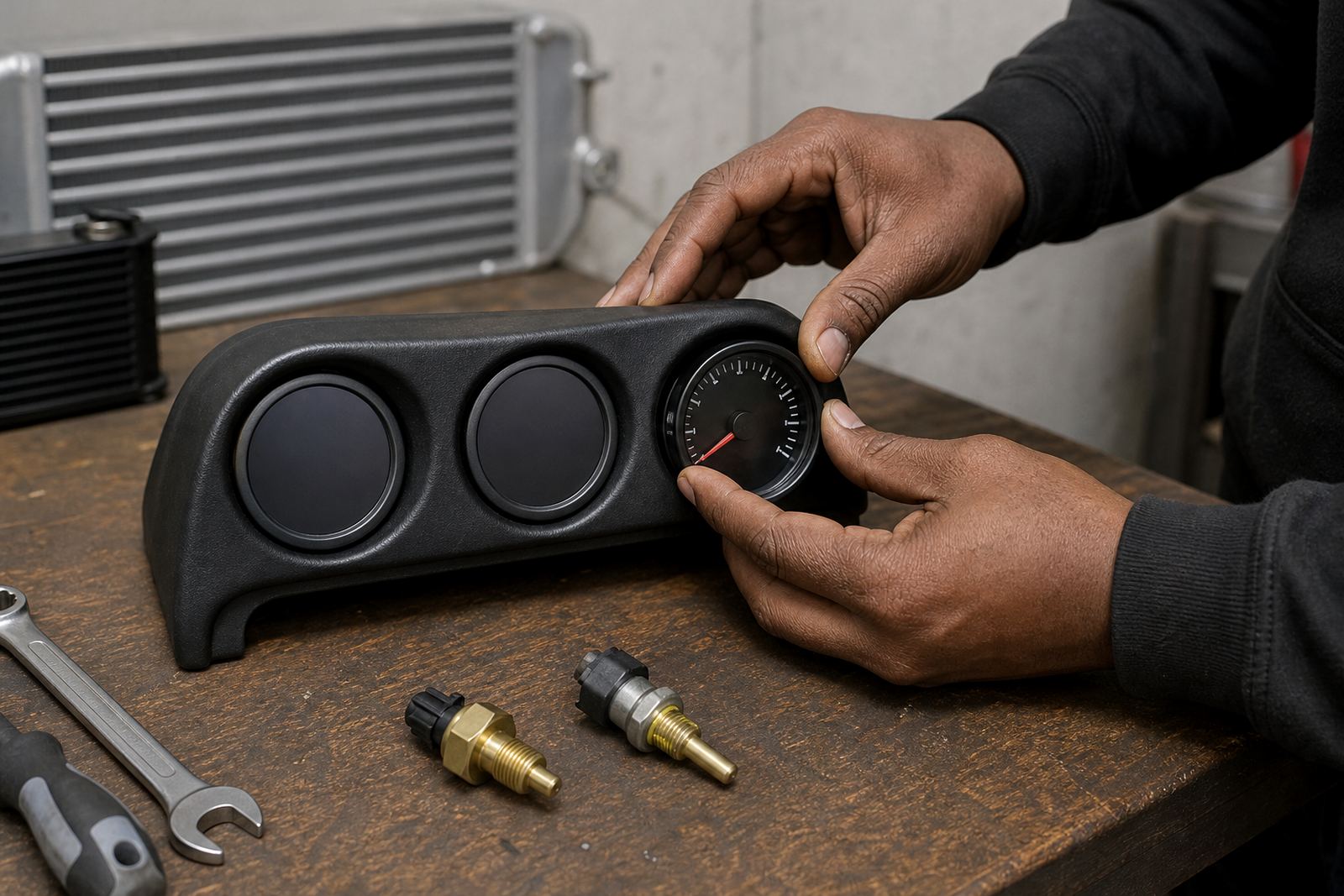
A basic setup should let the driver scan without taking eyes off the road for long. Mechanical gauges can work, but many race cars use electric senders for easier routing and cleaner packaging in tight cockpits.
- Oil pressure: shows if the pump and lubrication system are holding up.
- Oil temperature: helps you judge when the engine is ready for sustained pace.
- Coolant temperature: useful on grid, in traffic and after a hard lap.
- Fuel pressure: important on cars with modified pumps, regulators or injectors.
Choose A Layout You Can Read In One Glance
Where the dial sits in the driver's eyeline is half the value of fitting it. A tidy cluster near the steering wheel or high in the driver line of sight works better than a scattered row under the dash, especially in a car that sees kerb strikes, vibration and the odd loose fastener.
Keep the most urgent warnings closest to the driver. If the car has a shift light, it should sit where it catches the eye without blocking the road. A display that is too busy can hide the one reading you needed most.
- Put warning lights where the driver can see them in peripheral vision.
- Group related readings together, not across the cabin.
- Leave space for wiring, sender access and future checks.
What A Club Racer Should Actually Prioritise
Not every build needs a full digital dash. Many cars run best with a small, sensible group of analogue gauges and one clear warning light. If the car is naturally aspirated and used mainly for club events, the first priority is usually oil pressure and coolant temperature, then oil temperature.
Forced induction cars need a little more attention. Boost pressure, fuel pressure and intake air temperature become more useful when the engine is working harder, and when the tune has less room for error. That extra information helps during setup days and post-session checks.
- Naturally aspirated track car: oil pressure, coolant temp, oil temp.
- Turbo or supercharged car: add boost and fuel pressure.
- Long-distance or hot-weather use: consider oil temperature a must-have.
- Mixed road and track use: keep the display simple and durable.
Sensor Quality And Sender Location Matter More Than A Fancy Face
A cheap sender will make an expensive gauge lie to you. Poor wiring, loose earths or a sender fitted in the wrong spot can give readings that look tidy but mean very little. On race cars, the best place is usually where the reading reflects actual engine load, not a cooler or quieter corner of the system.
That applies to coolant and oil readings in particular. A neat dash is no help if the sender sits where it sees delayed temperature changes. Proper routing, heat protection and secure fittings keep the data steady enough to trust during a session.
- Use senders suited to motorsport heat and vibration.
- Keep wiring clear of exhaust heat and moving parts.
- Check earth points and connectors before a race meeting.
- Label each sensor so troubleshooting is straightforward.
How Gauges Fit Into Setup Days And Track Prep
Gauges fit best into a broader setup plan. During alignment checks, corner weighting, brake upgrade planning and cooling system checks, the readings help confirm whether the car is behaving the way it should. A temperature rise on one side, or an oil pressure drop at high rpm, can point to a fitment issue or a setup change that needs attention.
For drivers who move between Midrand, Johannesburg, Pretoria, Kyalami, Durban or Cape Town, the same car can behave differently in altitude, heat and traffic. A well chosen gauge set makes those changes easier to spot before they affect lap time or reliability.
A Short Checklist Before You Add Another Gauge
Before fitting more dials, it helps to check whether the current set answers the right questions. A racer who can read oil pressure, coolant temperature and fuel pressure clearly is usually in a better position than one with six numbers and no confidence in any of them.
- Can the driver see the reading without hunting for it?
- Does the gauge reflect a real engine risk?
- Is the sender fitted in the right place?
- Can the system survive heat, vibration and quick pit checks?
- Will the reading help with tuning, cooling or engine protection?
If the answer is no to most of those points, the setup needs sorting before the next event. A cleaner panel often works better than a busy one, and it is simpler to keep in shape between sessions.