

Start with the class and the seat you already run
Begin with the car class, the seat shell and the way the driver gets in and out of the cockpit. A harness has to suit the seat, the seat mounts and the driver’s shoulder height, otherwise the belts can sit too high or pull across the wrong angle. In a club car that sees regular road use and track days, access matters as much as restraint, especially when helmets, HANS devices and thicker race clothing are part of the routine.
For most saloon and hatchback builds, the harness layout needs to work with the existing cage or seat bracket plan. In a rally car, the belt routing often has to cope with rough ground, movement over bumps and quick driver changes. That is where mounting layout and adjuster access matter, because a belt that is awkward to tighten usually ends up being worn poorly.
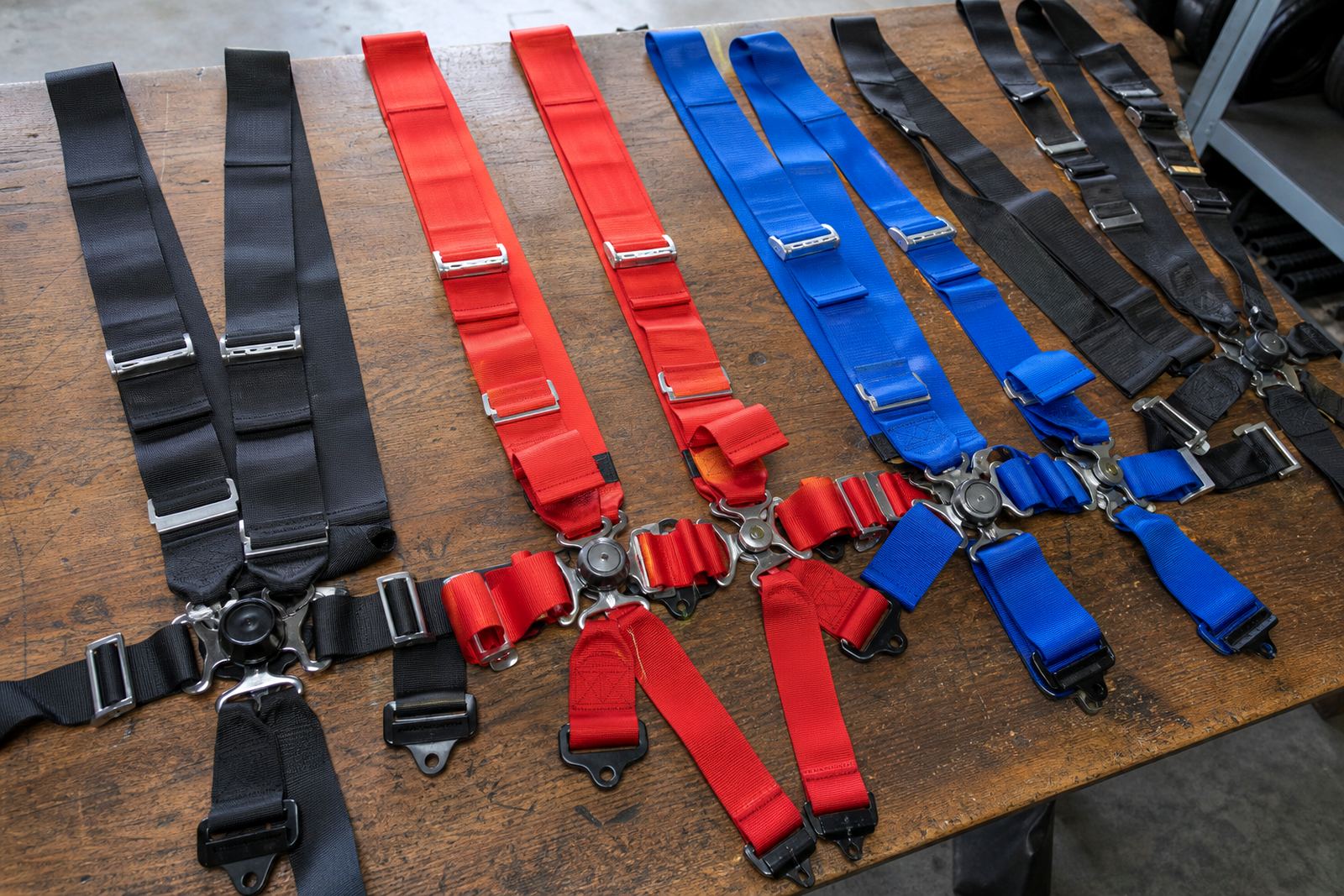
Five point, six point or more straps: what the count changes
Strap count changes how the load is spread across the body and how the belts behave when the car moves hard under braking or on kerbs. A five point harness is common where the driver wants a straightforward lap and shoulder layout with a single anti-submarine strap. A six point harness adds more control at the crotch area and can keep the lap section where it should stay under pressure.
More straps are not automatically better. The right setup depends on the seat opening, the anti-submarine strap angle and whether the driver needs quicker in and out movement during pit work or stage changes. In a car with a narrow seat base, the strap path must be checked carefully or the buckle ends up sitting where it should not.
- Check the seat shell opening before choosing strap count.
- Make sure the buckle sits where the driver can reach it cleanly.
- Confirm that lap straps lie flat over the pelvis, not the stomach.
- Look for shoulder straps that exit the seat at the right height.
- Test the buckle release with gloves on and the helmet in place.
Adjusters that can be reached while belted in
Harness adjusters should be easy to reach from the seated position, but not so loose that they flap around or foul the seat base. Drivers often focus on the number of straps and ignore how the adjusters sit on the shoulder and lap sections. In practice, the car that is easiest to tighten properly is usually the one that gets used properly.
On a tight cockpit, such as a compact rally shell or a stripped club racer, the position of the adjusters makes a real difference. If the shoulder adjusters sit behind the seat or under trim, the driver may struggle to set an even pull on both sides. That can leave one shoulder strap tighter than the other, which is not what you want when braking hard into a corner at Kyalami or through a bumpy section outside Pretoria.
- Adjusters should sit where fingers can find them without strain.
- Straps must not rub on harness guides with sharp edges.
- There should be no twist in the webbing near the adjuster.
- Buckles and adjusters must clear the seat bolsters cleanly.
Mounting points that respect the shell and the cage
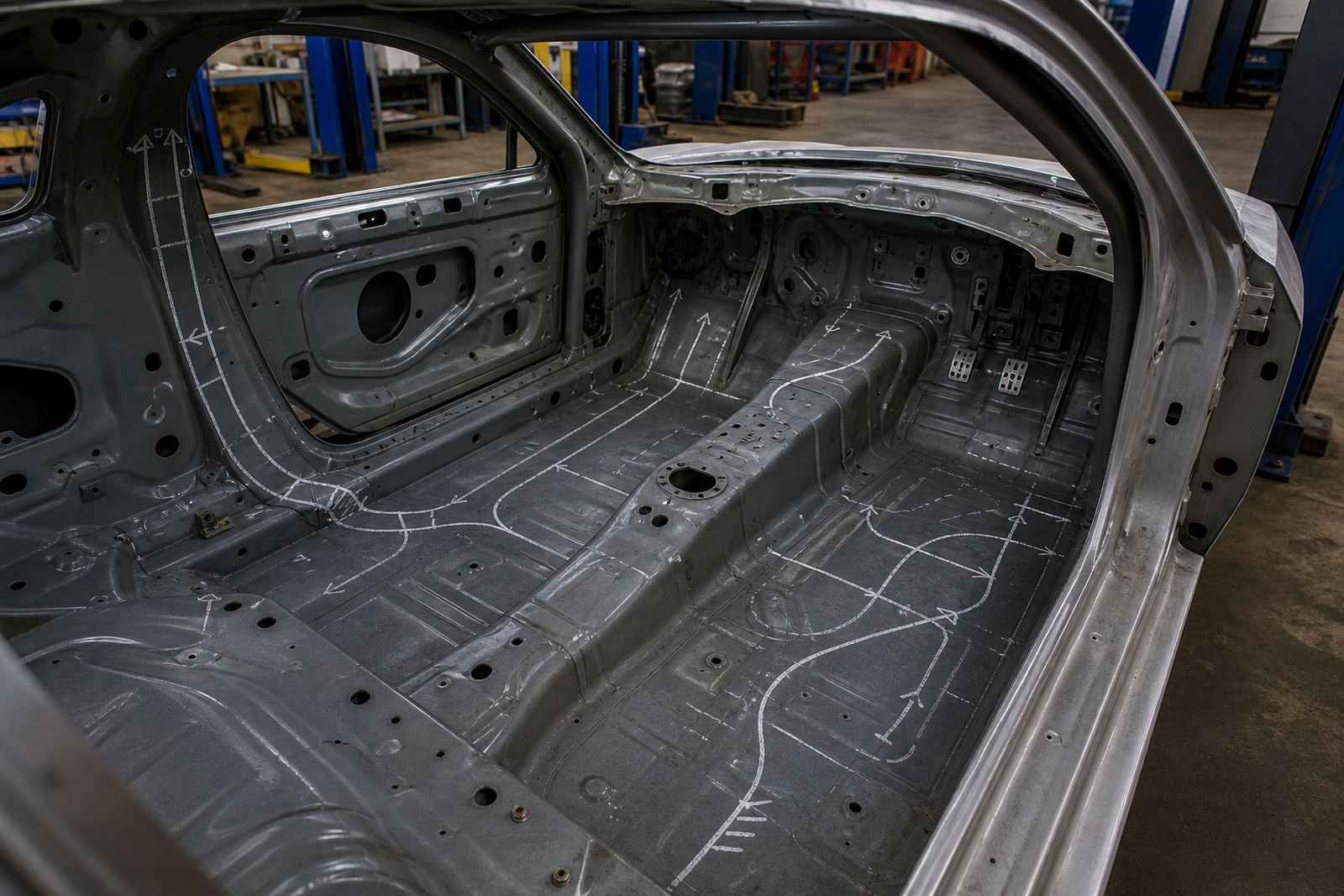
The mounting layout must suit the shell, the cage and the way the car is loaded in motion. Shoulder straps normally need a sound rear mounting point or a proper harness bar, with angles that do not force the straps too steeply down. Lap straps need a strong, sensible point near the floor or side mounts, depending on the shell and seat position.
Do not treat the cage as a place to improvise. A roll cage can help create the correct geometry, but the mounts still need proper planning and correct hardware. On a rally build, the rear layout may need to handle more vibration and a harsher driving style. On a circuit car, the focus may be on repeatable fit and quick driver changes between sessions.
Check the metalwork around the mounting point as well. A neat mount on thin, tired sheet metal is not a good solution. The surrounding structure must match the job, and the belt path should stay free from sharp bends, edge contact and excess movement.
Fitting checks before the first hard session
Once the belts are installed, the fit should be checked in driving position with the full kit on. That means helmet, head restraint, gloves and race shoes where relevant. The lap section should hold the pelvis down, the shoulder straps should sit square, and the buckle should not ride up toward the stomach.
A proper fitment check also looks at the seat position, steering wheel distance and pedal reach. If the driver has to stretch to reach the controls, the harness may appear tight while still leaving the body in a poor position. It is better to set seat, wheel and belts together than to chase each part on its own.
- Check that the lap straps pass low across the hips.
- Confirm shoulder straps stay level and do not slip off the seat.
- Test buckle access with the driver seated and belted.
- Look for rubbing against seat edges, trim or hardware.
- Recheck tension after the driver has been in motion for a few laps.
When harness advice matters more than the catalogue
Some cars need more than a part number. A build with cooling changes, a clutch upgrade, altered seat mounts or a new cage layout can shift the whole belt plan. That is where fitting advice helps, because the harness has to work with the rest of the car rather than sitting in isolation.
For drivers across Midrand, Johannesburg, Pretoria, Centurion, Kyalami, Durban, Cape Town and Port Elizabeth, harness planning often sits alongside seat positioning, roll cage fit advice and track setup days. The goal is a cockpit that is practical to enter, secure under load and suitable for the kind of events the car actually runs. If the layout needs another look, start the conversation through our contact form.
A short checklist for choosing the right harness
Use this as a working check before any purchase or fitment:
- Match the harness to the seat shell and driver size.
- Choose strap count that suits the class and usage.
- Confirm the buckle sits clear of the stomach area.
- Check whether the adjusters can be reached easily.
- Plan the mounting points before the belts are fitted.
- Make sure the shoulder angle is sensible for the shell.
- Review the layout after any seat or cage changes.
A harness should feel settled, not fussy. If the car is easy to strap into and the belts sit in the right place without constant fiddling, the driver can get on with the session and stop thinking about the hardware.