

Start With The Event, Not The Bottle Label
Brake fluid only makes sense when it is matched to the sort of driving the car actually does. A short club sprint, a full track day at Kyalami, a rally stage with repeated braking, or a mixed test session each puts different heat into the system. The right fluid is not the one with the flashiest copy, it is the one that keeps the pedal consistent when the brakes are already warm and the driver still needs feel.
For a car that sees hard use, look at more than a single boiling figure. Ask how often the fluid will be changed, whether the car sits in the trailer for long stretches, and if the system has stainless lines, race pads, larger calipers or a ducted cooling setup. Those details alter the way heat builds in the circuit and the margin you have before the pedal goes long.
- Track cars need stable pedal feel under repeated stops.
- Rally cars need fluid that copes with rough surfaces and long stages.
- Club cars may use the same brakes more lightly, but still need a proper wet boiling margin.
- Pedal travel that changes during a session often points to heat or moisture in the fluid.
Boiling Resistance Means Dry And Wet Numbers Both Matter
Dry boiling point is the headline number, but it is only part of the story. Once a fluid has absorbed moisture through the reservoir cap, hoses and seals, the wet boiling point becomes the real test. In South African conditions, especially where cars are parked in humid coastal air or sit through a rainy weekend, moisture uptake matters more than many drivers expect.
A high dry boiling point with poor wet performance can still let a pedal soften when the fluid is not fresh. That is why a good buying choice balances the two figures against the car's use. A lightweight car on a short sprint circuit may not need the most extreme fluid on the shelf, while a heavier car with big tyres and sticky pads often does.
Pay attention to how the fluid behaves in a real system, not just on a spec sheet. Long pedal travel, a change in bite point, or a spongy feel after a few hard stops can all mean the fluid is not matching the heat load. If the car is used in Midrand, Johannesburg, Pretoria or further afield, the same fluid can behave differently once weather, altitude and event length are factored in.
Match Service Intervals To How The Car Is Used
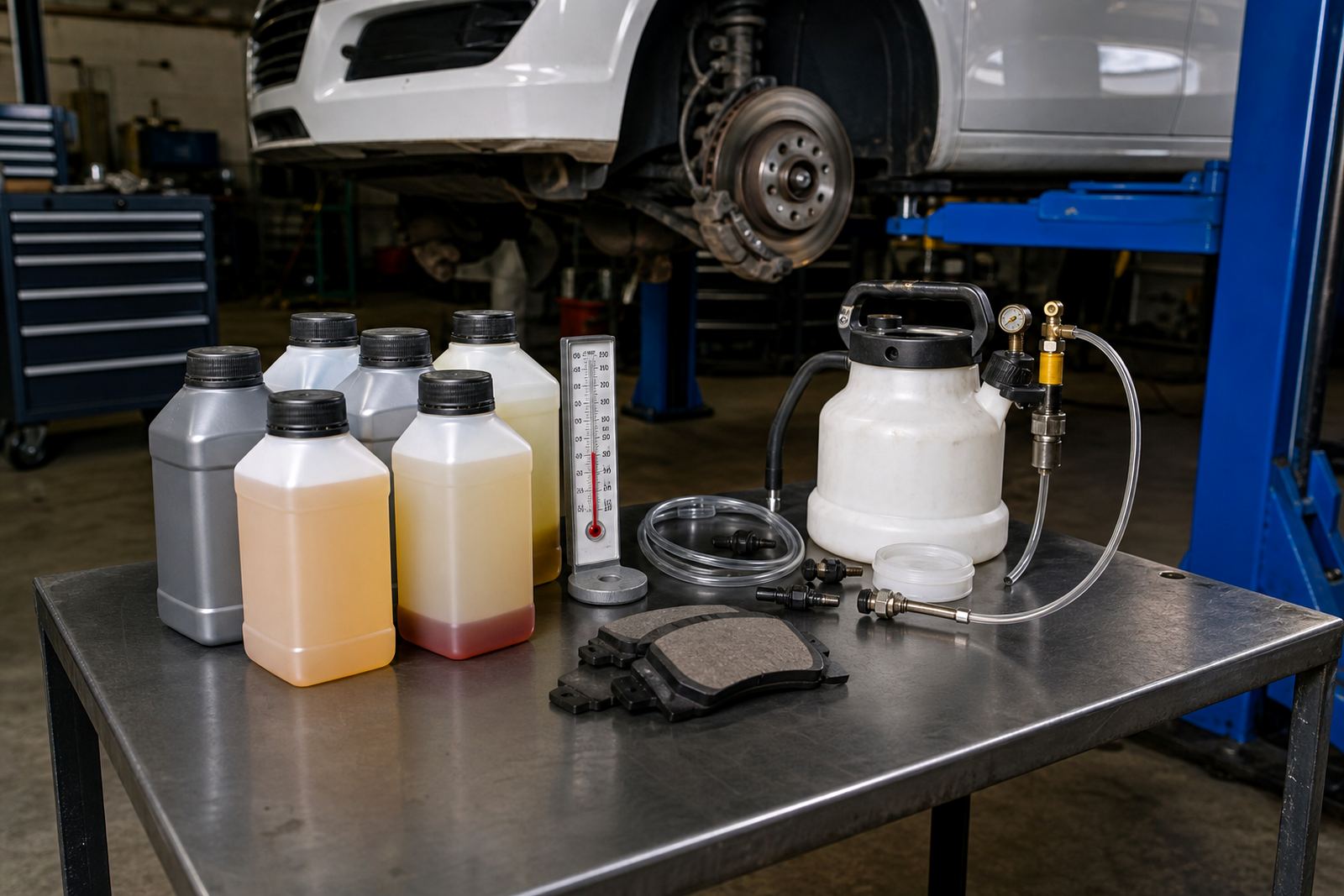
Brake fluid is a service item, not a fill-and-forget part. Racing use shortens the useful life because heat cycles and moisture both work against the fluid. A car that sees regular track or rally work should be bled and refreshed far more often than a road car, and the interval should be set by use, not by hope.
- Fresh fluid is worth fitting before an important event, not after pedal fade has already appeared.
- Bleeding all four corners matters when the pedal feels inconsistent from one session to the next.
- Old fluid can hide problems in the master cylinder, calipers or hoses.
- If the car sits unused for months, moisture can still work into the system.
At RaceHouse in Midrand, we look at the whole brake package during brake upgrade planning and brake bleeding. Pads, fluid, caliper size, ducting and disc mass all influence how hot the system runs. That is why a fluid change works best when it sits inside a proper setup check, not as an isolated task.
Pick Fluid Around Pedal Feel And Heat Margin
Drivers often describe brake fluid in terms of confidence, and that is fair. The right fluid keeps the pedal firm enough to judge trail braking, yet not so aggressive that the system becomes vague once the temperature climbs. For a track car, the aim is steady pedal feel from the first lap to the last. For rally use, the target is a fluid that stays calm under vibration, dirt and repeated stabs at the brakes.
When comparing options, use this checklist rather than guessing:
- Does the fluid suit high temperature use without relying on a single laboratory number?
- Does the service plan fit the way the car is actually raced?
- Will the fluid work with the current seals, hoses and reservoir layout?
- Is the pedal feel consistent after a full bleed and proper warm-up?
- Does the event schedule allow for fresh fluid before demanding sessions?
Brake pad choice, wheel size and rotor thickness all change how much heat reaches the fluid. A car on large slicks can ask far more from the brakes than a similar shell on street tyres. That is why a proper fluid choice sits alongside alignment checks, corner weighting and cooling system checks when a car is being prepared for serious use.
Use A Bleed Routine That Tells The Truth
Good fluid can still be undermined by poor bleeding. Air left in the lines, old fluid trapped in corners, or a lazy bleed sequence can make the pedal feel weak even when the bottle choice was correct. The best routine removes the old fluid fully, checks for tiny leaks and keeps the reservoir at the right level during the process.
Before the car leaves for an event, the brake system should be checked for these points:
- Pedal feel is firm and repeatable with the engine running.
- No signs of moisture, staining or seepage at calipers and fittings.
- Fluid colour is not dark or cloudy from age and heat.
- Reservoir cap, seals and lines are in good condition.
- The driver can identify any change in feel before the first session starts.
Where a car is used for fitting advice and setup days, brake work is best checked against seat position, harness fitment checks and the driver's reach to the pedal box. A car that fits the driver properly usually makes braking more consistent, and that helps the fluid do its job without extra strain.
A Midrand Checklist Before The Car Goes Back Out
For track, rally and club racing cars, the smartest brake fluid plan is practical and repeatable. Match the fluid to the event, keep the change interval honest, and check the rest of the system while the wheels are off. In Gauteng heat or coastal humidity, the margin for error gets smaller once the car starts working hard.
Use this final check before the next run:
- Fluid spec suits the car's heat load and event length.
- Bleed has been done properly, with all corners covered.
- Pedal feel is firm at the start and after warm-up.
- There is a clear service plan for the next refresh.
- The brake package matches the rest of the setup, including pads and cooling.
If the car is being prepared for Johannesburg, Pretoria, Kyalami, Durban, Cape Town or Port Elizabeth, the same basic rule applies: choose the fluid for the braking work it will actually do. The bottle is only one part of the system, but it is the part that carries the heat when the session gets serious.