

Start With The Car, Not The Catalogue
Before looking at shell styles, measure the cockpit. Door opening height, tunnel width, steering wheel reach and the height of the helmet above the roofline all affect what will fit. A seat that looks right on a stand can sit too high in the car, which leaves the driver cramped and can push the helmet too close to the roof or roll cage.
Think about the job the car does. A club racer that does sprint events and track days can use a different shell shape from a rally car that sees rough roads, side loading and more movement inside the cabin. The aim is not only comfort, but steadier control when the tyres load up under braking or through a fast corner. Small changes in seat height and back angle can make a large difference.
Seat fitting also has to work with the rest of the safety gear. Harness straps should leave the seat at the correct angle and the shell should support the shoulders without forcing the driver to hunch forward. If the seat is too wide, the driver slides around. If it is too narrow, pressure builds at the hips and lower back.
Shell Shape Changes How The Car Feels
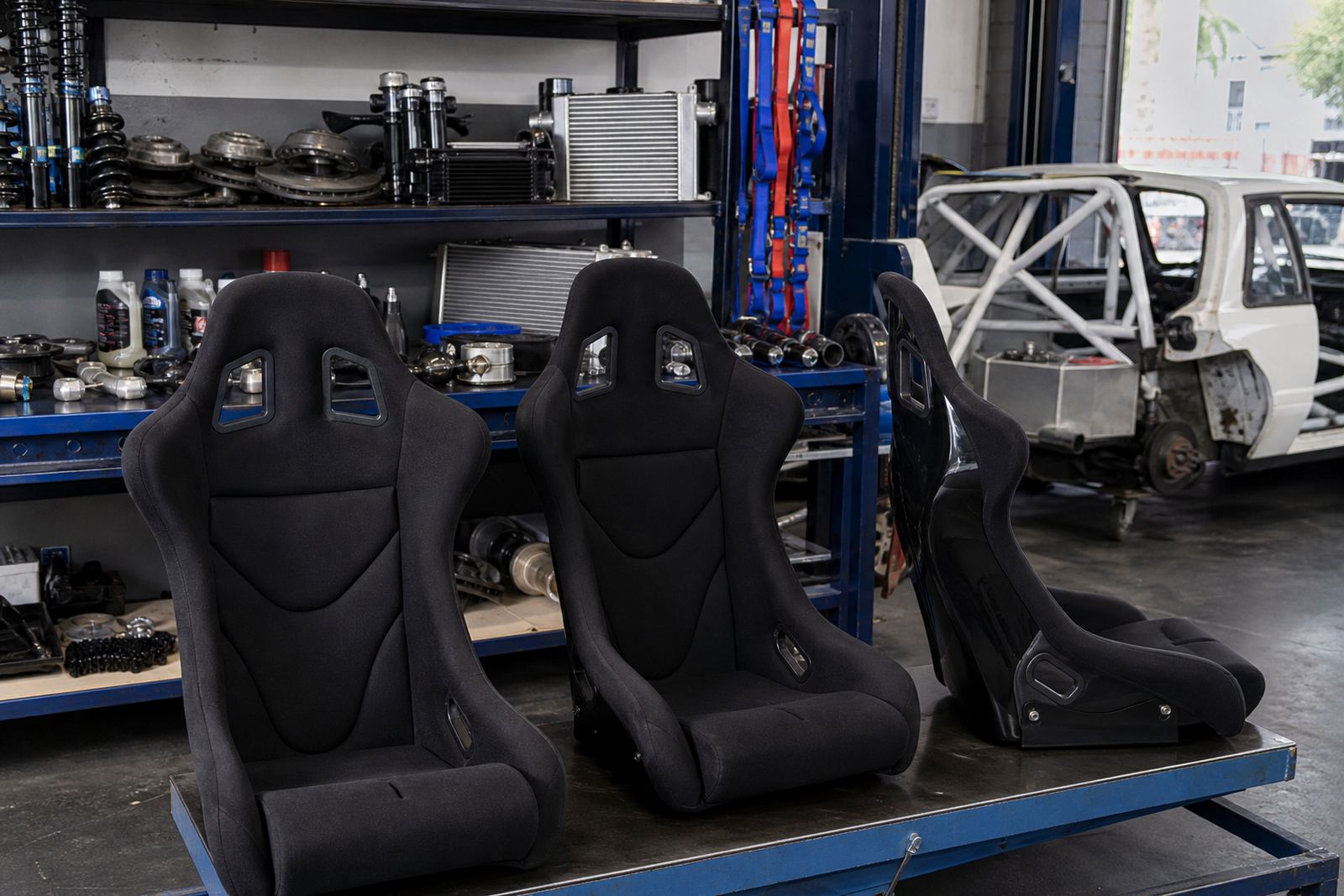
Race seats come in different shapes for a reason. A deep shell with tall side bolsters gives more lateral support, which helps when the car moves hard in corners. A flatter shell can suit drivers who need easier side entry and exit or who share the car across different events. The backrest shape matters too, because some drivers sit more upright while others need a slightly reclined position to suit the pedals and steering column.
Pay attention to shoulder width and thigh support. If the shoulders are pinched, the driver gets sore and starts shifting around. If the thigh area does not support the legs, fatigue builds on longer stints. A seat should hold the driver still without feeling like a mould that fights every small movement.
- Check shoulder width against the shell opening, not just the listed size.
- Look for leg support that leaves room to work the pedals cleanly.
- Make sure the side bolsters do not foul the helmet or arms.
- Test how the seat feels with full race kit on, including boots and helmet.
Mounting Height And Angle Need Real Numbers
Mounting position is where many installs go wrong. If the seat sits too high, the driver loses head clearance and feels perched on top of the car. If it sits too low, vision over the bonnet drops and it can become harder to judge braking points and apexes. The base, side mounts and sliders all affect the final position, so the whole stack has to be considered together.
The backrest angle should suit the car and the driver, not a habit from road use. A slight recline can help in a sprint car if it keeps the torso settled and the arms relaxed, but too much recline can pull the harness angle out of line. The seat should also sit square to the steering wheel and pedals, with no twist through the hips. A crooked position feels small at first then becomes tiring after a few laps.
For cars used in South Africa, heat matters too. A black shell, full side bolsters and tight cabin packaging can trap heat on a hot Gauteng afternoon, so breathable padding and sensible trim choices help. In coastal humidity, sweaty padding can become slippery if the seat fit is already loose.
Harness And Roll Cage Clearance Must Line Up
A race seat cannot be judged on its own. Harness slots must match the shoulder belt height, the lap belts should sit low across the pelvis and the buckle should land where the driver can reach it without strain. If the slots are too high or too low, the belts can ride on the neck or pull the driver forward in an impact.
Roll cage clearance needs equal care. Side tubes, door bars and rear stays can limit how far the shell can slide or tilt. There should be clear space around the seat for mounting hardware and enough room for the driver to enter and exit without catching the helmet, HANS type device or shoulder pads on the cage. In rally cars, that extra clearance matters when the car bounces over rough ground.
- Confirm shoulder belt exit height against the driver’s seated shoulder line.
- Check lap belt routing across the pelvis, not across the stomach.
- Leave space for cage tubes, side mounts and harness eyelets.
- Make sure the driver can get out without twisting hard against the shell.
Seat Positioning Works With Pedals And Steering
The best seat position lets the driver press the brake hard without sliding forward and reach the steering wheel with bent elbows, not locked arms. The hips should stay planted while the feet move between throttle, brake and clutch without strain. If the seat is too far forward, the knees end up cramped. Too far back, and pedal control suffers.
For cars with clutch work and quick gear changes, the seat has to support the lower back while leaving enough room to work the shifter cleanly. That becomes more important in cars with a stiff clutch or a short pedal box. A proper fit often needs a few small changes, not one large move. One spacer, one mount height change or a slight backrest angle adjustment can solve a problem that seemed bigger at first.
At RaceHouse, the practical side matters. Seat position, harness fitment checks, alignment checks and coilover setup all affect how the driver feels the car. A seat that works with the rest of the cockpit usually gives better confidence and less fatigue, especially in long sessions or on rougher rally stages.
A Simple Buying Checklist For Race Seats
Before you buy, look at the whole setup in one pass. That keeps the choice grounded in the car you own, not just the shape you prefer. It is also the best way to avoid a seat that fits your body but clashes with the cage or the steering wheel.
- Measure cockpit width at the shoulder and hip points.
- Check the driver’s helmet height in relation to the roof and cage.
- Match shell width to the driver in full race kit.
- Plan the mount type before choosing the seat.
- Confirm harness slot height and shoulder belt route.
- Check door clearance for side entry and exit.
- Allow for cooling, padding wear and long stints in hot weather.
If the car is used across track, rally and club racing, the best seat is usually the one that balances hold, reach and clearance rather than chasing the deepest shell available. A careful fit makes the car easier to live with and keeps the driver working in a clean position from the first lap to the last.