Window nets help keep arms, hands and loose cockpit items inside the car during circuit, rally and club racing. The right kit has the correct size, latch position and bracket layout for the door opening and seat position in your car.
Containment at the side window, where it matters
A window net sits across the side opening and forms a barrier between the driver and the outside line of travel. In circuit cars it is fitted on the driver side or both sides where the cage and class rules call for it, while rally cars often need a layout that suits tighter cockpit access and a firmer harnessed seating position.
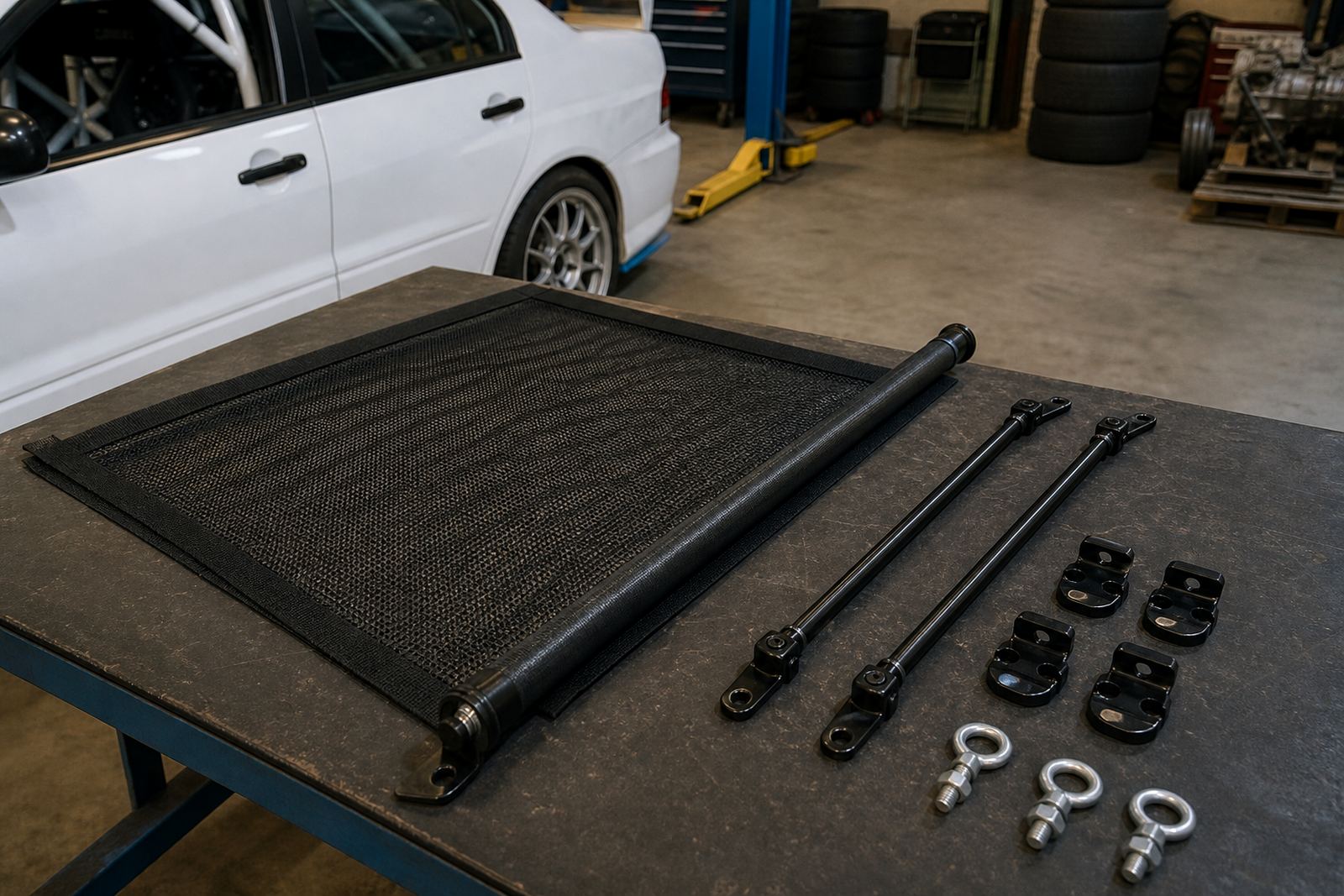
Most kits are built around a woven net panel, fixed edge straps, release hardware and mounting brackets that attach to the roll cage or approved internal structure. The net should sit taut, not baggy, and the latch must fall where the driver can reach it with gloves on and belts tightened.
Common net widths: 18 inch, 20 inch and 22 inch panels
Typical heights: about 16 inch to 20 inch, depending on cockpit opening
Mounting styles: fixed bar, pivot style or lift out hardware
Use with steel or alloy cage mounting points, where rules allow
Sizes and hardware that suit different cockpits
The size has to match the window aperture, door height and seat position. If the net is too short, it leaves a gap along the upper edge, while one that is too tall can catch the roof lining, cage tube or side bolt pattern. In a low roof saloon, hatchback or coupe the net often needs a shallower rise at the front edge, while taller doors in touring and rally shells can take a more square panel.
Hardware choices also matter. Some kits use a quick release latch with a pull strap, others use a clip and pin style fastening. Where the car has door bars close to the opening, the bracket positions need care so the net clears the cage but still closes flat against the door card area.
Panel shape: square, tapered or stepped front edge
Release type: pull handle, latch tab or clip system
Mounting direction: forward release or rearward release
Edge finish: bound webbing, stitched loops and reinforced corners
Best fitment matches in track and rally cars
Window nets are used in saloon racers, club cars, rally builds and some time attack or sprint cars where cockpit containment is part of the safety set-up. They suit cars with fixed seats and multi-point harnesses, because the net works with a seated driver who stays in position under cornering load and during contact.
They are also useful where marshals and officials expect clear containment around the side opening. In a busy pit lane, a proper net gives the cockpit a tidier side barrier and helps keep loose gloves, notes or small items inside the car. The final layout should still allow quick entry and exit, with the seat, harness and steering wheel position considered together.
Circuit cars with roll cages and fixed bucket seats
Rally cars with side opening containment needs
Club racing cars running harnesses and side bars
Cars with narrow openings that need careful latch placement
Fitment points, clearance and setup details
Fitting begins with the cage location, the door frame shape and the driver’s normal seating position. The lower strap or bottom rail should sit level and clear the armrest line, while the upper edge should run close enough to the window line to stop the net from sagging into the cockpit. On cars with trimmed door cards, the installer may need to check how the bracket sits against the trim and whether a spacer or alternate bracket angle is needed.
The latch side must be easy to find under pressure, especially when the driver is belted in and the steering wheel is in place. On some cars the best position is near the B-pillar, on others it works better further forward. Good fitment also means checking the net against the seat shell, side bolster and the head restraint so there is no rubbing point that will wear the webbing early.
Care, inspection and race-day condition
Window nets live near helmet edges, harness buckles and dusty cockpit trim, so they need regular inspection. Check the stitching at the corners, the latch action, the mounting loops and any signs of fray along the edges. If the car runs on gravel or dirt stages, fine grit can work into the weave and should be brushed out before it starts to abrade the webbing.
Keep the net dry and stored flat when removed, not folded around a sharp cage joint. If the car sees coastal humidity in Durban or Port Elizabeth, wipe the hardware clean so the metal fittings do not pick up surface corrosion. Any net that has taken a heavy hit, or shows stretched webbing, should be replaced rather than patched.
What to confirm before ordering the kit
To match the correct kit, confirm the car model, door side, cage style and seat position. It also helps to note whether the net is for driver side only or for both sides, and whether the car runs a full door card, light trim panel or bare door shell. If the car has unusual door bars or a tall seat base, those points change the latch height and the net shape.
We also need the opening width, opening height and the preferred release side. If you already know your cage tube size or the bracket style fitted to the car, include that with your enquiry so the hardware lines up properly. For race teams working from Midrand, Johannesburg, Pretoria, Kyalami, Centurion, Durban, Cape Town or Port Elizabeth, our contact form is the easiest way to send those details through.
Car model and body shape
Driver side or passenger side fitment
Opening width and opening height
Cage tube size and bracket style
Seat type, harness layout and door trim clearance
Key facts
Product type
Window net kit for cockpit containment
Typical sizes
Nets 18, 20 or 22 inches wide
Typical height range
About 16 inch to 20 inch
Hardware
Mounting brackets, release latch and straps
Use cases
Circuit racing, rally cars and club racing
Fitment notes
Matches roll cage position, seat height and latch reach
What our Motorsport Parts customers say
Verified Google reviews
Race parts questions
Can a window net be fitted to any race car?
It depends on the door opening, cage layout and seat position. The net has to sit flat, clear the harness and allow the latch to be reached while belted in.
Which size suits my car?
Measure the opening width and height at the fitted position, not just the bare door gap. A net that suits a hatchback opening may be too wide for a coupe or too shallow for a taller rally shell.
Do I need to check the fitting hardware as well?
Yes, the bracket style and release side must suit the cage tube and the way the driver enters the car. A correct panel with the wrong hardware still sits badly and can wear early.