

Thermostat choices that suit a race cooling plan
A motorsport thermostat is a temperature-controlled valve that manages when coolant starts circulating through the radiator. In practice it helps an engine reach working temperature faster, then keeps flow under control so the system does not run colder than the setup expects on a hard out lap or a long cruise to the circuit.
We supply thermostat options for engines that need a tighter warm-up window, as well as units suited to cars that spend more time under sustained load. Common opening ratings include 68°C, 71°C, 82°C and 88°C, with some engines favouring a lower opening point for aggressive cooling and others needing a slightly warmer setting for clean fuelling and stable oil behaviour.
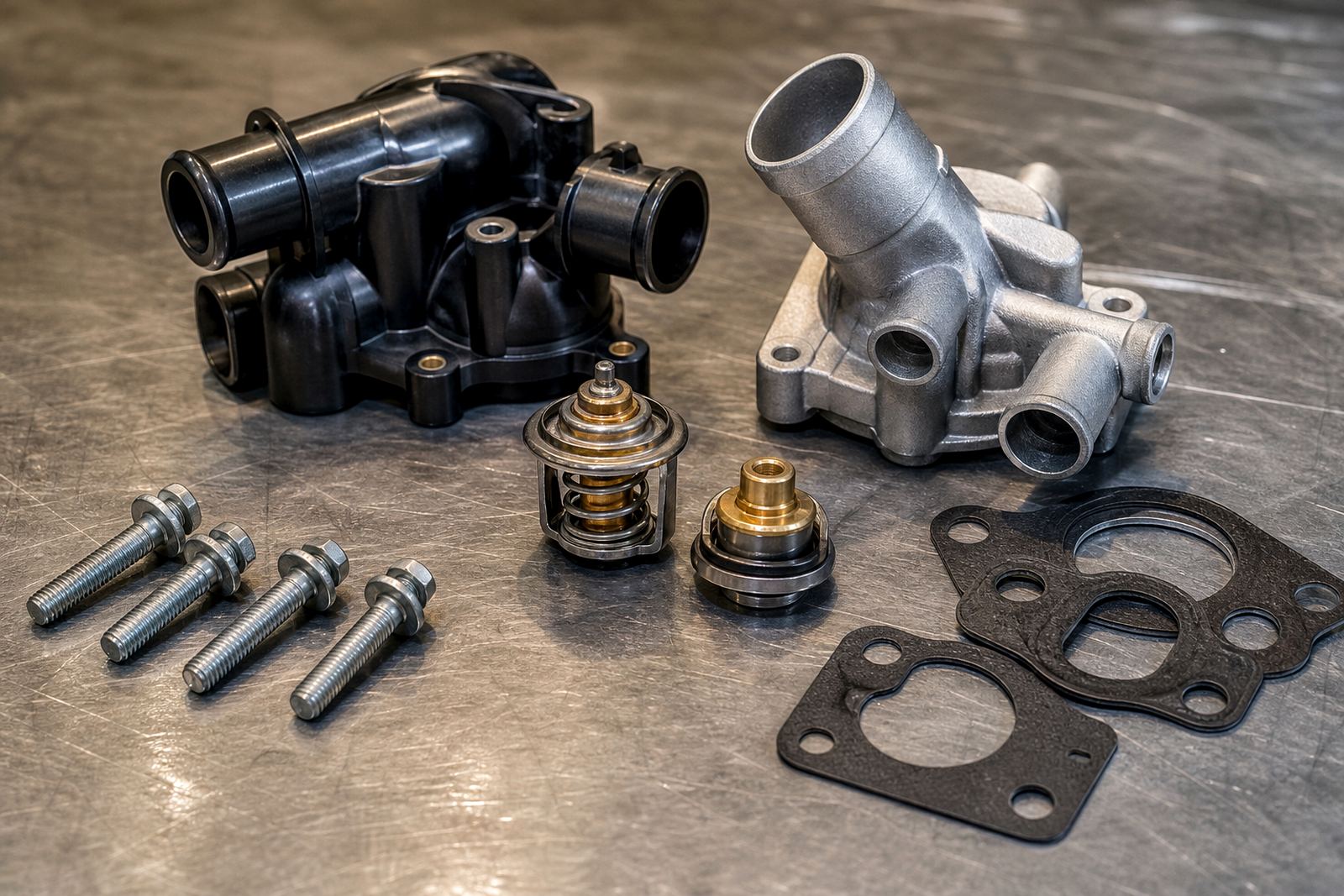
- Wax pellet style thermostats for standard housings
- Bypass style units where the cooling circuit needs a specific flow path
- Thermostats with bleed features for easier air purge
- Replacement gaskets or O-rings where the housing uses them
Where a lower or higher opening point makes sense
Track cars in Gauteng often see warm ambient conditions, slower pit lane crawling and repeated heat soak after a session. A lower opening thermostat can help if the engine runs hot under load, while a higher opening point may suit a build that needs a bit more retained heat for throttle response, cabin demist on road sections, or a cooler that already has strong capacity.
For rally cars, the better choice usually depends on stage length, airflow, and how much time the car spends between high-load sections. Club racers often want a middle ground, especially when the car still drives on the road to a test day or alignment bay in Midrand or Pretoria.
- Short circuit sessions with frequent heat cycles
- Endurance style use with long periods at speed
- Mixed road and track use on the same car
- Turbocharged or high-compression engines that need stable coolant control
The thermostat works alongside the radiator, pump and hoses. Radiator condition, cap pressure, hose routing, ducting and coolant mixture all change how the engine behaves on track.
Fitment notes from the workshop side of the job
Thermostat fitment sounds simple until a housing is the wrong depth, a gasket face has corrosion or the bleed hole sits in the wrong position. A proper workshop assessment is what counts here. The housing must be clean, the mating face flat and the thermostat seated the right way around so the valve can open without sticking.
When we talk through fitment, we look at the engine code, housing shape, hose outlet size and whether the system has a separate bypass. Some engines need the thermostat fitted with the spring toward the engine side, others need the jiggle pin or bleed feature positioned at the highest point so trapped air can move out during filling.
- Confirm housing type before ordering
- Check gasket or seal style used on the engine
- Inspect hose necks, clips and casting faces
- Bleed the system properly after refill
Signs the cooling system wants attention
A thermostat problem can show up as slow warm-up, temperature swings, weak heater output on road sections or a car that runs hotter than expected after a pit stop. A thermostat that is stuck partly open often delays warm-up and can make the engine feel lazy early in the stint. One that sticks shut can push temperatures up very fast, which is hard on hoses, seals and head gaskets.
We also see cases where the thermostat is fine but the rest of the system is letting it down. A blocked radiator core, tired water pump, air pocket, poor cap sealing or a bent fan shroud can mislead the driver into changing parts that are not the real fault. A careful check saves time and avoids chasing the same symptom twice.
- Gauge climbs faster than usual under load
- Temperature drops too far on the move
- Upper hose stays cold for too long
- Coolant level shifts after the car cools down
Ordering details that help the right part land on the bench
When you send through a thermostat enquiry, the useful details are the engine code, vehicle model, housing type and the opening temperature you want to target. If the car has been modified, it helps to note radiator size, electric fan setup, oil cooler use and whether the vehicle is mainly for track, rally or club racing.
For more exact matching, include whether the housing takes a complete assembly or only the insert, plus the seal style and any bleed notch or jiggle pin requirement. A thermostat that is correct in diameter can still be wrong if the depth or bypass arrangement does not suit the engine family.
- Engine code and model year range
- Opening temperature wanted in °C
- Housing or insert style
- Seal type, gasket or O-ring details
- Use case, such as track, rally or mixed road use
If the details are unclear, our contact form is the easiest way to send what we need for parts matching. Thermostats ship from Midrand to circuits in Gauteng and down to Durban, Cape Town and Port Elizabeth.
Keeping the thermostat and coolant circuit in good shape
Thermostats do not need much attention once fitted, but the surrounding system does. Fresh coolant at the correct mix matters, especially where heat cycles and overnight storage can change corrosion behaviour. Old coolant can leave scale and sludge that makes the valve work harder than it should.
We suggest checking hose clamps, radiator necks and the housing whenever the system is opened for inspection. If the thermostat has been removed during a rebuild, replace any tired seal and make sure the bleed path is clear before the first heat cycle. That small step helps prevent trapped air from sitting in the head or top hose.
For race cars that see frequent strip-downs, keep the removed thermostat clean and dry if it is being inspected for reuse, and never force the valve open with tools. A bent frame, scored seat or contaminated wax capsule can ruin the part even if it still looks workable at a glance.
Key facts
| Product type | Motorsport thermostat for cooling system control |
|---|---|
| Common opening ratings | 68°C, 71°C, 82°C, 88°C |
| Fitment style | Insert and complete housing styles, depending on engine |
| Typical materials | Metal frame with wax pellet control element |
| Common use | Track, rally, club racing and mixed road use |
| Related checks | Radiator, hoses, cap pressure, bleed procedure and housing seal |