

What a coilover package changes on a race car
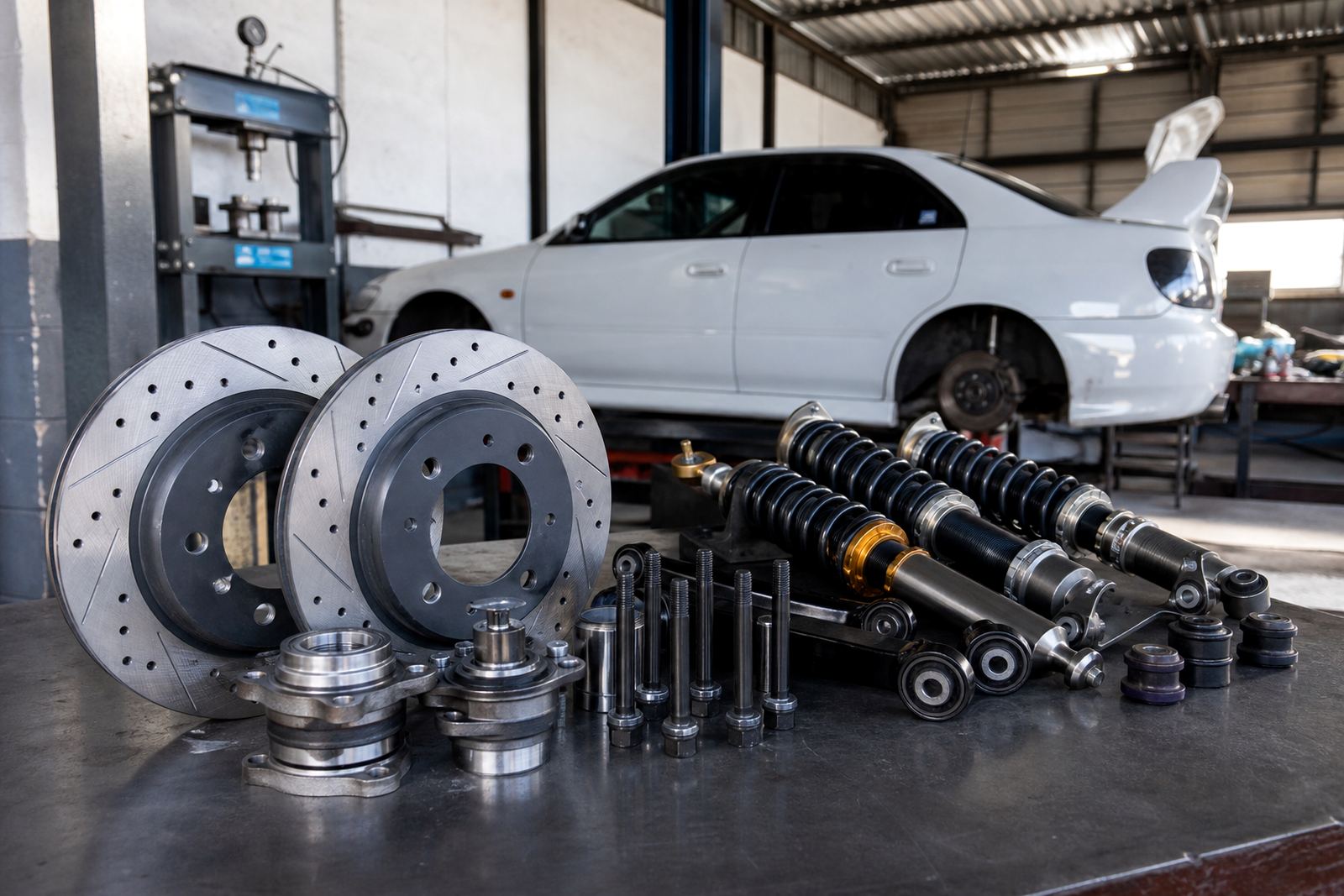
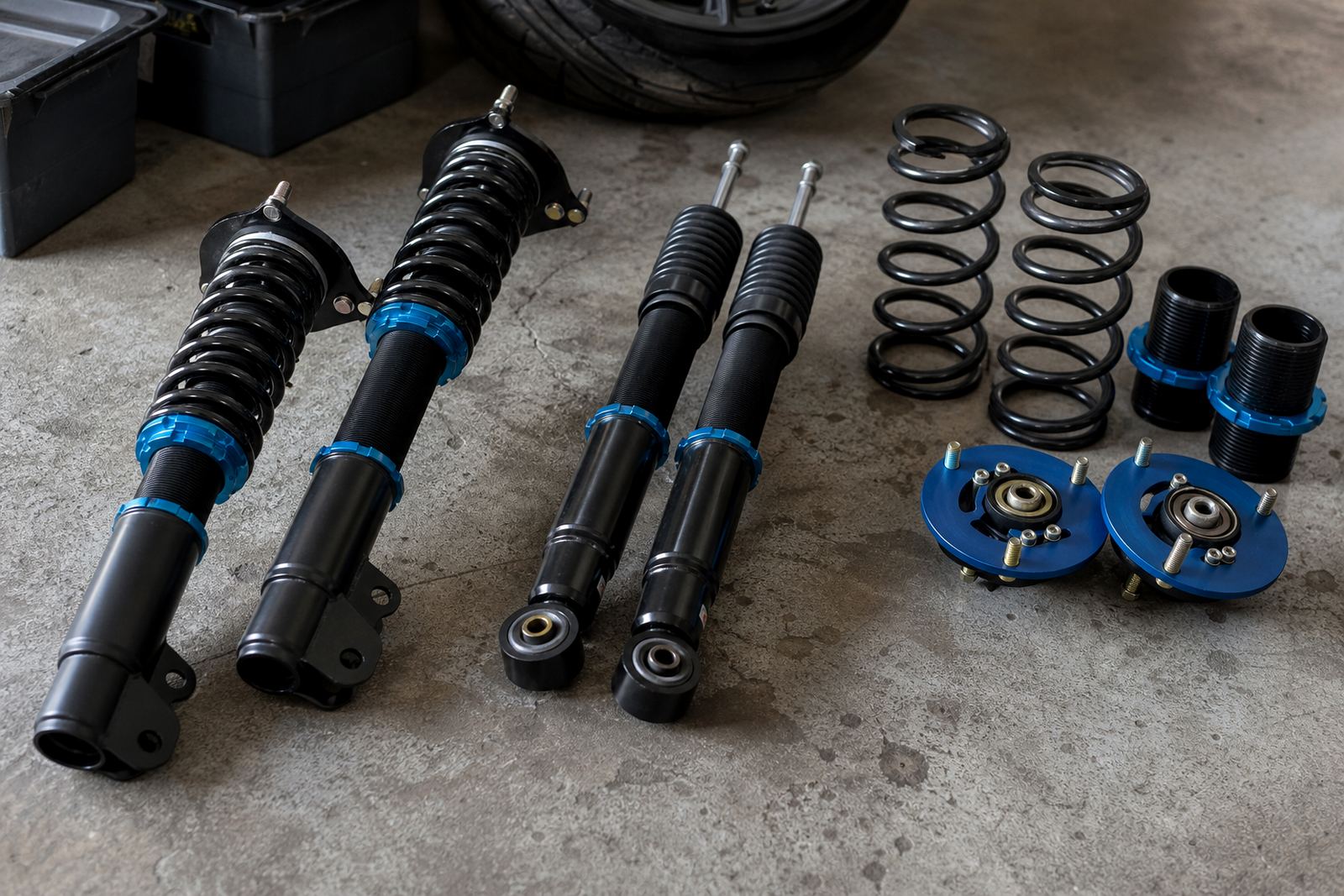
A coilover brings the spring and damper into one unit, usually with threaded body adjustment for ride height and a perch that lets the spring preload be set properly. On a motorsport car that matters because the suspension needs to hold the tyre in contact with the surface while the chassis settles in a repeatable way through braking, turn-in and exit.
For track, rally and club racing use, the better coilover package is not only about stiffness. It also needs the correct stroke, spring rate, top mount style and body length for the car, plus enough travel to work on rougher surfaces without topping out. A good setup can sharpen response, but if the package is wrong for the shell or tyre package it can make the car skittish and hard on tyres.
- Threaded ride height adjustment for corner balance work
- Damping control for rebound and compression tuning
- Spring rates matched to car weight and racing use
- Top mounts and inserts suited to the vehicle layout
Sizes, bodies and adjustment ranges we handle
Coilovers are not one-size-fits-all. The common choices are units for front MacPherson struts, separate rear shock and spring packages, and complete height-adjustable kits where the rear uses a threaded body or a matched spring perch. For many saloons and hatchbacks, the front strut length, hub clamp size and top mount fitment need checking before anything is ordered.
Adjustment range should be practical, not extreme. A car that runs track days and club races may need a lower stance for centre of gravity and aero balance, but still needs bump travel for kerbs and South African road sections between events. On rally cars and rougher circuits, slightly softer springing and more travel often work better than chasing very low height.
- Common body diameters include 42 mm, 45 mm and 52 mm styles
- Single-adjustable and twin-adjustable damping options are available
- Short body and inverted styles suit more demanding chassis loads
- Front and rear rates can be specified separately where the chassis allows
Where coilovers suit best in local motorsport
These packages suit cars used for circuit racing, time attack, rally sprints and club competition where turn-in, braking stability and tyre wear are being watched closely. Midrand, Kyalami and Johannesburg cars often run a firmer setup for smooth circuits, while Durban and Port Elizabeth cars may need a little more compliance for mixed road surfaces and longer stints between events.
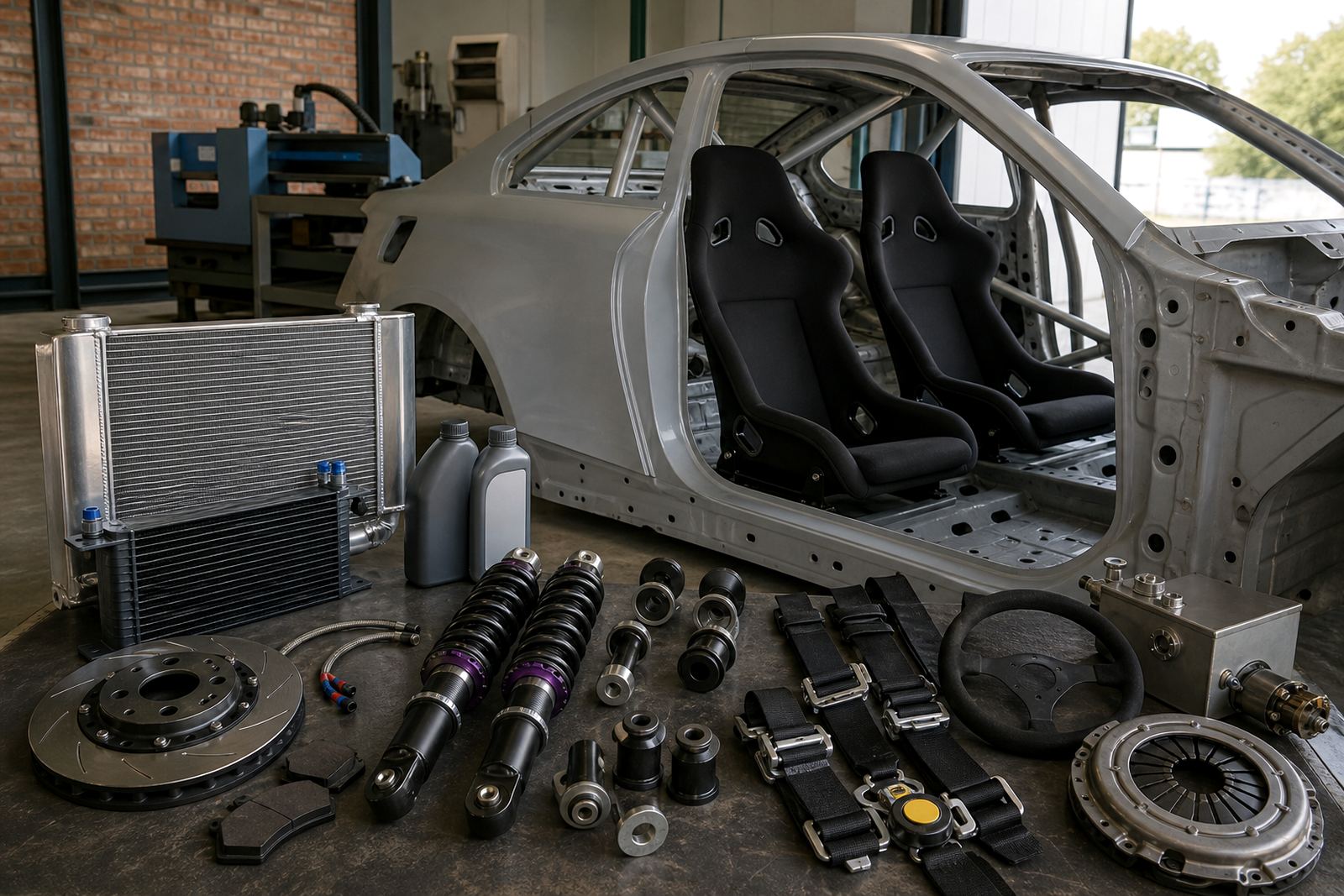
Coilovers also help when the car is carrying safety equipment, bigger brakes or a different wheel and tyre package. Once the weight changes, the original springs and dampers can fall out of step with the car. That is when the chassis starts moving too much, or settles too slowly after a direction change.
- Track cars needing flatter cornering and quicker response
- Rally cars where ride height and travel need proper care
- Club racers running mixed tyres, seats and safety equipment
- Cars needing repeatable corner weighting after other upgrades
Fitting checks that matter before the car goes on stands
Installation is not only about bolting the units in and dropping the car. The spring seat position, bump stop length, top mount clearance and wheel offset all affect whether the package works correctly. A coilover that sits too low can run into tyre rub, driveshaft angles or poor bump travel, while one set too high may never get the chassis balance the driver wants.
We look at damper body clearance to brake lines, brake hoses, tyres and wheel arch lips, then check that the adjustment collars can still be reached once the car is assembled. Where the car runs camber plates, the top mount position needs to line up with the steering rack movement so the front end does not bind or knock on full lock. That sort of detail saves a lot of rework after the first shakedown.
- Check hub clamp size, top mount pattern and rear eye or pin fitment
- Confirm wheel offset and tyre width before setting final height
- Inspect bump stop length and droop travel on each corner
- Set corner weights after the driver seat and fuel load are in place
Keeping the dampers clean, free and consistent
Coilovers live a hard life, especially on dusty roads, wet winter events and cars washed down after every race weekend. The threaded bodies should be kept clean so the perches move without binding, and the lock rings should be checked for tightness after height changes. If a car runs on gravel, mud or coastal humidity, corrosion around the adjusters can make later changes difficult.
The damper shafts and seals also deserve regular inspection. Oil seepage, gritty movement or uneven rebound between corners points to service work, not just another alignment. A fresh setup on tired dampers will still feel wrong, because the chassis is being supported by parts that are no longer matching each other properly.
- Clean threads and apply suitable anti-seize where allowed
- Inspect springs for coil bind marks or cracked powder coat
- Check for leaking seals or damaged dust boots
- Recheck ride height after a few heat cycles and event miles
Coilover details we ask for before the car is on the lift
When a coilover package is being ordered, the exact car details matter. Body shape, year range, engine weight changes, gearbox swaps, wheel size and whether the car is still on original arms all change the right answer. A car with stripped interior, cage work and lightweight panels may need a very different spring and damper choice from a similar model still carrying trim.
We also confirm how the kit will be used at the event. A smooth circuit setup is not the same as a rally tarmac car or a club car that sees road miles between meeting points. The clearer the brief, the easier it is to match the hardware to the way the car really gets used.
- Vehicle make, model, year range and body style
- Front and rear suspension layout and any arm changes
- Wheel size, tyre width and brake package already fitted
- Intended use, from circuit to rally or mixed club events
Key facts
| Ride height adjustment | Threaded body with lock ring and perch |
|---|---|
| Damping control | Single or twin adjustment depending on package |
| Spring rates | Matched to vehicle weight and motorsport use |
| Common body sizes | 42 mm, 45 mm, 52 mm |
| Fitment range | Front strut and rear shock applications |
| Support | Fitting advice, coilover setup, alignment checks and corner weighting |