

Disc faces built for hard braking cycles
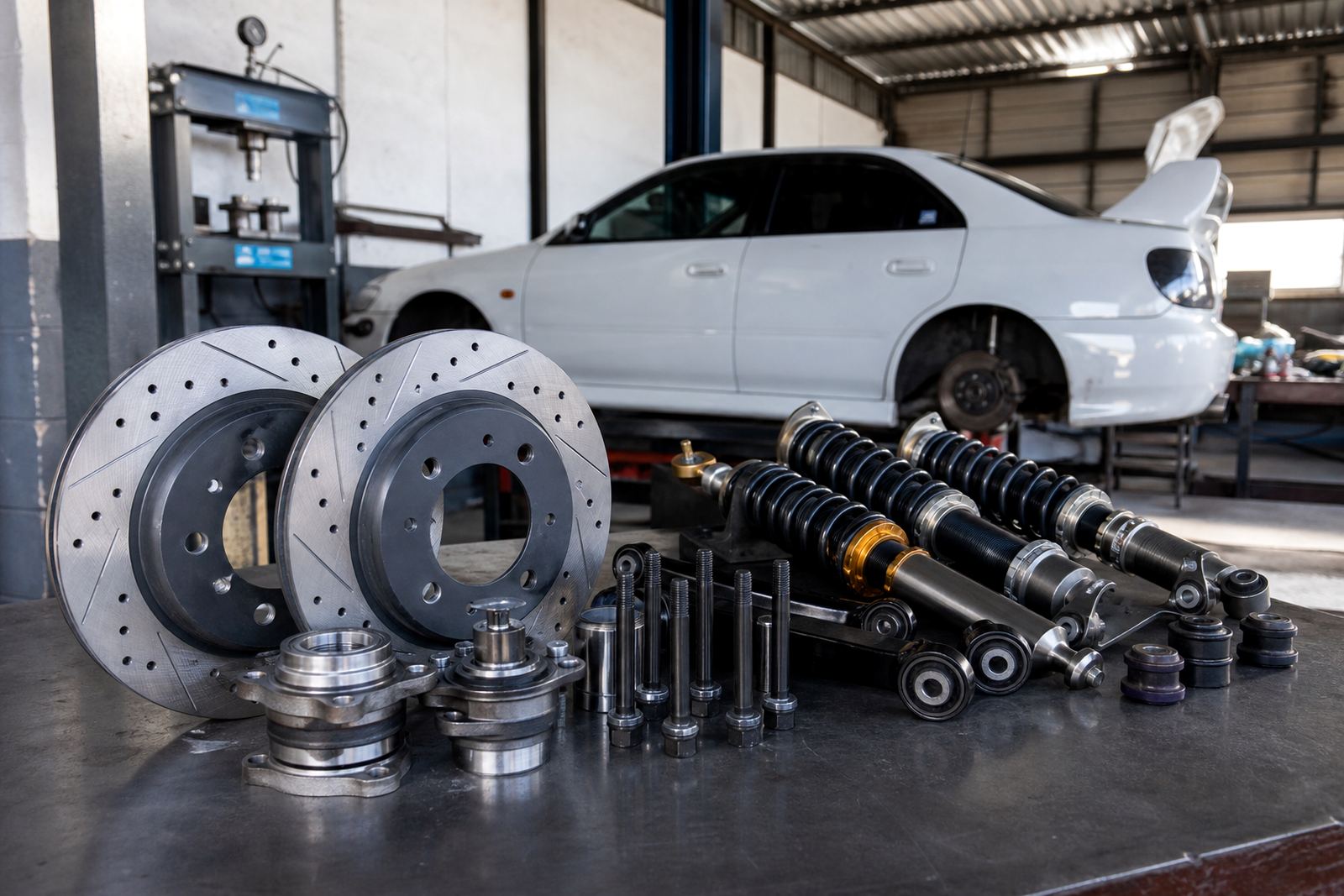
A brake disc must deal with repeated heat soak, not just one strong stop. On race cars, that means choosing a disc that holds its shape under load, works with the pad compound in use, and gives the driver a pedal that stays consistent from lap one to the last session. We work with vented and slotted disc options for track, rally and club racing cars, with advice around fitment, bedding and the rest of the braking package.
Vented discs help move heat out through the internal vanes, while slotted faces clear gas and debris from the pad surface. The right choice depends on the car, the circuit, the tyre grip, and how aggressive the braking points are. A light car on road-based tyres asks for a different disc character to a heavier sedan on slicks or semi-slicks. On long, fast stops, heat control matters just as much as raw clamping force.
- Vented discs for stronger heat management on repeated stops
- Slotted faces for cleaner pad contact under race use
- Options matched to the hub, caliper and pad shape already on the car
- Advice for front axle and rear axle balance, not only the front end
Sizes and patterns that match the car
Brake disc size is not a guess. Diameter, thickness and offset all need to line up with the caliper bracket, upright and wheel clearance. A disc that is too large can foul the wheel barrel or push the caliper into the wrong position. A disc that is too thin may not hold up under racing temperatures, while one that is too thick may not suit the caliper gap or the pad sweep.
We help with common race fitment checks such as the disc outer diameter, centre bore, bolt pattern, hat depth and ventilation pattern. Some cars work well with a straightforward solid rear disc and a more aggressive front disc. Others need a matched pair so the balance stays predictable under trail braking and into slower corners. When the car has been moved away from road trim, the brake package should be looked at as one system, not as separate pieces.
- Outer diameter to suit wheel and caliper clearance
- Thickness matched to the caliper and expected heat load
- Hat offset and centre bore for correct seating on the hub
- Vane direction where directional airflow is part of the design
Where brake discs suit the work
Track cars need discs that can take repeated high-energy stops without going soft in the pedal or getting a heavy pulse from heat spotting. Rally cars ask for a different kind of toughness, especially where the road surface changes fast and the braking is often done on loose entries, crests or rough tarmac. Club racers usually need a disc that is predictable, serviceable and easy to inspect between sessions.
Brake discs also matter where the rest of the chassis is being sorted out. A car with coilover changes, alignment work or corner weighting can show up braking issues that were hidden before. If the front end carries more load after setup changes, the discs and pads will tell that story quickly. For drivers moving between street and circuit use, the disc choice has to stay calm in traffic and still cope with race temperatures at Kyalami, Zwartkops or a sprint day further afield.
We see the best results where the disc choice matches the event type, the tyre grip and the driver’s braking style. Late, hard braking usually benefits from stronger heat control. Softer entry braking may call for a disc and pad package that gives a cleaner initial bite without feeling nervous on the pedal.
Fitting notes that protect the braking package
Having the disc installed correctly is as important as the disc itself. The hub face should be clean, flat and free of corrosion before the new disc goes on. Wheel bearings need to be healthy, because any play at the hub can create pedal knock-back or uneven wear. Caliper alignment also needs checking so the pad sweeps the disc face evenly, not just one edge.
We also look at brake fluid condition, pad bedding and the rest of the system around the disc. Fresh discs on old fluid will not give the same feel as a properly prepared package. If the car is used for track days and sprints, the bleeding procedure and fluid choice should match the temperature the car actually sees. On some cars, brake ducting and wheel design also affect how well the discs shed heat.
- Clean hub face before disc fitment
- Check hub play and bearing condition
- Confirm caliper centring and pad sweep
- Bedding in should be done with the pad compound in mind
Care between sessions and after events
Brake discs last longer when they are inspected often and used within their heat range. After a hard session, look for cracking, blue patches, ridges, uneven wear and pad transfer that has gone patchy. A quick wash after dusty rally use helps, especially where mud, grit or brake dust can sit on the face and in the vane openings. In coastal humidity, surface film can appear quickly, so the discs should be dried and stored properly.
Do not let the car stand for weeks with a wet disc and pad clamped together if it can be avoided. Light rust on the face is common, but deep corrosion on the hub side or around the ventilation edges needs attention. If the steering wheel starts to shake, or the pedal changes after a few laps, the disc surface and the rest of the braking package should be checked before the next event.
- Inspect for cracks around the outer edge and drill points, if present
- Check for overheating marks and pad material transfer
- Keep the discs dry after washing or wet gravel stages
- Replace discs in pairs where wear has moved unevenly
Details to send when you need the right disc
Getting the right brake disc starts with accurate details. The car model, year and brake setup matter, but so do the changes made since it left standard trim. A disc that suits one caliper or hub arrangement may not fit another version of the same car. If the vehicle has been converted for racing, the current brake hardware and wheel size need to be included, not only the original road specification.
Send the disc diameter, thickness, bolt pattern, centre bore, front or rear position and the current pad shape if you have it. If the car has been used in endurance-style sessions, mountain runs, rally stages or short sprint events, that also helps with the recommendation. We can then talk through whether vented or slotted discs make the more useful choice for the way the car is actually driven.
- Car model, year and brake package already fitted
- Front or rear disc position
- Diameter, thickness and bolt pattern
- Wheel size and any caliper or hub changes
- Type of use, such as track, rally or club racing
Key facts
| Product type | Brake discs for motorsport and performance braking |
|---|---|
| Disc styles | Vented and slotted options |
| Common sizes | Vehicle-specific diameters and thicknesses |
| Fitment points | Centre bore, bolt pattern, offset and caliper clearance |
| Best use | Track, rally and club racing cars |
| Support | Brake upgrade planning and fitting advice from our Midrand team |