

Shell shape, side support and the seat position you feel in the car
A fixed-back race seat is built to hold the torso, hips and shoulders in a set driving position, so the driver is not sliding around when the car loads up in corners or under braking. The right shell gives support without forcing the spine into a bad angle, which matters in cars that see kerb strikes, rough surfaces and long stints at Kyalami or on regional rally stages.
Most motorsport shells use a fibreglass, composite or carbon-style construction, with deep shoulder bolsters and a narrow base for harness control. Some seats suit a more upright touring feel, others suit a laid-back cockpit with lower dash clearance, and the wrong choice can leave the helmet touching the roof or the steering wheel too close to the chest.
- Fixed-back shells for circuit, rally and club racing use
- Fibre or composite construction with shaped side bolsters
- High shoulder support for stable harness routing
- Low or medium base profiles for cockpit clearance
Sizes, widths and insert choices for different drivers
Seat sizing is not just about body weight, it is about shoulder width, hip room, helmet clearance and how much lateral movement the car allows. A snug seat keeps the driver planted, but it must still allow breathing room and leave space for a balaclava, HANS-style device where used, and the harness wrap points.
Common options include small, medium and large shells, plus deeper or flatter seat cushions depending on the car and the class rules. Some fixed-back seats take removable pads or cushion inserts, which helps tune the fit for a shorter driver, a taller driver, or a car that is used by more than one person on a track day or sprint event.
- Multiple shell widths for different body sizes
- Optional cushion inserts for small fit adjustments
- Deeper shoulder wings for more side hold
- Openings or slots for multi-point harnesses
Where fixed-back seats work best in South African motorsport
These seats suit cars that see hard cornering, repeated braking and fast weight transfer, especially where the driver needs a stable base for consistent steering input. They are commonly fitted in track cars, rally cars, hillclimb builds and club racers that run semi-slick or performance road tyres, but they also help in fast road cars used for events in Gauteng, Durban or Cape Town.
On rougher stages, the seat needs to keep the driver centred so the hands stay light on the wheel and the feet stay precise on the pedals. In lighter cars with less interior trim, seat height and shoulder width become more important, because there is less room to work with and small mistakes can foul the door card, cage tubes or centre tunnel.
- Track cars with repeated high-g cornering
- Rally cars that need stable body support
- Club cars where repeatable position matters
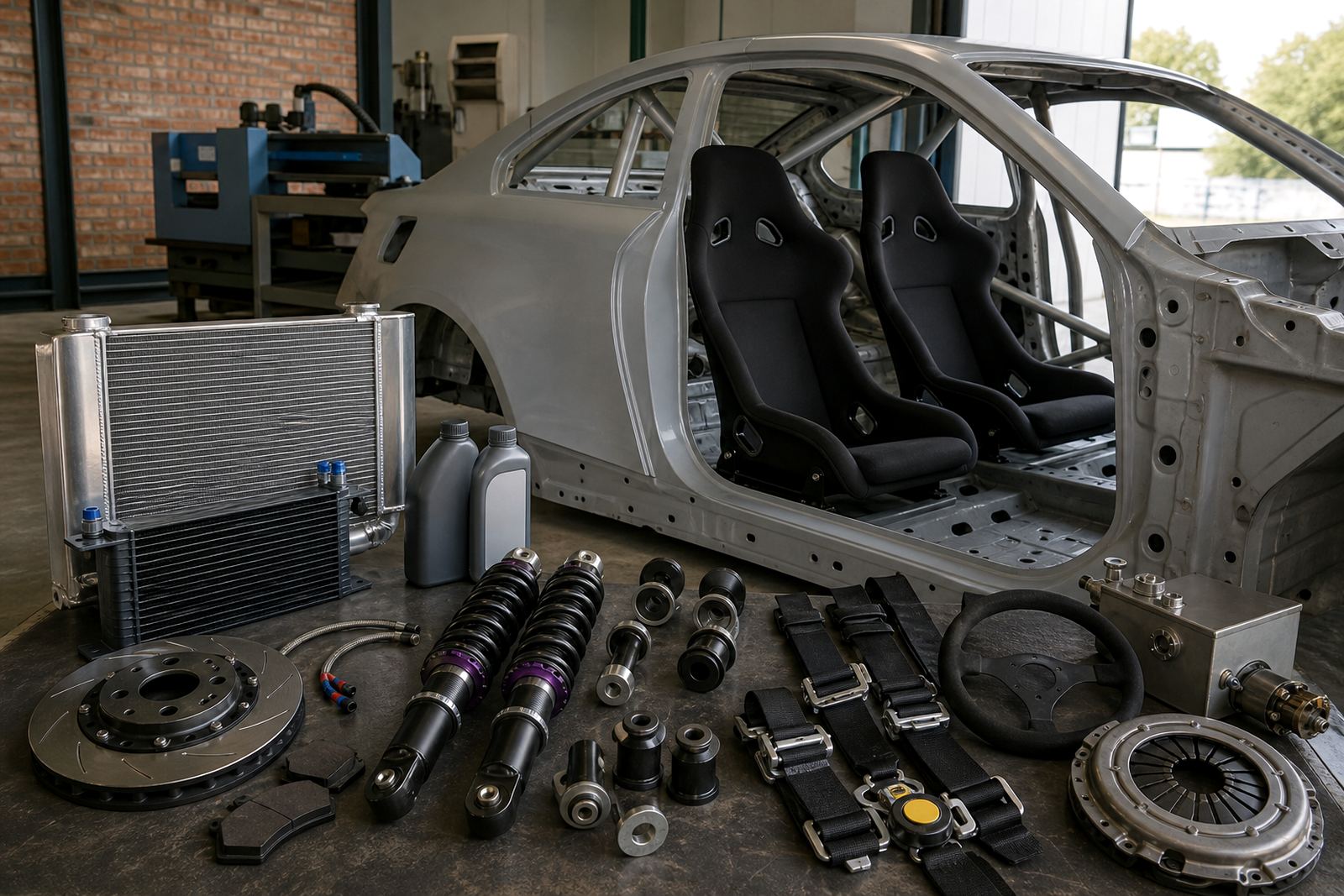
- Cars with stripped interiors or roll cage fitment
Mounting brackets, runner choices and fitting checks
Seat fitment needs proper brackets, side mounts or base mounts, depending on the shell design and the car floor layout. The seat has to sit square to the steering wheel, with enough clearance for the door bar, cage legs and transmission tunnel, and the belt slots need to match the harness angle so the belts do not rub or twist.
Our fitting advice covers seat height, tilt and fore-aft position, plus the relation between the steering wheel, pedals and shoulder slots. In a car with a roll cage or harness bar, the mounting point may need a small change to keep the shoulder belts level or close to level, and that detail makes a real difference on a long session. A tidy install also stops the shell from flexing against the floor or rail.
- Side mounts or base mounts where the shell allows it
- Check for door, cage and tunnel clearance
- Match shoulder slots to harness angle
- Set height so the helmet and wheel line up properly
Care in dusty garages, humid coastal air and wet paddock weeks
Race seats do not ask for much, but they do need regular checks. Dust, sweat and brake residue collect on the fabric or gelcoat, and in humid areas like Durban the metal brackets and fixings can pick up surface corrosion if they are left damp. A simple wipe with a mild cleaner keeps the shell clean, while the mounting bolts and sliders, if fitted, should be checked for tightness after events.
Cloth trims can be brushed and vacuumed, while harder shells can be wiped with a soft cloth and a mild cleaner, then dried well before the car is covered. If the seat uses removable padding, take the inserts out now and then so trapped grit does not wear the cover, and inspect the harness openings for fraying or sharp edges. Small marks are normal, but cracks in the shell or loose threaded inserts should be dealt with before the next event.
- Clean dust and sweat before storage
- Dry brackets and hardware after wet meetings
- Inspect shell, mounts and belt slots regularly
- Keep fixings torqued and free of grit
Seat details we need confirmed before ordering
For the right seat to land in the right car, we need the driver dimensions, the car model, the harness type and the available cockpit space. It also helps to know whether the car still has full trim, a partial strip, or an installed cage, because that changes seat width, shoulder clearance and the mounting height. A short measure of floor-to-roof space and tunnel width avoids a poor fit later on.
The basic details below are the ones that matter most when matching a shell to a car and class setup, and they keep the install practical rather than cramped. If the car is shared between drivers, include both seat sizes or the larger driver so the position works for everyone who gets strapped in.
- Driver height, weight and shoulder width
- Car model and whether a cage is fitted
- Harness type and slot requirement
- Available width between tunnel and door side
- Preferred seat height and recline angle
- Use case: track, rally, sprint or club racing
Midrand supply for race seats and cockpit fitment
RaceHouse supplies fixed-back seats for motorsport builds across Midrand, Johannesburg, Pretoria, Centurion, Kyalami, Durban, Cape Town and Port Elizabeth. We work with track, rally and club racers who need a proper cockpit position, and the seat is often part of a wider setup that includes harness checks, roll cage fit advice, clutch and shift setup or alignment work.
Because every cockpit differs, we look at the shell, the mount and the driver as one package. That keeps the seating position honest, with enough support to drive hard and enough room to move the belts into the correct path. If you need help matching a seat to the car, use our contact form and send the car details, the driver size and the sort of events the car is built for.
- Midrand base with motorsport parts support nationwide
- Suitable for club cars, rally cars and track builds
- Part of a wider setup with harness and cage checks
- Mounting advice for clean, repeatable cockpit position
Key facts
| Product type | Fixed-back motorsport race seat |
|---|---|
| Construction | Fibreglass, composite or carbon-style shell |
| Typical widths | Small, medium and large shell options |
| Mounting | Side mount or base mount, depending on shell |
| Harness routing | Multi-point belt slots with shoulder cut-outs |
| Best use | Track, rally, sprint and club racing cars |