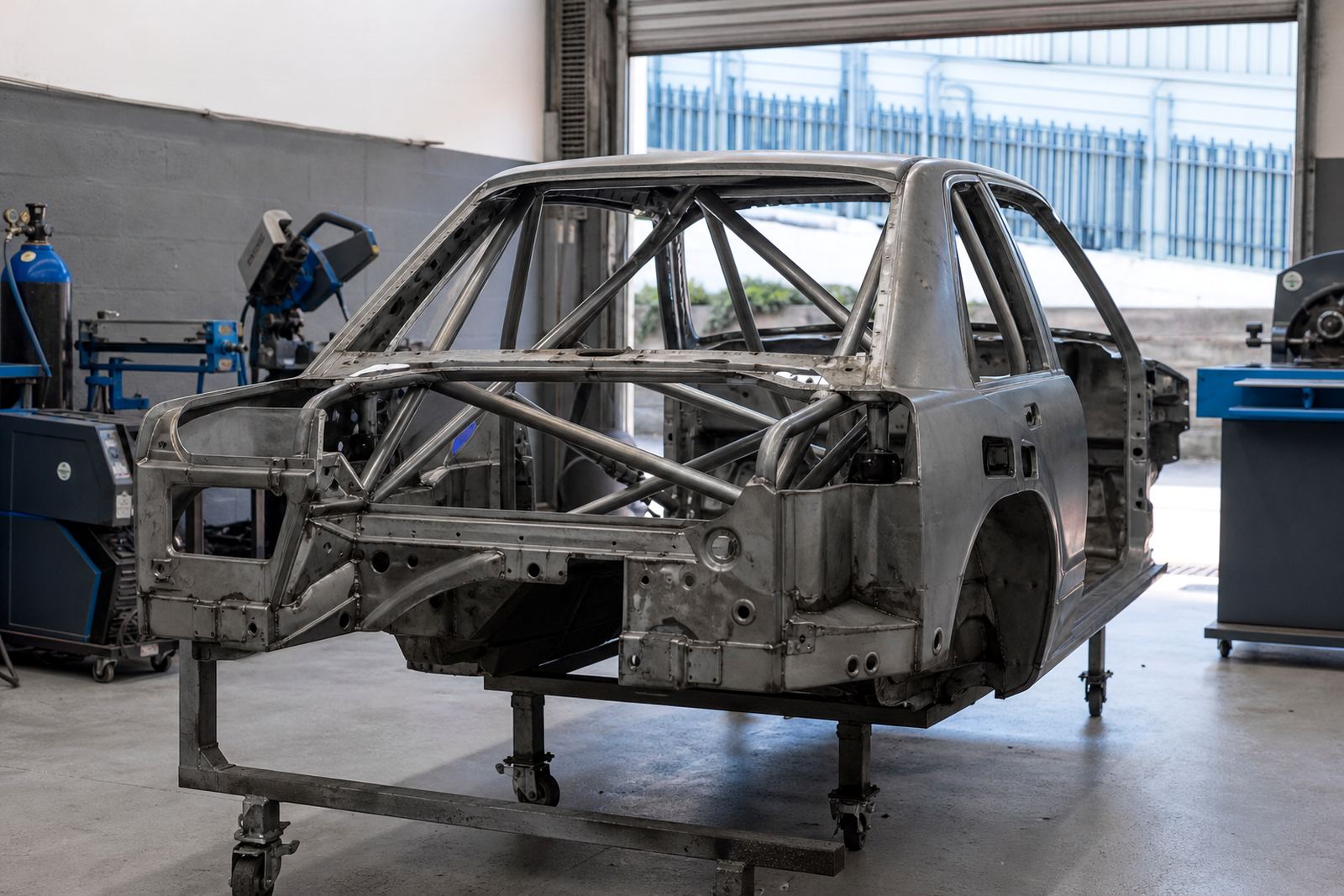


Cage structure that starts with the shell
Sizes and layouts need to suit the car and the class. Tube diameter and wall thickness are usually selected around the vehicle mass, the intended use and the expected points of stress. Common cage material in motorsport is smooth steel tube, with typical diameters around 38 mm to 45 mm and wall thickness around 2 mm to 3 mm, though the final choice must suit the shell and the rule set being followed.
Some cars suit a half cage, with a main hoop and rear stays, while others need a full multipoint cage with A-pillar legs, dash bar, roof diagonal and side intrusion bars. A tight cabin in a hatchback or coupe often needs careful tube bending so the structure fits without blocking pedals, switches or steering movement. On a sedan shell, rear bar angles and parcel shelf clearance also matter.
- From a simple hoop to a welded-in rally cage
- Painted or bare tube finish for later coating
- Weld-in kits and pre-bent sections for cleaner fitment
- Custom door bar style to suit entry and exit needs
Where a cage earns its keep
Fitting work is not guesswork. A cage must follow the shell closely, with base plates on sound metal and welds that can be inspected properly. Before any fitting step, the seat position, steering wheel reach, pedal box location and harness anchor points need to be set out. If the cage is going into a car with a fuel cell, fire suppression line or relocated battery, plan those items with the cage so the finished cabin still leaves room to work.
RaceHouse handles fitting advice and setup days for drivers who need a straight plan before the grinder comes out. That includes checking whether a bolt-in route suits the shell, or whether a welded-in structure is the better answer for the intended use. We also look at harness bar height, door bar clearance and where the driver will climb in and out with gloves and helmet on.
- Measure seat base height, helmet room and steering clearance
- Confirm whether the shell needs welding or removable sections
- Check harness angles before the final weld or bolt torque
- Review door bar placement against seat bolsters and arm room
What to keep an eye on after fitment
Ordering the right cage parts needs a proper brief. The car make, body style, two-door or four-door layout, current seat arrangement and intended motorsport class all shape the final design. If the shell already has a half cage or welded bars, that detail helps with compatibility and repair planning. A straight note on whether the car is a rally shell, circuit build or mixed-use club car helps avoid mismatched tube bends and wasted labour.
It also helps to confirm the finish you want, because some cars leave the workshop painted, some are powder coated after fitment and some stay in bare steel until final prep. If the car has a sunroof, cage legs may need additional routing. If there is a dashboard that must remain in place, that changes the cross tube and leg layout. Greater detail gives a tidier fit on the day.
- Vehicle make, model and body type
- Track, rally or club use
- Full cage, half cage or rear bracing only
- Seat type, harness type and dashboard retention
- Finish preference and any existing interior parts
Key facts
| Product type | Roll cage components, kits and fitment guidance |
|---|---|
| Typical tube diameter | 38 mm to 45 mm depending on shell and use |
| Typical wall thickness | About 2 mm to 3 mm, matched to application |
| Material | Smooth steel tubing with steel plates and gussets |
| Fitment options | Bolt-in sections, weld-in kits and custom bent layouts |
| Use cases | Track, rally, club racing and safety-minded project shells |